


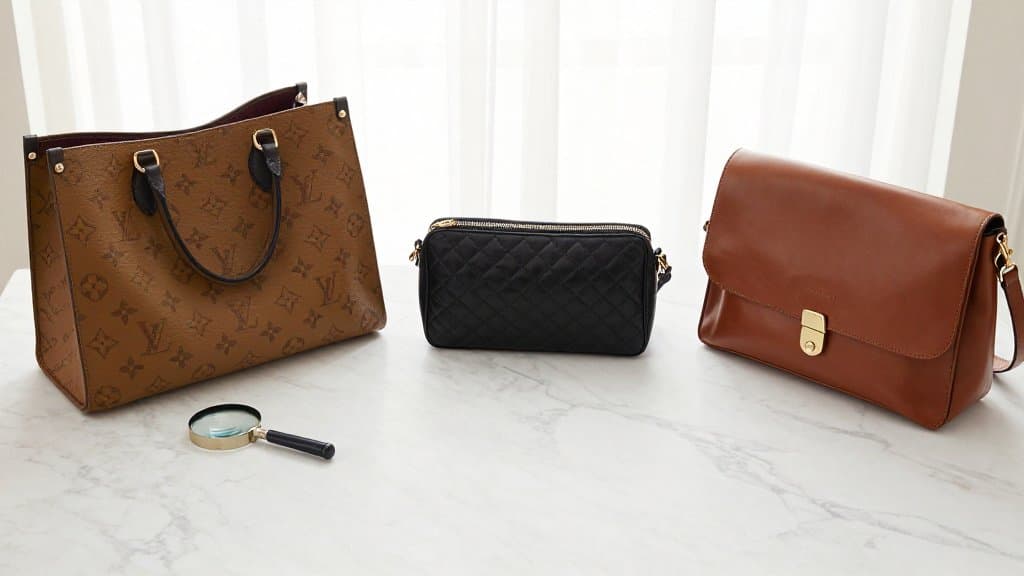
Walking through a thrift store and spotting a monogram canvas tote with interlocking LV initials can stop you cold. The question that matters in that moment is how to tell if a Louis Vuitton bag is real, fast, without any specialist equipment. Counterfeits are plentiful, and thrift stores are not immune to them. The difference between a genuine vintage find and a worthless knockoff comes down to a handful of physical details any careful buyer can check in under five minutes.
This guide covers the checks professional resellers use to tell if a Louis Vuitton bag is real, then extends to how to tell if a Gucci purse is real and how to tell if a Chanel bag is real. All three brands show up regularly at Goodwill donation centers, estate sales, and flea markets, priced as though they are ordinary handbags. Once you can authenticate them on the floor, the profit potential is significant.
Why Designer Bags End Up at Thrift Stores
Most authentic luxury handbags arrive at thrift stores through estate donations. When families clear out a deceased relative's home, they often have no idea that the structured bag in the hall closet is a $2,000 Chanel Boy Bag. Probate executors, moving seniors, and estate cleaners donate by the box without inspecting individual items. Thrift store staff almost never have training to recognize genuine designer goods, so a real Gucci Marmont can sit next to a department-store knockoff with the same $6.99 tag.
Estate donations consistently bring authentic designer goods to thrift stores at prices set by staff with no authentication training. Learning to spot real from fake in under five minutes separates informed resellers from casual shoppers.
- •Monogram canvas with a centered, symmetrical LV pattern
- •Mustard-yellow beeswax-treated thread in all stitching
- •Hardware that feels noticeably heavy when lifted
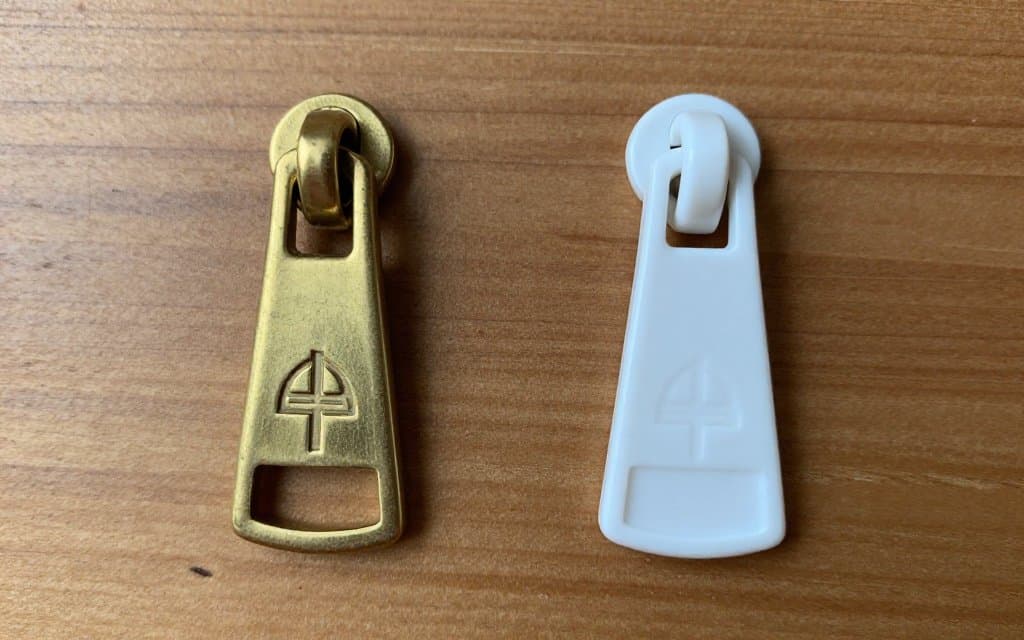
- •Zipper pulls with clear, complete brand engravings
- •Interior lining with a subtle, clean leather scent
How to Tell If a Louis Vuitton Bag Is Real
Reading the LV Date Code
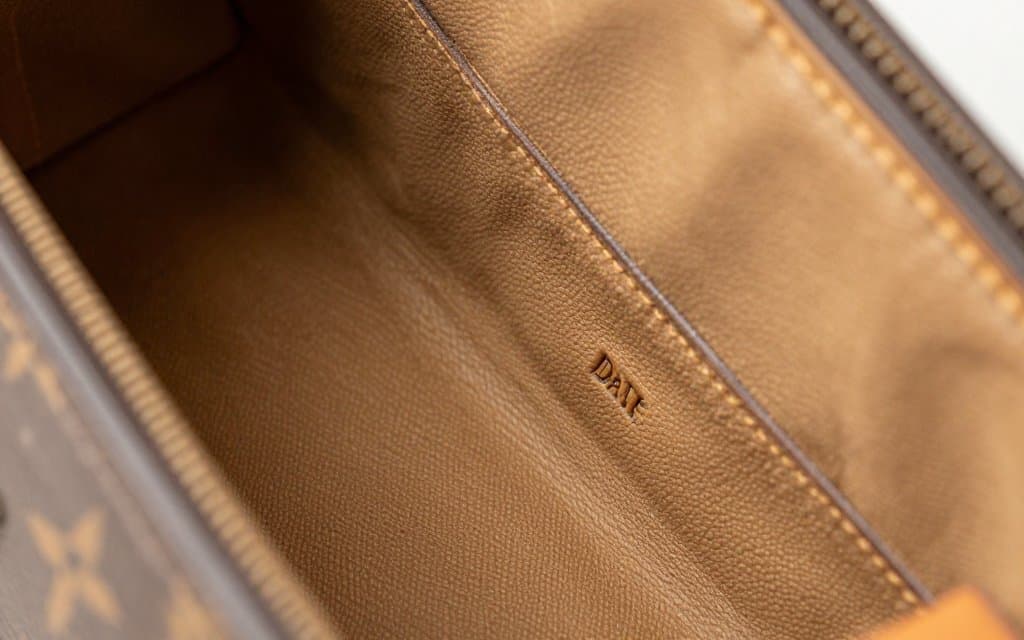
Louis Vuitton stamped date codes inside bags produced after 1982, and the format changed several times across eras. From 1990 through 2006, the code starts with two factory letters followed by four digits: the first and third digits indicate the month of production, while the second and fourth digits indicate the year. From 2007 onward, Vuitton switched the numbering to represent the week of production rather than the month. After March 2021, codes were replaced entirely by NFC microchips embedded in the lining.
For anyone wondering how do I know my Louis Vuitton bag is real from the date code alone: the code tells you when and where the bag was made, but it is not proof of authenticity on its own. Skilled counterfeiters stamp plausible codes in the correct era format. If you want to learn how to authenticate a Louis Vuitton bag systematically, the code is always the first check, but the canvas, stitching, and hardware must also pass. Full era-specific code charts are available at Miloura for cross-referencing.
Monogram Canvas and Stitching
On a genuine Louis Vuitton bag, the monogram pattern is never cropped awkwardly at seams. The LV initials and the fleur-de-lys center on each panel, with every cut deliberate. Authentic stitching runs mustard-yellow throughout, made from white linen thread dyed and sealed with beeswax, with matching stitch counts on both sides of every seam. Thread that shifts from mustard to orange or bright yellow, or any loose thread ends, is an instant authentication failure.
Hardware and Zipper Details
Every zipper pull, buckle, and lock on an authentic LV bag is solid brass, which makes it feel noticeably heavy for its size. The engraving reads 'Louis Vuitton' in clean, sharp letters with consistent depth. Authentic brass develops a warm honey patina with age, while counterfeit hardware often feels hollow and displays blurry or shallow logo engravings. The S-lock on closures like the Speedy and Alma should click shut and open with smooth, firm resistance.
- 1.Check for a date code near the zipper or strap ring inside
- 2.Confirm stitching is mustard-yellow, not orange or bright
- 3.Verify the monogram is centered and not cut off at seams
- 4.Test hardware weight - authentic brass feels solid and dense
- 5.Look for a clear, complete LV engraving on every zipper pull
- 6.Match the code format to the production era it should represent
How To Tell If A Louis Vuitton Bag Is Real Or Fake
How to Tell If a Gucci Purse Is Real
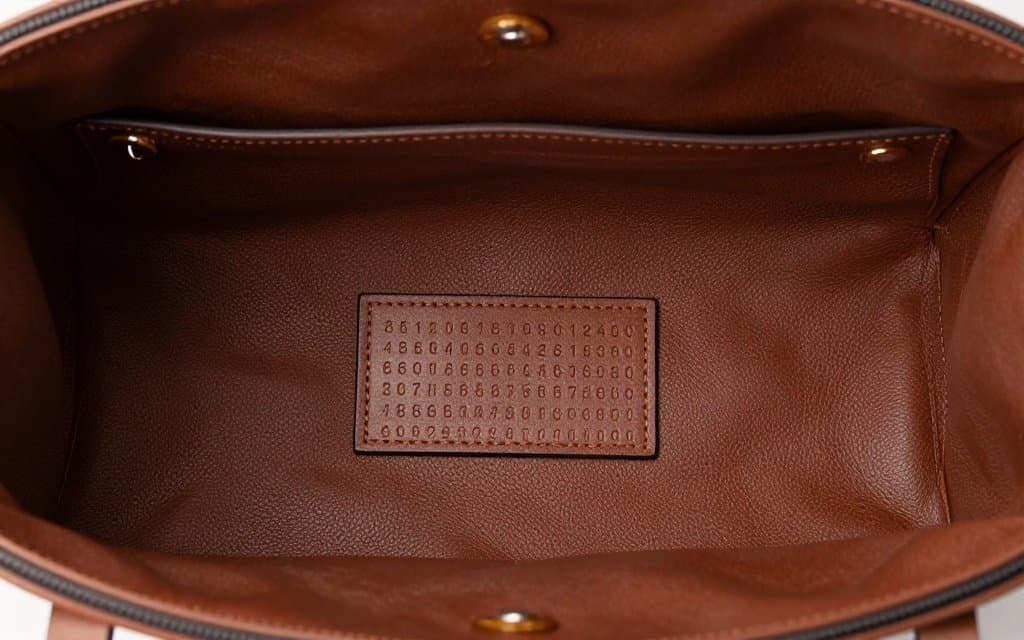
Gucci is one of the most-searched brands for designer bag authentication, with the GG Marmont, Dionysus, and Jackie 1961 all facing massive counterfeiting markets. So how do you know if a Gucci bag is real when you are standing in a thrift store aisle? Start by opening the bag and looking for a small rectangular leather tag sewn along an interior seam, stamped with a 10 to 13-digit serial number. To tell if a Gucci purse is real, that serial number must consist of digits only: any letter in it means the bag is counterfeit.
The Interior Serial Number Tag
When you need to know how do I know if my Gucci bag is real, examine the tag leather and font quality closely. Authentic Gucci numbers use a serif, typewriter-style font where each digit is slender, evenly spaced, and does not touch its neighbor. The words 'made in Italy' appear in lowercase on the tag below the brand logo, centered and cleanly stamped. If you want to know how can you tell if a Gucci purse is real from the serial tag: paper instead of leather, blurry digits, or inconsistent spacing are all disqualifying.
Hardware Color and Logo Precision
Knowing how to tell if a Gucci handbag is real extends beyond the serial tag. To know if your Gucci bag is real when the interior tag is hard to read, check the hardware: genuine Gucci uses a restrained, subtle gold tone, not the bright, coated-looking gold common on replicas. The double-G logo on the exterior should be perfectly symmetrical: on counterfeits, one G is often slightly off-axis or heavier than the other. Chain bag straps on authentic pieces lie flat without kinking, and the stamped 'Gucci' on zipper pulls should be clean with no blurring.
- •Interior serial tag is leather, not paper or cardstock
- •Serial number is all digits with no letters present
- •'Made in Italy' appears in lowercase on the interior tag
- •Logo font is thin, crisp, and consistently uses serifs
- •Chain hardware is heavy and lies flat without any kinking
How to Tell If a Chanel Bag Is Real
Chanel is among the most counterfeited luxury brands in the world, making knowing how to tell if a Chanel bag is real a particularly high-value skill at any thrift store. Knowing how to tell if Chanel bag is real without an authentication card is also possible, since the interior hologram sticker provides its own set of checks. Authentic bags made between 1986 and 2020 include a rigid plastic card with gold trim and an embossed serial number that matches the interior sticker exactly. After 2021, Chanel replaced both with an NFC microchip embedded in a metal plaque.
Hologram Sticker and Authentication Card
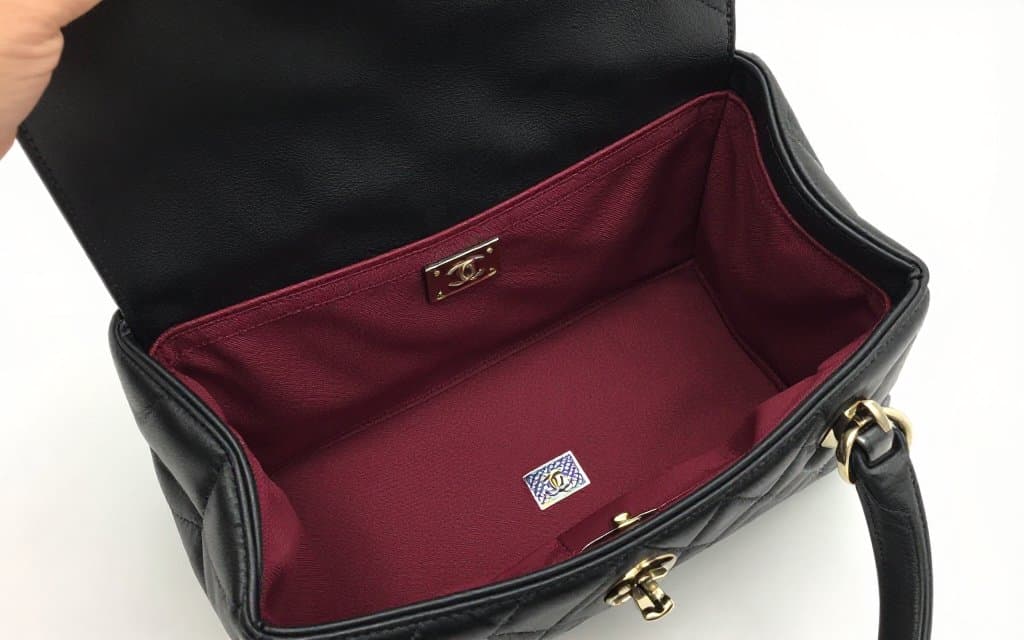
To tell if a Chanel bag is real using the sticker, look for a CC logo on the hologram and an X-shaped cut in the tape that prevents removal without tearing. The single most reliable counterfeit signal is this: a genuine Chanel hologram sticker does not cast a rainbow when tilted. If you see rainbow colors on the sticker, the bag is fake. The authentication card should be stiff like a credit card, and the serial numbers on the card and the sticker must match exactly, digit for digit.
Chanel Quilting, Stitching, and Chain Hardware
Chanel's signature quilted pattern is the most copied design in luxury goods, but authentic quilting has precise, uniform diamond or chevron geometry with consistent depth across every panel. Real Chanel chain straps are heavy and lie flat on a surface without twisting. The interior lining of a genuine Chanel bag is a burgundy grosgrain or silk fabric with a woven Chanel logo that is crisp and clean. Puckered seams, uneven diamond sizes, or thin synthetic lining are strong authentication failures.
Red Flags Across All Luxury Bags
Certain authentication failures cut across all luxury brands and let you rule out fakes quickly before spending time on brand-specific checks. Spotting any one of these on the floor is usually reason enough to pass on the bag.
- •Brand name is misspelled anywhere on the bag or hardware
- •Stitching changes color, thickness, or angle mid-seam
- •Serial number format does not match the stated brand rules
- •Hardware feels hollow, lightweight, or scratches too easily
- •Interior lining smells chemical rather than leather
- •Retail price sticker still attached - luxury bags never have them
- •Country of manufacture is one the brand does not use
| Brand | Key Marker | Resale Range |
|---|---|---|
| Louis Vuitton | Date code format and mustard stitching | $200 to $2,500 |
| Gucci | 10 to 13 digit serial tag, digits only | $150 to $2,000 |
| Chanel | Hologram sticker plus matching auth card | $800 to $6,000 |
Resale Value After You Authenticate
Once you confirm a bag is genuine, the resale data makes the time investment worthwhile. Louis Vuitton bags retain 85 to 92% of retail value on average, and the Gucci Jackie 1961 in vintage 1970s and 1980s form has appreciated 120 to 150% over five-year periods, according to secondhand market analysis. The Chanel Medium Classic Flap retains approximately 100% of its retail price, and limited-edition pieces regularly sell above original cost. These retention rates hold on platforms like The RealReal, Vestiaire Collective, and Poshmark.
Never list a designer bag without confirming authenticity first. Misrepresenting a counterfeit as genuine can result in platform bans and legal liability under the Lanham Act. Authenticate before you buy, not after.
Designer Bag Authentication FAQ
How do I know my Louis Vuitton bag is real without a receipt?
Run the physical checks in order: a date code in the correct era format, mustard-yellow stitching with matching counts on both sides of each seam, a centered monogram that is never cropped at the seams, and solid brass hardware that feels heavy with crisp engraving. No single feature proves authenticity on its own. A bag is only safe to call genuine when every check passes.
Do all real Louis Vuitton bags have a date code?
No. Louis Vuitton only began stamping date codes in the early 1980s, so genuine vintage pieces made before then have none. The brand also phased date codes out around 2021 in favor of embedded microchips, which means a very recent bag with no visible code can still be authentic. For bags made between those years, a missing or wrongly formatted code is a serious red flag.
What is the fastest way to tell if a Gucci bag is fake?
Open it and find the interior serial tag. It must be leather rather than paper, stamped with 10 to 13 digits in a slender serif font where no digit touches its neighbor, with 'made in Italy' in lowercase below the logo. Pair that with the hardware check: genuine Gucci gold tone is muted, while replicas usually look bright and coated.
Is a Chanel bag without an authenticity card still real?
It can be. Cards are separated from bags all the time in donations and estate clearances, so a missing card alone proves nothing. Check the interior hologram sticker instead: a CC logo, an X-shaped cut in the tape, and no rainbow cast when tilted. Combine that with uniform quilting and a heavy chain strap that lies flat before making a call.
Using Thrift Scanner to Authenticate on the Floor
Pulling out a magnifying glass every time you spot a designer logo in a thrift store is not realistic. A faster method is to photograph the bag's exterior, interior tag, hardware, and stitching, then run the photos through Thrift Scanner. If you have ever asked how can I authenticate a Louis Vuitton bag without specialist training, this is the tool designed for exactly that situation. It cross-references visual details against millions of sold listings and surfaces key identifiers, including date code format, hardware type, and lining color, within seconds.
Beyond the initial check, Thrift Scanner pulls real sold-listing data so you can confirm market value before committing to a buy price at the thrift store. For other close-reading techniques applied to different categories, the vintage sunglasses authentication guide covers BL markings and frame tells, while the sports jersey tag code guide applies the same approach to sportswear. The vintage band tee authentication guide walks through single-stitch dating and print identification for graphic tees.
Ready to stop guessing and start profiting? Download Thrift Scanner and let AI identify valuable items instantly. Snap a photo, get real market data, and know whether that monogram tote is worth grabbing before you head to checkout. Whether you are sourcing designer bags or anything else, you can spot winners faster and avoid costly mistakes. Get the app here: iOS or Android.