


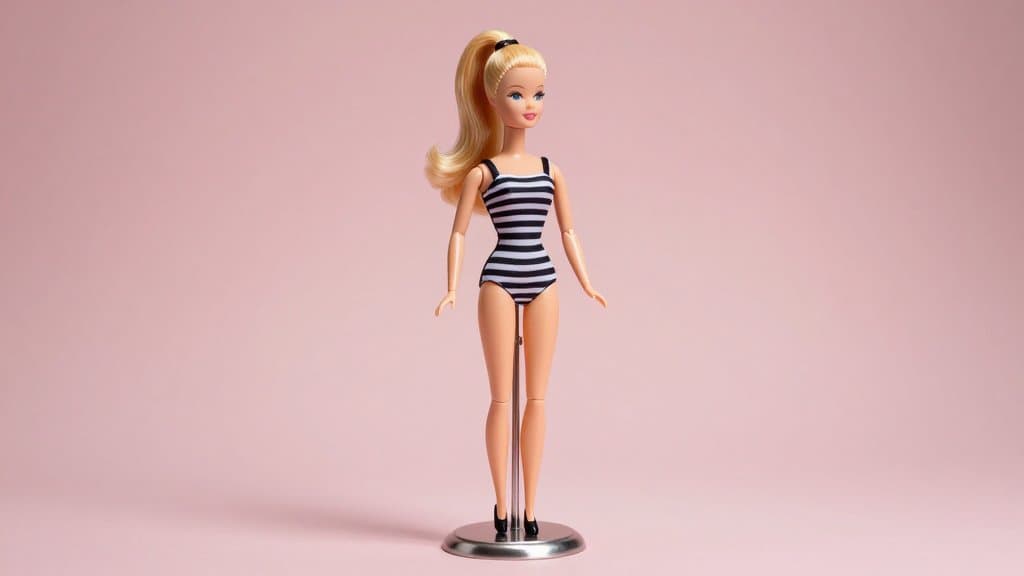
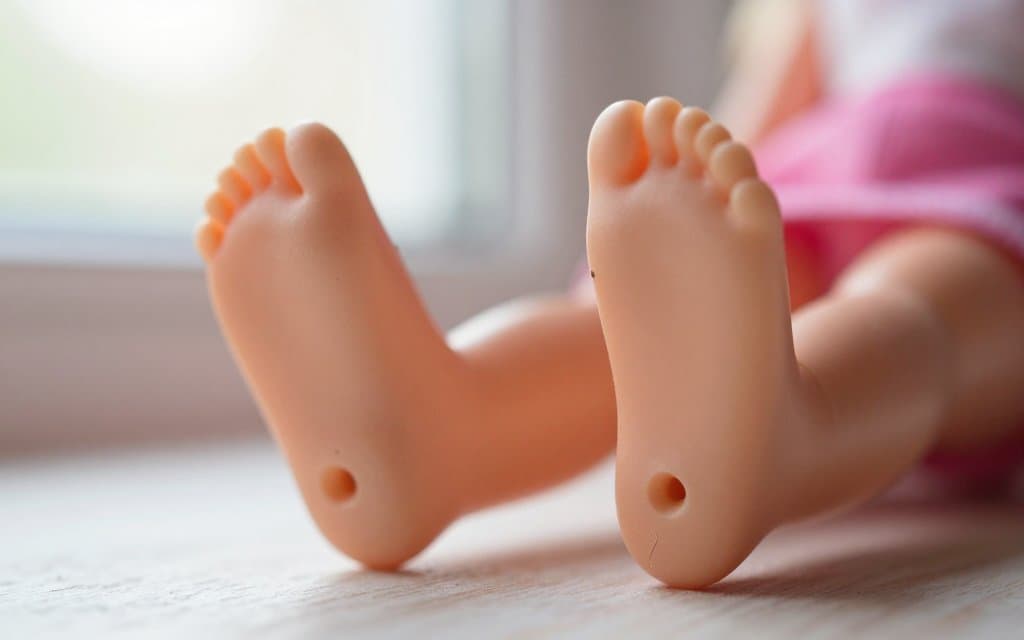
Pull a Barbie out of a thrift store bin and flip her over. If the bottoms of her feet have two small holes, you could be holding a Number 1 ponytail doll from early 1959, the version collectors chase hardest. The most valuable Barbie dolls almost always come from that first run, and a clean one trades for thousands instead of the couple of dollars written on the tag.
Mattel has made billions of dolls since March 1959, so most of what you find is worth a few bucks. The real money hides in the earliest ponytail Barbies and a short list of rare later editions. Learn the handful of tells on the feet, eyes, and hip, and you can spot a four-figure doll before anyone else in the aisle notices.
Why the most valuable Barbie dolls are the early ponytails
Barbie debuted at the 1959 New York Toy Fair and sold for about $3. Mattel produced roughly 350,000 of that first doll in early 1959, which sounds like a lot until you remember these were toys that kids bathed, styled, and lost. Survivors in sharp shape are genuinely scarce, and scarcity is what lifts vintage Barbie prices into collector territory.
The rule with early Barbie is blunt: the lower the version number and the better the condition, the bigger the payday.
How to spot a Number 1 ponytail Barbie
The first two dolls both have white irises and sharp, pointed eyebrows that collectors nickname lightning bolts. What sets the Number 1 apart is her feet. She has small holes in the soles and copper tubes inside her legs, both built to grip a black metal pedestal stand, and her right foot is stamped JAPAN.
The holes in her feet
Those foot holes are the single most reliable clue in barbie doll identification. The Number 2, made later in 1959, dropped the holes and copper tubes and shipped with a wire stand instead. If the soles are smooth, you have a Number 2 at best, still a strong doll but a clear step down in price.
White irises versus blue
Eye color dates the doll fast. Numbers 1 and 2 wear white irises. By 1960 the Number 3 switched to blue irises with softer curved brows and added blue or brown eyeliner, and the Number 4 kept the blue eyes in a new plastic that held its skin tone better. White eyes almost always mean 1959, and collector reference guides track every one of these changes.
- •Holes in both feet mean a 1959 Number 1
- •Copper tubes inside the legs back that up
- •White irises point to 1959, blue to 1960
- •Pointed lightning-bolt brows read as early
- •Right foot stamped JAPAN, not Taiwan
Identifying ALL Vintage Ponytail Barbie's 1959-1964
Dating vintage Barbie dolls by their markings
Every doll carries a stamp on her right buttock or hip, and the wording shifted over time. The earliest ponytails read Barbie T.M. for trademark. Around 1962 the mark changed to Barbie R for registered, and the copyright year printed there tells you the mold, the same way a Seiko serial number dates a watch rather than pinning the exact build day.
Country of origin helps too. Dolls marked Made in Japan run from 1959 to about 1972, so a Japan stamp is a good sign you are in vintage barbie doll value range. Later Taiwan, Korea, or China stamps mean a modern doll, and those rarely clear more than pocket change.
| Version | Year | Quick tell |
|---|---|---|
| Number 1 | 1959 | Holes in feet |
| Number 2 | 1959 | White eyes, no holes |
| Number 3 | 1960 | Blue irises |
| Number 4 | 1960 | New flesh plastic |
| Bubble cut | 1961-1965 | Short curled hair |

What old Barbie dolls are actually worth
Here is the money picture. A mint Number 1 with her stand, swimsuit, and box has sold in the $8,000 to $25,000 range, and one clean 1959 example is widely appraised at $27,450. Everyday played-with ponytails without a box tend to land between $75 and $400, still a huge markup on a thrift tag.
Condition swings everything. Green ear, the corrosion stain left by old metal earrings, plus chewed fingers, haircuts, and re-rooted hair can cut a doll's value by half or more. A boxed doll with her booklet, shoes, and sunglasses can be worth two or three times the same doll sold loose.
A 1959 Barbie originally cost about $3. In sharp condition with her box, that same doll can sell for the price of a used car.
| Doll | Era | Value |
|---|---|---|
| Number 1 ponytail | 1959 | $10,000-$27,450 |
| Color Magic | 1966 | About $6,000 |
| De Beers 40th | 1999 | About $85,000 |
| Canturi diamond | 2010 | $302,500 |
| Common modern doll | 1990s | $5-$20 |
Other collectible Barbie dolls worth checking
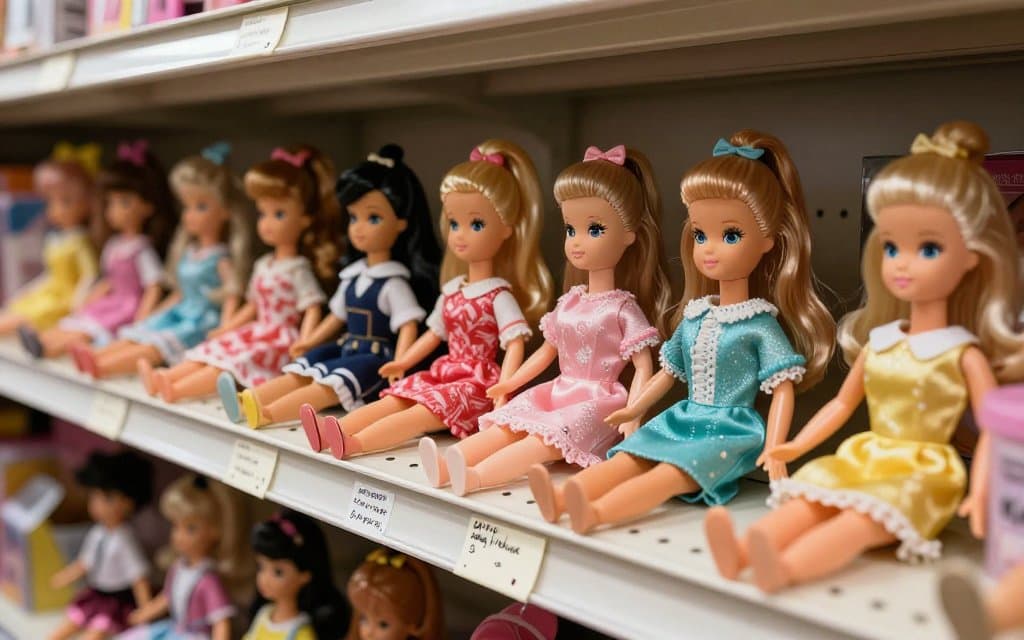
The ponytails grab the headlines, but a few later dolls pay well too. Bubble cut Barbies ran from 1961 to 1965 with short curled hair and turn up constantly at estate sales. Much like the most valuable Hot Wheels, the exact version and condition decide the price, and the 1966 Color Magic, whose hair changed color with a special solution, is a genuine grail near $6,000 in top shape.
At the very top sit modern luxury editions rather than old toys. The 1999 De Beers 40th Anniversary Barbie, set with real diamonds, has been valued near $85,000, and a 2010 Stefano Canturi doll wearing a pink diamond necklace sold for $302,500. Those are outliers, but they show how far mattel barbie dolls can climb.
- •Bubble cut dolls made from 1961 to 1965
- •Color Magic with its solution and box
- •American Girl bendable-leg ponytail dolls
- •Any doll still sealed in the box
- •Loose vintage outfits in mint condition
How to price and sell a vintage Barbie for the most
Once you have identified the doll, price her on sold data, not hopeful listings. Search completed eBay sales for the exact version and condition, just as a Coach bag serial number reveals its real worth. Rare barbie dolls swing widely, so a comp from the last few months beats an old paper price guide.
Presentation lifts the barbie doll value you actually capture. Clean the doll gently, photograph her in daylight against a plain background, note every flaw honestly, and run your comps and save finds at thrifting.app. Bundle her original stand, shoes, and booklet if you have them, because a complete doll clears far more than a naked body.
- •Sell on eBay for the widest buyer pool
- •List early ponytails as auctions, not fixed
- •Photograph feet, hip mark, and face closeup
- •Disclose green ear and haircuts up front
- •Ship with the head supported and boxed
Barbie doll questions resellers ask
How much is a 1959 Barbie doll worth?
A common played-with 1959 ponytail usually sells for $75 to $400 depending on condition. A Number 1 with foot holes, her original stand, and box climbs into the thousands, and mint examples have reached $25,000 or more. Green ear, haircuts, and re-rooted hair pull those numbers down quickly.
How can I tell if my Barbie is rare?
Start at the feet and the eyes. Holes in the soles plus white irises point to a scarce 1959 doll, while blue eyes and a smooth sole mean 1960 or later. Then read the hip stamp and country mark, and compare against recent sold listings to see where your exact version lands.
Where do old Barbies turn up?
Estate sales, church rummage sales, and older thrift stores are the best hunting grounds, because vintage Barbies often come straight from one owner's childhood collection. Buy the whole lot when you can, since accessories, cases, and outfits scattered in the box can be worth as much as the dolls themselves.
Ready to stop guessing at the bin and start spotting four-figure dolls? Thrift Scanner identifies a Barbie from a single photo, reads her likely era, and shows real resale comps so you never overpay or leave money on the shelf. Snap, check, and buy smarter. Get the app here: iOS or Android.