


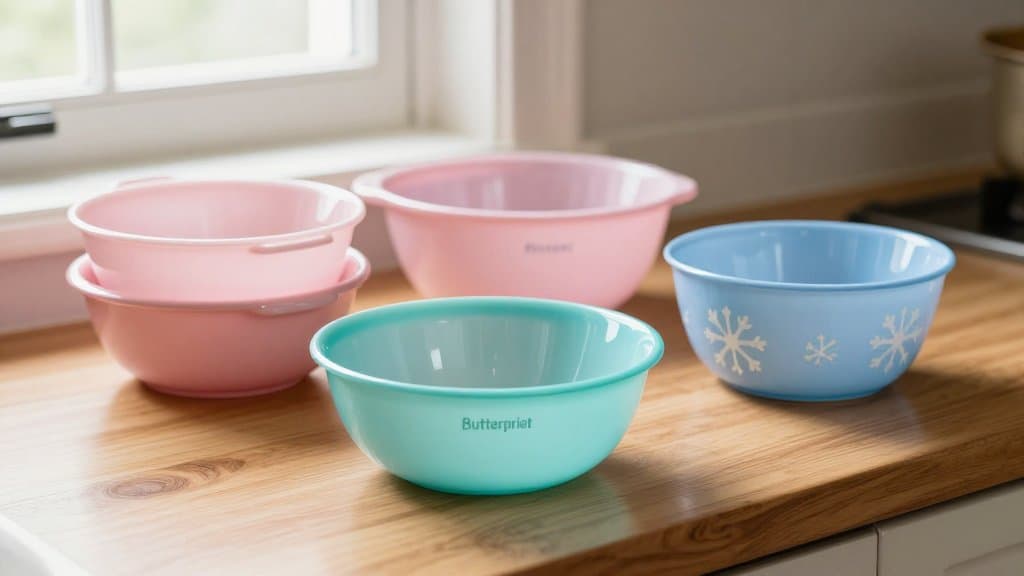
Why Vintage Butterprint Pyrex Draws Real Money
A turquoise bowl printed with a stern Amish farmer and his wife can sit on a thrift shelf marked four dollars. That is vintage Butterprint Pyrex, and a full nesting set in clean condition sells for hundreds. Learning to read the print, the backstamp, and the model number turns a lucky guess into a confident buy.
Corning ran Butterprint from the late 1950s into the late 1960s, which makes clean vintage Butterprint Pyrex one of the most searched vintage pyrex patterns today. This guide covers the marks that date a piece, the rare pyrex patterns that clear four figures, and the everyday designs that still cover your sourcing costs.
Lowercase pyrex means a modern piece made after 1998. Every vintage Corning-era bowl spells the name in capitals: PYREX.
How to Date Vintage Pyrex by the Backstamp
Flip any piece and read the stamp before anything else. The earliest marks, from the 1940s and early 1950s, show PYREX in capitals inside a circle with a CG for Corning Glassworks. By the mid 1950s that circle added Made in U.S.A. and a small trademark symbol.
The circle straightened into a block, straight-line stamp during the 1960s, and by the 1970s many pieces carried care lines such as no broiler. Those small changes bracket a bowl to a single decade before you even name the pattern, as LoveToKnow's identification guide lays out.
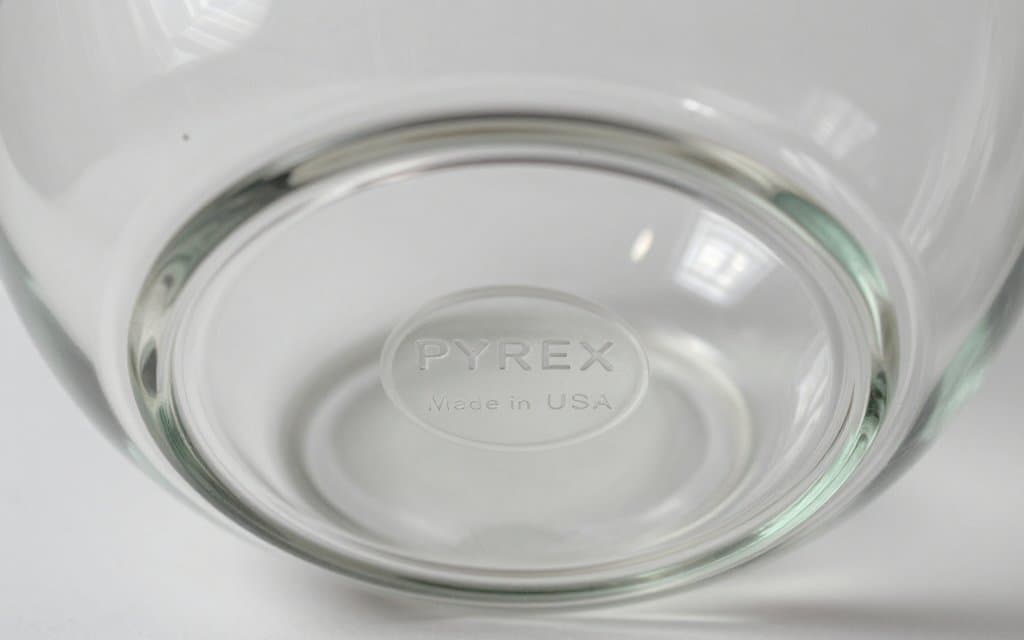
- •Capital PYREX in a circle points to the 1940s
- •Made in U.S.A. was added in the mid 1950s
- •Straight-line block stamps signal the 1960s
- •No broiler care lines mark 1970s pieces
- •Lowercase pyrex means it was made after 1998
The Pyrex Butterprint Refrigerator Dish
The pyrex butterprint refrigerator dish is a useful teaching piece. It uses the 500 series numbers, carries the same white farmer print, and often keeps its clear lid. A matched pair with lids is worth far more than a single lidless base.
Reading Pyrex Model Numbers and Glass Type
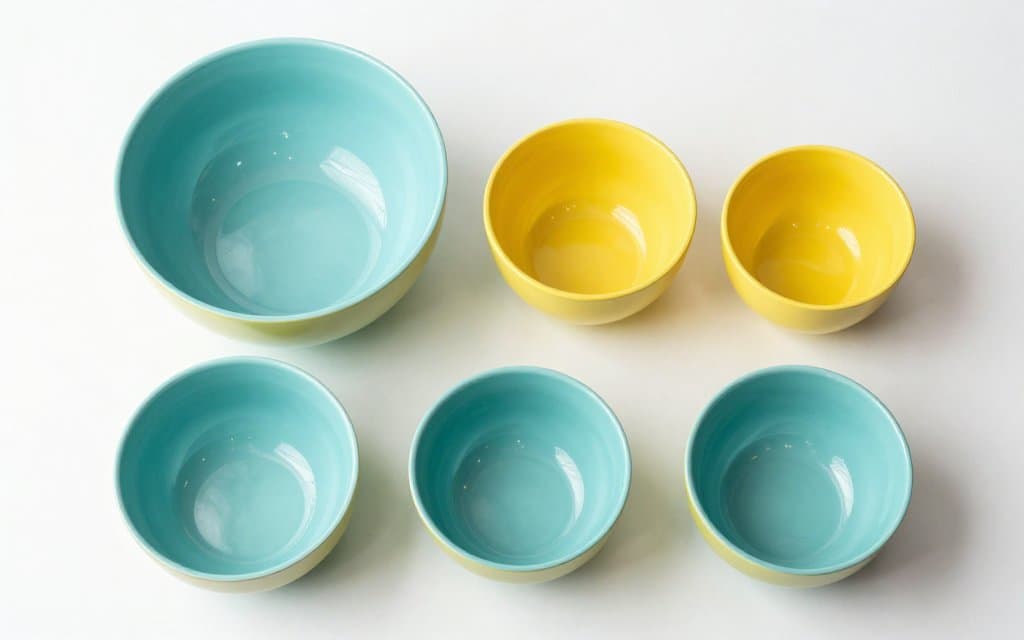
The number under the stamp names the shape. KnowOldStuff lists the 400 series for mixing bowls, 401 to 404, the 440 series for Cinderella bowls, 441 to 444, the 470 series for round casseroles, 471 to 474, and the 500 series for refrigerator dishes, 501 to 503.
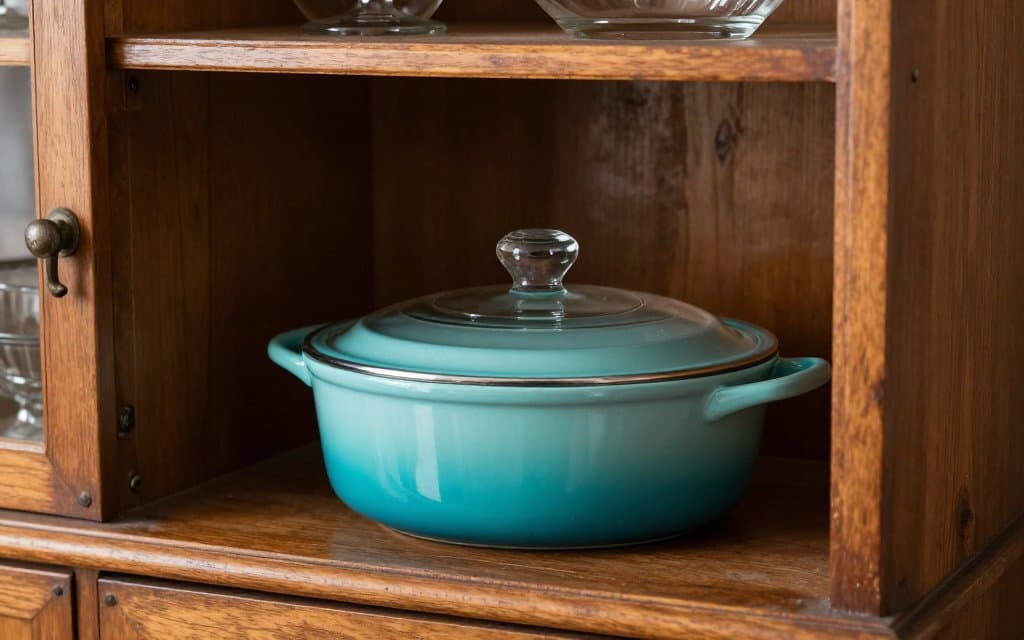
Glass type tells time too. Clear borosilicate ran from 1915 into the 1940s, and the milky white opal glass that carries every color pattern ran from the 1940s to 1998. Corning first made that opal glass in 1936, while any piece with a faint blue-green tint at the edge was made after 1998.
| Series | Shape | Numbers |
|---|---|---|
| 400 | Mixing bowls | 401 to 404 |
| 440 | Cinderella bowls | 441 to 444 |
| 470 | Round casseroles | 471 to 474 |
| 500 | Refrigerator dishes | 501 to 503 |
Rare Pyrex Patterns Worth Real Money
Now the fun part. A short list of rare pyrex patterns clears four figures because Corning ran them briefly or as sales tests. House Digest reports a 1963 Blue Dianthus test bowl at $3,600 and a 1966 promotional Barcode piece at $3,500.
The 1959 Duchess set, a casserole with lid and warming stand, reaches $3,000, and a 1962 Pink Stems oval casserole reaches $1,000. Record auction results run higher still, with a Lucky in Love casserole near $6,000 and a Gypsy Caravan bowl near $4,700.
A 1963 Blue Dianthus mixing bowl sold for $3,600. Corning ran it only as a sales test, so almost none ever reached a kitchen.
| Pattern | Year | Top Price |
|---|---|---|
| Blue Dianthus | 1963 | $3,600 |
| Barcode | 1966 | $3,500 |
| Duchess set | 1959 | $3,000 |
| Pink Stems | 1962 | $1,000 |
| Lucky in Love | 1959 | $6,000 |
These are the most valuable pyrex patterns, but they are true outliers. Most thrifters will never touch a Dianthus. The realistic money sits in complete mid-century sets, and a run-through of the best sellers on eBay shows where steady demand actually lives.
Top 10 Best Selling Vintage Pyrex Patterns on Ebay in 2025 | 10 Best Selling Vintage Categories
Snowflake Garland Pyrex and Promotional Runs
Snowflake garland pyrex belongs to the Snowflake family that ran from the mid 1950s into the late 1960s as a long promotional line. The blue Snowflake nesting sets from the early 1970s start around $189, and a boxed set has reached $435 on the resale market, per House Digest.
Everyday Patterns: Spice of Life, Olive, Butterfly Gold
Not every good find is rare. The 1970s brought mass-market prints you will see on nearly every thrift run. The pyrex spice of life pattern, also sold as French Spice, ran from about 1972 to 1987 with earth-tone vegetables like mushrooms, artichokes, and garlic.
The butterfly gold pyrex casserole is the other 1970s regular, a harvest-gold flower print made across that decade. A pyrex olive pattern and other gold pyrex pattern designs share the warm palette and sell in the everyday tier rather than the collector tier.
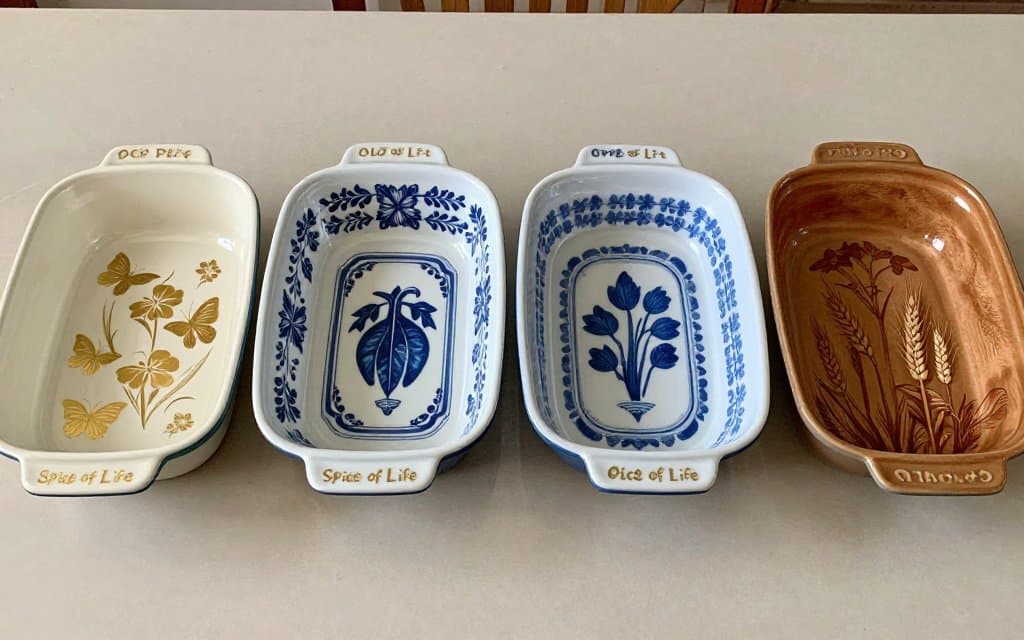
- •Spice of Life: French Spice veg print, 1972 on
- •Butterfly Gold: harvest-gold flowers, made in the 1970s
- •Old Town Blue: indigo folk print, 1972 to 1982
- •Woodland: brown wheat print, 1978 to 1983
- •Homestead: country scene, 1976 to 1980
Old Town Blue Pyrex and the $10,000 Myth
Old town blue pyrex is a dark indigo folk print made from 1972 to 1982, and a clean butter dish runs about $50. Viral posts claim these 1970s patterns fetch $10,000. No common Pyrex or CorningWare in these prints has ever sold for that, so price from sold listings, not rumors.
No everyday 1970s Pyrex pattern has sold for $10,000. That figure comes from viral posts, not from real sold comps.
Condition and Lids Set Vintage Pyrex Value
Condition moves the number more than pattern in the common tiers. Dishwasher damage, the dull cloudy fade seen on old Pyrex, can cut a piece's value by about half, while an original lid or metal cradle adds real money back. KnowOldStuff makes this point plainly for anyone pricing a shelf.
When you scan a shelf, tilt the print into angled light to catch scratches, run a finger along the rim for chips, and confirm the lid number matches the base. A clean turquoise set with lids holds its vintage pyrex value near the top of the range, while a faded single bowl slides to the bottom.
- •Angle the light to catch print scratches
- •Feel along the rim for chips and flea bites
- •Match the lid number to the base number
- •Skip cloudy dishwasher-faded pieces
- •Favor complete nesting sets with boxes
Where you shop shapes the margin. Bins and outlet stores bury mixed Pyrex in the by-the-pound piles, so a sorting routine like the one in our Goodwill outlet bins guide pays off, and stacking store discounts from our coupon stacking breakdown lowers your cost of goods. Fragile glass ships the same careful way as the frames in our vintage mirror flips guide.
Before you commit at the register, compare the exact pattern and piece against real sold prices. You can check current market value at thrifting.app instead of trusting one hopeful asking price.
Common Questions About Vintage Pyrex
How much is vintage Butterprint Pyrex worth?
A pink Amish print set can reach $700 in clean condition, while the common turquoise version trades from about $60 into the low hundreds for a full lidded set. Single bowls without lids sit lower, often $20 to $40.
What are the most valuable Pyrex patterns?
The most valuable pyrex patterns are short-run tests and promotions. Blue Dianthus hit $3,600, Barcode $3,500, and the 1959 Duchess set near $3,000. Record pieces like Lucky in Love have neared $6,000, but you will almost never see them in the wild.
How do I identify vintage Pyrex fast?
Read the backstamp for the decade, read the model number for the shape, then match the print to a known pattern. Capital PYREX and opal white glass confirm a vintage piece, while a lowercase logo or a blue-green tint means it was made after 1998.
Ready to stop guessing at the thrift shelf and start pricing vintage Butterprint Pyrex from real market data? Thrift Scanner identifies the pattern, reads the condition, and shows what a piece actually sells for so you never overpay again. Get the app here: iOS or Android.