



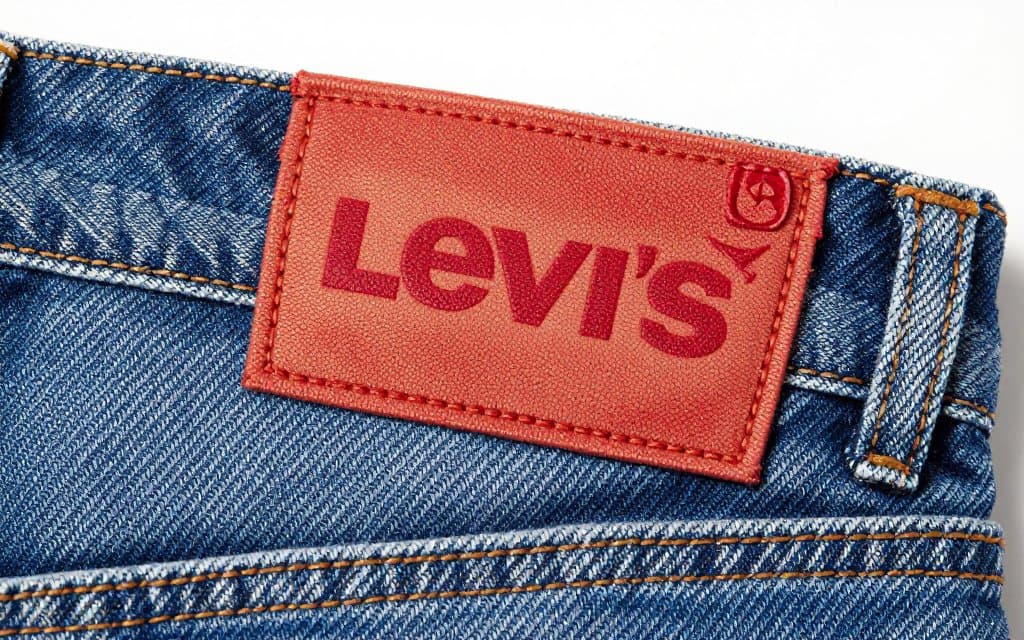
Flip a pair of jeans over at the thrift store and find the Levi red tab, the little flag stitched into the back right pocket. If it reads LEVI'S in all capital letters, you could be holding a few hundred dollars instead of a five dollar find. Resellers call it the Big E, and it is the fastest way to spot valuable vintage Levis on a crowded rack.
The capital E works like a date stamp. Levi's printed the brand that way from 1936 until 1971, then redrew it with a lowercase e, so a Big E Levis pair left the factory more than fifty years ago. That age is where the money lives, and a worn pair can still clear a few hundred dollars while clean early examples reach into the thousands.
What a Big E Levi red tab actually tells you
The red tab first appeared in 1936 as a quick way to tell real Levi's from copycats across a store. For its first thirty-five years it spelled the brand in full capitals. In 1971 the company switched to a lowercase e, and that small change split the vintage market in two. Anything with the capital E is pre-1971, and pre-1971 is what collectors chase.
One capital letter draws the line. A red tab that reads LEVI'S in all caps left the factory before 1971, and that detail alone can move a pair from thrift-bin cheap to collector money.
The tab sits on the back right pocket of jeans and on the chest pocket of jackets. It can be red, orange, or now and then another color. Red is the flagship, so a red tab with a capital E on an old pair is the combination worth stopping for.
How to date Levis jeans without a single guess
You do not need a readable tab to date a pair. Levi's built several other clues into every garment, and each one changed on a schedule. Learn four of them and you can place most old jeans within a decade in under a minute.
Read the care tag first
Federal rules made washing instructions mandatory around 1971, so a pair with no care tag at all was almost certainly made before then, which lines up with the Big E cutoff. Early tags were printed on paper, and fabric labels with an RN number came later. When a tab is missing, the care label is the next best clue.
Check the rivets and inseam
Levi's covered its copper back-pocket rivets with denim starting in 1937, then dropped hidden rivets entirely after 1966 in favor of bar tack stitching. Run a finger down the inner leg too, because a single line of stitching on the inseam points to a pair sewn before the mid-1980s.
Find the redline selvedge
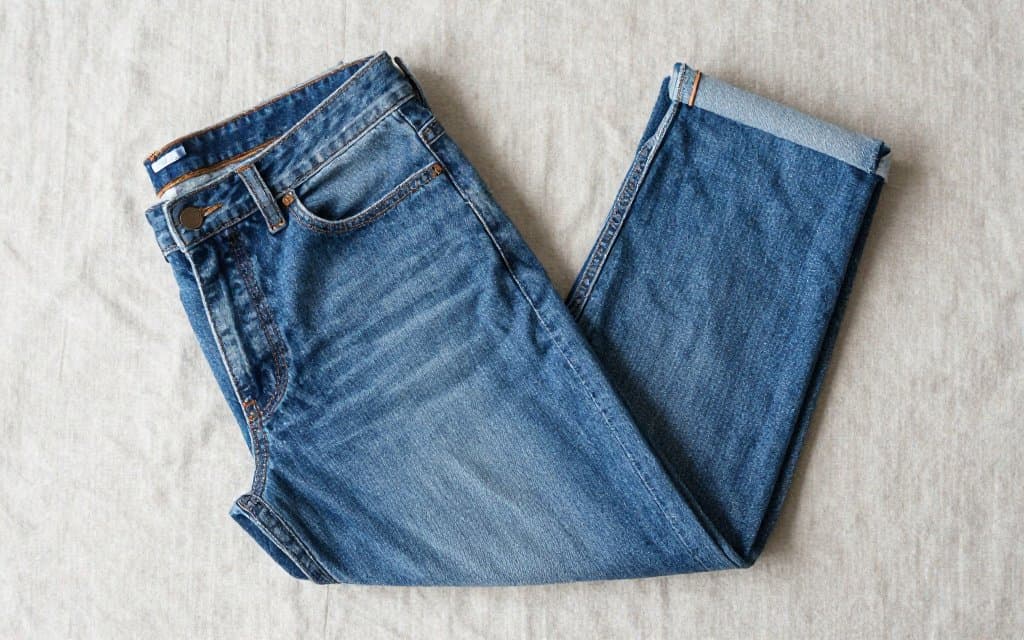
Turn the hem up and study the inside leg seam. A thin red line running down the edge is redline selvedge, woven on old shuttle looms that Levi's retired around the mid-1980s. That red line is a strong sign you are holding the real thing, not a modern reproduction.
- •Read the red tab, big LEVI'S means pre-1971
- •No care tag usually means it predates 1971
- •Feel the inseam for one line of stitching
- •Look for a red line on the inside leg seam
- •Check the back patch for the words Made in USA
| Feature | Era | Meaning |
|---|---|---|
| Big E red tab | 1936 to 1971 | All caps LEVI'S, pre-1971 pair |
| Small e tab | 1971 onward | Lowercase Levi's, newer pair |
| No care tag | Before 1971 | Care labels not yet required |
| Hidden rivets | 1937 to 1966 | Rivets covered under the denim |
| Redline selvedge | Before mid-1980s | Red line on the inseam edge |
| Made in USA | Before 2003 | Domestic, pre-overseas production |
No care tag is not a missing tag. Before 1971 the law did not require one, so its absence works like a date stamp.
What vintage Levis are worth right now
Era is the biggest lever on price for vintage Levis 501 jeans, ahead of size or wash. The gap between a modern pair and a Big E pair is wide, and the figures below track real resale prices rather than hopeful asking prices. You can dig into resale price data by era for the full spread.
| Era | Tab | Resale |
|---|---|---|
| 1950s 501XX | Big E | $2,000 to $10,000+ |
| 1960s 501 | Big E | $500 to $2,000 |
| 1971 to 1983 | Small e | $200 to $1,000 |
| 1980s to 1990s | Small e | $50 to $300 |
| After 2003 | Small e | $15 to $40 |
Those top numbers are not fantasy. A pair of 1960s Big E 501s sold at auction for $2,040, and a separate Big E 501 pair closed on eBay at $2,002. Even damaged capital E jeans routinely clear $500, and the story reaches past jeans, since a Big E denim jacket bought for around ten dollars resold for $380.
A plain pair of 1960s Big E 501s sold at auction for $2,040, and the capital E on the red tab was the detail that drove the bidding.
Newer pairs still pay. Made in USA small e 501s from the 1980s and 1990s with good fades tend to bring $100 to $200, and deadstock pairs go higher. Check any pair against live sold prices with the resale value tool at thrifting.app before you commit at the register.
The vintage Levis tag and label details resellers check
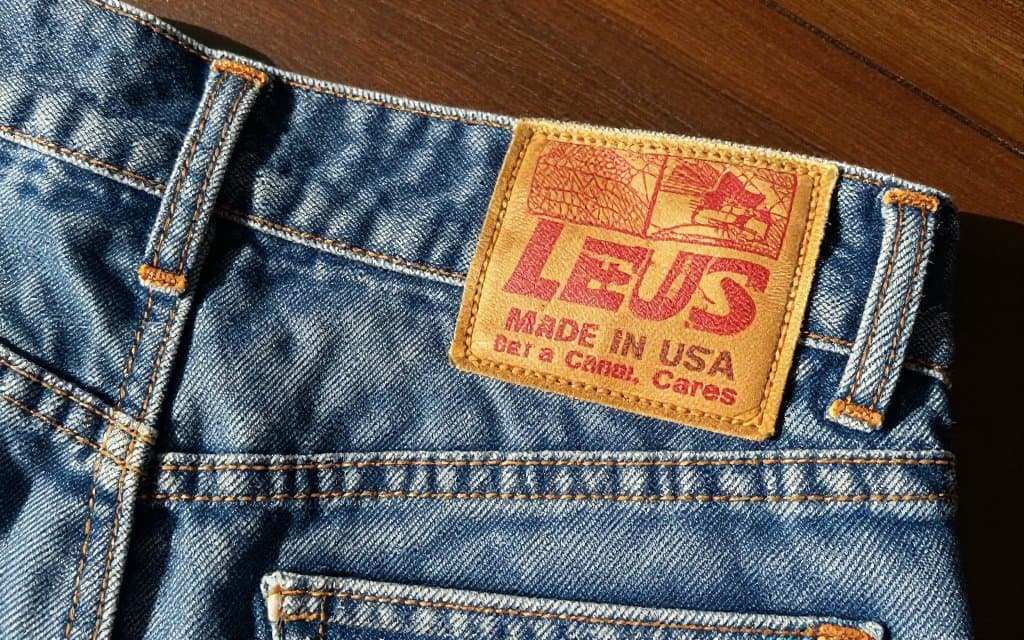
Beyond the tab, the back patch and inner labels carry the rest of the story. On a Levis vintage tag the words Made in USA matter, because Levi's shifted most production overseas by the early 2000s. A leather patch beats a paper or cardboard one and usually signals an older, higher-value pair.
The lot number on the patch tells you the cut. 501 is the classic button-fly straight leg that collectors want most, and a Levi's 501 vintage pair in a 30 waist is the real trophy. 505 is the zip-fly version, and 550 is a roomier 1990s fit. Reading vintage Levis labels this way keeps you from overpaying for a common cut, and the same eye pays off across denim jackets and overalls too.
- •A leather patch beats paper or cardboard
- •501 is the classic button-fly straight leg
- •505 is a zip fly and 550 is a 1990s fit
- •Orange tab marked cheaper 1970s to 1990s lines
- •Rivets vanished after 1966 for bar tacks
The Ultimate Levi's Vintage Guide | Big E, Red Tab, 501s, Batwings & Dating Levi's
How to tell if Levis are vintage before you buy
In the aisle you have seconds, not minutes. Work the tab, then the tag, then the seams, and let size guide the final call. Waist sizes from 28 to 32 sell the fastest, so a small capital E pair is worth more effort than a large one from the same year.
- 1.Flip to the back pocket and read the red tab
- 2.Check the waist, since 28 to 32 sells fastest
- 3.Scan the inseam edge for redline selvedge
- 4.Look over knees and hems for blowouts
- 5.Photograph the tab and patch for later
Condition still decides the final number, so check the knees, the crotch seam, and the hems for blowouts and price honestly around what you find. This tag-and-serial habit is the same one that dates a vintage Seiko by its serial number or values a Coach bag by its serial number.

Common questions thrifters ask about Levis
How do I know if my Levis are a Big E?
Look at the red tab on the back right pocket. If the brand is printed in all capitals, it is a Big E and predates 1971. A lowercase tab is a small e and newer. A magnifier helps on faded or worn tabs.
Are small e Levis worth anything?
Yes, just less than the capital E pairs. Made in USA small e 501s from the 1980s and 1990s often sell for $50 to $300 depending on fades and size, while pairs made after 2003 usually bring $15 to $40. Selvedge and clean condition push those numbers higher.
How can I tell if Levis are vintage from the stitching?
A single line of stitching down the inseam and a red line along that seam both point to production before the mid-1980s. Bar tacks where hidden rivets used to sit suggest a pair made after 1966. Together they let you date a pair even when the tab is long gone.
Ready to stop guessing at the rack and start pricing denim with real data? Thrift Scanner reads the tab, the tag, and the stitching from one photo and shows live sold prices in seconds, so you never leave a Big E pair behind or overpay for a common one. Get the app here: iOS or Android.