


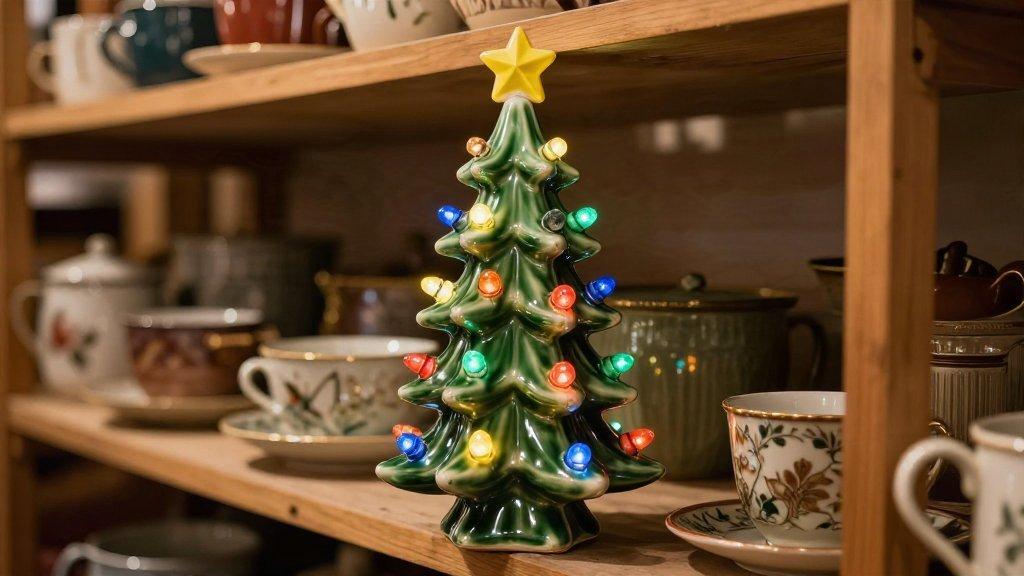
That glazed green tree on the bottom shelf of the holiday aisle could be your best flip of the season. A tall ceramic Christmas tree in the 22 to 26 inch range is listed on eBay for roughly $400 to $600 by sellers who know what they've got, while an unmarked 23-inch tree with a music box sold at auction for $127.
The gap between those numbers is the whole story. Marks, lights, height and condition decide which end of the range a vintage ceramic Christmas tree lands on, and most thrift stores price them without checking any of it. You can check all four in about two minutes.
Why old ceramic trees turned collectible
Ceramic trees first showed up in the 1940s and hit their peak in the 1960s and 1970s, according to a history piece from the American Ceramic Society. Craft shops ran workshops where customers glazed and fired their own trees from mass-produced molds. They went out of style in the 1980s, and by the 1990s imports from Japan and China had pushed them aside.
That hobby-shop past is why no two old trees look quite alike. One studio's glaze, one person's paint job, one family's mix of plastic bulbs. Buyers now pay for exactly that, and every December the nostalgia crowd comes back hunting for the one Grandma had.
Ceramic trees were popular from the 1950s to the 1970s. Most stand 12 to 24 inches tall, with a light in the base, clear plastic ornaments and often a small star on top. (Terry and Kim Kovel, December 2025)
Who made the molds
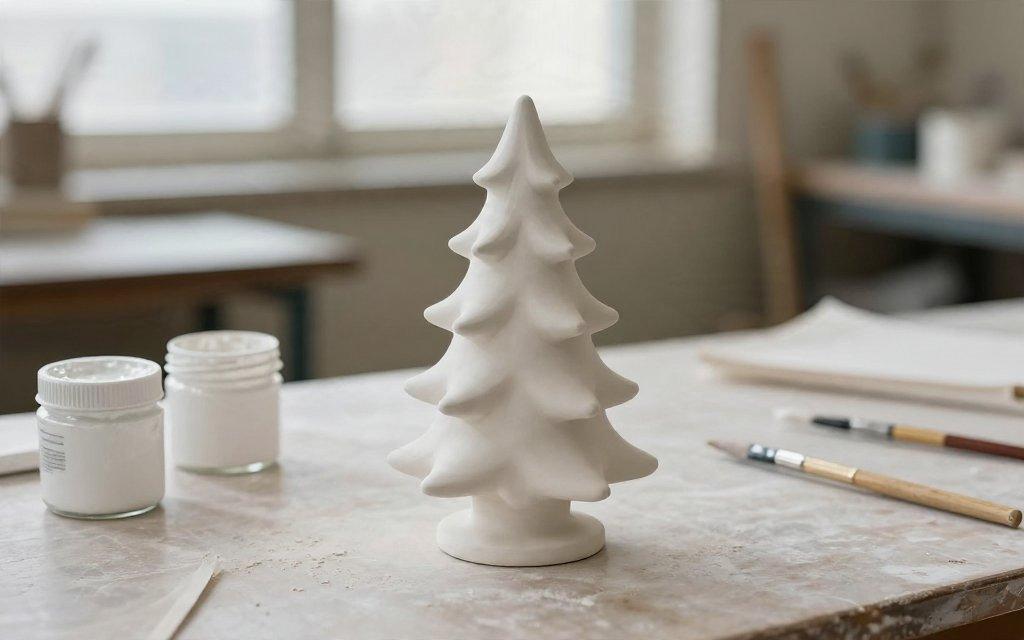
The Atlantic Mold Company copyrighted one of the first tree designs, the A-64, in 1958 and sold thousands of those molds to ceramic studios across the country. Holland Mold, Arnel's and Nowell's sold tree molds to hobbyists too, so a Holland Mold tree and an Atlantic one can look nearly identical from across the aisle.
How to read the marks on a vintage ceramic tree
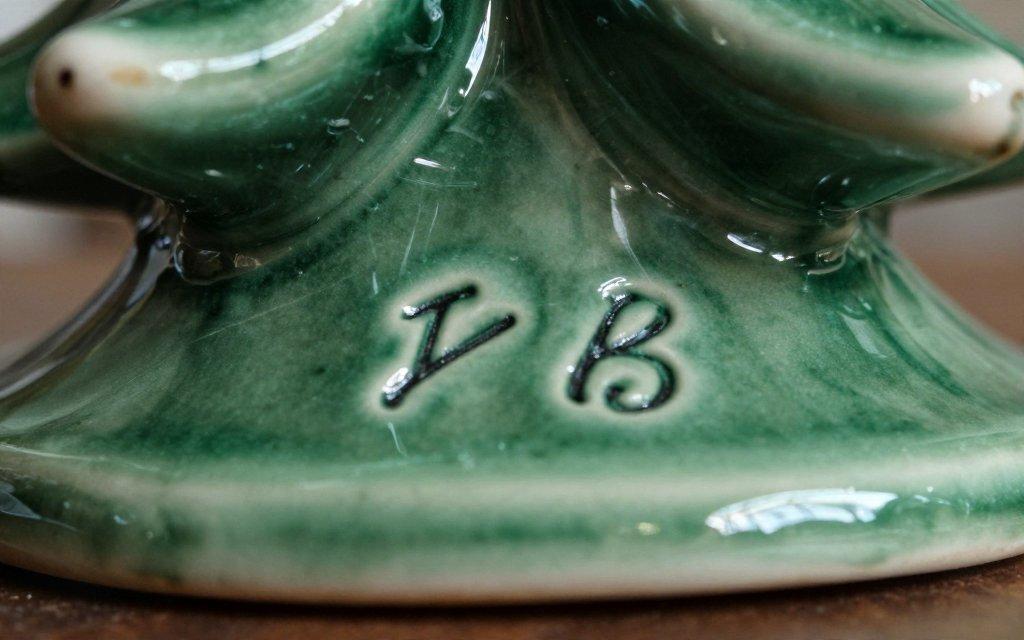
Flip it over first. Atlantic trees are usually marked on the base, the Kovels note in their December 2025 column. Unmarked ones can still be identified by shape, decorations and especially the shape of the base.
Here's the catch. Atlantic closed in 1999 and sold its molds to other companies, so the same shape is still being poured today. That's why so many people search for an Atlantic Mold ceramic Christmas tree 1974 stamp: dates like 1958 and 1974 turn up on bases, including a 20-inch white tree listed on eBay Germany, but they point to the mold, not the year the clay went in the kiln.
Dogwood Ceramic Supply warns that an A-64 style tree could have been made in 1958 or just last week by your local studio. The embossed date is the mold's copyright, not proof of age.
Signs of real age
- •An individually numbered base, as appraisers advise checking
- •Tiny glass bulbs that light one by one on the earliest trees
- •An original cord and switch showing honest, even wear
- •Hobbyist initials or a studio name scratched into the base
- •Dust settled deep in the peg holes of an untouched tree
Red flags on a newer tree
- •A bright new wiring kit and a molded modern plug
- •Uniform factory paint with no hand-glazed variation
- •A fresh star and bulbs on a tree that's otherwise worn
- •A seller's 1958 date offered as the only proof of age
The bulbs and lights show a tree's age too
Lighting is your second clue. Early trees sometimes had tiny electric bulbs that lit individually, while later designs used one bulb in the base to glow through colored plastic pegs. A Providence antiques shop told the consumer site Don't Waste Your Money that those first individually lit glass versions are the ones collectors chase.
Don't write off plastic pegs, though. Most 1970s hobby trees used them, and the Kovels list clear plastic ornaments as standard. What you want is a ceramic Christmas tree with lights that match its age: original, working and complete.
Replacing missing pegs
Replacement ceramic Christmas tree bulbs are easy to buy, and swapping in a few for display is fine. Say so in the listing. The Kovels' advice on old holiday ornaments is blunt: wear shows age, and restoration tends to lower value, so keep original parts in a bag with the tree.
What a tall ceramic Christmas tree is worth in real money
Height drives the asks. Taller Atlantic trees are listed on eBay at $500 and $600, and Etsy trees marked as vintage Atlantic start around $30, with "rare" ones above $400. Vintage expert Bob Richter told Today that sellers ask a couple hundred dollars for these during the holidays.
Those are asking prices, not sales. The one confirmed result in our research is far lower: a 23-inch unmarked tree with a scrolled base, bird and holly bulbs and a music box that sold at Keystone Auctions for $127. Price from sold listings, not from the hopeful ones.
| Tree | Height | Price |
|---|---|---|
| Unmarked, scrolled base, music box | 23 in | $127 sold at auction |
| Atlantic Mold, lighted and musical | 22 in | $525 asking on eBay |
| Atlantic Mold, white with snow | 26 in | $399.99 asking on eBay |
| Modern handmade, The Ceramic Barn | 17 in | $179 new on Etsy |
| Vintage Atlantic, entry level | Varies | From about $30 on Etsy |
The modern tree sets a useful ceiling. Anyone who just wants the look can buy a new 17-inch handmade tree for $179, so a small, unmarked old tree priced above that will sit. A marked Atlantic tree over 20 inches with original pegs is where the bigger money lives.
Shipping eats into that fast, since a two-foot ceramic tree needs double boxing. Run the numbers on our eBay fees breakdown before you list, and consider selling locally in December when buyers will drive to you.
- •Height over 20 inches puts a tree in the top asking tier
- •A clear Atlantic mark draws more buyer searches than none
- •A working music box in the base adds a selling point
- •Original star and a full set of pegs beat replacements
- •No chips on the branch tips, where trees break first
Bob Richter's rule for these trees is simple: shop for them in summer, when nobody's thinking about Christmas, and sell when the holiday asks hit a couple hundred dollars.
Where to find old ceramic trees before December
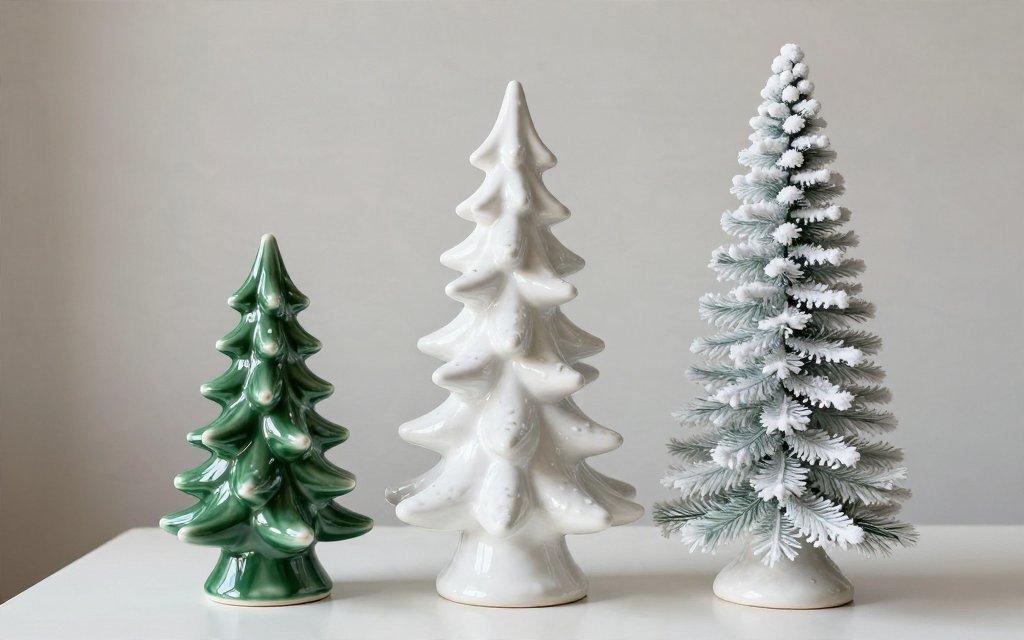
Strictly speaking, almost none of these are antiques, since most date from the 1960s and 1970s. Sellers still title them as an antique ceramic Christmas tree, and buyers search that way. Follow Richter's summer advice and you'll beat the December markup, the same timing that works for vintage glass Santa ornaments and 1950s Halloween decor.
- •Estate sales in homes where someone ran a ceramics hobby
- •Thrift stores in July and August, when holiday stock is ignored
- •Church rummage sales in January, after the decor comes down
- •Garage sales with boxes of mixed Christmas lights and cords
Packing a fragile tree to ship
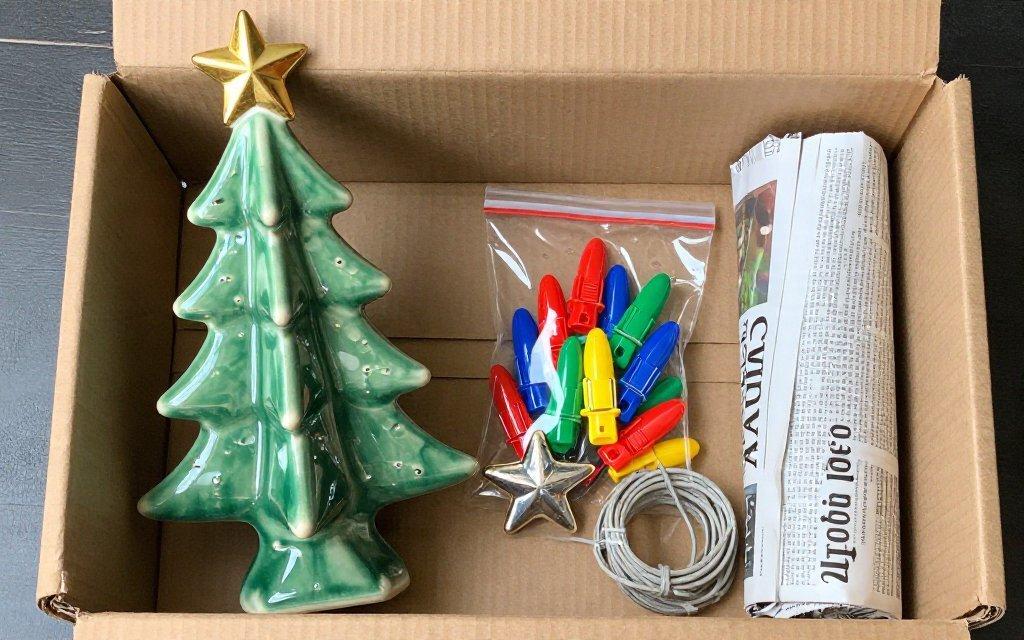
Pull the star and every peg, bag them and label the bag. Wrap the tree and base separately, then float the inner box inside a second one with padding on all sides. Most damage happens at the thin branch tips, so pad those hardest.
Questions resellers ask about the retro ceramic Christmas tree
How do I know if my ceramic tree is vintage?
Check the base for a number, a maker's mark or a hobbyist's initials, then look at the cord and bulbs. Worn original wiring and old pegs point to age. A 1958 date alone proves nothing, because that's the mold copyright.
Is an old ceramic tree worth more with music?
It helps. The $127 auction tree had a music box, and the $525 Atlantic listing is musical too. Make sure it actually plays before you mention it, since a dead movement turns a selling point into a return.
Are Holland Mold trees worth as much as Atlantic?
Atlantic is the name buyers search most, so its trees carry the highest asks. Trees from other mold makers sell on height, condition and lights. Price them from sold comps for that maker, not from Atlantic's top listings.
Should I fix a chipped tree before selling it?
Usually not. Buyers of these trees expect some wear, and amateur repairs show under the light. Photograph chips clearly, price the tree a little lower and let the buyer decide.
Ready to stop guessing at the holiday shelf? Download Thrift Scanner, snap a photo of that ceramic tree and see real sold prices before you pay, so you know whether it's a $127 tree or a $500 one. You can also browse more guides at thrifting.app. Get the app here: iOS or Android.