


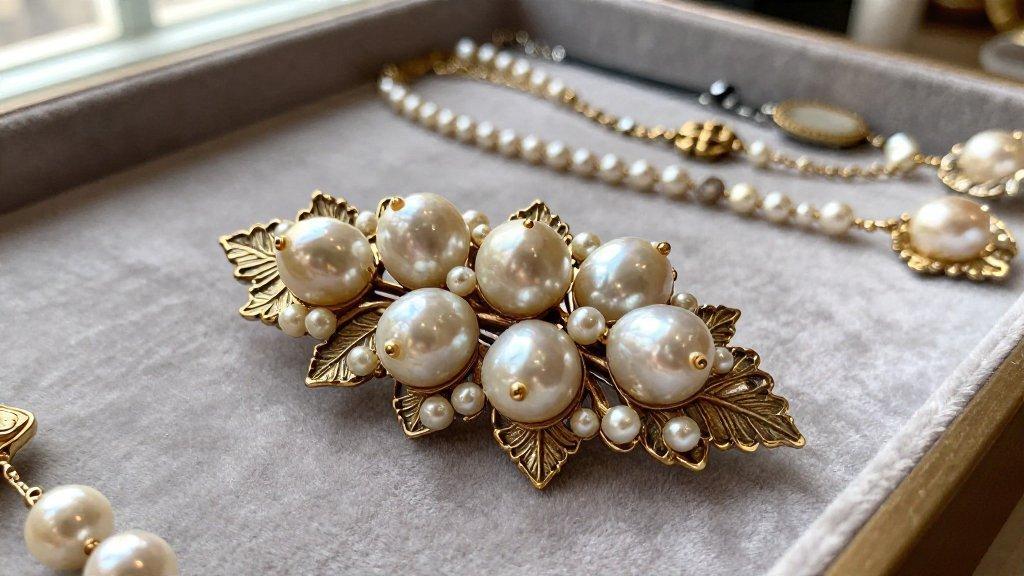
A Miriam Haskell pearl brooch can sit in the same thrift store case as a pile of tangled chains priced at a few dollars each, and most shoppers walk right past it. That's a mistake. Dealer price guides put most costume pieces between $5 and $50, while signed Haskell bead necklaces typically land between $100 and $300.
The catch is that Haskell pieces don't always announce themselves. The earliest work carries no mark at all, the later marks changed several times, and a department store line traded on the name with lesser quality. Once you know what to flip over and look for, though, you'll start pulling the right brooch out of the bargain tray and leaving the look-alikes behind.
Why a Miriam Haskell pearl brooch beats the rest of the case
The value gap starts with how the jewelry was made. According to Antique Trader's history of the firm, Haskell opened her first shop in New York's McAlpin Hotel in the late 1920s and soon hired Frank Hess, a former Macy's window dresser, as her designer. Hess ran the creative side until he left in 1960.
What came out of that workshop was hand assembled, not cast in one piece. That labor shows in the finished jewelry, and collectors pay for it. Compare that with mass-market brands such as Avon, Sarah Coventry, Monet and Napier, which one dealer guide says usually sell for $5 to $50 and often go in lots.
Rule of thumb from the dealer guides: the maker's mark matters more than anything else on a piece of costume jewelry, so check the pin stem, clasp, plates and backs before you check the price tag.
How Miriam Haskell jewelry was built
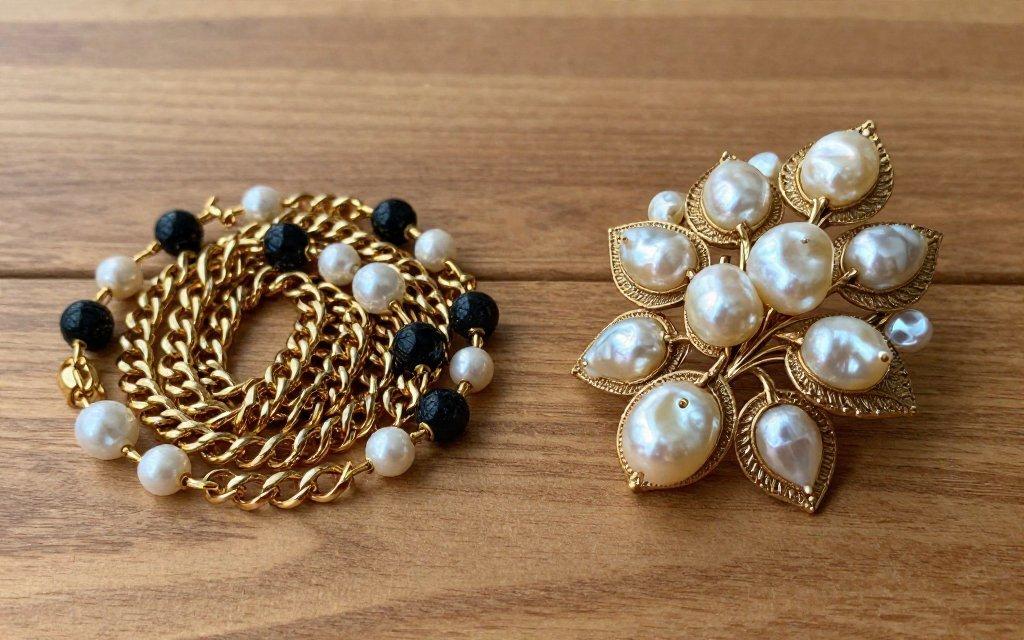
Turn the piece over first. Haskell components were die-stamped metal, and from the late 1940s on the firm used filigree backings extensively. Each small element was wired on by hand, and that backing plate hides the wiring from the front.
Hand wiring hidden behind filigree
On a genuine piece you'll often see tiny wire wraps holding pearls and beads to a pierced plate, with no glue blobs. Rhinestones on quality pieces are usually prong set or small flat-backed rose montees worked into the design. A brooch where every stone is glued into a cup is a different animal.
Baroque pearls and the warm gold tone
Haskell leaned hard on faux pearls, including tiny seed pearls and lumpy baroque pearls imported from Japan. The gold tone has a soft, antiqued warmth that collectors call Russian gold, and nature motifs like flowers, leaves and berries turn up constantly. During World War II, metal shortages pushed the shop toward wooden beads, real seashells and plastic.
- •Pierced filigree back plate covering the wiring
- •Seed pearls and irregular baroque pearls in clusters
- •Prong-set stones or flat-backed rose montees, not glue
- •Soft antiqued gold tone rather than bright yellow plating
- •Flowers, leaves and berries as the main design theme
Jewelry marks identification for Haskell pieces
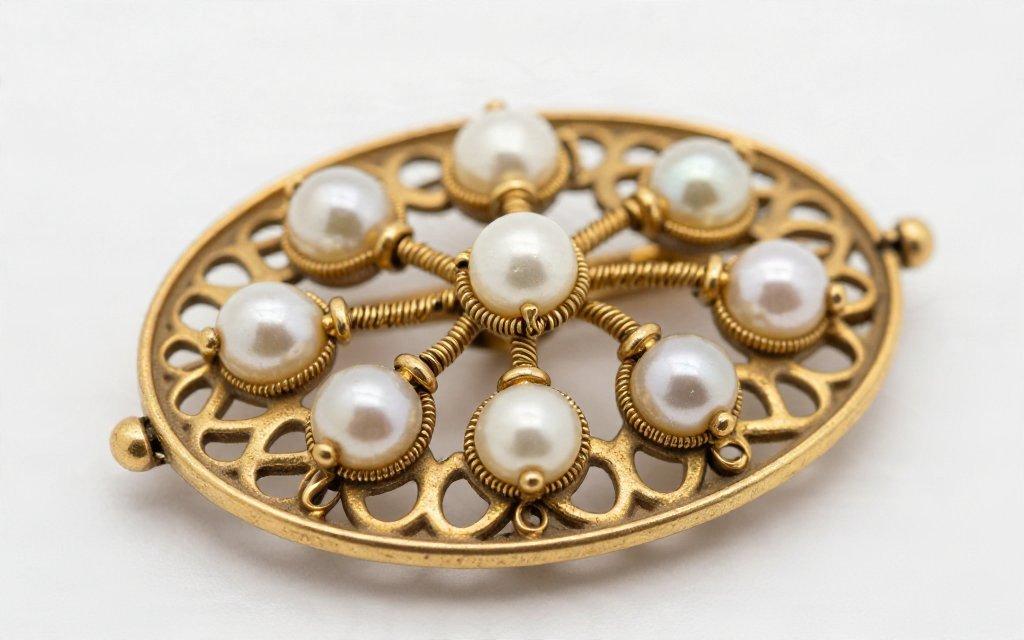
Here's the tricky part. Antique Trader notes that Hess designs from the late 1920s through the late 1940s were unmarked, and that a correct Haskell mark means the piece was made after 1947. So an unsigned piece isn't automatically a fake, and a signed one isn't automatically old.
| Mark | Dates | What it means |
|---|---|---|
| No mark | Late 1920s to late 1940s | Hess era; judge it by construction alone |
| Name in a circle | From 1947 | Earliest mark, stamped into the metal |
| Horseshoe plaque | From 1948, a few years | Early mark; old stock plaques reused later |
| Oval cartouche | After the horseshoe | The familiar mark most finds carry |
| M. Haskell | Department store line | Lesser pieces, usually no oval mark |
Unsigned pieces from the Frank Hess years
Dealers do sell unmarked pieces as attributed to Hess, but that's a judgment call, not proof. If you find an unsigned cluster of baroque pearls on a wired filigree back, price it as a strong maybe and let a specialist confirm it before you list it as Haskell.
A Haskell mark can only date a piece to 1947 or later. Anything earlier was sold unsigned, which is why construction, not the signature, is your first test.
What vintage costume jewelry really sells for
Prices across vintage costume jewelry are lower than the hype videos suggest. The figures below come from California Vintage Buyers' costume jewelry value guide, which says they're mostly asking prices from a dealer, not certified appraisals.
| Maker or type | Era | Typical price |
|---|---|---|
| Unsigned, Avon, Monet | Mixed | $5 to $50 |
| Trifari, copyright, no crown | 1970s on | $15 to $60 |
| Crown Trifari pin | Late 1930s to 1960s | $50 to $150 |
| Signed Haskell bead necklace | 1947 on | $100 to $300 |
| Eisenberg Original | 1930s to 1940s | $100 to $300 |
| Trifari Jelly Belly | 1940s | $200 to $600 for the best |
Trifari jewelry is the useful comparison
Trifari shows how much the mark era matters. One collector's Trifari dating guide lists crown Trifari brooches with a copyright symbol, made from 1955 to 1969, that sold for $11.96, $12.50 and $17.50. Signed, yes. Rare, no.
Haskell auction results tell a similar story at the low end. A Skinner sale in December 2008 sold three signed Haskell brooches as one lot for $119, and a Bonhams group of 13 Haskell pieces brought $341.60 in 2011, or roughly $26 each. The same guide notes a Haskell pearl necklace and earrings set made $237 at Skinner, which is why sets and single listings beat bulk lots.
The money math on old costume jewelry brooches
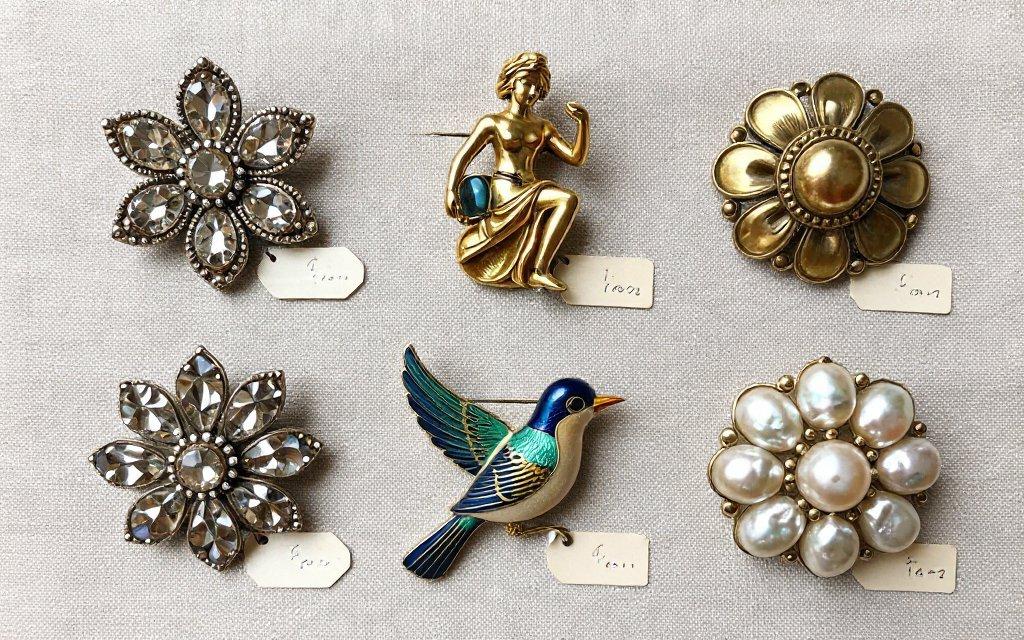
Say you pay $8 for a signed Haskell brooch in a bargain tray. Sold alone at the auction-lot average of about $40 per brooch, that's a modest win once you subtract shipping and the cut covered in our breakdown of eBay fees. Pair it with matching earrings and the picture improves, because complete sets bring more than their parts.
The losing move is buying a whole bag of unsigned old costume jewelry because one piece looks promising. Dealer guides put unsigned work in the same $5 to $50 band as Avon and Sarah Coventry, so a $30 bag of mixed brooches needs at least one real maker inside to pay off.
- •Sell signed pieces one at a time, never in a mixed lot
- •Keep brooch and earrings together if they match
- •List the mark in the title, with a clear photo of it
- •Photograph the wired back plate as proof of construction
- •Skip bags of unsigned pieces unless the price is tiny
Group sales drag down the per-piece price. Thirteen Haskell pieces at Bonhams averaged about $26 each, well under what a single clean signed brooch can bring on its own.
Silver content can change the math too. Eisenberg used a sterling mark during the war years, and if a piece is stamped sterling, the same melt-value logic in our sterling silverware price guide gives you a floor price before collector demand even enters the picture.
Condition problems that sink a vintage costume brooch
Green crust is the big one. Antique Trader warns that brass wiring paired with faux pearls is prone to verdigris, which can eat through the wire and let components fall off. Active verdigris can lower value sharply, and missing or mismatched stones hurt it as well.
- •Green or white crust around wire wraps and pin hinges
- •Pearls with flaking coating or bare glass showing through
- •Empty settings or stones that don't match the rest
- •Bent pin stems or a catch that won't stay closed
- •Loose clusters that wobble when you tilt the brooch
Small chips and a little rub on the gold tone are normal for pieces this old, and buyers expect them. Structural damage is different. If the wiring is broken, you're selling parts, and you should price it that way.
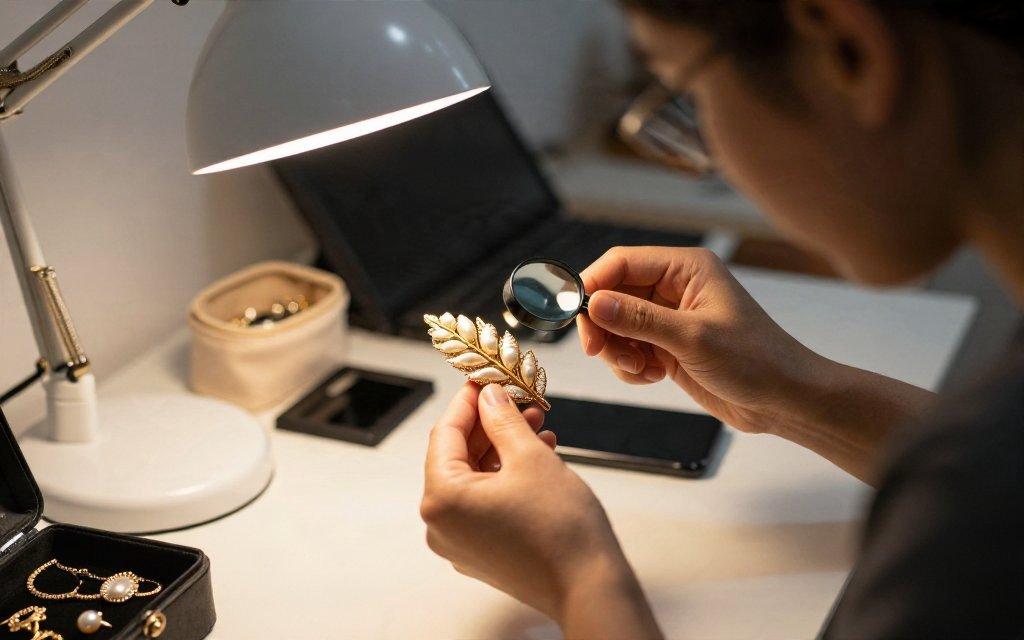
Beautiful Vintage Miriam Haskell Vintage Jewelry From The 1940s - 1970's
Questions resellers ask about Miriam Haskell jewelry
Are unsigned Miriam Haskell earrings worth buying?
They can be, but only when the construction matches: wired seed pearls, a filigree back, prong-set or rose montee stones. Unsigned Miriam Haskell earrings from the Hess years exist, yet sellers attribute pieces on style, so pay unsigned prices and treat any upside as a bonus.
Do Miriam Haskell vintage earrings sell better with a matching brooch?
Yes. Dealer guides say complete parures, especially in original boxes, are worth more than the same pieces sold separately. If you find Miriam Haskell vintage earrings in the same case as a brooch with identical pearls and leaves, buy both.
Are antique costume brooches always worth more than newer ones?
No. Age helps only when quality and maker come with it. Plenty of antique costume brooches are unsigned and sell in the $5 to $50 range, while a well-made signed piece from the 1950s can beat them easily.
How do I check vintage costume jewelry brooches fast in the store?
Flip each one, look for a mark on the plate or pin stem, then check whether stones are prong set or glued. Run a quick photo scan to pull sold comps on the spot, and use the same habit you'd use when checking a gold filled Bulova watch: marks first, condition second, price last.
Ready to stop guessing at the jewelry case? Download Thrift Scanner, snap a photo of that pearl brooch, and see real sold prices before you pay, so a $5 tray find never turns into an overpay. Get the app here: iOS or Android.