


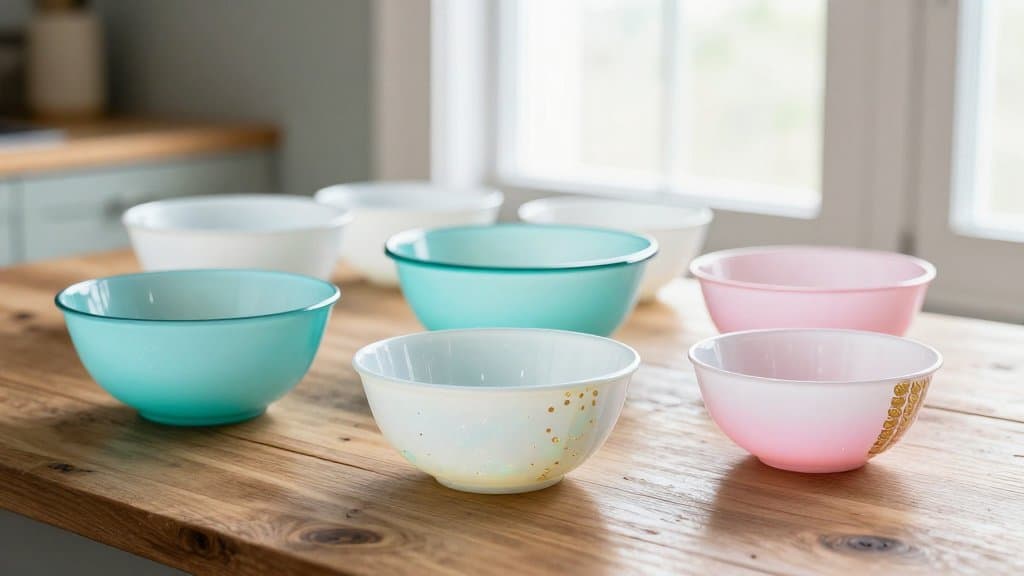
That plain-looking mixing bowl at the bottom of a thrift shelf might be the best flip in the whole store. Vintage Pyrex bowls for sale online run from a couple of dollars to well past a thousand, and the gap between the two comes down to pattern, color, and whether the lid is still around.
Collectors chase this old kitchen glass hard, and prices for the rare examples keep climbing. Learn to read a backstamp and a pattern name and you can walk right past the $2 bowls while spotting the one quietly worth $400.
What vintage Pyrex bowls for sale actually fetch
Most vintage Pyrex bowls for sale sit in the $10 to $50 range, and a single common one usually brings $15 to $30. The real money hides in the exceptions. A rare promotional pattern, a full nesting set, or an unusual colorway can push one piece into the hundreds, and the rarest survivors clear several thousand dollars at auction.
Four things set the price of almost any piece, and a beginner can check all four in under a minute before deciding whether a bowl is worth carrying to the register.
- •Pattern rarity, from common Snowflake to rare promos
- •Condition, meaning no chips, cloudiness, or wear
- •Completeness, so lids and cradles still present
- •Colorway, since pink and turquoise beat plain white
Condition matters more than most sellers think. A clean 1970s bowl often beats a scratched 1950s one, because collectors want display pieces, not something the dishwasher has faded for forty years.
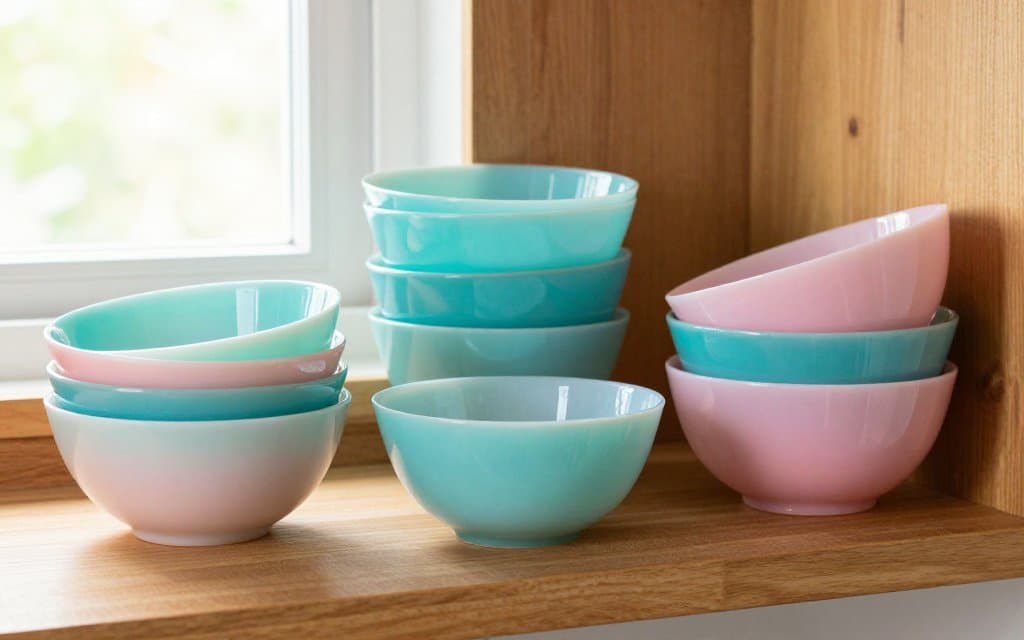
A single common Pyrex bowl brings $15 to $30, yet a rare promotional pattern in a complete set can clear several thousand. Same glass, wildly different money.
How to date old Pyrex bowls by their numbers
Corning Glass Works introduced Pyrex back in 1915, but the colorful pieces thrifters hunt came later. Colored opalware, the white opaque glass under every pattern, took off after World War II. Flip any bowl over and the backstamp plus a three-digit number code tells you most of what you need.
The 400-series nesting set
In 1945 Corning released its primary-color mixing bowls, the famous 400-series nesting set that runs from the small blue 401 up to the big 4-quart yellow 404. That yellow, red, green, and blue stack is the piece most people picture, and a clean full set stays in steady demand. Reading these number codes is the fastest way to sort old Pyrex bowls from newer reproductions.
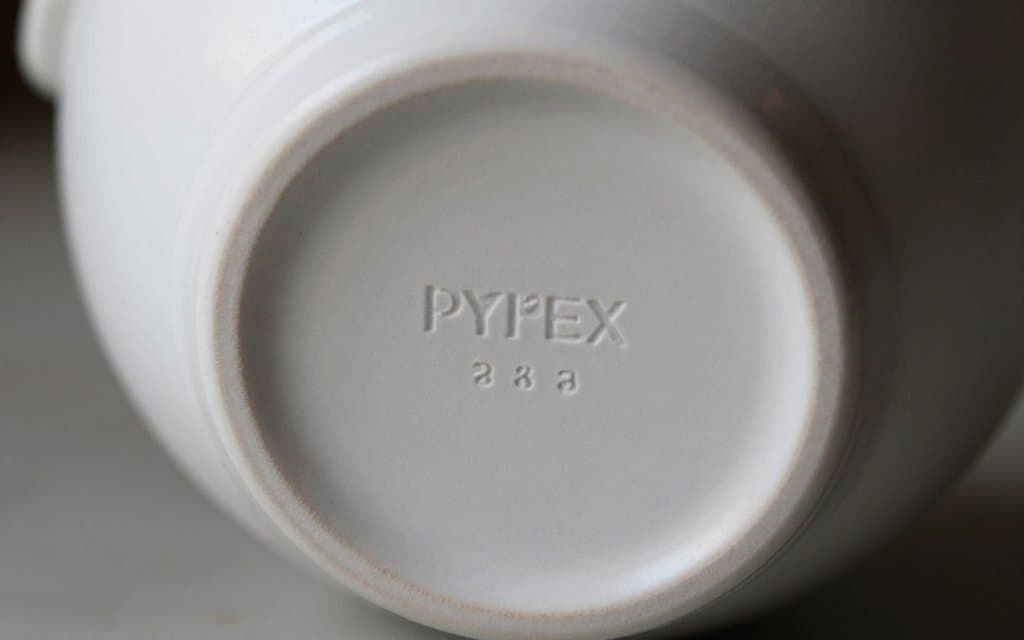
- •Flip it over and read the Pyrex backstamp first
- •Find the three-digit number code near the logo
- •Match that number to a known bowl size
- •Note the pattern name and color for research
Cinderella bowls and the 440 series
Corning added the Cinderella bowls in 1957, designed by John Phillip Johnson and marked 441 through 444. They have two flared rims, one that works as a pour spout and one as a grip tab, so you can spot them by shape alone. Many of the best patterns, including several rare ones, live on these Cinderella shapes.
The rare Pyrex patterns that crack four figures
This is where the eye-popping numbers live. The rare Pyrex patterns were often short promotional runs or sales tests that never went national, so few survived. When one shows up clean and complete, collectors bid it up fast, and a single dish can outprice a month of ordinary flips.
Atomic Eyes and the space-age look
The Atomic Eyes Pyrex pattern, from the 1950s Hot 'N' Cold set, shows blue pointed ovals on opal white. A standard set runs $600 to $900, and a well-kept one with its original metal serving bracket has sold for as much as $1,450. Other test patterns go higher still, which is why the most valuable Pyrex trades more like art than kitchenware.
| Pattern | Era | Value |
|---|---|---|
| Atomic Eyes | 1950s | $600 to $1,450 |
| Amish Butterprint | 1957 | up to $700 a set |
| Pink Stems | 1962 | around $1,000 |
| Blue Dianthus | 1963 | $3,600 one bowl |
| Turquoise Golden Birds | 1960s | around $6,000 |
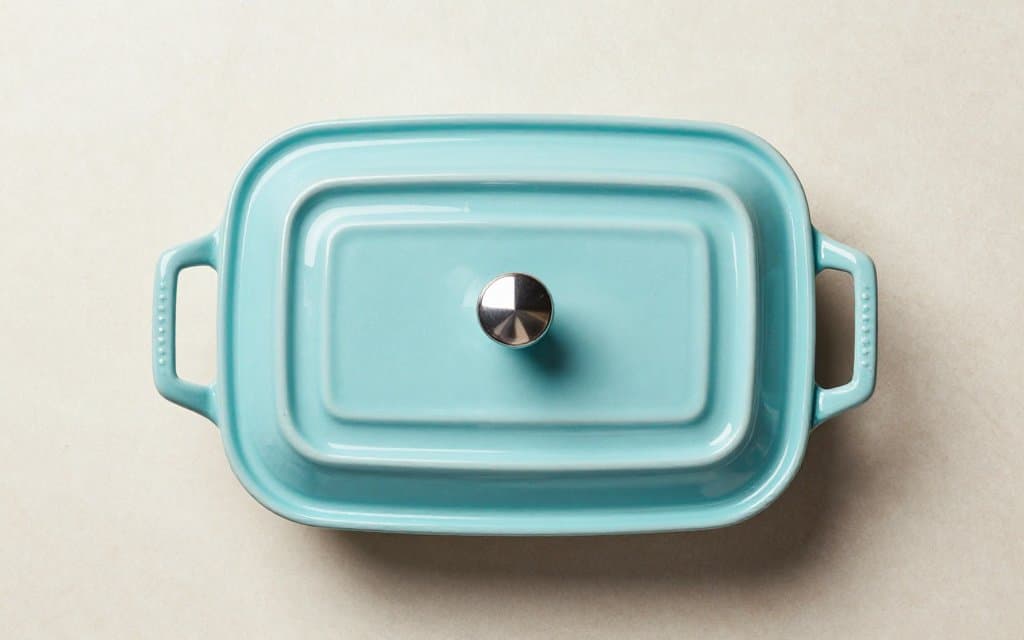
A Blue Dianthus mixing bowl from a 1963 sales test has sold for $3,600, and a Turquoise Golden Birds casserole for roughly $6,000. Rarity, not age, drives those figures.
Everyday vintage Pyrex patterns and what they bring
Not every find is a jackpot, and that is fine. Common vintage Pyrex patterns still sell steadily, which makes them reliable inventory for a resale side hustle. The 1970s brought mass-market prints like the Pyrex Spice of Life pattern, the olive-green vegetable prints, and the gold Pyrex pattern promos, most of which trade for $10 to $40 today.
The Pyrex olive pattern and other earth-tone kitchen prints are easy to find and easy to move, and Pyrex divided dishes and other vintage glass serving dishes from the same years sell well around the holidays. For a sense of how condition and pattern shift a price, our Corningware Blue Cornflower guide covers a close cousin, and the same reading skills carry over to glowing uranium glass.
What a valuable Pyrex set means for your profit
Here is what the price gap looks like in practice. Buy a common bowl for a dollar and sell it for $20, and you have a solid $19 flip. Buy an overlooked rare pattern for $3 because nobody read the backstamp, and a single sale can cover a whole weekend of thrifting.
| Piece | Typical | Top price |
|---|---|---|
| Single bowl | $15 to $30 | $300 plus |
| Casserole | $50 to $150 | $1,500 plus |
| Complete set | $100 plus | $6,000 |
The trap is guessing. Overpay for a common print or underprice a rare one and the math flips against you, so many resellers check real sold prices before they buy. An app like Thrift Scanner reads the pattern and pulls actual market data, and you can browse more flipping guides at thrifting.app.
- •Photograph the backstamp and any chips honestly
- •Sell rare patterns as complete sets when you can
- •Price against recent sold listings, not asking prices
- •Ship bowls double-boxed to avoid breakage claims
Condition outranks age at resale. A pristine 1970s print often beats a chipped 1950s rarity, because buyers pay for shelf-ready glass.
Common questions about vintage Pyrex value
How much is my vintage Pyrex worth?
Most everyday pieces bring $10 to $50, and a plain single bowl often lands near $20. Rare patterns, unusual colors, and complete sets with lids are the ones that reach the hundreds or thousands. The honest answer to vintage Pyrex value is that pattern and condition decide almost everything, so identify both before you price.
What is the most valuable Pyrex pattern?
Short promotional and sales-test patterns top the charts. Turquoise Golden Birds has fetched around $6,000, and a single Blue Dianthus bowl has hit $3,600. Named rarities like Lucky in Love and Pink Gooseberry regularly clear $800 to $1,500 when they surface in good shape.
How can I tell if my Pyrex bowls are old?
Check the backstamp and the number code on the base. Older opalware pieces carry stamps that changed over the decades, and solid-color 400-series bowls date to the mid-1940s and 1950s. Pieces from the estate-sale era also feel heavier than modern clear glass, and you can compare marks against our guide to reading maker marks.
Ready to stop guessing at the thrift shelf and start spotting the Pyrex that pays? Thrift Scanner identifies the pattern, checks real sold prices, and tells you what a piece is worth before you hand over a dollar. Snap a photo and never leave money on the shelf again. Get the app here: iOS or Android.