


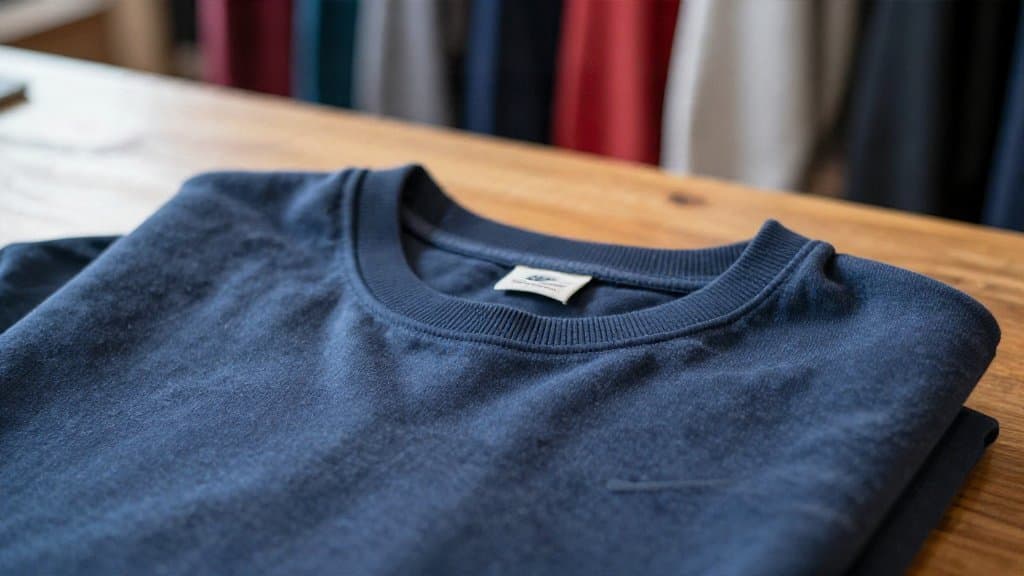
Flip the collar before you look at anything else. Vintage Nike tags changed color and layout every few years, so the little label at the neck can tell you whether that grey crewneck in the $6 bin came off a 1985 production line or a 2015 one.
That matters because Nike makes close to a billion new clothing pieces a year, according to Thriftcon's history of the brand. Most of the swooshes on a thrift rack are recent. The older pieces worth flipping are hiding among them, and the tag is how you sort one from the other in about five seconds.
Reading vintage Nike tags from the late 1970s to the 2000s
Nike has never published an official tag history, so the timeline below is pieced together by collectors and dealers. The ranges overlap at the edges because old label stock kept getting sewn in after a new design arrived. Treat each era as a strong hint, then confirm it with the other clues further down.
| Tag | Years | What you see |
|---|---|---|
| Pinwheel | 1978 to 1982 | Swooshes arranged in a circle, hand-drawn style lettering |
| Orange | 1978 to 1983 | White label with an orange swoosh and simple text |
| Blue | 1984 to 1987 | Blue label, larger logo, bold text, mostly made in USA |
| Grey | 1987 to 1994 | Red swoosh in a grey box, printed or woven versions |
| Black | About 1994 | Dark label with contrasting branding, roughly one year |
| White | 1994 to 1999 | Printed, woven or embroidered white labels |
| Silver | Early to mid 2000s | Grey or silver label with a clean, technical look |
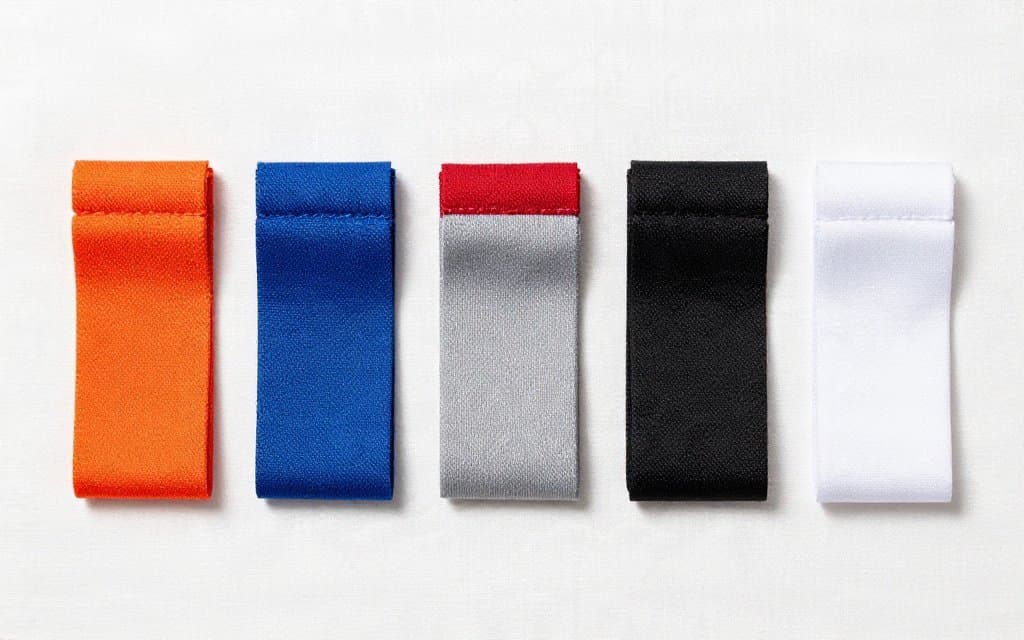
The swoosh wasn't always on the neck label
Here's a quick tell most people miss. The swoosh only became a regular feature of the neck label in 1987, according to Truss Archive's Nike dating guide. A label that spells out NIKE without the logo points you toward the earlier blue or orange years, not the grey ones.
Blue tag or grey tag, which one did you find?
The blue tag lines up with the years Nike signed Michael Jordan in 1984 and ran until the grey tag took over around 1987. The grey tag came in two flavors: a printed version used until about 1992 and a woven one that hung on until about 1994. Collectors still argue over whether that label is grey or silver, which is why you'll see both words in listings.
No swoosh on the neck label? Slow down. The logo didn't become a fixture on Nike neck tags until 1987, so a plain NIKE label is your cue to look for a blue or orange era piece.
VINTAGE NIKE TAG GUIDE: 70s - present day
Nike tags by year get you close, the serial code gets you exact
Color only narrows things to a window of several years. For anything from the late 80s onward, look for a small label tucked among the wash tags in the side seam. It carries a serial code of 6 to 12 characters, and the first four of those give you the year and the season.
- •SP or S means Spring, made January to March
- •SU or U means Summer, made April to June
- •FA or F means Fall, made July to September
- •HO or H means Holiday, made October to December
Older codes use a single digit for the year, so an F with a 2 could be 2002 and you have to guess the decade from the neck label. From the late 2000s Nike switched to two digits, so SP20 reads as Spring 2020 and the four digits after it, such as 0408, mark the production date. If the code says 2019, it's not vintage, no matter how faded it looks.
Ignore the RN and CA numbers
You'll often spot RN 56323 and CA 05553 printed on the same labels. Those are the US and Canadian textile registration numbers Nike is required to show, and they appear across decades, so they won't help you date anything.
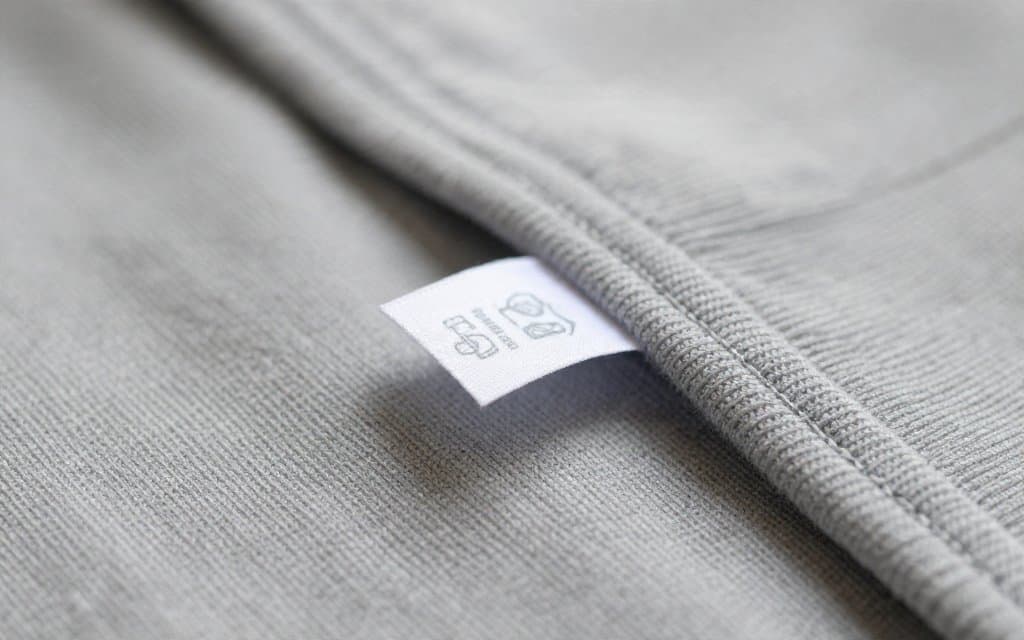
Where it was made narrows the decade
Country of origin is supporting evidence, not proof, but it's a useful second opinion. Most pieces sold in the US carried a Made in USA label until 1997. After the FTC changed its labeling rules that year, tags often switched to wording like Made in (country) of U.S. components.
- •Made in USA with a blue or grey label points to the 80s or early 90s
- •Taiwan, Korea or Indonesia on a grey label fits the late 80s and 90s
- •Of U.S. components wording points to 1997 or later
- •Multilingual care text and printed labels lean 2000s onward
A Made in USA tag on a Nike sweatshirt isn't a guarantee of age, but paired with a blue or grey neck label it's the strongest early signal you'll get in the aisle.
What a vintage Nike sweatshirt or windbreaker lists for
Era changes the price more than most people expect. Vintage Rare USA, a dealer that specializes in old sportswear, lists a late 1980s sage green Made in USA crewneck at $145 and a 1980s Green Mountain Running Club half-zip at $125. Its plain 2000s swoosh sweatshirts sit lower, mostly between $60 and $90.
| Piece | Era | Asking price |
|---|---|---|
| Sage green crewneck, Made in USA | Late 1980s | $145 |
| Running club half-zip hoodie | 1980s | $125 |
| Big swoosh white sweatshirt, Made in USA | 1990s | $125 |
| Classic swoosh grey sweatshirt | 1990s | $90 |
| Classic swoosh grey sweatshirt | 2000s | $65 |
| Grey tag pink windbreaker | 1990s | $49 |
| Aqua Gear neon windbreaker | 1980s | $125 |
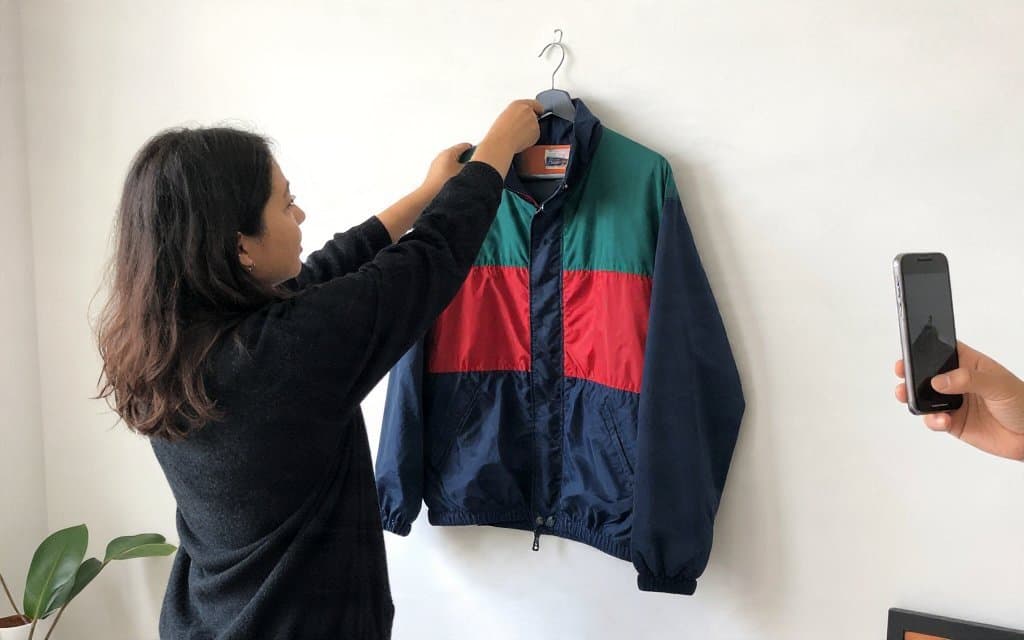
Windbreakers are cheaper and more crowded. On Poshmark, common 90s colorblock pieces with a grey tag ask between about $30 and $65, while an 80s neon Aqua Gear jacket asks $125. Those are asking prices, not sold prices, so check sold listings before you lock in a number.
Now run the money. Say you pay $8 for a 90s grey sweatshirt and it sells near the $90 mark that dealers ask; after platform fees and before shipping you're still well over $60 ahead. Pay the same $8 for a 2010s swoosh crewneck and you might struggle to get $20. Our breakdown of what eBay fees take from a flip shows how fast that margin shrinks on cheap items.
The tag doesn't just date the piece, it sets the price ceiling. The same dealer asks $90 for a classic grey swoosh crewneck from the 1990s and $65 for one from the 2000s.
Spotting a fake Nike vintage tag before you pay
Old Nike gets reproduced, both by bootleggers and by Nike's own retro lines, so a convincing label isn't the end of the check. Genuine labels use solid acrylic inks that are hard to copy cleanly, and the lettering follows rules counterfeiters tend to get wrong.
- •Check the E in NIKE overlaps the swoosh on the logo
- •Look for even letter spacing with no crowded characters
- •Both ends of the swoosh should come to sharp points
- •Watch for spelling mistakes or odd fonts on the care label
- •Sloppy stitching or frayed edges on the label itself is a red flag
Match the tag to the garment
A 1985 blue tag sewn into a stretchy modern polyester hoodie doesn't add up. Check that the fabric, print style and stitching all belong to the same era as the neck label. If you're unsure on a tee, our guide to single stitch sleeves on vintage tees gives you a second test that takes ten seconds.
Questions thrifters ask about old Nike labels
Is a vintage Nike shirt with a Made in USA tag always old?
Usually, but not always. Made in USA was standard on US-sold Nike until 1997, so the label fits the 80s and 90s. Pair it with the neck label color before you pay a premium.
How do I date a vintage Nike track pant or jacket with no neck tag?
Pants and many jackets carry their branding on a waistband or inner label instead. Look for the serial code on the care label and read the season letters and year digits the same way. A vintage Nike jacket with a grey or blue inner label follows the same timeline as a sweatshirt.
Is a 2000s Nike vintage sweater worth picking up?
Sometimes. Silver tag pieces from the early 2000s list for $60 to $90 at specialist shops when the graphic is strong, like a center swoosh or a spell out. Plain ones move slower, so buy them only when the price is low and the condition is clean.
Are other 90s sportswear tags worth checking too?
Yes. The same habit of reading the label pays off on team jackets, and our post on Starter jacket logo details walks through it. You can also run any piece through the scanner at thrifting.app to see what similar items have sold for.
Ready to stop guessing which swooshes are worth your cart space? Download Thrift Scanner, snap the tag and the front of the piece, and get real sold data before you hit the register. Get the app here: iOS or Android.