


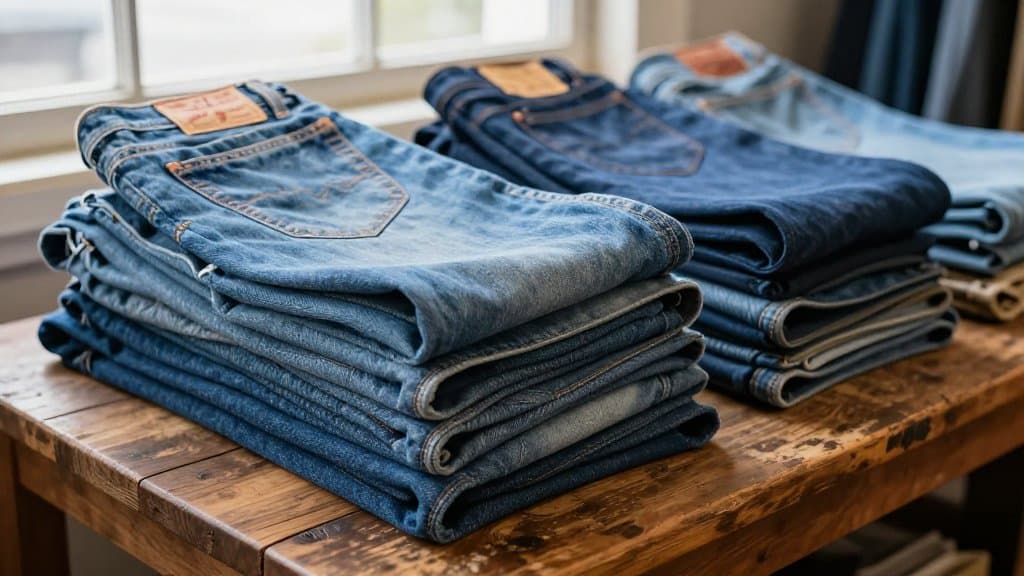
That little red tab stitched into a back pocket seam is the fastest thing to read on a rack of old jeans. On a real Levi red tab from before 1971, the brand name is spelled LEVI'S in full capitals, and that single capital E can move a $6 thrift-store pair into three-figure or even four-figure territory. Most shoppers walk right past it.
Here's the useful part for anyone digging through bins. Dating a pair of vintage Levis takes about ten seconds once you know the four things to look at: the tab, the back-pocket rivets, the stitching and the care tag. Get those right and you'll know roughly what decade you're holding, and whether it earns the closet space.
Start with the Levi red tab and its big E

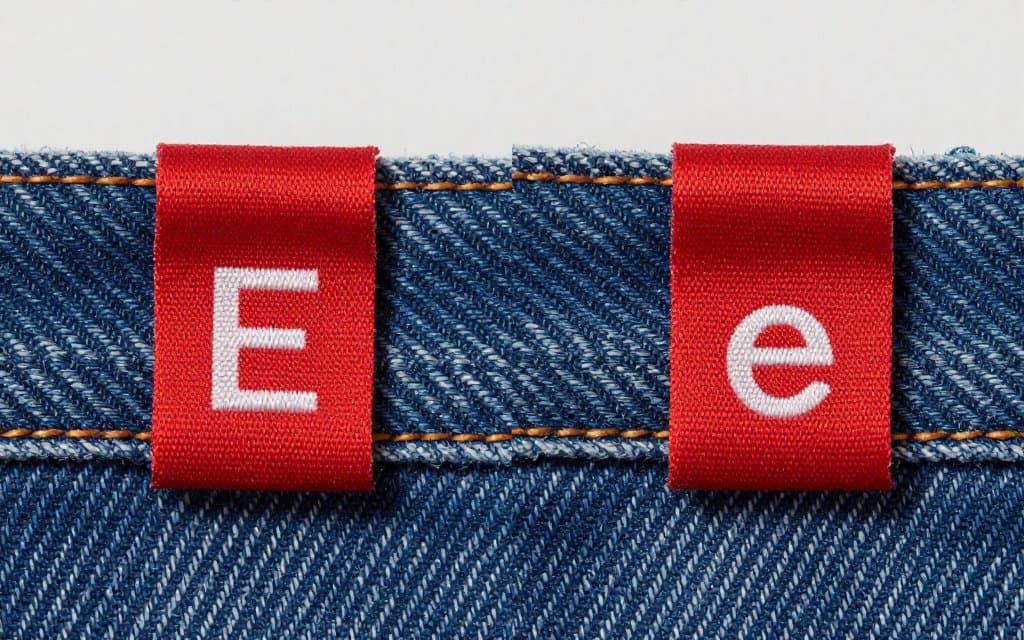
Levi's first sewed a red tab onto the right back pocket in 1936, and for decades it printed the name in capitals. Collectors call anything from that long run big E Levis. In 1971 the company switched to a lowercase e, so a tab that reads Levi's with a small e places the jeans at 1971 or later.
What a big E on the tab really means
A capital E on its own doesn't promise a fortune, but it narrows the age fast and flags a pair worth a second look. A big E tab on a 501 tells you to go hunting for the rest of the clues below. A small e tab isn't junk either, though the ceiling drops a lot once you are past the early 1980s.
Rule of thumb: a capital E on the tab means before 1971, and a lowercase e means 1971 or later. That one letter sets your starting price.
- •Capital E in the tab means before 1971
- •Lowercase e means 1971 or newer
- •The tab sits on the right back pocket
- •Faded or crooked tabs are normal, not fakes
How to date Levis jeans by tags and rivets
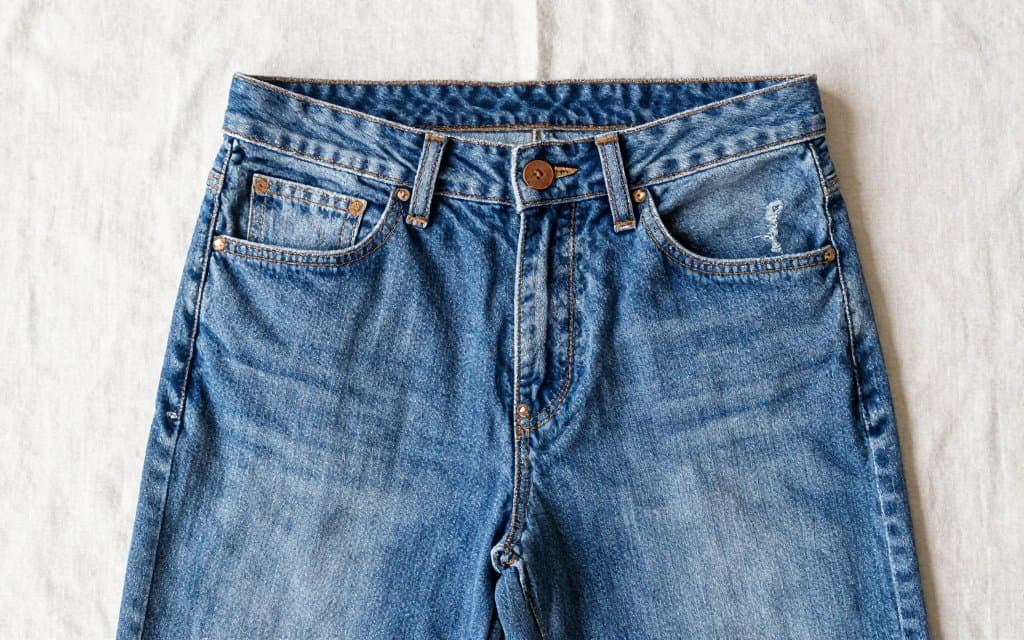
Flip the back pockets inside out first. From 1937 Levi's hid the copper rivets behind the fabric so they would stop scratching furniture, then dropped them by 1966 and moved to bar tack stitching, according to Levi Strauss and Co. So hidden rivets tucked inside a back pocket mean the pair predates 1966.
A few more tells stack up quickly. A single line of stitching on the arcuate, the curved design on the pocket, points to older, pre-mid-1970s work, the same single-stitch trick that dates a vintage band tee. Run a finger up the inside leg seam: a clean edge with a colored selvedge line is pre-1985 denim, and no care tag at all usually means before 1971. A Made in USA label means the pair left an American factory before the last one closed in 2003.
Two or three matching clues beat any single one. A big E tab plus hidden rivets plus a selvedge inseam is a confident pre-1966 pair.
The number on a vintage Levis button
Undo the top button and look at the back of it. Levi's stamps a number there that ties the jeans to the factory that made them, and serious buyers use it as a cross-check against the tab and rivets. It won't hand you an exact year on its own, but a button that matches an old US plant backs up everything else you have spotted.
| Detail | Points to | Rough date |
|---|---|---|
| Capital E red tab | Older pair | Before 1971 |
| Hidden back rivets | Earlier still | Before 1966 |
| Selvedge inseam | Shuttle looms | Before 1985 |
| No care tag | Pre-labeling | Before 1971 |
| Made in USA tag | US factory | Before 2003 |
- •Read the red tab: capital or lowercase E
- •Turn out pockets to find hidden rivets
- •Check the arcuate for single stitching
- •Feel the inseam for a selvedge edge
- •Read the care tag and country label
What vintage Levis 501 pairs are worth

Now the money. Prices swing wildly by era, and the jump from the 1980s back to the 1950s is enormous. Worn 1950s 501XX pairs with real life left in them commonly sell for $1,000 to $5,000, and deadstock examples reach five figures. Big E pairs from the mid-1950s to 1971 usually land between $400 and $2,500 in wearable shape.
Condition and size decide where you land in those ranges. A measured waist between 33 and 38 inches can fetch double what the same pair brings in a tiny or huge size. Buyers pay up for honest wear too, the honeycomb creases behind the knees and the faded wallet outline. Washing, hemming or patching a vintage pair guts the value, so leave the repairs alone.
A clean 1950s 501XX in deadstock condition can cross into five figures. The very same cut from the 1990s might bring $60.
| Era | Red tab | Resale |
|---|---|---|
| 1950s 501XX | Big E | $1,000 to $5,000 |
| 1955 to 1971 | Big E | $400 to $2,500 |
| 1971 to 1983 | Small e | $200 to $1,000 |
| 1980s to 1990s | Small e | $40 to $150 |
| Modern pairs | Small e | $15 to $40 |
- •Bigger sizes, waist 33 to 38, pay more
- •Original unwashed fades add real money
- •Hemming or repairs cut the value fast
- •Deadstock with tags brings a premium
Which Levis models actually pay off
Not every red tab is a jackpot, and the model number on the patch tells you plenty before you even reach the tab. The prize is the 501 with a button fly, especially a levi's 501 vintage pair from the big E years. The 505 zip fly and the 517 boot cut have real vintage followings too.
The numbers people search most are not the valuable ones. Levi's 550s and levi 565 jeans are roomy 1990s and 2000s fits made in huge quantities, so most sell in that $15 to $40 modern range unless they are deadstock. When you are sorting a heap of levi's vintage clothing, condition and the big E clues beat the model number almost every time. It's the same eye that catches a fake Coach bag at a glance.
Turn the clues into a fast thrift-run habit
You don't need to memorize every date code to move fast. Build a quick loop: tab, pockets, inseam, tag, then price. After a dozen racks it turns into muscle memory, and you'll spot a big E tab from two feet away. When you want a second opinion on the spot, snap a photo and let Thrift Scanner read the brand and recent sold prices before you commit.
The same discipline carries to other categories. If denim isn't your thing that day, the marks on old cast iron follow the same logic: small details set the price. Learn one category well and the rest come faster, and you can browse more thrifting guides to build the habit.
Common questions from thrifters
How to tell if Levis are vintage?
Check the red tab first: a capital E means before 1971. Then look for hidden back-pocket rivets from before 1966, single-stitched pockets, a selvedge inseam from before 1985, and either no care tag or a Made in USA label. Two or three of those together is a solid sign you are holding a genuinely old pair, not a recent reissue.
Are Levis 550s worth anything?
Usually not much. Levi's 550s are a 1990s and 2000s relaxed fit made in large numbers, so most sell for $15 to $40, in line with other modern pairs. The exceptions are deadstock pairs with the tags still on or unusual sizes, which can do a little better. A capital E tab on one would be a genuine oddity worth a closer look.
Does washing hurt the resale value?
Yes, more than most people expect. Collectors pay for original, unwashed denim with high-contrast fades, and a hot wash can flatten those fades and shrink the pair by a size. Hemming and patching hurt too. If you thrift a promising old pair, resist the urge to clean it up before you sell, and photograph the fades exactly as they are.
Ready to stop guessing at the rack and start pricing finds with real data? Thrift Scanner reads the brand, weighs the condition and shows what similar pairs actually sold for, so you never overpay for a common tab or walk past a big E again. Get the app here: iOS or Android.