


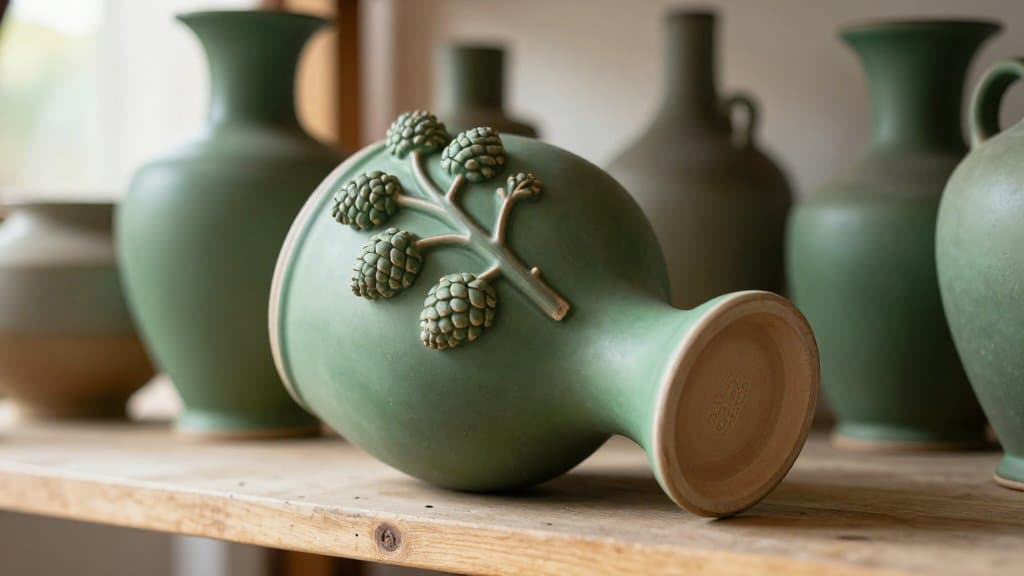
Flip a vase over before you judge the glaze. Roseville pottery marks on the base can tell you within seconds whether you're holding a $40 shelf filler or a piece a collector will pay several hundred dollars for. They're also the quickest way to catch the reproductions that keep landing on thrift store shelves.
The Ohio company ran from 1890 until its final designs in 1953, and the Mosaic Tile Company bought its plant the next year. Over those six decades it stamped, labeled and molded its wares in at least six different ways, so the mark doubles as a rough date. Learn the sequence once and every shelf of green and blue florals gets easier to read.
How to read Roseville pottery marks by era
Roseville wasn't consistent about marking, and that's the first thing to accept. Plenty of genuine pieces left the factory with nothing but a paper label that fell off decades ago. The marks that did survive still follow a clear timeline.
| Mark | Years | Clue |
|---|---|---|
| RPCo stamp | Early 1900s to 1920s | Early ware, often with shape codes |
| Rozane or Rozane Ware | Before the mid-1920s | Early art lines, sometimes a round wafer |
| Rv ink stamp | About 1915 to 1925 | Middle-period pieces |
| Black paper or foil label | 1927 to 1935 | Usually lost, so the piece looks unmarked |
| Roseville U.S.A., indented | 1932 to 1937 | Letters pressed into the clay |
| Roseville U.S.A., raised | 1937 onward | Molded letters with shape and size numbers |
Paper labels and early stamps
Anything stamped RPCo, Rozane or a small Rv is early, from before the mid-1920s. The Zanesville Museum of Art holds Rozane pieces with a round wafer reading ROZANE WARE, and some add ROYAL for that sub-line. These early art lines are where the serious money sits.
Indented versus raised script
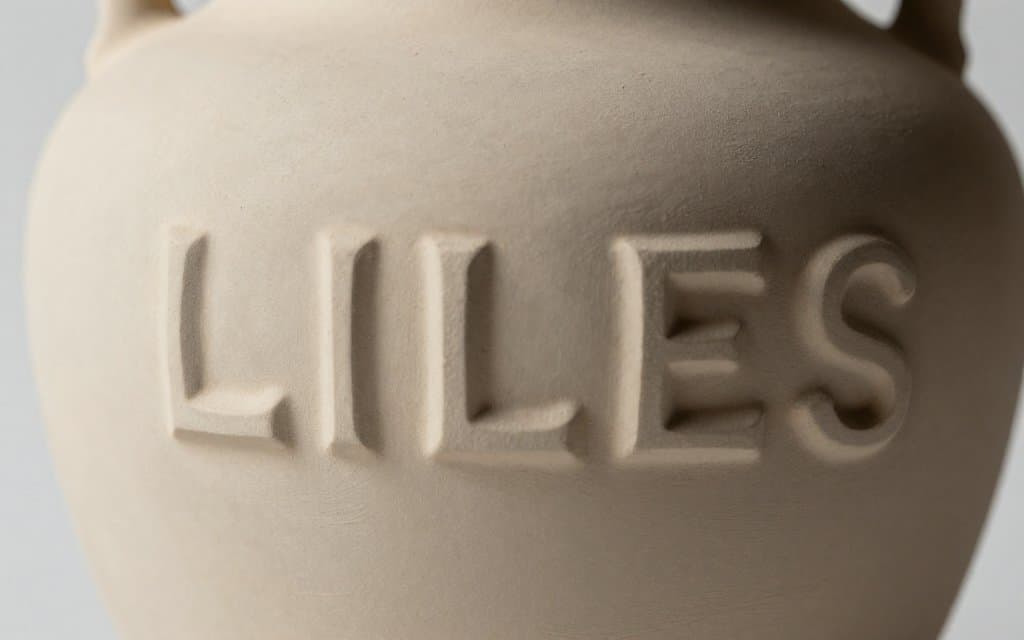
From 1932 to 1937 the factory pressed Roseville U.S.A. into the clay, so the letters sit below the surface. From 1937 on the mark was molded, and the letters stand up from the base. Run your thumb across it. If the letters stand proud, you're holding something from 1937 or later.
The shape number tells you the line and the size
Starting in the mid-1930s, Roseville added a number under the mark in a format like 35-9. The first part points to the shape within a pattern's line and the second is the height or diameter in inches. A 35-9 is a 9-inch Bushberry piece, a 738-10 is a 10-inch Silhouette and a 294-12 is a 12-inch Moss form.
That number is your search term. Typing the pattern plus the shape number into sold listings gets you true comps in seconds, instead of scrolling past hundreds of mismatched vases. It's the same habit that pays off with McCoy planters, where the base does half the pricing work for you.
- •Read the number under the mark, not just the word Roseville
- •First number: the shape within that pattern's line
- •Second number: height or diameter in inches
- •Search pattern name plus shape number in sold listings
- •Check the number matches the form in a reference photo
A shape number that doesn't match the form is one of the clearest warning signs on any base. A 9-inch number on a 6-inch vase means something is wrong.
How to spot fake Roseville pottery marks
Most reproductions come from China, and many carry the word Roseville right on the base. That's why a mark alone never settles it. Copies often get the letter shapes wrong, especially the R, and the spacing and depth look off next to an authentic example, much like the way Murano fakes give themselves away on small details.
The glaze, weight and detail test
Genuine pieces were made from denser clay, so they feel heavier than you'd expect. Original glazes look subdued but glowing, while copies lean bright or muddy with drips and smears. Molded leaves and berries on the real thing are crisp. On reproductions they look soft.
- •Mark letters that look thick, shallow or oddly spaced
- •A light body that feels hollow next to similar pieces
- •Drips, smears or a flat, dull glaze surface
- •Soft, blurry molding on leaves, cones and flowers
- •Bulky handles where originals were light but sturdy
- •Fake dirt or staining rubbed into an unglazed base
In an antique shop, a piece labeled Roseville and priced under $50 usually means damage or something that isn't Roseville at all. Thrift prices run low anyway, so lean on the mark and the weight instead of the tag.
Roseville Ohio pottery marks that aren't Roseville
Here's the mix-up that catches new resellers. Robinson-Ransbottom, a separate firm that closed in 2005, used Roseville Ohio pottery marks like R.R.P.Co. Roseville, O. because that's the town on its address. Kovels is blunt about it: RRP is not a mark of the famous art pottery, so price those crocks and planters as stoneware.
Which patterns hold Roseville pottery value
Pattern matters as much as the mark. The early lines from Frederick Hurten Rhead's years as art director, 1904 to 1909, sit at the top, and pieces like Della Robbia, Egypto and Aztec mostly sell from $1,000 into the thousands. Pine Cone, introduced in 1931 and made in more than 75 shapes, was the company's best seller and still draws collectors.
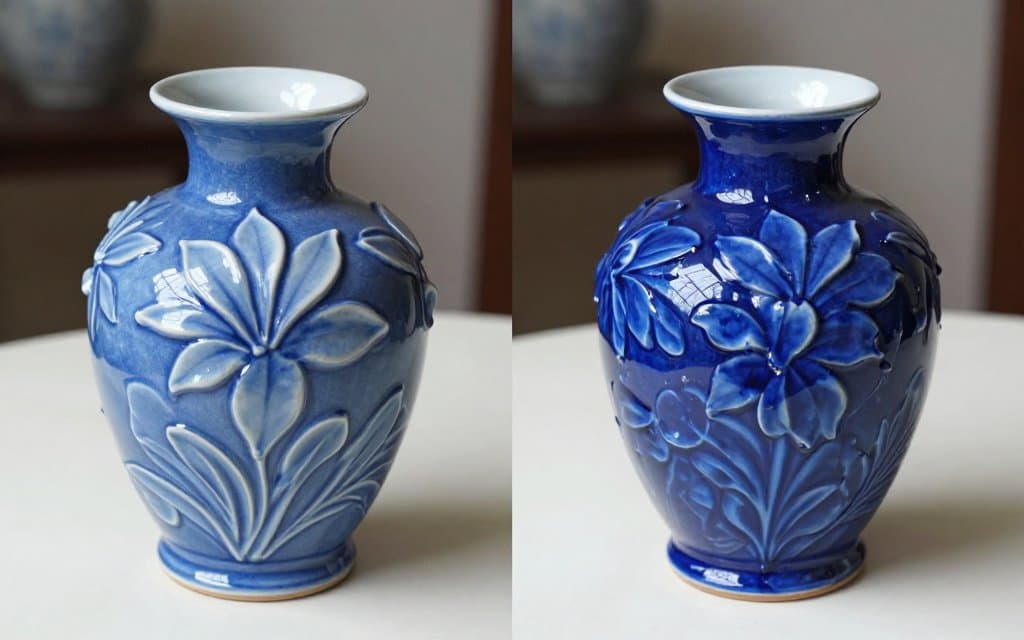
Among middle-period pieces, Baneda, Blackberry, green Laurel, red Ferella and the Rosecraft lines have held up best. The 1940s florals do well in the right colors: green Apple Blossom, blue Bleeding Heart, blue or green Bushberry, yellow Bittersweet, and green or blue Freesia and Snowberry.
Prices haven't all climbed, though. The dealer Just Art Pottery tracked its own sales of identical mint shapes for nearly 20 years, and the numbers are humbling.
| Piece | Earlier sale | Recent sale |
|---|---|---|
| Sunflower vase 487-7 | $1,050 (2004) | $550 (2022) |
| Baneda vase 603-4 | $495 (2004) | $445 (2021) |
| Wisteria blue vase 629-4 | $495 (2007) | $365 (2023) |
| Bushberry blue vase 34-8 | $265 (2006) | $225 (2020) |
| Zephyr Lily ewer 23-10 | $235 (2006) | $175 (2022) |
The Sunflower vase lost almost half its price between 2004 and 2022, while the Baneda barely moved. The dealer's read is that prices have been fairly stable since about 2009, with a few patterns creeping up. So pattern and color count for more than age.
What a thrift store find is really worth to you
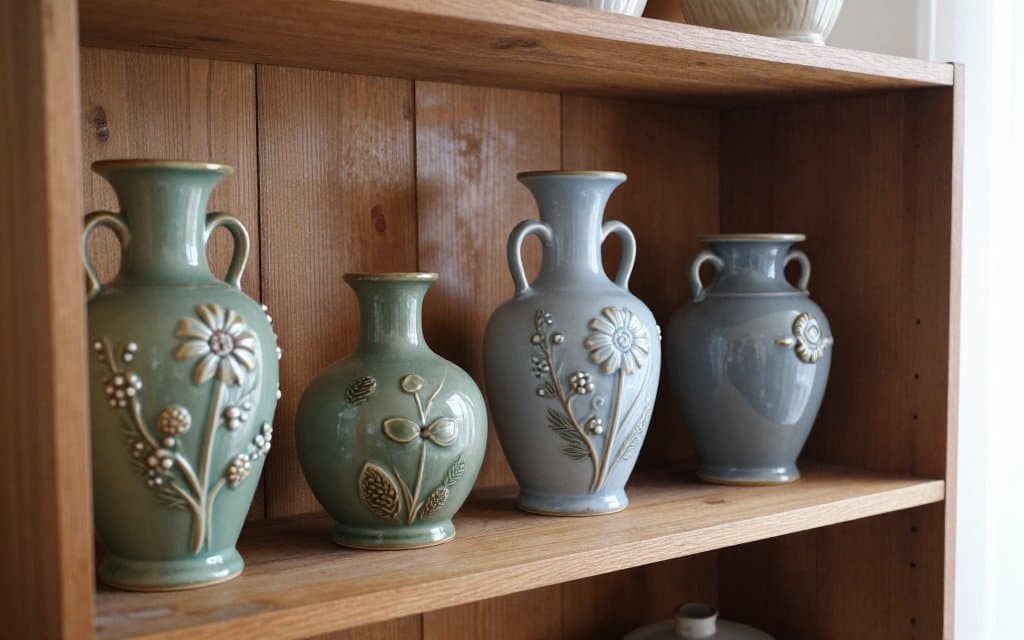
Here's how the money usually shakes out. Common small pieces with chips, crazing or glaze wear sell for $40 to $150, popular floral vases and bowls bring $100 to $400, and big jardinieres or pedestal sets can reach $300 to $1,500 or more. A Roseville bud vase with a rim flake sits at the bottom of that first band.
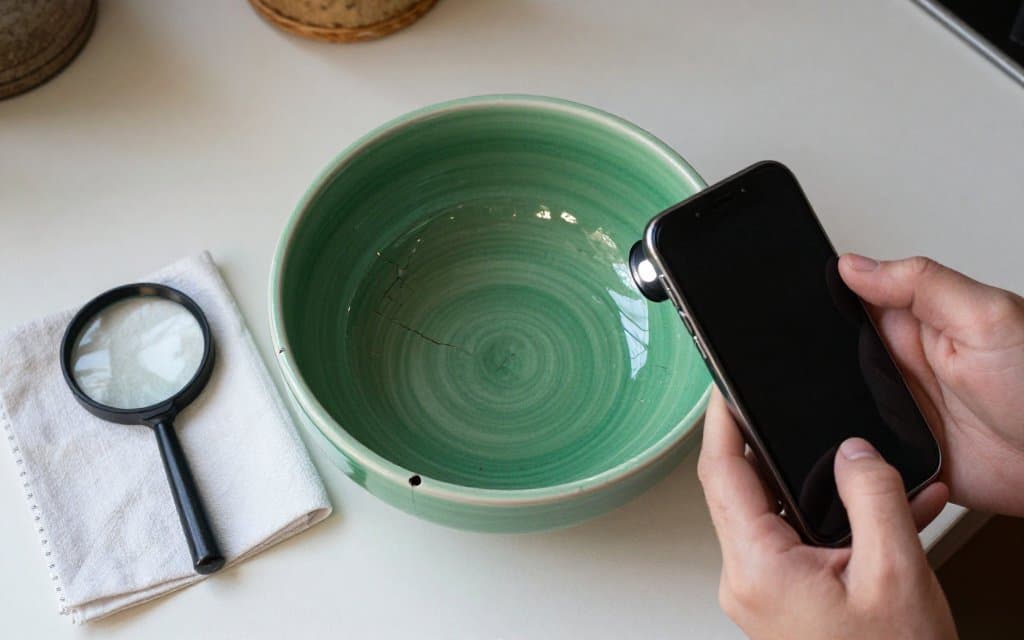
Condition drags down Roseville pottery prices faster than anything else. Hairline cracks, rim flakes, handle repairs, drill holes and overpaint all cut buyer confidence, and any restoration has to be disclosed in your listing. A rare form with a repair can still sell. A common damaged piece mostly sits.
- •Run a fingertip around the rim and handles for flakes
- •Shine a phone light inside to find hairlines and repairs
- •Look for drill holes in the base from lamp conversions
- •Check raised leaves and berries for overpaint touch-ups
Buy right and the math is forgiving. That blue Bushberry 34-8 sold for $225 in 2020, which leaves real room over a thrift shelf price even after the cut that eBay fees take from every flip. A Roseville cornucopia vase with a crisp raised mark and no damage is worth five minutes of checking, and you can scan the base with your phone to pull sold comps on the spot.
Pattern and color set the ceiling on a piece. Condition decides whether you get anywhere near it.
Roseville questions resellers keep asking
How much is Roseville pottery worth?
Most common pieces fall between $40 and $400 depending on size, pattern and condition. Early art lines and large jardinieres are the outliers that reach $1,000 or more. Check sold listings for the exact pattern and shape number before you price anything.
Is unmarked vintage Roseville pottery still real?
It can be. Between 1927 and 1935 many pieces left the factory with only a black paper or foil label, and most of those labels are long gone. Match the shape, glaze and weight against documented examples before you call it either way.
Does antique Roseville pottery need a Rozane mark?
No. Rozane was a line launched in 1900 and its name shows up on early pieces before the mid-1920s, but plenty of early ware carries RPCo or an Rv stamp instead. The mark gives you the era, while the decoration and form tell you the line.
Ready to stop guessing every time you flip a green vase over? Download Thrift Scanner, snap a photo of the piece and its mark, and get real sold-listing data before you pay a cent. Get the app here: iOS or Android.