


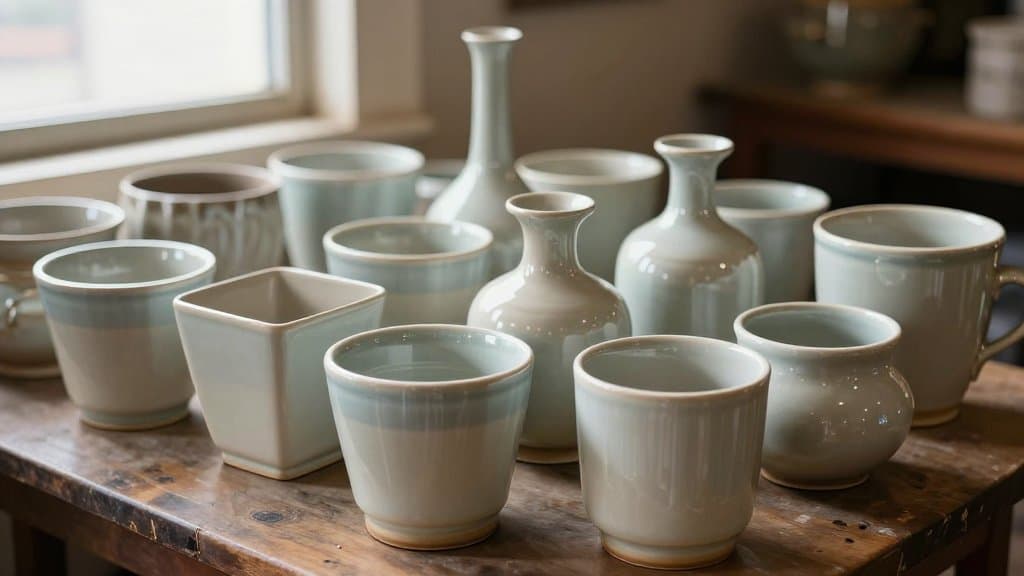
That dull pastel planter on the bottom shelf of the thrift store, the one tagged at a couple of dollars, might be McCoy. Resellers pull these out of donation bins for $5 to $10, and the right shape carries real McCoy pottery value. One thrifter posted a McCoy planter grabbed for $7 that sat next to inherited pieces worth far more.
McCoy pottery value comes down to five things you can check in seconds: the mark on the base, the shape, the glaze color, the condition, and how rare the piece is. Get those right and a plain white planter stays a plain white planter, or it turns into a $200 sale. This guide walks each one, with real sold prices so you know what to grab and what to leave.
How to identify McCoy pottery at a glance
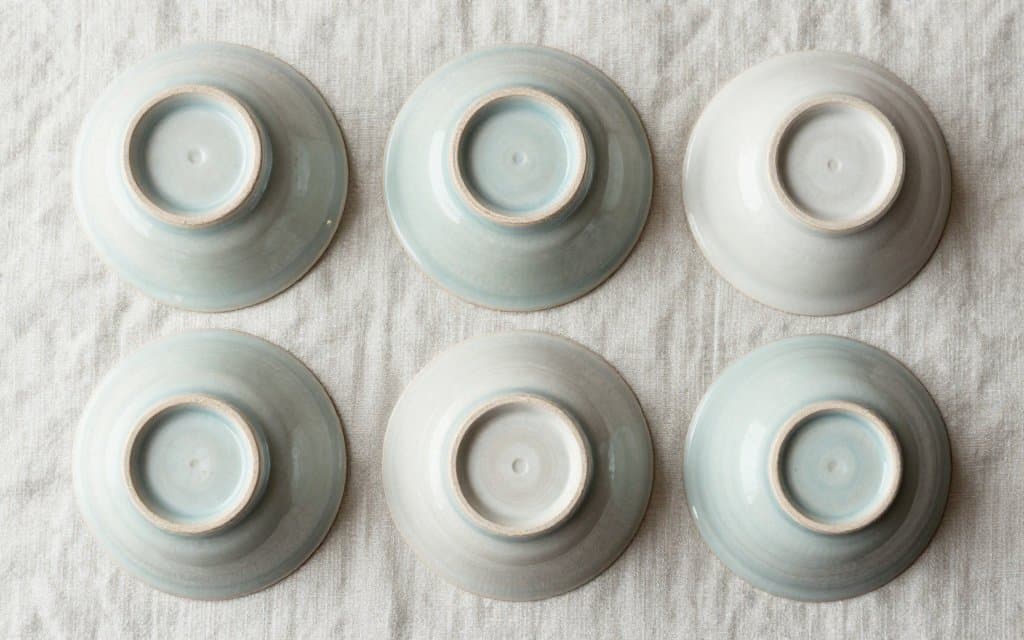
If you want to know how to spot a McCoy piece fast, work back to front. Turn it over first, because the base holds the mark and the clue most fakes get wrong. Then read the glaze and the shape, and see whether all three agree on the same era.
Start with the base, then the glaze
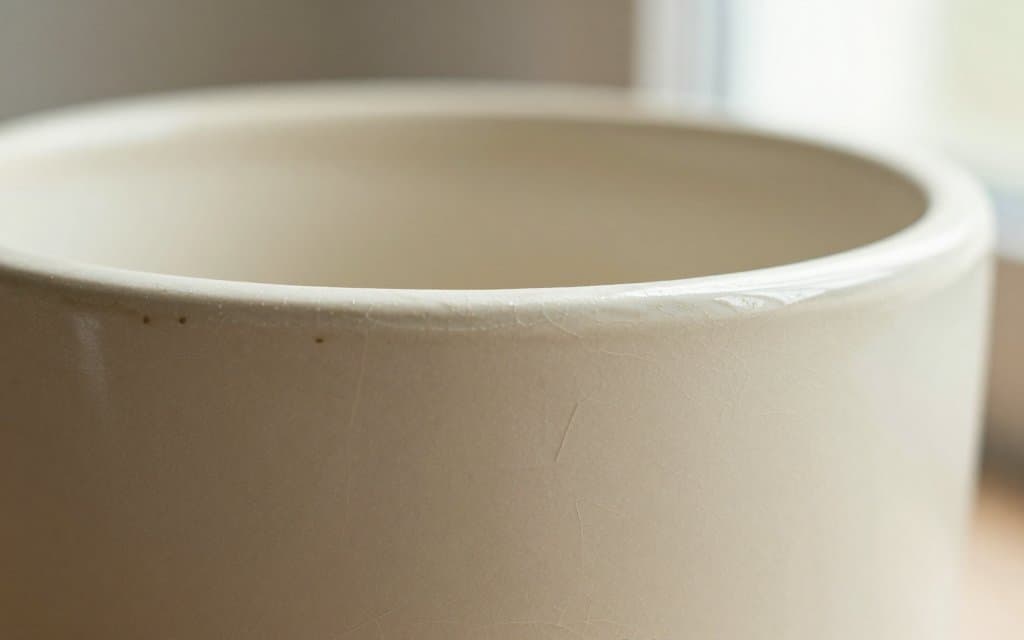
Genuine McCoy clay is dense and buff to tan, with fine crazing that shows its age. The lettering is crisp but not razor sharp, and many jars show a dry foot, an unglazed ring where the piece sat in the kiln. A chalky white body or a glassy, too perfect glaze is a warning sign.
- •Flip it over and read the base mark first
- •Feel for dense, heavy buff or tan clay
- •Look for fine crazing across an aged glaze
- •Check the foot ring for an unglazed dry spot
- •Match mark, shape and color to one era
McCoy pottery marks and the dates they point to
The marks changed enough over the years to date a piece within a decade. The earliest collectible stamp is the NM shield, Nelson McCoy inside a stylized shield, used on early art ware. By 1939 most pieces simply read McCoy with USA underneath, the look most thrift finds carry.
| Mark | Years | Reads as |
|---|---|---|
| NM USA | 1929 to 1938 | earliest art ware |
| McCoy USA | 1939 on | classic decades |
| McCoy in circle | 1960s | later factory logo |
| LCC | after 1974 | Lancaster Colony era |
| McCoy LLC | after 1991 | modern reproduction |
Flip the piece over before you admire the front. On real McCoy the base tells the truth, and a bright white clay body under a flawless glaze usually means a reproduction.
The company started in 1899 as J.W. McCoy Stoneware, became Nelson McCoy in 1909, and ran until it closed around 1990. Pieces stamped McCoy LLC or McCoy Ltd came after 1991 and are modern reproductions, not the vintage pottery buyers actually pay for.
Which McCoy shapes and colors actually sell
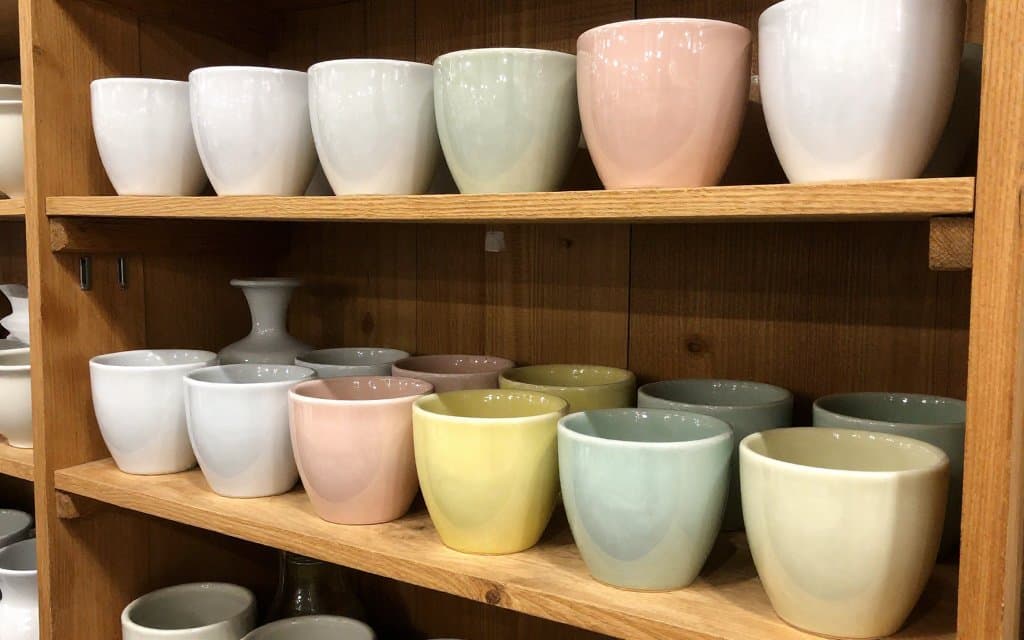
Not every piece is worth hauling home. Common planters and the 1970s brown drip line sell in the $5 to $40 range, while figural shapes and strong colors climb fast. Color drives a lot of it, so learn which glazes buyers chase.
| Piece | Detail | Price |
|---|---|---|
| Poppy planter | green glaze | $350 |
| Kookaburra pitcher | figural | $215 |
| Yellow umbrella stand | tall form | $150 |
| Brown drip jardiniere | 1970s | $100 |
| Blossom Time vase | floral | $40 |
| Wishing Well planter | common | $40 |
- •A McCoy pink vase in gloss glaze sells quickly
- •A small McCoy bud vase is an easy steady flip
- •A McCoy white pitcher photographs clean and bright
- •McCoy brown drip pottery is common but not worthless
- •A green McCoy pitcher moves faster than plain white
Collecting 101: McCoy Pottery! The History, Popularity, Lines, Colors & Value! Episode 13
The video above from 66 Unique Antiques walks the main lines and colorways if you want to train your eye. Pair that with sold listings and you will spot the difference between a $10 shelf filler and a $200 piece.
McCoy cookie jars can be the real money
McCoy cookie jars are where the numbers get loud. Plenty sell under $100, but the rare ones reach into the thousands. A blue train shaped jar set a record near $6,100 back in 2010, according to published auction records, and figural cats and fruit jars still trade for hundreds.
A blue train cookie jar sold for about $6,100, while the plain jar beside it might bring $30. Same maker, very different money.
Not every jar is a jackpot. The McCoy cookie jar Pillsbury Doughboy fans know, the smiling Poppin Fresh, is common and usually sells in the $30 to $60 range. Condition and a matching lid matter more than the character on the front.
Real McCoy or a reproduction
The McCoy name was copied heavily in the 1990s, so the mark alone proves nothing. Trust the body and the glaze. Real pieces feel dense with a soft sheen and fine crazing, while imports feel light, look bright, and often use chalk white clay.
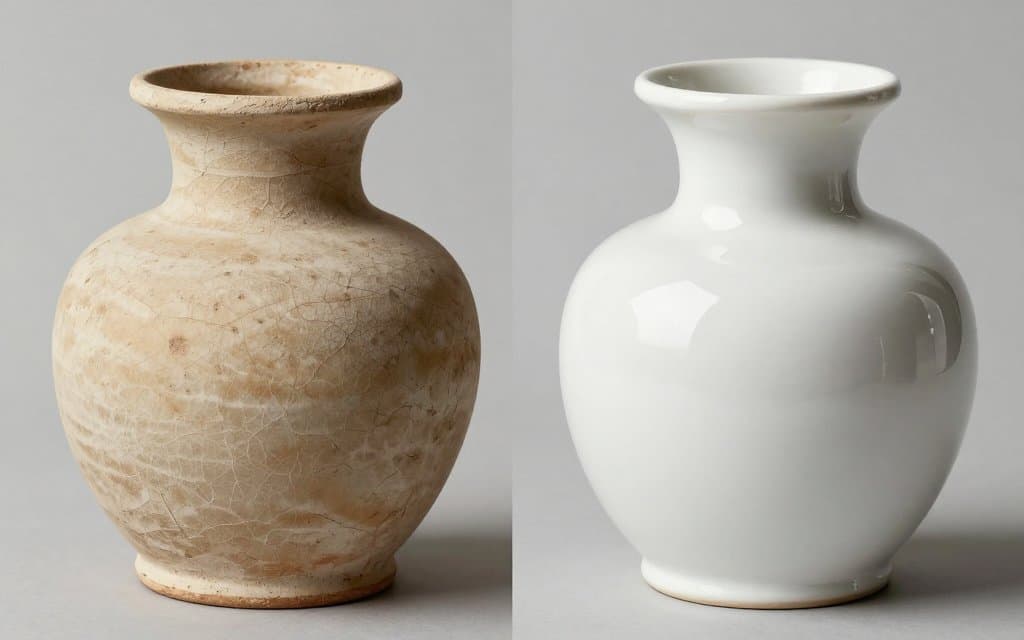
- •Chalky white clay instead of buff or tan
- •A glassy, flawless glaze with no crazing
- •Lettering cut too deep and too crisp
- •Marks reading McCoy LLC or McCoy Ltd
- •Light weight and a rough, matte foot
New collectors mix up McCoy and Roseville pottery, and the fakers know it. Roseville pottery carries a raised script Roseville USA mark from 1936 on, and its Chinese copies of Pine Cone and Magnolia lack that raised USA. Among dealers the rule of thumb is blunt: real Roseville priced under $50 is usually damaged or not Roseville at all.
What McCoy pottery value means for your resale math
Here is the money view. You buy at $5 to $10, you sell clean planters and vases from $40 to $350, and a rare cookie jar or figural piece can carry a slow month. Chips, hairlines, and heavy crazing can cut a price in half, so inspect under good light before you commit.
- •Chips and hairlines cut value by half or more
- •Missing lids drop a cookie jar hard
- •Crazing is normal but stains lower the grade
- •Original foil labels add a small premium
Buy near $5 to $10, sell clean pieces from $40 to a few hundred, and let condition set the ceiling.
Never guess. Cross check sold listings before you pay, the same habit behind our vintage Pyrex value guide and the Corningware price breakdown. Snap a photo, check it against real sold data, and let the numbers decide. For other glazed kitchen finds, our jadeite identification guide uses the same base first habit.
Common questions about McCoy pottery value
How can you tell if McCoy pottery is valuable?
Start with the mark, then weigh shape, color, and condition. A crisp NM or McCoy USA mark on a dense, lightly crazed body points to genuine mid century output. Rare shapes, strong colors, and mint condition push the value up, while chips and reproductions push it down.
Is the Pillsbury Doughboy cookie jar worth money?
The McCoy cookie jar Pillsbury Doughboy collectors love is common, so most sell in the $30 to $60 range with the lid intact. A clean example with bright paint and no chips sits at the top of that band. Rarity, not the familiar face, is what would make it worth more.
How do you tell McCoy from Roseville pottery?
Read the base. Roseville pottery uses a raised script Roseville USA mark from 1936 on, while McCoy leans on the NM shield and plain McCoy USA stamps. Roseville also feels denser and shows crisper molded flowers, and genuine Roseville rarely sells for under $50.
Ready to stop guessing and start profiting on pottery? Thrift Scanner identifies the maker, reads the marks, and shows real sold prices the moment you snap a photo, so you never leave a $200 planter behind or overpay for a reproduction. Get the app here: iOS or Android.