


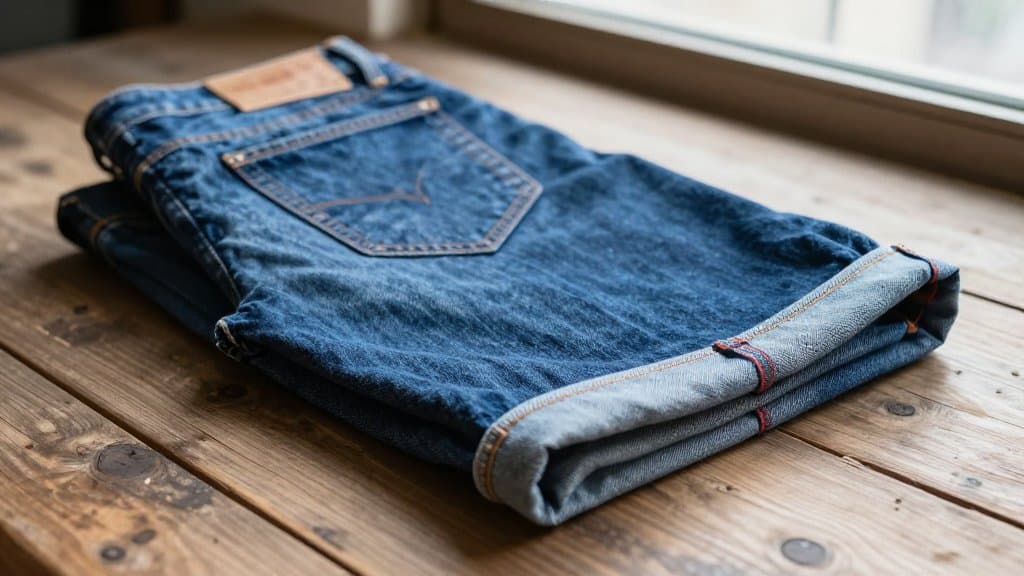
A worn pair of Levis in a thrift bin can be a $20 sale or a $2,000 sale, and the difference hides in the seams. Learn to read selvedge denim Levis the way a picker does and a single sourcing trip can cover a month of buying. The clues are small: a capital letter on the red tab, a red thread inside the leg, and a three-digit code stamped on a care label.
The checkpoints below are the exact ones resellers use to date and price vintage 501s, from the Big E tab to the redline seam to the care-tag date code. Every figure here comes from real sold-price data and documented Levis history, so you can spot a genuine find fast and skip the reproductions.
What Makes Selvedge Denim Levis Worth Money
Selvedge denim comes off narrow shuttle looms that weave a clean, self-finished edge, so the fabric does not fray when it is cut. Levis used this Cone Mills cloth until roughly 1985 before moving to faster projectile looms. Pre-1996 Cone Mills denim ran a heavy 13 to 14 ounces per yard, while modern jeans use a lighter 10 to 11 ounce cloth.
Collectors chase that older cloth because it fades sharper and wears denser than anything made today. Unwashed, rigid raw denim jeans from Levis draw their own buyers, since dark deadstock rarely survives decades. A quick resale value check on your phone confirms whether the pair in your hand is a common flip or a real payday.
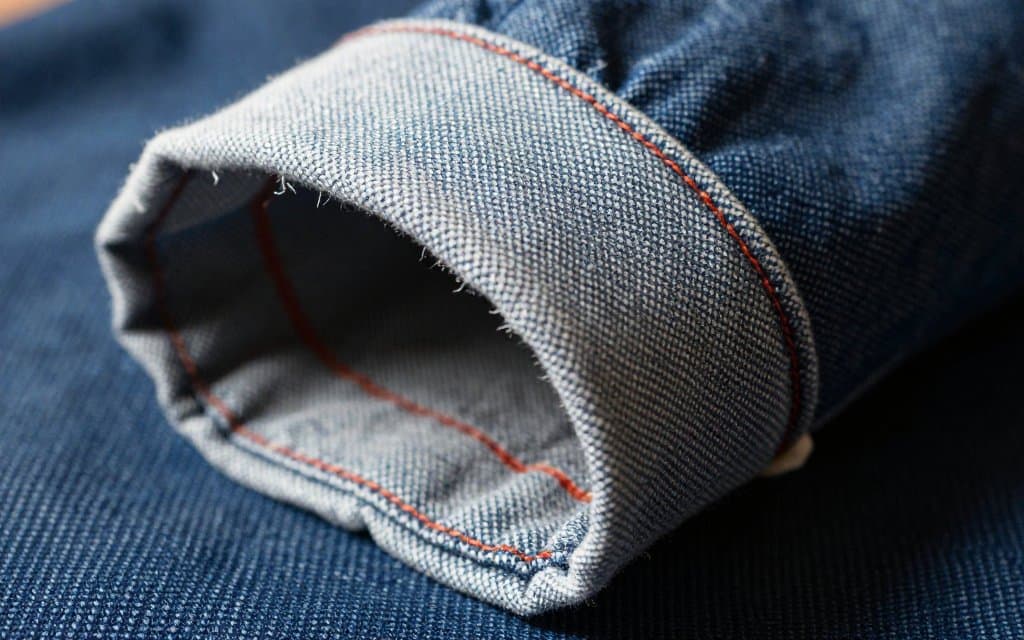
A red line inside the outseam means the denim was woven before about 1986. That single thread can add $100 or more to a pair's resale value.
Read the Red Tab: Big E Levis vs Small e
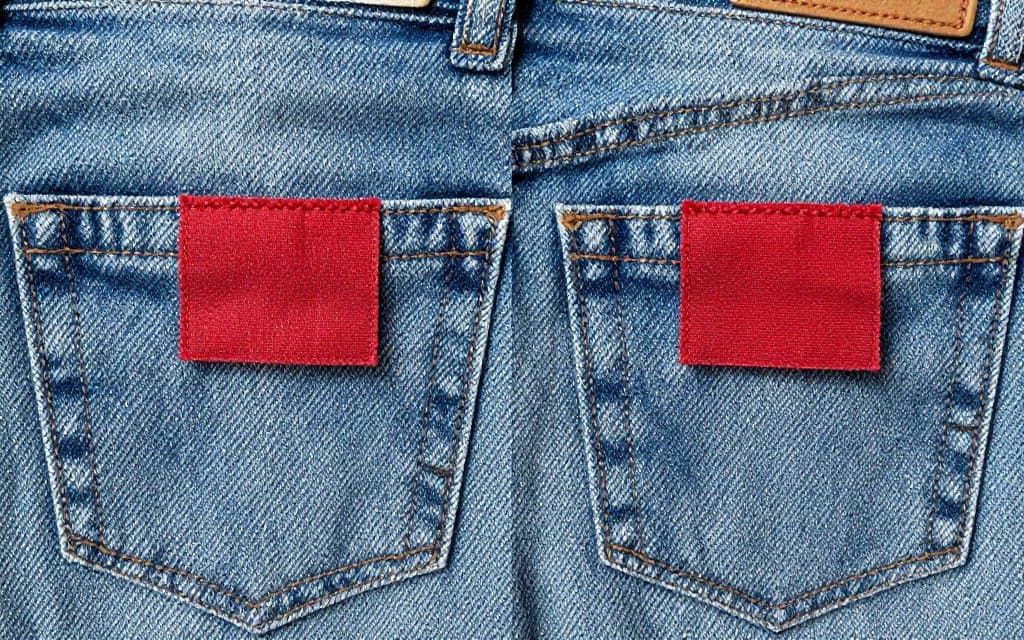
The small red tab on the right back pocket is checkpoint one. Before 1971 it read LEVI'S in all capital letters, the style collectors call Big E Levis. In 1971 the brand shrank every letter after the L, so post-1971 tabs read Levis with a lowercase e.
A capital E tab pushes a pair into the top value bracket on its own. Even worn Big E 501s with flaws regularly clear $500, and clean examples reach several thousand dollars. Small e pairs still sell well, but the jump from one letter to the next can double the price of an otherwise identical pair.
Watch for Reproduction Tabs
Modern Levis Vintage Clothing reproductions copy the capital E tab, so the tab alone is not proof. Cross-check the selvedge, the rivets, and the care tag before you trust that letter. A real pre-1971 pair agrees across all four clues, not just one, which is the same skill as reading jersey tag codes for authenticity.
- •Big E tab: capital LEVI'S, made before 1971
- •Small e tab: lowercase Levis, 1971 or later
- •Red tab signals mainline five-pocket styles
- •Orange tab marks fashion or slim-fit cuts
- •LVC reproductions reuse the Big E red tab
Selvedge Denim Levis and the Redline Test
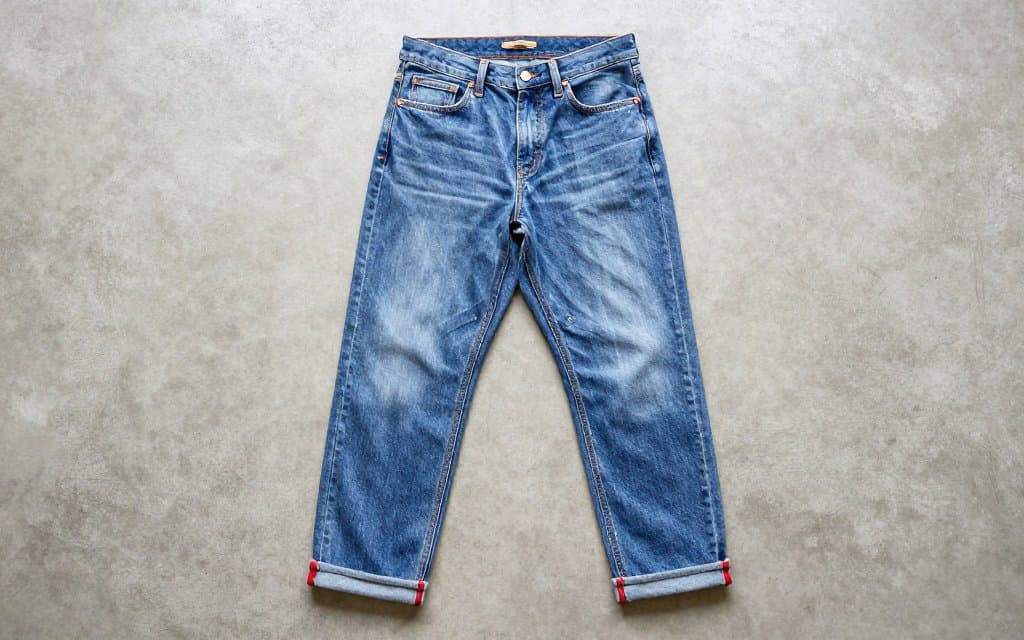
Fold up the hem and look at the outseam inside the leg. Selvedge denim Levis show a clean woven edge, usually with a single red thread running its length, which is why pickers call it the redline. That finish only comes off shuttle looms, so its presence points to production before about 1986.
The redline outlived the tab change, so a lowercase Levis selvedge pair can still date to the 1971 to 1986 window. On a 501, the redline runs up both sides of the button fly and along the outseam. No red line and a lighter cloth usually means a later projectile-loom pair worth far less.
Where the Selvedge Shows
Check three spots: the outseam, the coin-pocket edge, and the button-fly placket. A true selvedge 501 Levis pair shows the finished edge in all three. Reproductions sometimes fake the outseam but skip the coin pocket, so study that small seam under good light before you pay a vintage price.
No care tag at all is a strong sign of a pre-1971 pair, since federal rules made sewn-in care labels standard in the United States that year.
Date Codes: How to Tell If Levis Are Vintage
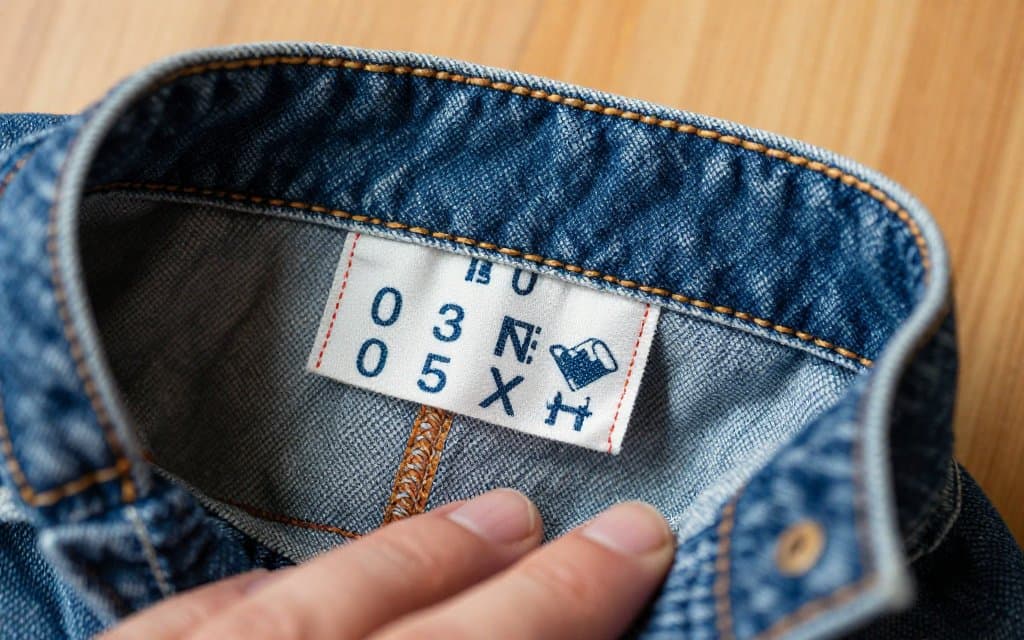
The care tag is the richest date clue on newer pairs. Levis began sewing in care labels in 1971 when the FTC required them, so a pair with no care tag almost always predates that year. The numbers on that tag decode the month and year the jeans left the factory.
Codes from the 1960s and early 1970s often show a single digit, the last number of the year, so a 7 could mean 1967 or 1977. From the mid 1970s onward, a three-digit code after the size gives the week and year. A code of 527 reads as the 52nd week of a year ending in 7, which you then pin down with the tab and cloth.
The Care-Tag Date Formula
- 1.Find the care tag on the inside left leg seam
- 2.Read the digits printed after the waist size
- 3.Match the last digit to the production year
- 4.Confirm the decade with tab, rivets, and cloth
Made in USA is another hard line. Levis closed its last American factory in 2002, so a Made in USA 501 was almost certainly built before 2003. Tags that add French and Spanish text alongside English lean toward the 1980s and 1990s rather than the earliest era.
Rivets, Stitching, and Patch Clues
Hardware backs up the tab and cloth. Levis used hidden copper rivets under the back pockets until about 1964, then switched to bar tacks, so exposed back-pocket bar tacks point to later pairs. The back waist cinch vanished during the 1940s, so any pair with a cinch strap is genuinely old and valuable.
The arcuate stitch, the curved design on the back pockets, also shifted over time. Single-row stitching on the arcuate marks earlier construction, while double-row stitching became standard on later pairs, the same logic behind single-stitch dating on vintage tees. The waist patch tells its own story, since leather gave way to Jacron faux leather in 1954 to survive home washing machines.
- •Hidden back rivets: pairs made before about 1964
- •Back cinch strap: 1940s wartime-era pairs
- •Single-row arcuate stitch marks earlier pairs
- •Leather waist patch: before 1954, then Jacron
Easy And Quick Tips: How To Identify Vintage Levi's - Jeans, Tags, Selvedge
What Vintage Levis Sell For
Price follows the decade you just dated. A confirmed pair of Levis selvedge denim jeans from the 1960s sits in a different bracket than a 1990s Made in USA pair, even when both look worn, a spread you can trace in real sold-price data. Size drives the rest, since a 28 to 32 waist sells far faster than a 40.
| Era | Tab | Value |
|---|---|---|
| Pre-1970 | Big E | $500 to $10,000 |
| 1970s | Small e | $200 to $1,000 |
| 1980s to 1990s | USA made | $50 to $300 |
| Post-2003 | Overseas | $15 to $40 |
Deadstock pairs, unworn with tags, push the top of every bracket, and early-1970s transitional pairs command the high end of the small e range. Before you list these Levis selvedge jeans, check which platform pays best for denim so you keep more of the margin.
Even a well-worn Big E 501 with holes and repairs commonly sells for $500 or more, because the era matters far more than the condition.
Common Questions About Vintage Levis
How can you tell if Levis are vintage fast?
Check four things in order: the red tab letter, the redline selvedge inside the leg, the rivets, and the care-tag code. If a capital E tab, a red selvedge line, and hidden rivets all agree, you are holding a pre-1971 pair. Any mismatch usually means a reproduction or a later rebuild.
Are all Big E Levis valuable?
Most are, but condition, size, and model still matter. A capital E 501 in a common 34 waist with heavy damage sells for less than a clean 30. Reproductions from the Levis Vintage Clothing line also carry Big E tags, so confirm the selvedge and rivets before you celebrate a bin find.
What does selvedge denim on Levis mean?
Selvedge is denim woven on narrow shuttle looms that leave a clean, self-finished edge instead of loose threads. On Levis it usually shows as a red line inside the outseam and points to production before about 1986. The heavier Cone Mills cloth of that era fades and ages in a way collectors pay extra to own.
Do 505s and 505 selvedge pairs sell too?
Yes. A vintage Levis 505 selvedge pair, the zip-fly cousin of the button-fly 501, follows the same tab and redline rules. Date it by the tab letter and the redline seam, and an early 505 with selvedge can sell as strongly as a 501 from the same era.
Ready to stop guessing on denim and start pricing it right? Snap any pair with Thrift Scanner, read the tab, redline, and era against real market data, and never leave money in the bin again. Get the app here: iOS or Android.