


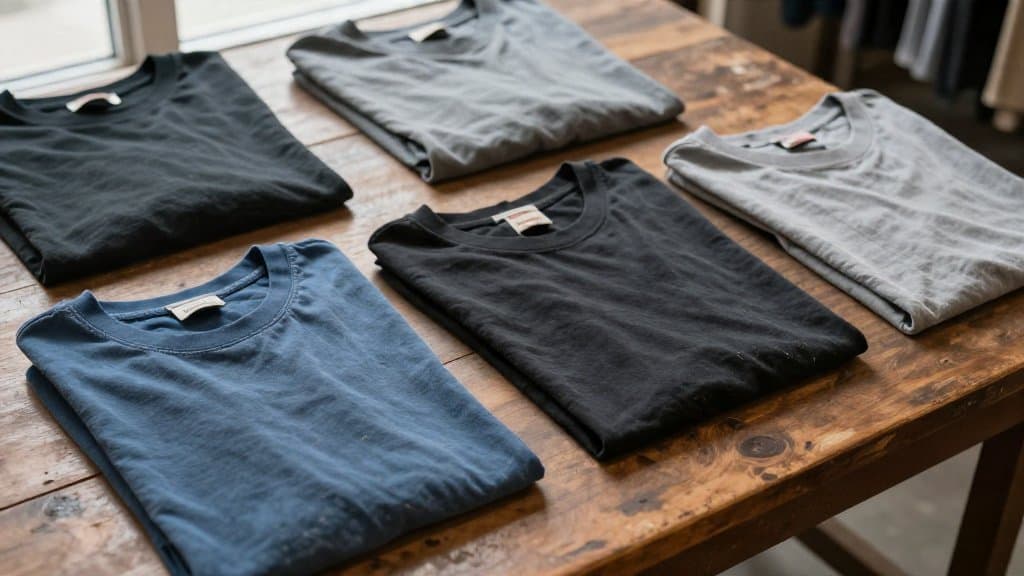
A single stitch hem tells you roughly when a blank shirt was sewn. It doesn't tell you what anyone will pay for it, and that's the mistake that leaves a lot of thrifters holding a pile of $15 shirts they paid $8 apiece for.
The money in vintage band tees sits in the print: which artist, which tour, which year, and whether the graphic is the original run or a later reissue. Stitching is your first filter. The front and back of the shirt are what a buyer is actually paying for, so that's where most of your checking time should go.
What a single stitch hem actually tells you
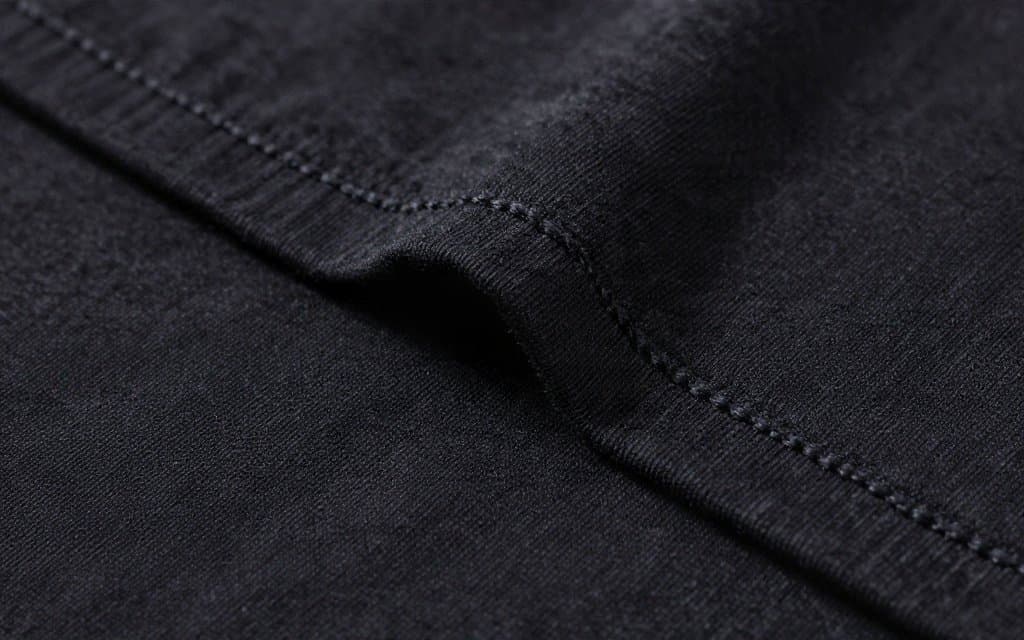
Most US blank makers finished sleeves and bottom hems with one line of thread through the early to mid 1990s. According to the authentication guide from Las Vegas vintage shop Keep It Classic, double stitching became the volume default between 1996 and 1998, though some premium blanks kept single-needle hems into the early 2000s.
- •One stitch line on sleeves and hem strongly suggests pre-1996
- •Mixed hems can still be honest mid-90s transitional blanks
- •Premium single-needle blanks ran into the early 2000s
- •Modern brands copy the look on brand new reproductions
Where to look on the shirt
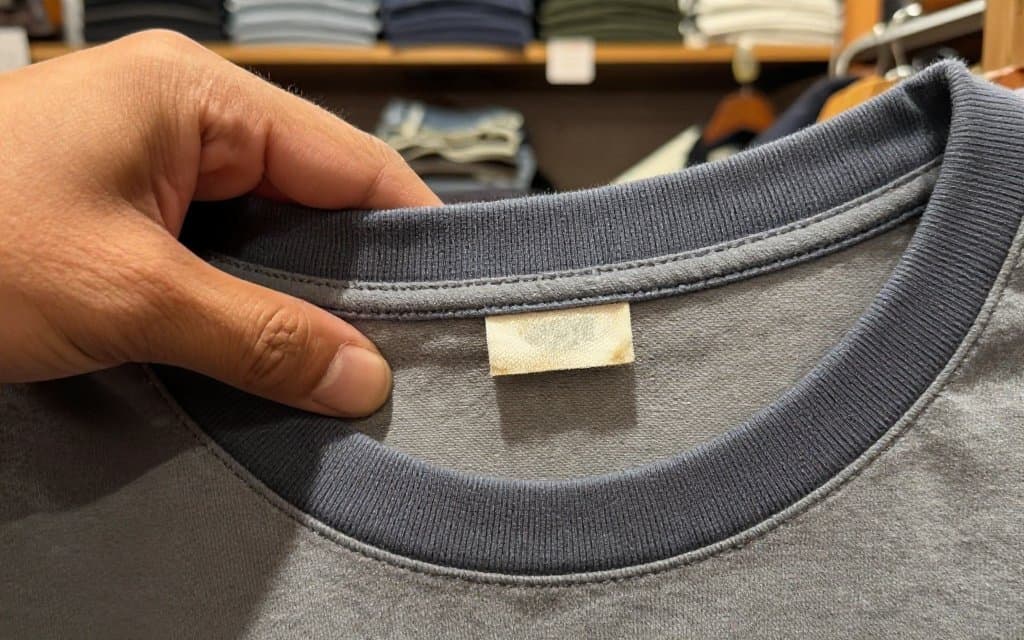
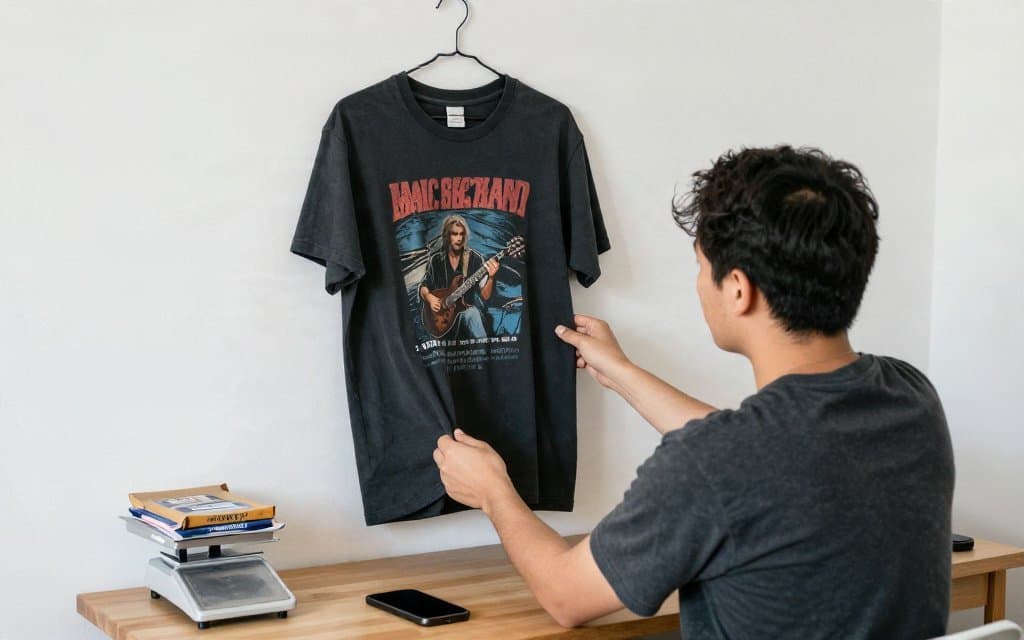
Flip the tee inside out and check both sleeve cuffs and the bottom hem. You want one row of thread on each. Then look at the collar tag and the fine print under the graphic before you even think about price, because a hem only narrows the date range.
Vintage band tour shirts and the graphic that sets the price
Real sold data on vintage t shirts shows how wide the spread is. Spreadshirt looked at more than 84,000 sold listings of music tees between December 2023 and September 2024, and the results reported by Loudwire put a handful of shirts in four figures while genre averages stayed under $180.
| Shirt | Era | Top Sale |
|---|---|---|
| Grateful Dead Panther tee | 1990s | Up to $2,750 |
| Nirvana In Utero long sleeve | 1990s | Up to $2,000 |
| Bjork Post tee | 1995 | $1,895.50 |
| Soundgarden Louder Than Love | 1989 | $1,349.99 |
| Metallica Load tee | 1996 | $1,250 |
| Nirvana Sliver tour tee | 1992 | Up to $1,200 |
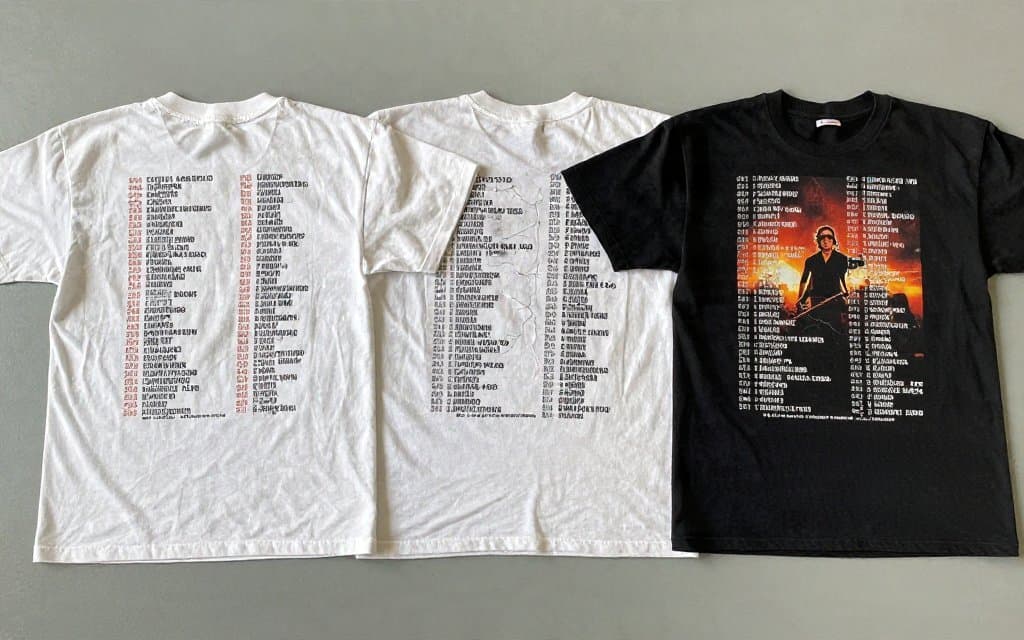
Look at what those shirts share. Most are tied to a specific album or tour, and almost all come from the late 80s and 90s grunge, alternative and metal years. Vintage concert t shirts with a dated city list on the back give buyers proof of era that a plain logo tee can't.
In that study, Nirvana tees averaged $278.51 each and rock as a whole averaged $179.54. Pop shirts averaged $144.70. The band name moves the price far more than the hem does.
Read the vintage Hanes tag and other blank labels
The neck label tells you which blank the band's merch company printed on, and blank makers changed their tags often enough to date them. Hanes Beefy-T used a red and blue block tag from about 1985 to 1995, and Hanes launched tagless blanks in 2002, so a printed neck label on a claimed 80s tour shirt is a problem.
- •Hanes Beefy-T red and blue block tag: about 1985 to 1995
- •Screen Stars 50/50 tag: the 1980s workhorse blank
- •Screen Stars Best: late 1980s to the mid 1990s
- •Tultex triangle logo: about 1992 to 2000
- •Fruit of the Loom fruit cluster with USA print: 80s to early 90s
Fruit of the Loom and Screen Stars details
A vintage Fruit of the Loom tag with the full fruit cluster and a USA print fits the 1980s to early 1990s. Two-tone Fruit tags with RN numbers usually point to the 1990s or later. Screen Stars faded out after 1995, so it's a strong sign of an older shirt when the graphic matches.
Country of origin and fabric
US-made blanks dominated through the late 1980s, and offshoring ran from about 1996 to 2005, with Mexico most common early on. A Made in Honduras tag on a shirt claiming 1991 is a hard fail in most cases. Fabric helps too: 50/50 cotton poly ruled through the early 90s, while tri-blend on a 90s graphic almost always means a reprint.
How reprints of vintage rock t shirts give themselves away
Reprints are the reason a shirt with the right graphic can still be worth $20. The copyright line printed under the art is the earliest possible year for that graphic, so a 2004 date on a 1988 tour design ends the conversation.
- •Gildan Soft-Style blanks only exist after 2010
- •Bella+Canvas 3001 blanks only date to after 2008
- •Comfort Colors 1717 garment-dyed blanks are a 2010s shirt
- •Crisp, uncracked ink on a claimed 1980s print is a red flag
- •Long, narrow fit reads modern; pre-1995 tees run boxy
Ink tells its own story. Plastisol prints crack in an irregular pattern after roughly 50 to 100 washes, while artificial aging tends to look uniform and stripy. Direct-to-garment printing wasn't commercially viable until the mid 2000s, so a DTG print on an 80s shirt is a fake.
The copyright year sets the floor. If the date under the art is newer than the tour on the back, you're holding a reissue, however old the hem looks.
What the price gap means for your margins
Here's where the maths gets fun. At Sotheby's in 2021, a yellow 1967 Grateful Dead tee estimated at $350 to $700 sold for $17,640, as InsideHook reported at the time. A spring 1977 Cornell tour shirt from the same sale went for $15,120. Those are outliers, but they show how much the specific tour matters.
Most finds land far lower. Keep It Classic lists a Liquid Blue Grateful Dead tee in size large at $75, which is a realistic number for a good 90s Dead shirt that isn't a famous design. Pay $5 at the thrift store and that's a clear profit even after you subtract the platform cut, which we broke down in our eBay fees guide.
- •Buy for the band and tour first, the stitching second
- •Skip plain logo tees on modern blanks unless they cost $2
- •Photograph the tag, hem, copyright line and both prints
- •Put the tour year and city list in your listing title
Treat the hem as a gate, not a payday. A shirt that passes the hem, the tag and the copyright check from a band in Spreadshirt's top tier is worth listing at a real price. A shirt that only passes the hem is usually a $15 to $25 item, and that's fine if you paid accordingly.
Single stitch shirt questions resellers ask
Is every single stitch t shirt vintage?
No. Most were made before 1996, but premium blanks kept single-needle hems into the early 2000s and some modern brands copy the look on purpose. Confirm with the tag, the country of origin and the copyright year before you call it vintage.
Is a vintage Metallica shirt from the 90s worth anything?
It can be. A 1996 Load tour tee reached $1,250 in the Spreadshirt data, and Metallica was named among rock's most valuable artists. Condition, size and whether the tour back print is intact will decide where yours lands.
What is the most expensive Grateful Dead shirt ever sold?
The 1967 yellow Dead tee that sold at Sotheby's for $17,640 in 2021 set the auction record for a vintage rock shirt. The previous record holder was a 1979 Led Zeppelin Knebworth shirt that sold for $10,000 on eBay in 2011.
Old blank, right tag, matching copyright date, famous tour. When all four line up, list it high and be patient.
Tag dating works the same way on sportswear, so it's worth reading our guides on vintage Nike tags and 90s Starter jackets before your next rack sweep. You can also browse more flipping guides at thrifting.app.
Ready to stop guessing at the rack? Download Thrift Scanner, snap a photo of any band tee, and get real sold-price data before you decide whether that shirt is a $15 flip or a four-figure find. Get the app here: iOS or Android.