


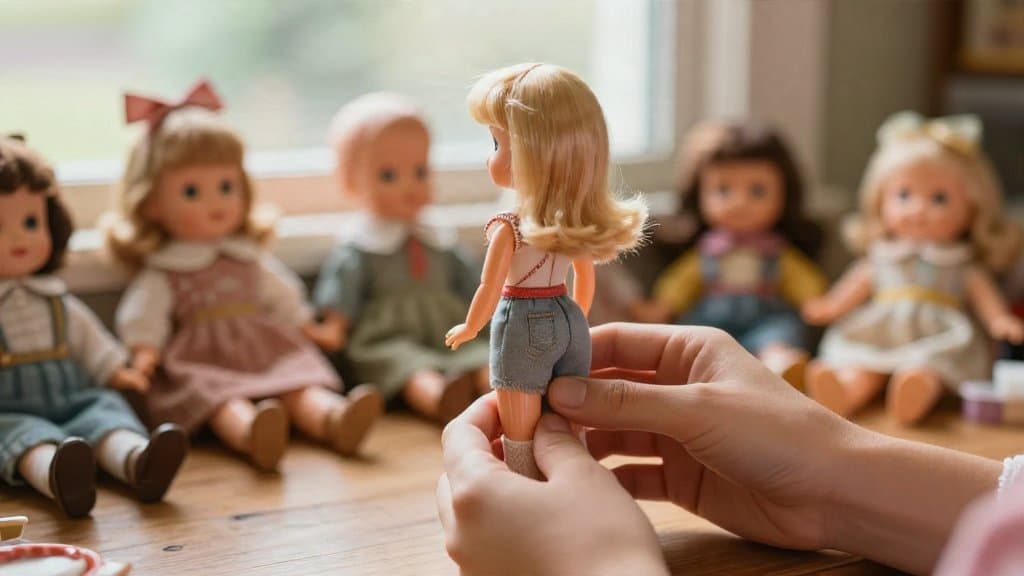
Flip a thrifted Barbie over and you'll almost always find © 1966 on her hip, and it's almost always a red herring. On old Barbie dolls, that date marks when Mattel registered the body patent in the country of manufacture, and dolls made well into the 1980s still carry it, according to the mark tables at Doll Reference.
That matters because sellers list these dolls as 1966 originals and price them like sixties toys. Plenty turn out to be 1970s or 1980s dolls, and mass-market 1980s Barbies bring about $20 to $50 at best. A genuine 1959 doll is a different story. The country line printed under the date tells you far more than the year ever will.
Why old Barbie dolls almost all say 1966
Mattel stamped a patent or copyright date into the mold, then kept using that mold for years. Doll Reference lists 1966-marked Japanese Malibu dolls from 1972, Taiwan-made Quick Curl and Malibu dolls from 1973 to 1976, and Korean dolls from the same mid-70s window.
Here's the part that trips people up. A Barbie actually sitting on a toy store shelf in 1966 wore the older 1958 mark, which the same reference describes as the mark on the vintage Barbies sold that year. So a doll stamped 1966 is, if anything, a sign she came later.
Rule of thumb: a 1966 hip mark tells you the earliest year a doll could have been made, never the year she was made. The country line narrows it down.
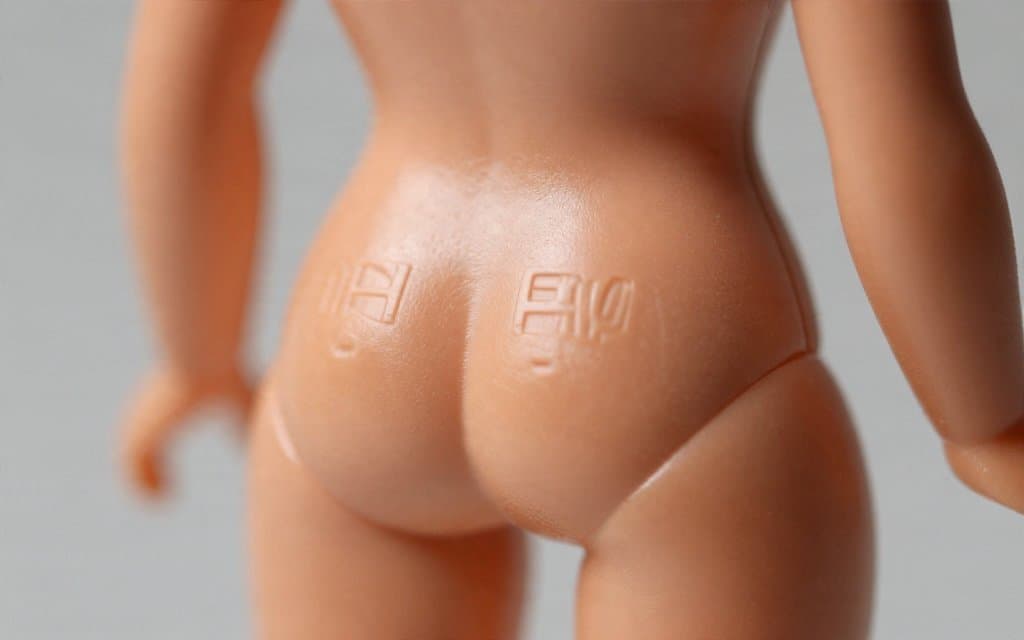
Read the country line, not the date
Right under the date sits the country, and each factory country ran for a known window. Japan made Barbies from 1959 to 1972, so a 1966 mark ending in Japan is the closest you'll get to a true sixties doll with that stamp. Philippines, China and Malaysia marks put a doll in 1978 or later.
| Country mark | Years made | Era clue |
|---|---|---|
| Japan | 1959 to 1972 | Oldest production run |
| Mexico | 1968 to 1970, 1989 to 1990 | Check face and hair |
| Korea | 1970 to 1978 | 1970s doll |
| Hong Kong | 1970 to 1987 | 1970s or 1980s |
| Taiwan | 1970 to 1987 | 1970s or 1980s |
| Philippines | 1978 to 1988 | Late 1970s onward |
| China | 1986 to present | Modern doll |
How to spot an original Barbie doll from 1959
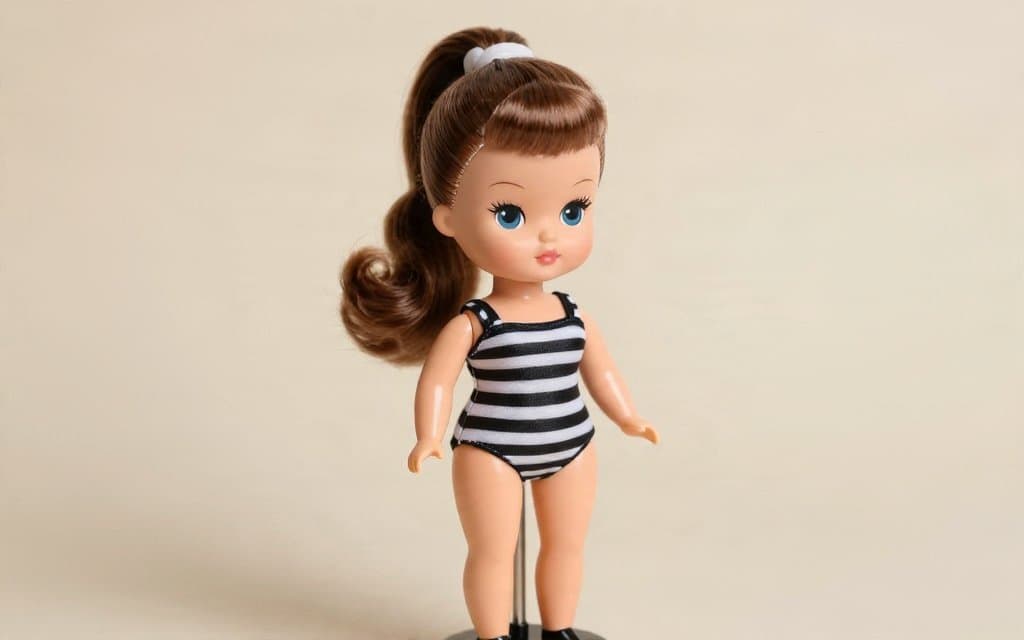
The first Barbie, the #1 Ponytail from 1959, has a face that's easy to learn once you've seen it. An appraiser on Antiques Roadshow pointed to a handful of tells on a 1959 doll he valued in 2016.
- •Sharply arched, almost triangular eyebrows
- •White irises with eyes glancing off to the side
- •Holes in the soles of the feet for the stand's prongs
- •A 1958 hip mark ending in Made in Japan
Why the 1958 mark alone proves nothing
The same appraiser warned that the 1958 body was used for several years, so the mark can't separate a #1 from later ponytail dolls. The foot holes and the face do that work. If the eyebrows are soft curves instead of sharp peaks, you're holding a later doll, and the price drops with it.
Other clues that date vintage Barbie dolls
Beyond the hip mark, small details help you place a doll. Doll Reference points out that numbers stamped inside the arms, thighs or neck are mold numbers, not dates or IDs, so don't read anything into them.
- •Hip mark country: Japan means 1972 or earlier
- •Twist waist: Twist 'N Turn Barbie #1160 ran 1967 to 1971
- •Numbers inside the limbs are mold numbers, not dates
- •A Philippines mark means 1978 to 1988 production
The Malibu years
Malibu Barbie is where a lot of thrift bin finds start. Japanese Malibu dolls with the 1966 mark date to 1972, and Taiwan turned out Malibu and Quick Curl dolls from 1973 to 1976. Those are real 1970s dolls, just not sixties ones, and buyers price them that way.
Japan made Barbies from 1959 to 1972. A 1966 mark that says Taiwan, Korea or Hong Kong almost always means a 1970s doll or newer.
What 1966 Barbie doll value looks like in real dollars
Here's where the stamp costs people money. A seller who believes a doll is from 1966 asks sixties prices, and buyers who know the marks scroll past. Sold and listed prices gathered by LoveToKnow show how wide the gap is between eras.
| Doll | Price | Condition |
|---|---|---|
| 1959 original Barbie | About $8,000 | Played with |
| 1959 original Barbie | $27,000+ | Pristine |
| 1959 #1 on Roadshow | $3,500 to $4,500 | Well loved, no stand |
| 1960s ponytail Barbie | $250 winning bid | Boxed, unopened |
| 1962 Bubble Cut | $225 listed | Lightly worn, boxed |
| 1986 Rockers Barbie | $26 | Boxed |
| 1990s Barbies | $10 to $30 | Typical sale |
Look at that spread. A boxed 1960s doll often sells for a few hundred dollars, while a loose 1980s doll barely covers postage. Pairs can help: a Barbie and Ken vintage Ice Capades duo sold for $84.99 together, and the roundup notes they'd have fetched less apart.
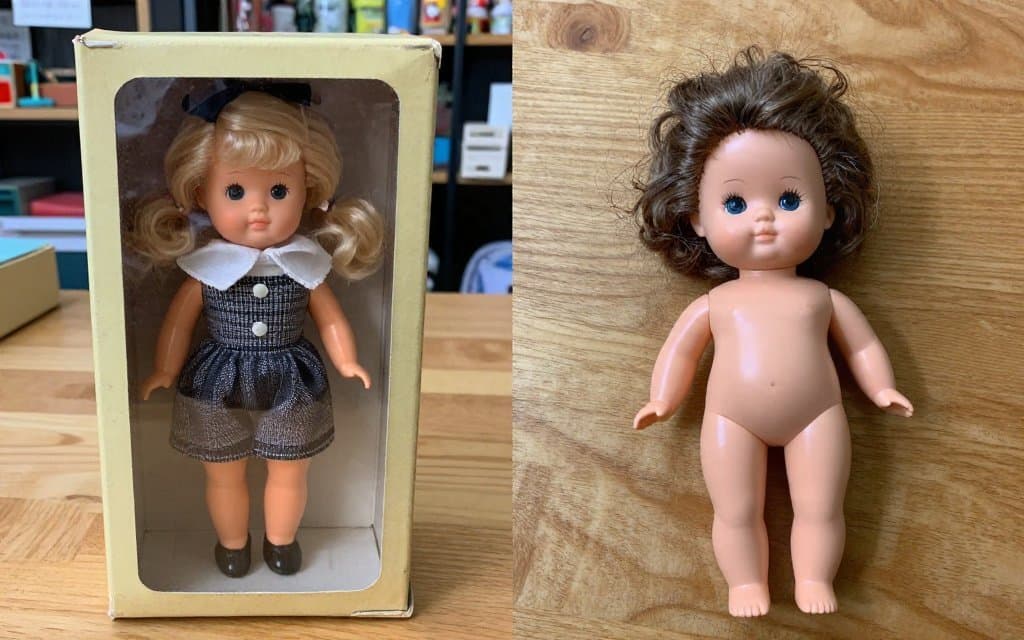
Mass-market 1980s Barbies top out around $20 to $50. Unless the box, outfit or hip mark points to something older, keep your offer small.
The most valuable Barbie dolls aren't always the oldest
The most expensive Barbie on record isn't a 1959 doll at all. The Stefano Canturi Barbie from 2010 sold for $302,500, and a De Beers 40th anniversary doll is said to be worth $85,000. A 2013 Pink Diamond Barbie sits at $15,000.
None of those will turn up at Goodwill. For thrift finds, the Barbies worth the most are early Japan-made dolls with their original swimsuit, stand and box, plus small runs like City Smart Barbie from 2003, of which only 600 were made.
- •Original box: boxed 1960s dolls often bring a few hundred
- •Original swimsuit and stand still with the doll
- •Smooth, uncut hair with no frizz from brushing
- •Clean, unmarked vinyl and bright face paint
- •Small limited runs, like the 600-piece City Smart Barbie
Condition checks before you pay for old Barbies
Condition swings value more than age. Collectors look for smooth hair, unmarked skin, bright facial features, every accessory, clean clothes and no bad smell, according to the same price roundup. A well-loved 1959 doll still beats a mint 1990s one, but within an era, condition is everything.
- •Flip her over and read the full hip mark and country
- •Sniff the vinyl; mildew or smoke odor scares off buyers
- •Check the feet for holes, a #1 Ponytail tell
- •Look for frizzed, cut or replaced hair
- •Count accessories and check for the original outfit
Then run the money maths before you buy. A $26 doll loses a real chunk to platform fees and shipping, which our breakdown of eBay fees on thrift flips spells out. Toys work like Ty Beanie Baby tags and redline Hot Wheels, where tiny marks decide the price. You can also scan a doll at thrifting.app before committing.
Questions people ask about old Barbies
What's a 1966 Barbie worth?
Usually less than the stamp suggests, because most 1966-marked dolls were made in the 1970s or later. A loose 1980s doll typically sells for $20 to $50 or less, while a Japan-marked doll in her original outfit sits higher. Check the country line first, then compare sold listings in the same condition.
Is a 1976 Mattel Barbie doll vintage?
It depends who you ask, but she's a separate market from the 1959 to 1972 Japan dolls. A 1976 Mattel Barbie doll will usually carry a Taiwan, Korea or Hong Kong mark beside the 1966 date. Expect prices well below sixties dolls unless she's still in her box.
Which vintage Barbie dolls sell for the most?
Among dolls you could realistically thrift, the 1959 #1 Ponytail leads, at about $8,000 played with and over $27,000 in pristine shape. Boxed 1960s dolls come next, often at a few hundred dollars. Jeweled one-offs like the $302,500 Canturi doll live in a different world entirely.
Ready to stop guessing what a thrifted Barbie is worth? Download Thrift Scanner and let AI identify the doll and pull real sold prices before you pay. Snap a photo, get real market data, and never overpay again. Get the app here: iOS or Android.