


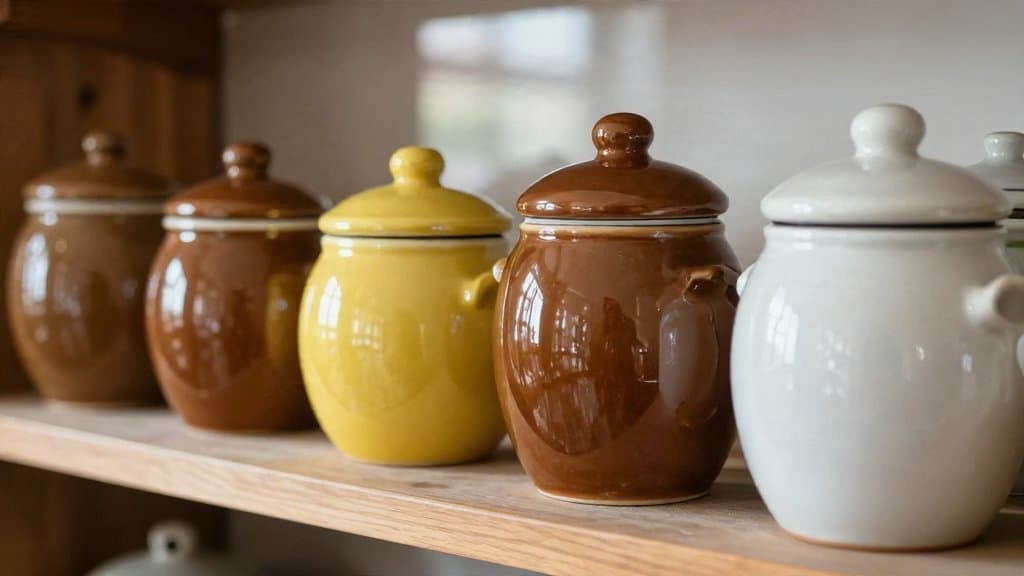
A cookie jar stamped McCoy on the bottom isn't proof of anything. Collectors have spent three decades sorting real old McCoy cookie jars from look-alikes that carry the same name, and some of those copies were never McCoy designs in the first place. If you flip thrift store kitchenware, that difference decides whether a $10 jar is a $10 jar or a four-figure find.
The Nelson McCoy factory in Roseville, Ohio closed in the fall of 1990. Anything marked McCoy that was made after that came from someone else, and the McCoy Pottery Collectors' Society keeps a running list of fakes. Here's how to check a jar on the shelf, which marks match which years, and what the real ones actually sell for.
Why old McCoy cookie jars draw so many fakes
Character designs were the heart of McCoy pottery cookie jars. The company made its first character jars in the 1930s, and by the 1970s it was turning out playful designs like Freddy the Gleep. That popularity is exactly why the market filled with copies once the factory went quiet.
The trademark fight tells the story. According to the Collectors' Society history of McCoy fakes, Roger Jensen of Rockwood, Tennessee applied on August 31, 1992 to register McCoy as a trademark for his own pottery, claiming first use in January 1991. That application was canceled on May 25, 1999, but by then plenty of his work was already in circulation.
A fake, in the Society's own definition, is a piece marked McCoy that the Nelson McCoy factory never made at all. A reproduction copies a real design. Both can carry the name.
Reproductions versus outright fakes
A reproduction is cast from a mold taken off a genuine jar, so it looks right but runs a little small. A fake is a design McCoy never produced, often molded from another maker's jar with the original mark removed and McCoy added. You'll handle both kinds at estate sales, and they need different checks.
How McCoy pottery marks changed from 1910 to 1990
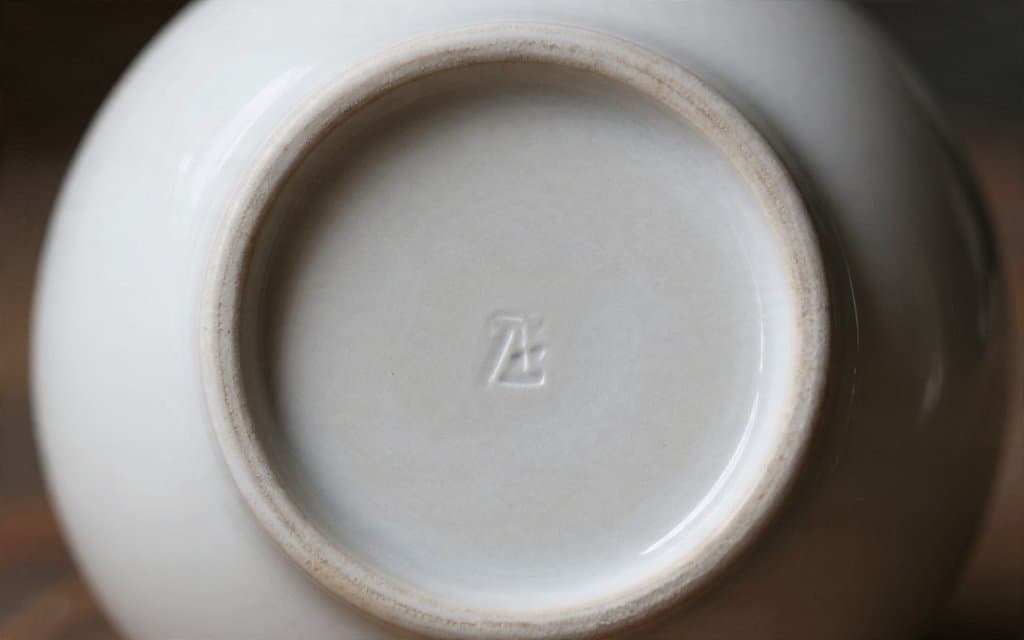
Dating a jar starts on its base. The Society's trademark history shows that Nelson McCoy wares went unmarked from 1910 until around 1927, and the marks shifted every time the company changed hands. Use the table below as a rough guide, since molds stayed in service for years.
| Mark | Years | Owner |
|---|---|---|
| No mark | 1910 to about 1927 | Nelson McCoy, early years |
| Incised NM | From 1934 | Nelson McCoy |
| McCoy, embossed | Early 1940s to late 1960s | Nelson McCoy Pottery |
| McCoy restored | 1968 to about 1973 | Mount Clemens Pottery |
| McCoy with LCC | 1974 to 1985 | Lancaster Colony |
| No McCoy name | 1985 to 1990 | Designer Accents |
The LCC mark is genuine
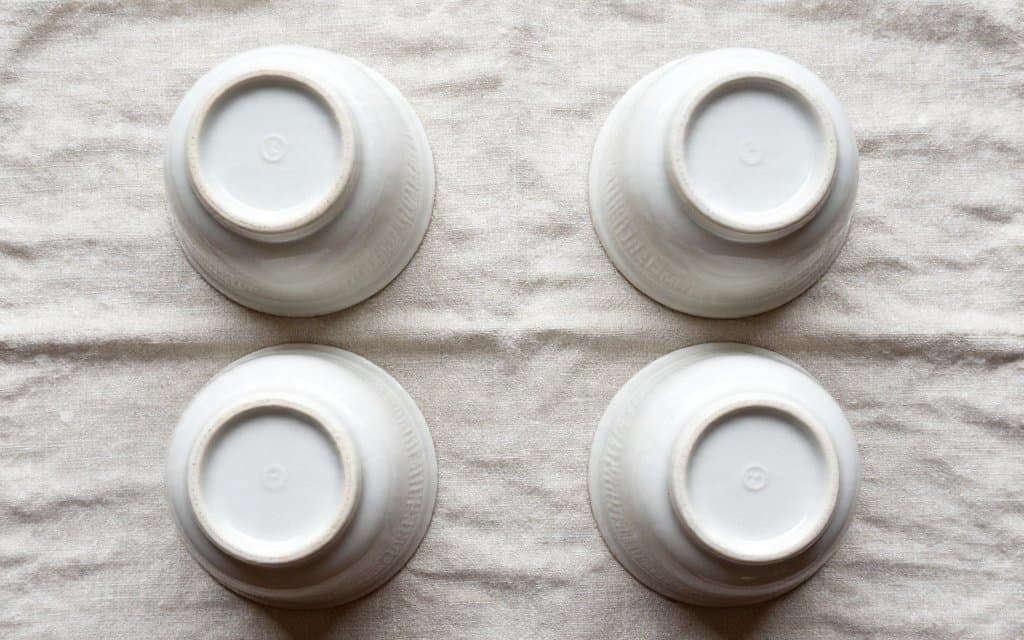
Plenty of sellers assume LCC means a knockoff. It doesn't. Lancaster Colony owned the pottery from 1974 to 1985, brought back the 1940s style McCoy mark, and added LCC and usually USA. Those jars are real factory production, just later and generally less pricey than 1940s and 1950s pieces.
- •No mark at all: early Nelson McCoy, or a fake with no claim
- •NM incised: introduced after Sidney Cope joined in 1934
- •McCoy USA: the classic mid-century stamp collectors expect
- •LCC plus McCoy: Lancaster Colony era, 1974 to 1985
- •Any McCoy mark on a design missing from the reference books
Which vintage McCoy cookie jars are genuine designs?
The fastest test needs no ruler. If the character never appears in the McCoy reference books, the jar is fake no matter how good the stamp looks. The Society points collectors to the Hanson, Nissen and Hanson McCoy Pottery Collector's Reference and Value Guide, whose second volume covers cookie jars.
Characters McCoy really made
- •Bobby the Baker, the jar that resembles the doughboy
- •Clown in a Barrel, a common and genuine character jar
- •Betsy Baker, with rare molds that have a flat two-tier cap
- •Coalby Black Cat, a genuine design that draws steady buyers
- •Freddy the Gleep from 1974, the jar that brings big money
Characters McCoy never made
- •Little Red Riding Hood, the best known fake carrying the mark
- •Snow White and Cinderella, never produced by Nelson McCoy
- •Daisy Cow and Elsie Cow, both marked McCoy, both fakes
- •Donald Duck Turnabout, a fake that still turns up online
- •Mugsie, Whistler, Wilber Pig and the Cobalt Rooster
If a jar has the McCoy name on the bottom but the character isn't in the reference guide, stop there. The mark is the forgery, not the clue.
The 6 percent rule and other checks at the shelf
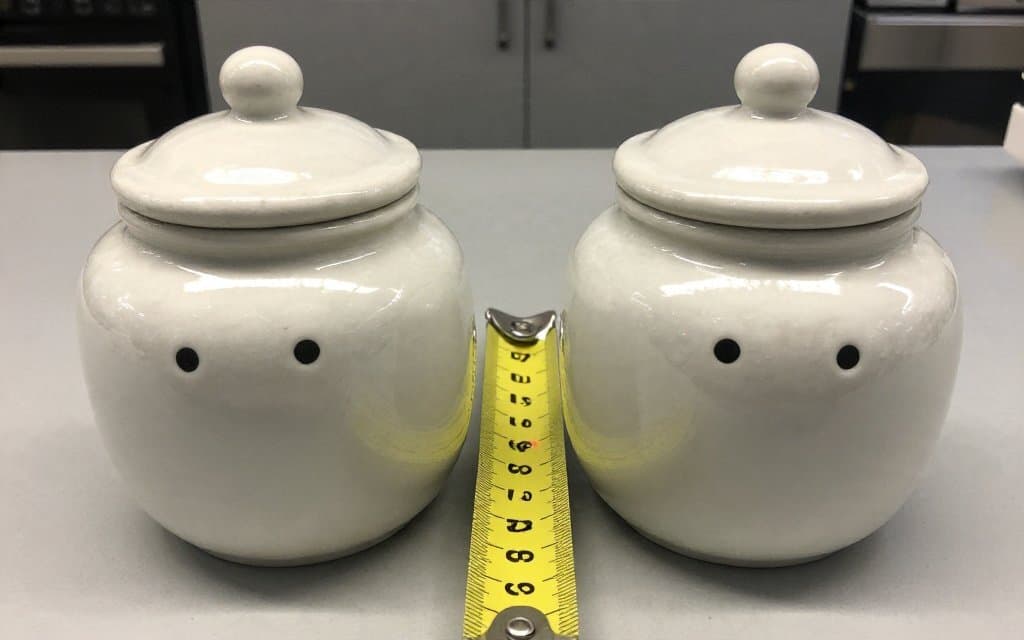
Clay shrinks as it dries and fires. A copy cast from a real jar ends up smaller than the original, so a tape measure catches what a mark won't. The Society's rule of thumb: if the suspect jar's height or length is about 6 percent or more under the genuine measurement, it's most likely a look-alike.
Measure the longest side
- 1.Look up the genuine height in a reference book or Society listing
- 2.Measure the jar's tallest or longest dimension in inches
- 3.Multiply the genuine figure by 0.94 for the 6 percent cutoff
- 4.Treat anything under that number as a probable reproduction
Say the reference lists a jar at 11 inches. Multiply by 0.94 and you get about 10.3 inches, so a jar measuring 10.25 inches is suspect. Genuine jars can vary a little from one another, so treat size as one strike, not a verdict.
Feel the weight and read the glaze
Real jars feel heavy and solid in the hand, and reproductions tend to run somewhat lighter. Genuine glazes are glossy with crisp molded detail, while copies often look cloudy or soft around the edges. Vague seller answers like "almost" or "nearly" to a measurement question are a warning sign too.
What a real McCoy jar is worth next to a fake
Most vintage McCoy pottery isn't a lottery ticket, and jars are no exception. Typical examples sell for around $30 to $75 online, which is still a fine flip on a $5 to $10 thrift price. The money gap opens up at the rare end, where a real jar and a convincing fake can look nearly identical to a casual buyer.
| Jar | Price | Details |
|---|---|---|
| Typical genuine jar | $30 to $75 | Usual online range |
| Freddy the Gleep | $2,520 | 1974 jar, eBay sale, November 2022 |
| Freddie the Gleep | $4,999 | Rare example, sold May 2026 |
| Pesky squirrel | Just over $3,000 | 1961 jar, eBay sale |
| McCoy Santa | Up to $3,000 | Produced in the 1980s |
Those figures come from Antique Trader's McCoy roundup and Tasting Table's reporting on jar sales. A fake has no collector value at all, so buying a $40 Little Red Riding Hood marked McCoy means buying decor. Remember to price in selling costs as well, because eBay fees take a real cut of a $60 jar.
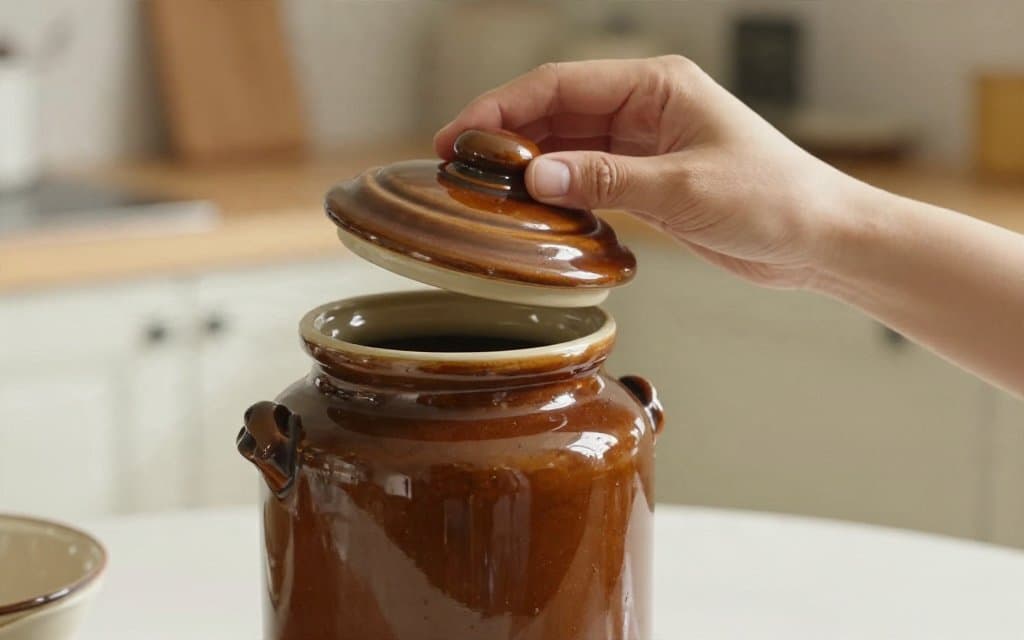
The jars that bring thousands are exactly the ones worth faking. The higher the asking price, the more carefully you should measure.
Condition matters on the real ones. A missing or replaced lid hurts a cookie jar more than almost any other flaw, and chips or hairlines on the rim knock buyers down fast. The same logic applies to other pottery, as our guide to Roseville pottery marks explains for vases and planters.
Questions people ask about McCoy cookie jar value
How can you tell if a McCoy cookie jar is real?
Check three things in order. Confirm the character appears in the McCoy reference books, compare the measurements against a genuine example using the 6 percent rule, and check that the mark fits the era. A jar that passes all three is very likely genuine.
Are antique McCoy cookie jars always marked?
No. Nelson McCoy wares from 1910 to about 1927 were unmarked, and the Designer Accents years from 1985 to 1990 dropped the McCoy name from the mark entirely. An unmarked jar can still be genuine if the design and size check out.
Is Brush-McCoy the same as Nelson McCoy pottery?
They're different companies. J.W. McCoy founded his pottery in Roseville in September 1899, it became Brush-McCoy in December 1911, and the McCoy name was dropped in December 1925. Nelson McCoy started his own company in April 1910, and that's the one behind the famous jars.
What is the most valuable McCoy cookie jar?
Tasting Table reported that a Hillbilly Bear set sold for $25,000 in 2018, a record at the time. Freddy the Gleep is the rare jar thrifters are most likely to recognize, with documented sales from about $2,500 to nearly $5,000. Both are heavily faked, so measure before you pay.
Want more practice spotting reproductions? Our guide to depression glass reproductions uses the same size and mold logic, and our Hummel plates breakdown covers another common thrift shelf find. You can also browse more guides at thrifting.app.
Ready to stop guessing about that cookie jar on the bottom shelf? Download Thrift Scanner, snap a photo, and see real sold prices before you pay. Get the app here: iOS or Android.