


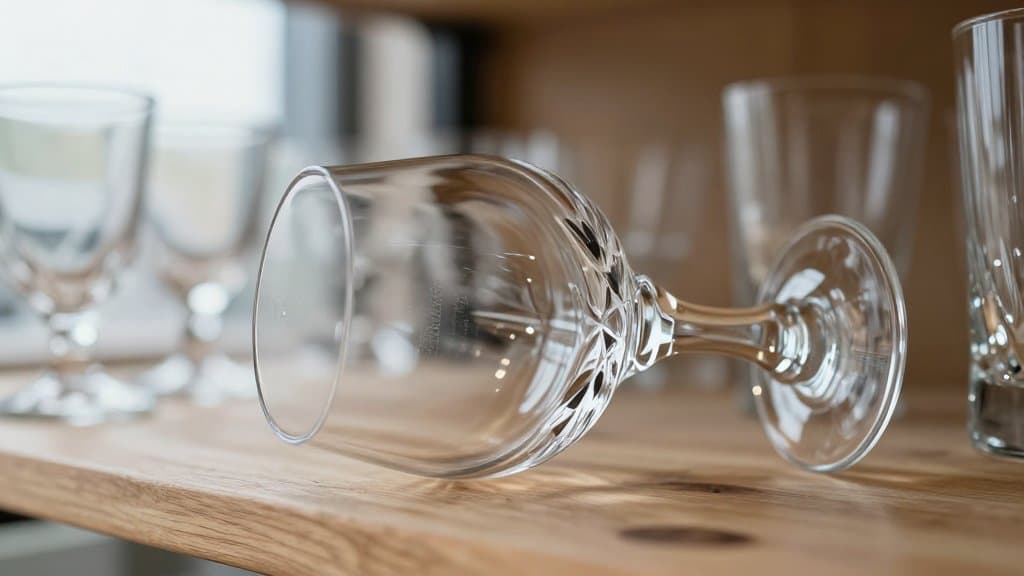
Most Waterford on a thrift shelf is worth a few dollars a glass, not the $80 or more it cost new. The Waterford crystal marks on the base are how you sort the $2 claret from the piece that's worth carrying to the register.
That gap surprises people. A Lismore wine glass retails for about $80 to $90 a stem, yet a pair of Lismore goblets sold for $31 on eBay in October 2025, according to a stemware valuation piece from Home Transition Pros. Reading the base takes ten seconds and saves you from paying retail-minded prices for glass that resells at a fraction.
How to read Waterford crystal marks on the base
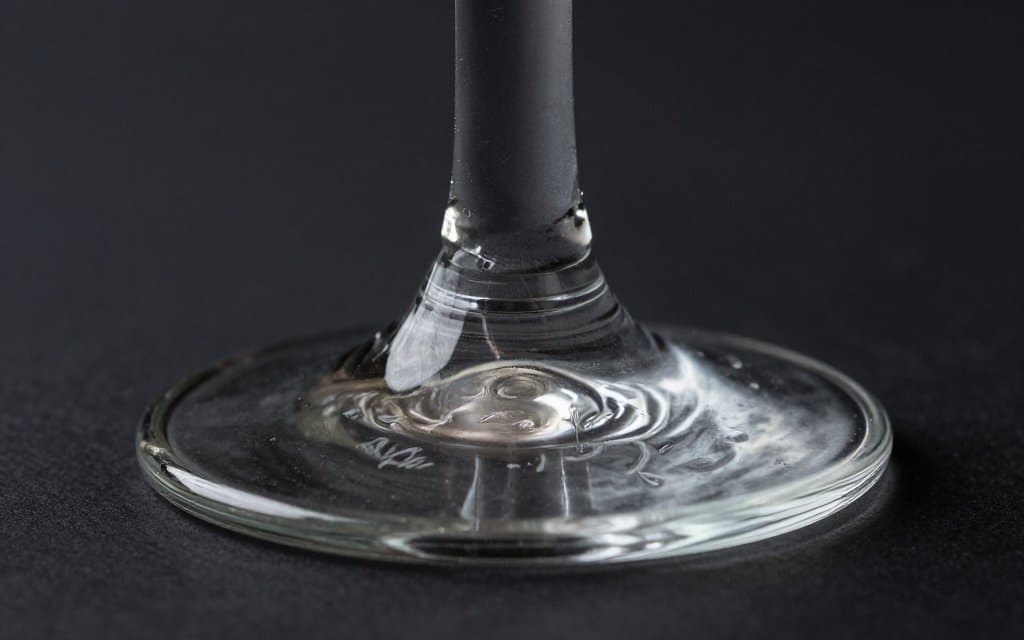
Flip the piece over and tilt it toward a window. The mark is faint, often tucked on the foot of a stem or near the edge of a vase base, and it's easy to miss under store lighting.
The Gothic script acid stamp
Genuine pieces usually carry an acid stamp reading Waterford in Gothic script on the foot. It looks frosted rather than cut, and you'll feel almost nothing when you run a fingernail over it. Older post-revival glass is the most likely to have it.
Seahorse stickers and Marquis labels
New or barely used pieces may still wear a foil sticker with a seahorse. Marquis pieces are different: they carry a blue rectangular label, a square foil label reading Marquis, or an etched watermark that says Marquis by Waterford.
- •Gothic script Waterford etched on the foot: main line glass
- •Seahorse foil sticker: newer stock, often barely used
- •Blue rectangle or Marquis foil label: the cheaper Marquis line
- •Etched Marquis by Waterford: still Marquis, price it that way
- •No mark at all: check weight, cut quality and pattern before buying
Marquis is the line that fools most buyers
Waterford launched Marquis in 1991 as its first new line since the founding. It's crystalline glass with more modern patterns, sold through stores like Marshalls, TJ Maxx and Ross, and it averages $10 to $15 a glass on resale.
One bulk buyer of Waterford states plainly that it isn't buying Marquis by Waterford at all, because of low resale values. If a dealer won't take it at $1, don't pay $8 for it.
That doesn't make Marquis worthless. A boxed, unused set can still sell to a gift buyer. It just means the logo on the label isn't the same as the logo on the main line, and your offer should reflect that.
Spotting real lead crystal when there's no stamp
Lead crystal was developed in England by George Ravenscroft in 1675, and glass needs at least 24% lead oxide to be called lead crystal. That lead is what gives proper lead glassware its weight, its clarity and the sharp edges on deep cuts.
- •Heft it: real lead crystal feels heavy for its size
- •Run a thumb along the cuts: they should be crisp, not molded
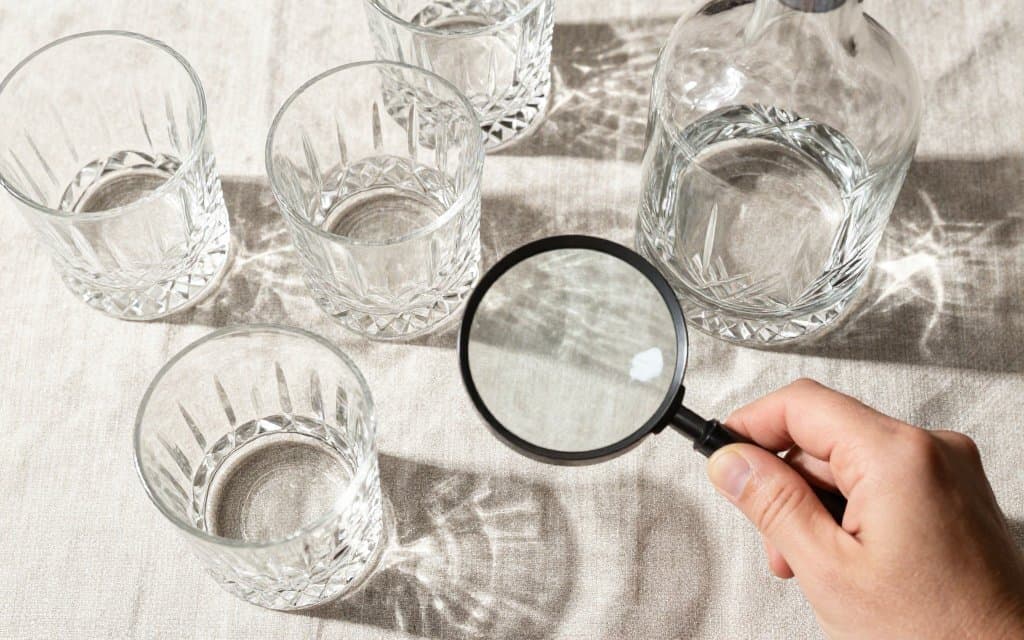
- •Look through it: no bubbles, no cloudy haze, no seams
- •Match the cut pattern against Waterford's catalog photos
- •Feel the rim: chips or roughness kill the resale outright
If it passes those checks but has no stamp, price it as unmarked crystal. Buyers pay for the name, and a piece you can't prove is Waterford sells like any other good cut glass. Our guide to Murano glass tells covers the same habit of trusting evidence over labels.
What Waterford crystal glasses actually sell for
Here's the honest floor. Sell4Value, which buys collections in bulk, publishes its per-glass prices for Lismore and adds a premium for a handful of other patterns.
| Piece | Buy price | Notes |
|---|---|---|
| Lismore flute or goblet | $4 | Base Lismore rate for larger stems |
| Lismore wine or highball | $3 | Most common size on thrift shelves |
| Lismore claret | $2 | Smaller stem, lower price |
| Lismore cordial or shot | $1 | Rarely worth reselling alone |
| Kelsey stem | Lismore rate + $7 | Highest premium the buyer lists |
| Marquis by Waterford | Not bought | Low resale values, per the buyer |
Those are wholesale numbers, so selling one at a time yourself will beat them. Still, they tell you where the market sits. Lismore is the most common pattern Waterford ever made, and supply is huge.
Bulk buyers want mint glass only: no chips, no cracks, no odors, and a smooth rim. Damaged pieces are generally valued at half or less of clean ones, so inspect every rim before you buy.
Where Waterford crystal value actually shows up
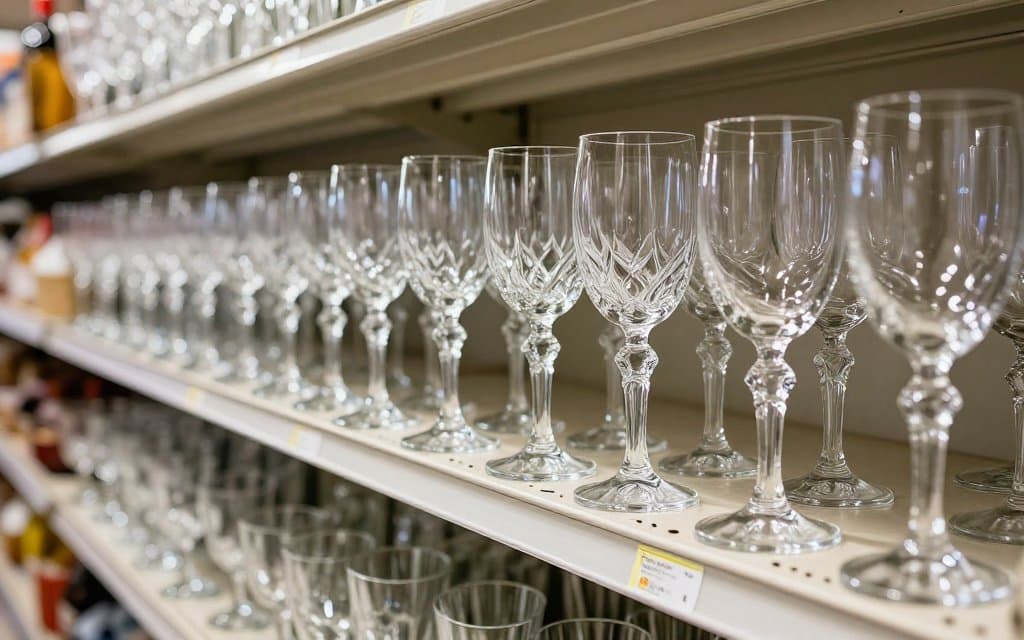
Say you pay $5 a glass for six Lismore wine glasses at a thrift store. That's $30 in. If a pair goes for $31 on eBay, six might bring around $90 before fees and shipping, and heavy crystal costs real money to ship safely. Run the numbers with our breakdown of eBay fees on thrift flips before you commit.
Better patterns than Lismore
The bulk price list adds $4 to $7 per glass above Lismore for Colleen, Powerscourt, Castlemaine and Kelsey. Those less common cuts are where a matching set starts to pay.
- •Kelsey: plus $7 per glass over the Lismore rate
- •Castlemaine: plus $6 per glass over the Lismore rate
- •Powerscourt: plus $5 per glass over the Lismore rate
- •Colleen Tall Stem: plus $5, Colleen Short Stem: plus $4
Vases, pitchers and signed pieces
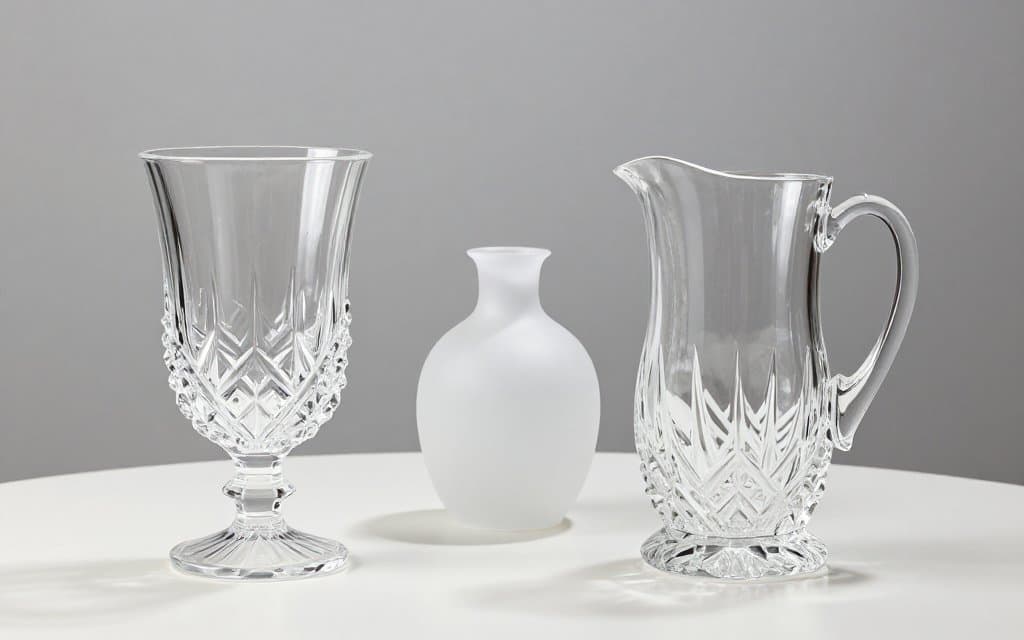
A heavy cut vase or a vintage waterford crystal pitcher sells as one item, so you ship one box instead of six. Even a small waterford crystal vase is worth flipping over if the Gothic stamp is there. Pieces signed by a Waterford ambassador as special issues are worth more again, so check the base for a signature as well as the stamp.
Irish-made pieces versus newer production
George and William Penrose started the Waterford Glassworks in 1783, and it closed in June 1851. Czech-born Charles Bacik revived the name in 1947, and designer Miroslav Havel created the Lismore pattern in 1952.
Waterford Wedgwood went into receivership in January 2009, and the Kilbarry plant shut on 30 January that year. Most production now happens outside Ireland, in Slovenia, the Czech Republic, Hungary and Germany, under Fiskars, which completed its purchase in 2015.
Older Irish-made glass with the Gothic stamp is what collectors hunt. A newer piece with a seahorse sticker is still real Waterford, but it competes with outlet stock and current retail.
Questions resellers ask about thrifted Waterford
Is Waterford crystal worth anything?
Yes, but usually less than people hope. Common Lismore stems bring $1 to $4 each from bulk buyers and more when you sell them yourself. Rarer patterns, vases, pitchers and signed pieces are where the real margin lives.
Where is it made these days?
Ask where Waterford crystal is made today and the answer is mostly central Europe: Slovenia, the Czech Republic, Hungary and Germany. The Waterford city site still melts over 750 tonnes of crystal a year for its visitor centre and showroom.
Does the original box raise the price?
For a buyer on eBay, a box helps a piece look gift-ready and protects it in shipping. Bulk buyers don't care, though. Sell4Value pays the same with or without original boxes.
Want a second opinion before you pay? Snap the piece with our scanner to compare it against sold listings, or read how color drives depression glass prices for another glassware category worth knowing.
Ready to stop guessing at the glass shelf? Download Thrift Scanner, snap a photo of that Waterford stem or vase, and see real sold prices before you pay. Get the app here: iOS or Android.