


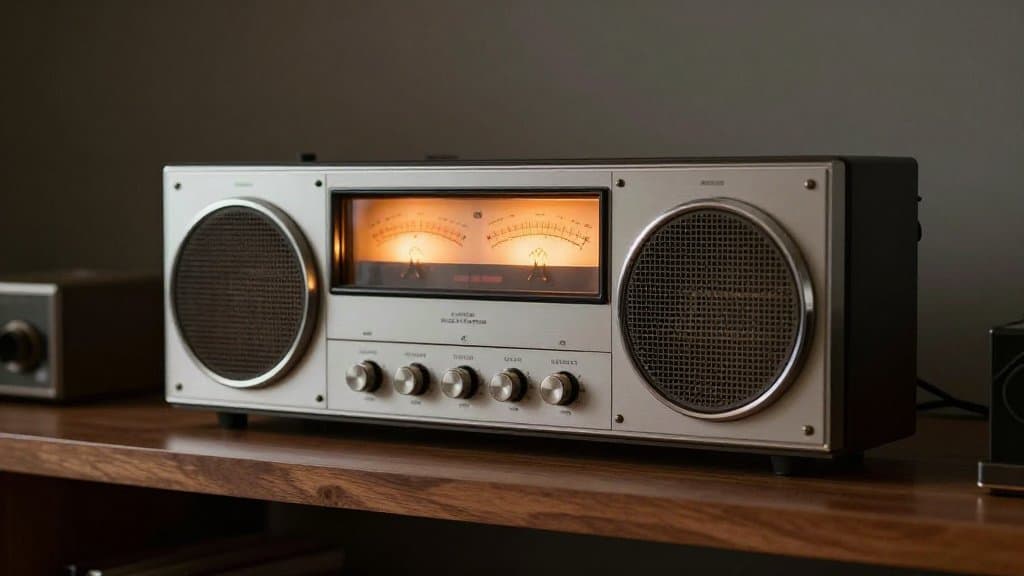
Most people walk past the heavy silver box on the bottom shelf and grab the lamp instead. That box is often a vintage AM FM stereo receiver, and the good ones sell for far more than the thrift tag suggests. A clean 1970s unit can clear $500, and the rare models climb well into four figures.
Here is the short version. A vintage AM FM stereo receiver from the golden decade of hi-fi, roughly 1971 to 1980, carries serious collector demand today. A working vintage stereo receiver trades for two to five times the price of a dead one, so knowing what you are holding before you buy is the whole game.
Thrifters already comb the audio aisle for records worth money. The vintage AM FM receiver sitting next to those crates is frequently the bigger payday, and it is the one almost nobody else recognizes.
Why a vintage AM FM stereo receiver sells for real money
Demand comes down to sound and looks. These units were built when brands competed on watts and weight, so the amplifier sections are overbuilt by today's standards. Collectors want that warm analog tone, and decorators want the glowing dial and brushed metal face sitting on a shelf.
Scarcity handles the rest. A brand like Marantz made plenty of receivers, but the clean, unmodified, fully working examples get harder to find every year. That gap between supply and demand is why a vintage stereo receiver keeps climbing in price.
A receiver that powers up cleanly through both channels is worth two to five times one that stays dark, so always test before you buy.
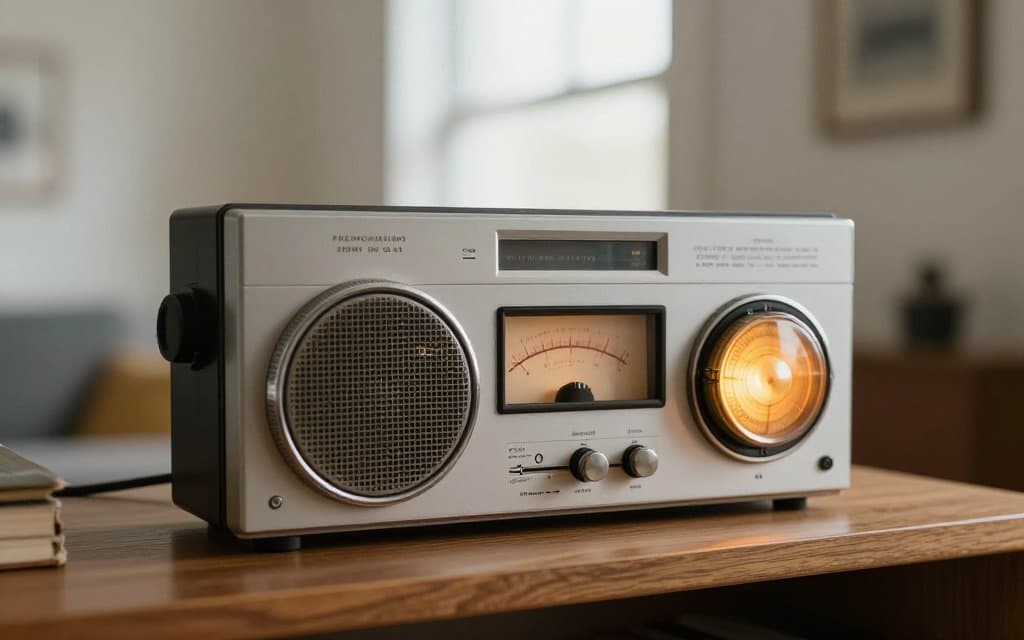
- •Working units sell for 2 to 5 times more
- •Silver faceplates from the 1970s draw buyers
- •Heavier 1970s builds beat lighter 1980s gear
- •Original wood side cases lift the price
- •Bright, even dial lighting closes the sale
How to read the model number on the faceplate
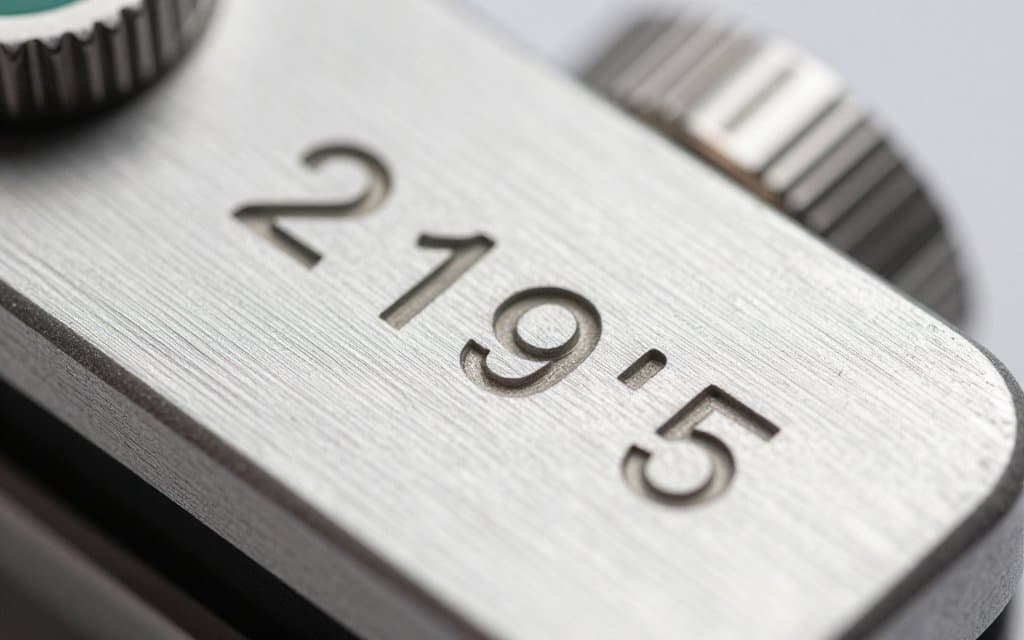
Every receiver tells you what it is if you know where to look. The model number sits on the front faceplate, usually near the tuning dial, and the serial number hides on the back panel. Start there before you judge anything by sight.
The Marantz naming shortcut
Marantz made this easy. On the classic 22 series, the last two digits of the model number equal the watts per channel. A Marantz 2215 pushes 15 watts, a 2230 does 30, and the sought after 2270 delivers 70 watts per channel into 8 ohms, according to Classic Receivers.
| Marantz model | Last digits | Watts/ch |
|---|---|---|
| Marantz 2215 | 15 | 15 |
| Marantz 2230 | 30 | 30 |
| Marantz 2270 | 70 | 70 |
| Marantz 2285B | 85 | 85 |
Pioneer, Sansui, and the rest
Pioneer used the SX prefix, and higher numbers meant more power and prestige. A Pioneer SX 780 sits in the friendly mid range, while the Pioneer SX 1980 was a monster flagship that resellers chase hard. Sansui, Kenwood, and Onkyo followed similar logic, so learn each brand's prefix and its ladder.
With a unit in hand, run a fast check before you commit any money. A minute spent on the faceplate, the back panel, and the power switch tells you almost everything that matters about a find.
- •Find the model number on the front faceplate
- •Read the watts per channel from the specs
- •Locate the serial number on the back panel
- •Note a silver or champagne colored face
- •Power it on and test both channels
The silver face era and why 1970s gear wins
Audio people talk about the silver face era for a reason. From about 1972 to 1979, most premium receivers wore brushed aluminum faceplates, backlit dials, and large VU meters. That look defines the collectible vintage stereo equipment market today.
The switch to black plastic faces in the 1980s tracked with cheaper, lighter builds. There are exceptions, but a heavy silver unit from the 1970s almost always outsells a plastic one from the 1990s. Weight is a rough but honest proxy for value in vintage audio equipment.
If you can barely lift it and the face is brushed silver, you are probably holding money.
What each vintage stereo receiver is actually worth
Prices swing with model, condition, and service history, but the ranges are real. A serviced Marantz 2270 runs from $500 to $3,000 depending on cosmetics and whether it has been recapped, based on current resale data from vintage audio sellers.
Pioneer flagships climb higher. A properly serviced Pioneer SX-1250 commands $2,500 to $4,500, a restored Pioneer KR-9600 lands between $1,200 and $2,200, and clean mid tier Pioneer units move fast at $500 to $1,000. For a lower risk start, a common entry level model like the Pioneer SX 450 is an easy first flip once you confirm it powers on.
| Model | Condition | Resale range |
|---|---|---|
| Marantz 2270 | Serviced | $500 to $3,000 |
| Pioneer SX-1250 | Serviced | $2,500 to $4,500 |
| Pioneer KR-9600 | Restored | $1,200 to $2,200 |
| Mid-tier Pioneer | Clean | $500 to $1,000 |
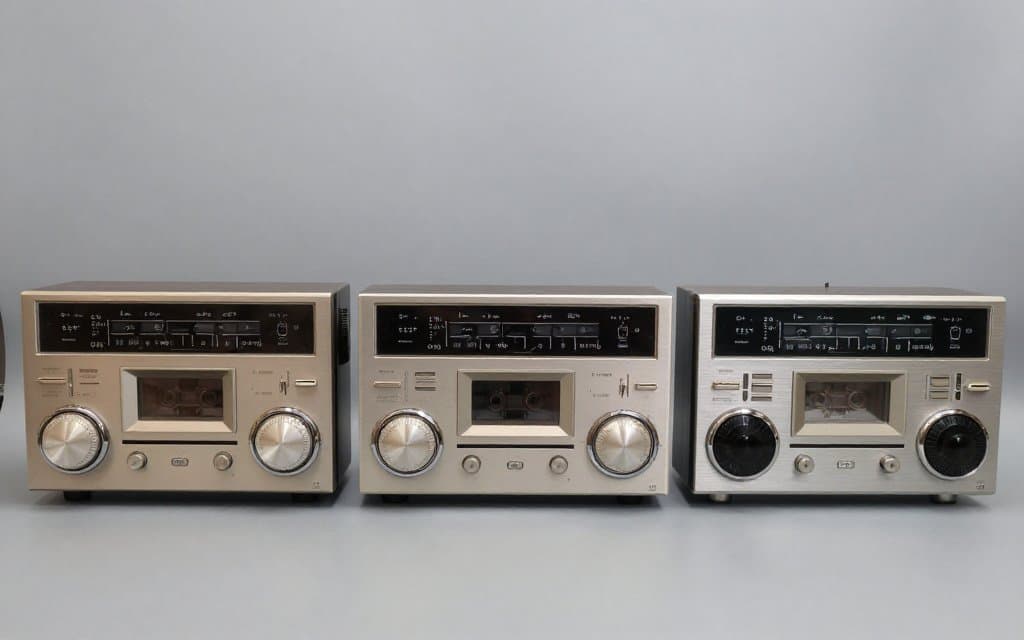
The true grails go higher. The Marantz 2600 from 1978 to 1980 pushed 300 watts per channel and belongs to the monster receiver club, so a clean one is a rare, high dollar find. If you spot a separate vintage stereo power amplifier from the same brands, those can carry similar money.
Repairing vintage stereo receivers adds real value
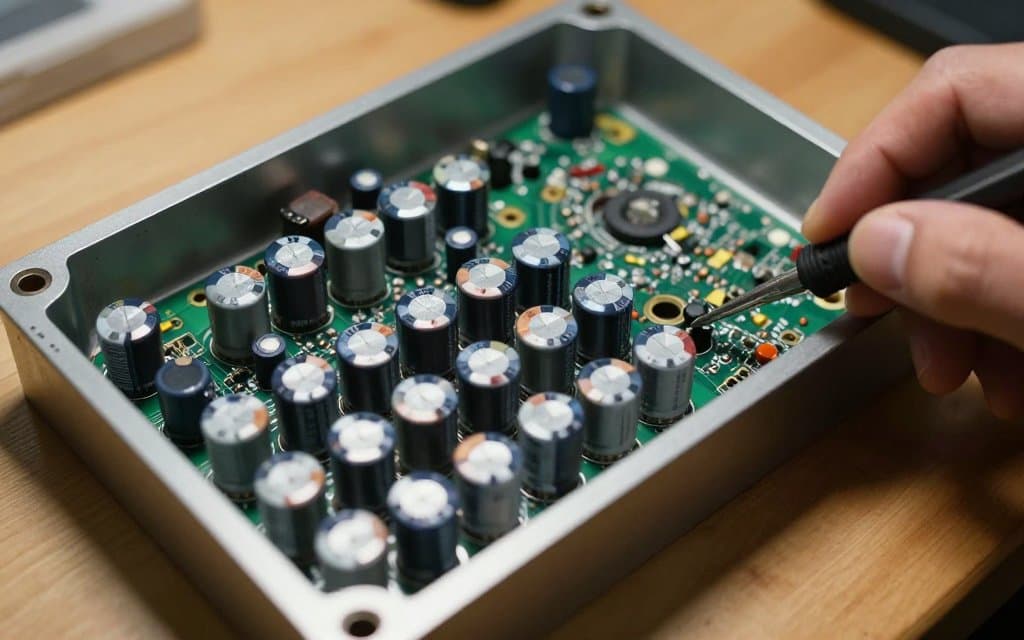
Condition is the one lever you can actually pull. A unit that has been recapped, meaning its aging capacitors were replaced, sells for far more than an untouched one. Repairing vintage stereo receivers is a real trade, and buyers pay a premium for a documented service.
You do not need to fix anything yourself to profit. Selling a working, unserviced unit honestly as is can still clear a strong margin. Just describe the flaws plainly, the way you would when flipping a Canon AE-1 film camera or any tested piece of gear.
- •Scratchy volume knobs point to dirty pots
- •A dead channel usually means bad capacitors
- •Any burnt smell is a reason to walk away
- •Dim dial bulbs are cheap, easy fixes
What this means for your thrift flip
Here is the money math. Estate sales and thrift shelves still price these units as old junk, often $10 to $40. The estate find where someone grabbed a receiver for $11 is not a myth, it is a Tuesday. Buy smart at the Goodwill outlet bins and the spread gets wider still.
Say you pay $20 for a working Marantz 2270, spend $150 on a professional recap, and sell it serviced for $900. That is roughly $730 in profit on a single flip. Even a plain mid tier Pioneer bought for $15 and sold clean at $500 is a return most vintage stereo systems buyers would take every day of the week.
Pull a $15 receiver off a Goodwill shelf, sell it clean, and one flip can clear several hundred dollars.
The trick is knowing the value before you carry it to the register. Scan the faceplate with Thrift Scanner and check live sold prices in seconds, the same way you would price a gold jewelry find. More sourcing tips live at Thrifting.app.
Common questions about vintage receivers
How can I tell if my vintage receiver is worth money?
Start with the model number on the faceplate and search sold listings, not asking prices. Real weight and a silver 1970s face are strong early signs. A working unit from Marantz, Pioneer, Sansui, or McIntosh almost always beats a light plastic 1990s receiver.
Are silver face receivers better than black ones?
Usually yes, at least for resale. Silver face models from the 1970s came from the era of heavier, higher quality builds, and collectors prize the look. Plenty of excellent black face units from the 1980s exist, but on average the silver ones sell for more.
Should I repair a vintage receiver before selling?
It depends on the model. For a valuable unit like a Marantz or a high end Pioneer, a professional recap often pays for itself several times over. For a common receiver, selling it honestly as a tested, working, unserviced piece is usually the smarter move.
What are the best vintage receivers to look for?
The best vintage receivers for profit are the heavy 1970s flagships from Marantz, Pioneer, Sansui, Kenwood, and McIntosh. Grab any working silver face unit you can buy cheap, then confirm the model and the going rate before you commit real money.
Ready to stop guessing and start profiting on the audio aisle? Thrift Scanner identifies that dusty receiver in seconds, reads the model, and shows real sold prices so you never leave money on the shelf or overpay again. Get the app here: iOS or Android.