


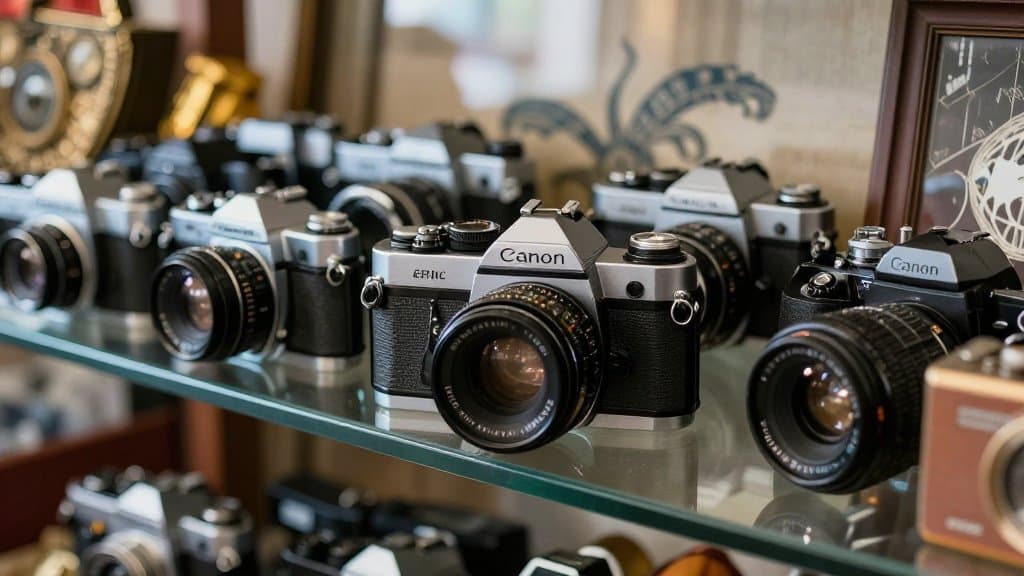
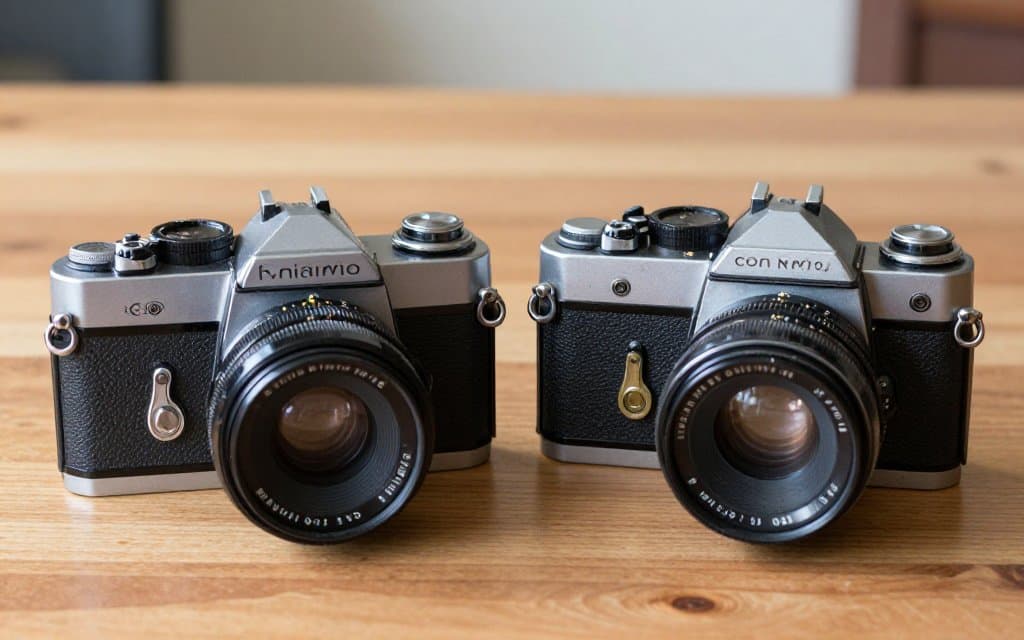
Walk into almost any thrift store and you will spot a black and chrome SLR sitting on a shelf for $15. Nine times out of ten it is a Canon AE-1, the best selling 35mm film camera of its era. The real question for a reseller is simple: is that Canon AE1 film camera worth money, or just heavy shelf decoration?
The honest answer is that a working Canon AE1 film camera usually sells for $100 to $250, which beats the shelf price but will not fund a vacation. The bigger money in any vintage film camera hides in a few models most shoppers walk right past. Like our guide to vinyl records worth money, the payoff lives in small details that separate a $150 body from a $3,000 one.
Why the Canon AE1 Film Camera Fills Thrift Shelves
Canon released the AE-1 in 1976 and sold it by the millions, which is exactly why you keep finding one. It was among the first affordable SLRs with a built in electronic brain, and film students bought them for decades. The Canon AE-1 vintage camera earned its reputation as the friendliest entry point in the hobby, so supply stays high and most prices stay modest.
Demand is climbing anyway. A resurgence of film photography has created strong demand for usable bodies from the 1960s through the 1990s, according to camera value guides. That rising tide lifts even common cameras, so a clean AE-1 that resellers once ignored now moves quickly at $150.
- •Brand pedigree from Leica, Hasselblad, or Contax
- •A shutter that fires cleanly at every speed
- •A standard film format such as 35mm or 120
- •The original box, manual, strap, and lens caps
- •Cult status among fashion and street shooters
A branded camera with its original box can be worth far more than the same model with no papers. Completeness and condition move the price more than age alone.
What a Canon AE1 Film Camera Is Worth Today
A tested, working Canon AE-1 with the common 50mm f/1.8 lens sells in the $100 to $250 range, depending on cosmetic wear. The later AE-1 Program usually brings a little more thanks to its extra program mode. A body with a frozen shutter, the classic squeal on release, or fungus in the lens can lose half its value as a repair project.
You can push an AE-1 higher without finding a rarer body. A complete kit with the original box, manual, and strap adds 50 to 100 percent over a bare body, and a sharp Canon FD prime such as the 50mm f/1.4 often sells well on its own. Fresh light seals and a working meter let you list at the top of the range.
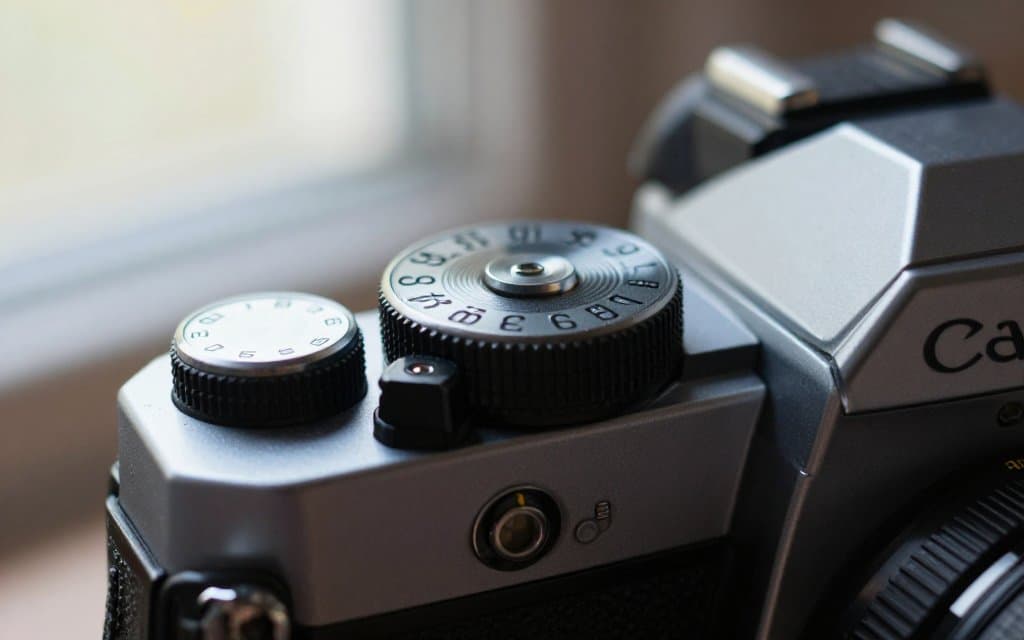
The Ever Popular Canon AE1 and AE1 Program. Here's What You Need To Know Before Buying One.
The table below sets the AE-1 against the cameras that actually move serious money. Format and brand do the heavy lifting here, since a medium format film camera or a Leica rangefinder can outsell a whole shelf of AE-1 bodies.
| Model | Value Range | Format |
|---|---|---|
| Canon AE-1 | $100 to $250 | 35mm SLR |
| Nikon F2 | $300 to $600 | 35mm SLR |
| Leica M6 | $3,200 to $9,000 | 35mm |
| Contax T2 | $700 to $2,000 | 35mm compact |
| Hasselblad 500C/M | $1,500 to $4,000 | 120 medium |
| Rolleiflex 2.8F | $1,500 to $3,800 | 120 TLR |
| Mamiya 7II | $3,400 and up | 120 medium |
How to Date and Identify Any Vintage Film Camera
Every vintage camera hides its story in small stamped codes. Serial numbers usually sit on the bottom plate, inside the film compartment, or on the lens barrel. Write that number down before you check sold listings, because it can separate a common run from a rare early batch.
Canon stamped an alpha date code inside the film chamber, where the first letter marks the year, running from A for 1960 through Z for 1985 and then repeating, per collector identification guides. Hasselblad hid two or three letter codes in its serials to flag the build year. These work like the stamps on a lighter, so our Zippo date code guide uses the same logic.
Read the lens and film format first
The lens tells you as much as the body. Its markings list the maker, the focal length such as 50mm, and the maximum aperture such as f/1.8, and glass from Carl Zeiss or Leica lifts any price. Format matters just as much, since a 35mm film camera or a 120 format body holds steady value while 110, 126, and disc formats have almost no buyers left.
- 1.Find the brand and model on the top plate
- 2.Record the serial number and any date code
- 3.Read the lens for focal length and aperture
- 4.Confirm the film format is 35mm or 120
- 5.Search sold listings for that exact model
The 35mm Film Camera Models That Beat the AE-1
Here is where thrift luck turns into rent money. A pocket sized 35mm film camera can outsell a full SLR kit, because fashion and street photographers made a few compacts famous. When a photographer like Terry Richardson works with one, resale prices follow.
The Olympus Mju II film camera, released in 1997, is the poster child. Olympus sold more than 20 million of them, yet clean copies now run $250 to $750. It weighs under 150 grams, is splash proof, and carries a sharp 35mm f/2.8 lens, which is why it climbed from around $30 in 2013 to hundreds today.
The Contax T2 sits at the top of the compact heap. A serviced 1990 body now sells near $2,000, up from $400 to $500 fifteen years ago, on the strength of its titanium shell and Carl Zeiss Sonnar 38mm f/2.8 lens, according to buyer guides. The Yashica T4 offers similar Zeiss glass for around $550, and the Ricoh GR1v with its 28mm lens runs $700 to $1,300.
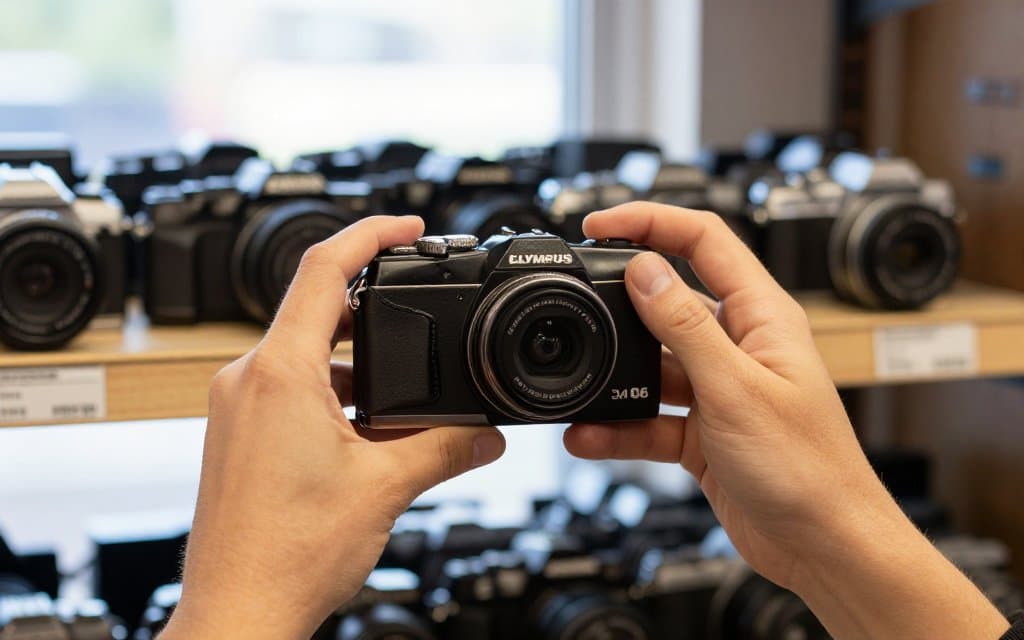
| Model | Price Range | Lens |
|---|---|---|
| Olympus Mju II | $250 to $750 | 35mm f/2.8 |
| Yashica T4 | Around $550 | Zeiss 35mm |
| Contax T2 | Near $2,000 | Zeiss 38mm f/2.8 |
| Ricoh GR1v | $700 to $1,300 | 28mm |
| Nikon 35Ti | $700 to $1,300 | Titanium 35mm |
The Olympus Mju II sold more than 20 million units in the 1990s, yet good copies are now hard to find and command $250 to $750. Supply dried up while demand exploded.
Medium Format Film Camera Payoffs and 120 Format Giants
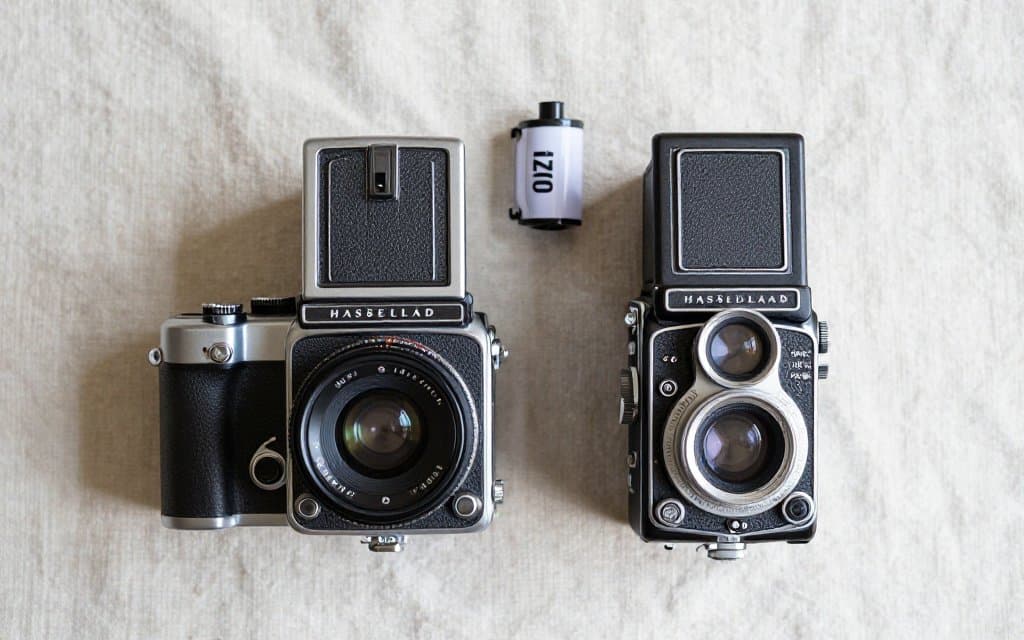
Move up to a medium format film camera and the numbers get serious. These bodies shoot the larger 120 format film, which gives a negative several times the size of 35mm and a look buyers pay for. A Hasselblad 500C/M sells for $1,500 to $4,000, and a Mamiya 7II starts around $3,400.
The twin lens reflex camera is the classic medium format shape, with two stacked lenses and a waist level finder. A Rolleiflex 2.8F, the crown jewel of that world, brings $1,500 to $3,800 in good order. If you prefer a medium format SLR camera, the Hasselblad system with its swappable film backs is the one collectors chase, and Hasselblad medium format bodies rarely sit unsold.
Leica rangefinders and the top of the market
No vintage camera name carries more weight than Leica. The Leica M6 camera is one of the most sought after 35mm rangefinders on the planet, with excellent bodies near $3,200 and mint boxed examples close to $9,000. An earlier Leica M3 from 1954 still brings $1,500 to $3,000, and a first year Leica from the 1920s can reach $5,000 to $10,000.
Condition Checks That Make or Break Resale Value
Condition decides everything once you know the model. A camera in excellent shape can be worth three to five times the same model in fair condition, so a two minute test at the counter pays off. Fire the shutter at every speed and listen to the slow ones such as half a second, since sticky slow speeds are the most common fault.
- •A frozen shutter or a squeal on release
- •Fungus or haze inside the lens glass
- •Crumbling foam light seals on the door
- •Corrosion in the battery compartment
- •Dents or brassing that signal hard use
Shine a phone light through the open film gate to check a cloth shutter for pinholes, and press the foam seals to see if they have turned to goo. Neither is a dealbreaker, since both are cheap fixes, but they give you room to negotiate on gear sourced from Goodwill outlet bins. When you are unsure, run a photo through Thrift Scanner to pull real sold prices before you buy.
Working cameras are almost always worth more than broken ones. A dead shutter or lens fungus can cut a top model's value in half, so test before you spend.
Questions Thrifters Ask About Film Camera Value
Is a Canon AE1 film camera worth money?
Yes, but modestly. A working Canon AE1 film camera with a 50mm lens sells for $100 to $250, while a broken one drops toward project prices. It is a dependable seller because so many people want a first film camera, just not a jackpot on its own.
How do I know if my vintage film camera is valuable?
Start with the brand and model, then the serial number and film format. A vintage film camera from Leica, Hasselblad, Contax, or Rolleiflex in 35mm or 120 format carries the most value, and working condition with the original box can double the price.
Which 35mm film camera sells for the most?
Among common finds, the Contax T2 leads the compacts near $2,000, and the Leica M6 rangefinder tops $3,000. Both have to work, since a dead shutter or fungus can cut a top 35mm film camera value in half.
Are medium format film cameras worth more than 35mm?
Often, yes. A medium format film camera such as a Hasselblad 500C/M or Mamiya 7II shoots the larger 120 format and sells for thousands, well above a typical 35mm SLR. The bigger negative and professional reputation drive that premium.
Ready to stop guessing whether that shelf SLR is a $15 mistake or a $2,000 sleeper? Snap a photo and let Thrift Scanner identify the brand, model, and real market value from millions of sold listings before you hand over a dollar. Get the app here: iOS or Android.