


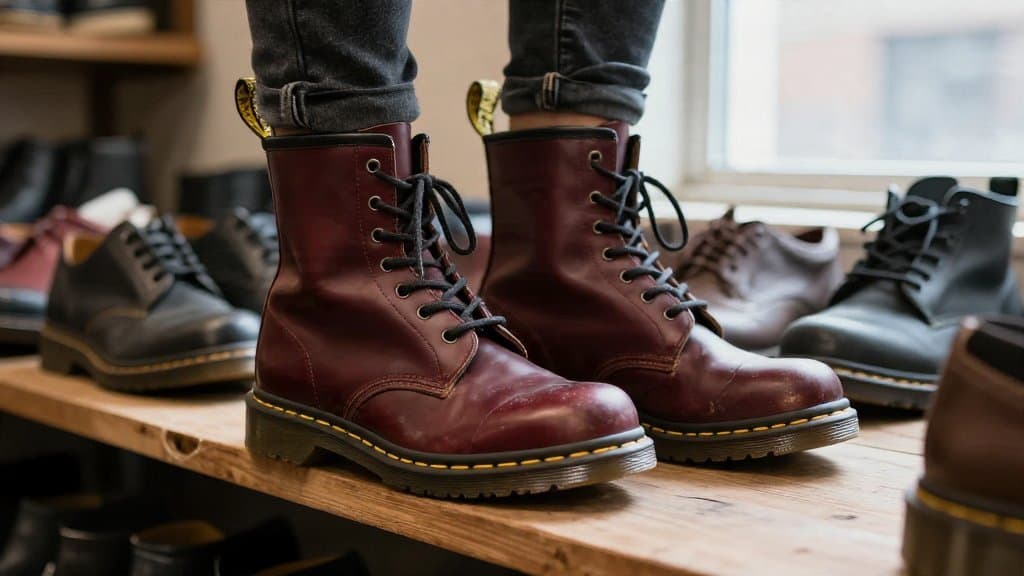
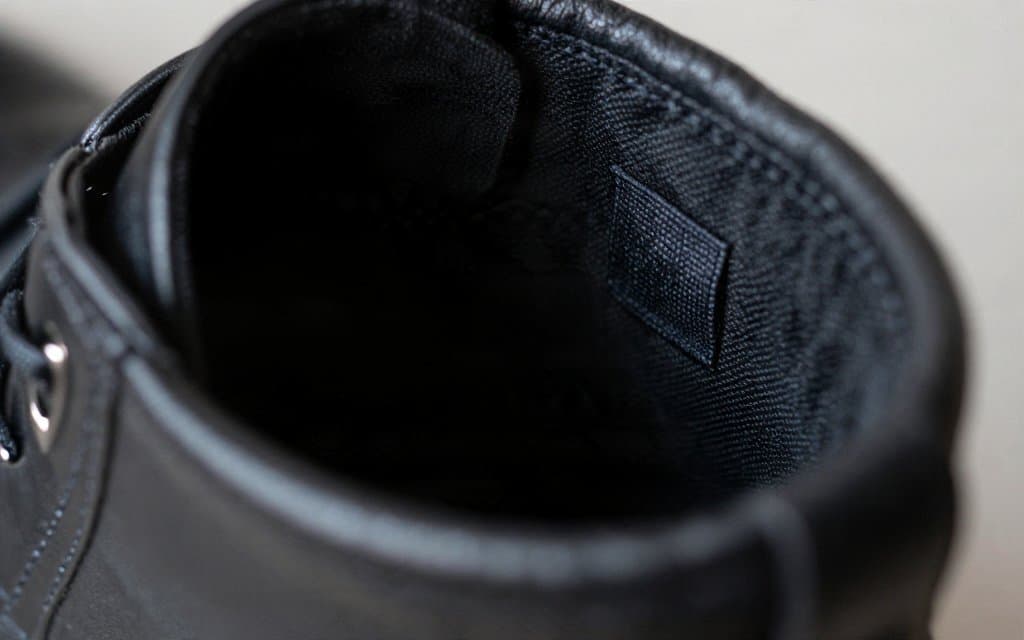
Most of the Dr Martens 1460 smooth leather boot pairs you'll find on a thrift rack were made in Asia, and the few made in England are the ones worth real money. The difference is printed on a small label inside the tongue, so you can check it before the boots ever reach the register.
Here's why that label matters. On 1 April 2003, Dr Martens stopped making shoes in the UK and moved production to China and Thailand, closing five factories and two shops and cutting more than 1,000 jobs, according to the brand's documented history. By 2018 the company was producing about ten million pairs a year, and only one percent came from the UK. That scarcity is the whole reason made in England Doc Martens carry a premium when they turn up secondhand.
Where the Dr Martens 1460 smooth leather boot story starts
The R. Griggs Group bought the UK rights to Klaus Maertens' air-cushioned sole in 1959, and the 1460 boot arrived on 1 April 1960. It was an eight-eyelet, cherry-red design, and its name is simply that launch date. The three-eyelet 1461 shoe followed a year later, in 1961.
The 2003 split that created two kinds of Docs
Production came back to the Cobbs Lane factory in Wollaston, Northamptonshire, in 2004, but only as a small premium line. So a pair made before the move and a pair from today's English line share one thing: neither came off the much larger Asian production run. Everything else on the shelf did.
In 2018 Dr Martens made roughly ten million pairs, and about 1 percent of them came out of a UK factory. That's why an English pair is worth stopping for.
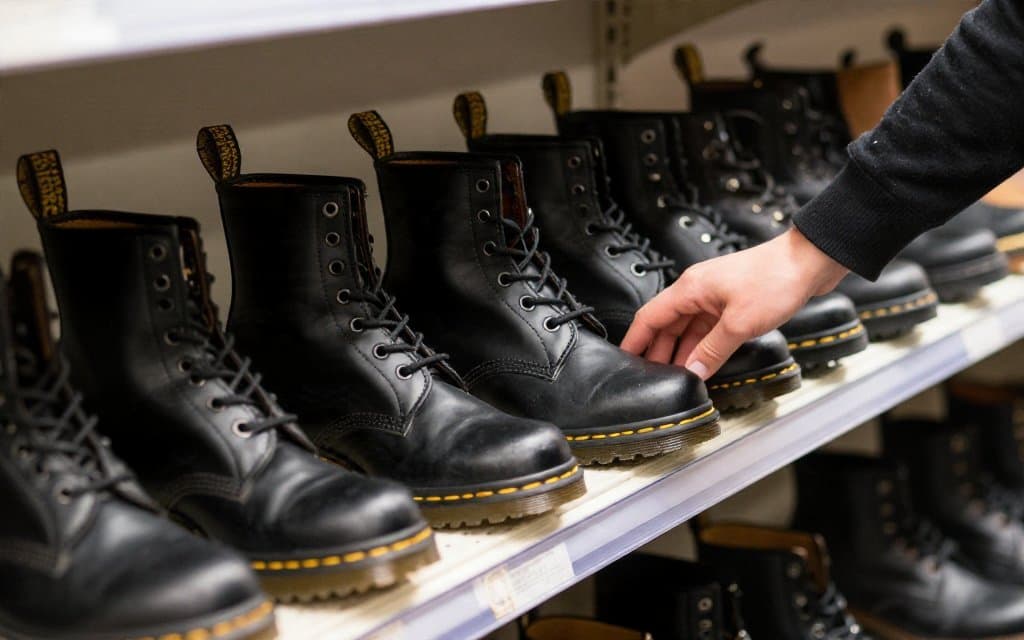
Where to look for Dr Martens made in England
Start with the tongue. Every pair carries a country-of-manufacture label there, and English pairs say Made in England while standard pairs name China, Vietnam, Laos or Thailand, as Britboot's breakdown of the two lines points out. The heel loop and insole on English pairs also state their origin, which helps when a tongue label has worn soft and faded.
- •Tongue label reads Made in England, not China or Vietnam
- •Heel loop states English origin on current English pairs
- •Insole names England rather than an Asian factory country
- •Yellow welt stitching runs evenly around the sole edge
- •Original box, if present, is labelled differently and sturdier
What the current Vintage line looks like
Dr Martens still sells the 1460 Vintage Made in England boot, and the oxblood version lists at $280 on the brand's US site. The product page says it's handcrafted at the original factory in Northamptonshire, uses Quilon, a corrected grain leather, and has a heel loop signed in gold script plus a slimmer, more tapered footbed. That gold script loop is an easy visual cue on a crowded shoe shelf.
Solovair is not a Dr Martens made in England 1460
The NPS factory in Wollaston made Dr Martens under contract for more than 35 years and kept making the same style of boot under the Solovair name after 2003. Those boots are English and well made, and new ones retail for £199 to £230, but buyers searching for Docs won't pay Docs prices for them. List them under their real name and you'll reach the people who actually want them.
How to tell if Dr Martens are fake?
Fake Doc Martens turn up more often in online listings than on thrift racks, but a sewn-in label is cheap to copy, so don't stop at the tongue. One reseller guide lists a handful of tells that show up again and again on counterfeits.
- •Brand spelled Dr. Marten on the label, with the s missing
- •Blurry or misspelled AirWair text moulded into the outsole
- •A US size printed as the main size instead of the UK size
- •Welt stitching that looks glued on rather than sewn through
- •Smooth leather that feels plastic, bonded or paper thin
What real leather does when you flex it
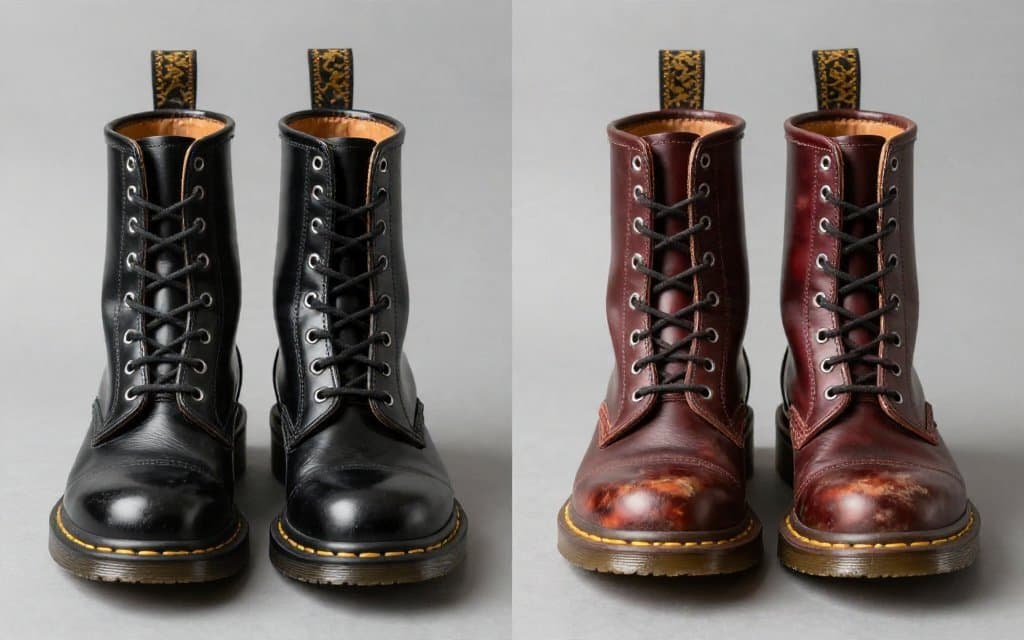
Bend the toe box. Dr Martens crazy horse leather should shift colour where it creases and build a patina over time, while genuine smooth leather shouldn't look laminated. Keep in mind the Vintage line's Quilon is a corrected grain leather by design, so a uniform surface alone isn't proof of a fake.
One odd detail can be a factory quirk. Three odd details on the same pair, like a missing s, a fuzzy sole stamp and glued stitching, is a pattern worth walking away from.
What vintage Dr Martens actually sell for
New prices set the ceiling. Britboot puts English pairs at £260 to £300 against about £170 for a standard 1460, and the US Vintage boot sits at $260 to $280 depending on colour. Resale estimates from one pricing guide show how wide the gap gets once pairs are used.
| Model | Asia made | England made |
|---|---|---|
| 1460 8-eye boot | $40 to $80 | $150 to $300+ |
| 1461 3-eye shoe | $35 to $70 | $120 to $250 |
| Jadon platform | $60 to $100 | $180 to $350 |
| 2976 Chelsea | $45 to $85 | $140 to $280 |
Treat those ranges as optimistic. The completed sales I found for common English styles landed lower: a vintage made in England 3989 wingtip brogue sold on eBay for $100, a 1460 Pascal suede pair sold for £99.99, and an English Mary Jane went for $80 on Grailed. A like-new 1990s English 1460 was listed on Poshmark at $275, but that's an asking price, not a sale.
The buy price that keeps the maths working
The same guide advises paying no more than $20 to $30 for a common black overseas 1460, and that's sensible because those pairs often sell for $40 to $80. An English pair can justify more, but remember that a $100 sale shrinks once you subtract eBay fees and shipping. Run the numbers before you get attached to the pair.
Used Doc Martens condition and what it costs you
Condition moves the price more than almost anything except the label. The pricing guide breaks it down as a share of retail, and English pairs hold value a little better at every grade.
- •Like new sells for 50 to 70 percent of retail, English 60 to 80
- •Good condition sells for 30 to 50 percent, English 40 to 60
- •Fair condition sells for 15 to 30 percent, vintage English 25 to 40
- •A resole runs about $20 to $50, so price worn soles accordingly
Second hand Doc Martens worth cleaning first
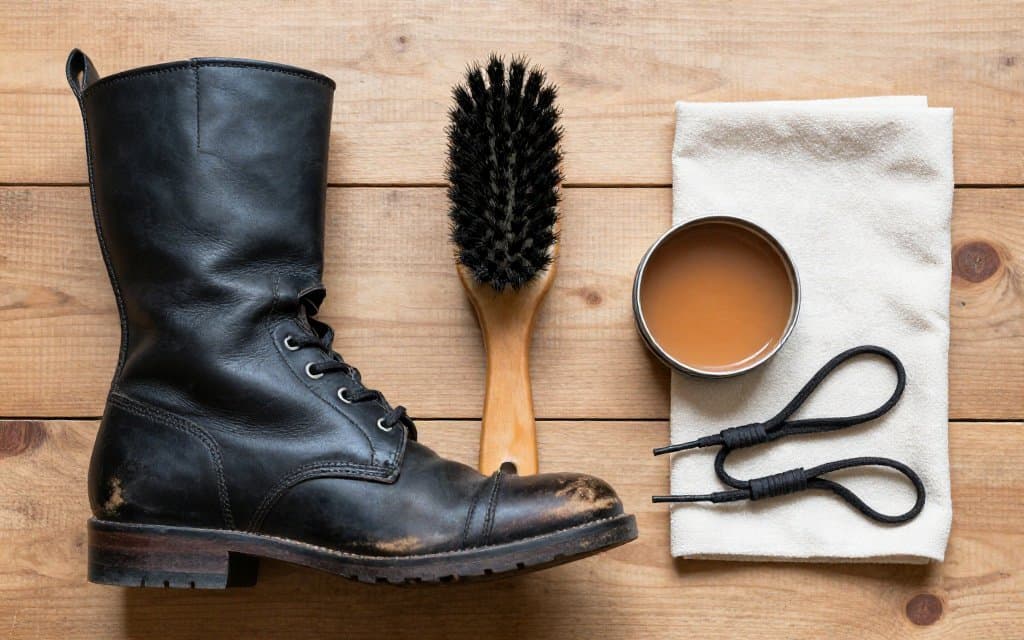
A $10 to $20 tin of leather conditioner can move a scuffed pair up a grade, which on an English 1460 can be worth far more than the tin. Clean the welt with a soft brush, condition the leather, and photograph the tongue label, heel loop and sole straight on. Buyers of second hand Doc Martens want to see the origin, not take your word for it.
Dr Martens 1460 boots, 1461 shoes and the other styles worth a look
Dr Martens 1460 boots are the most common find and the easiest to sell, while the Dr Martens 1461 shoe is close behind and usually a few dollars cheaper. Jadon platforms, 2976 Chelsea boots and 1490 ten-eye boots also get named by resellers as styles that move.
If you like reading labels, the same habit pays off on denim and sportswear. A capital E on a Levis red tab dates a pair of jeans, and vintage Nike tags do the same for sweatshirts. Workwear has its own traps too, like the Carhartt WIP versus vintage Carhartt mix-up.
Check the tongue first and the price tag second. A $15 pair with an English label is a better bet than a $40 pair that looks newer.
Questions thrifters ask about vintage Doc Martens
Are all vintage Dr Martens made in England?
Pairs from before the April 2003 move came out of English factories, and since then English pairs come only from the smaller Made in England line. Dating a pair by looks alone is hard, so trust the tongue label and heel loop over the wear.
Does a Made in England pair always sell for more?
Usually, but not by as much as some guides suggest. Common English styles in the sales I found went for $80 to $100, while worn overseas 1460s tend to sit in the $40 to $80 range. Heavy creasing or a split sole can erase most of that gap.
Should I flip overseas-made Docs at all?
Yes, if the buy price is right. Keep it near $20 to $30 for a common black 1460, pick pairs in good condition, and run a quick scan through thrifting.app to sanity-check recent sold prices before you commit.
Ready to stop guessing at the tongue label and start profiting? Download Thrift Scanner, snap a photo of any pair of Docs, and get real sold-price data in seconds, so you never overpay for boots that won't flip. Get the app here: iOS or Android.