


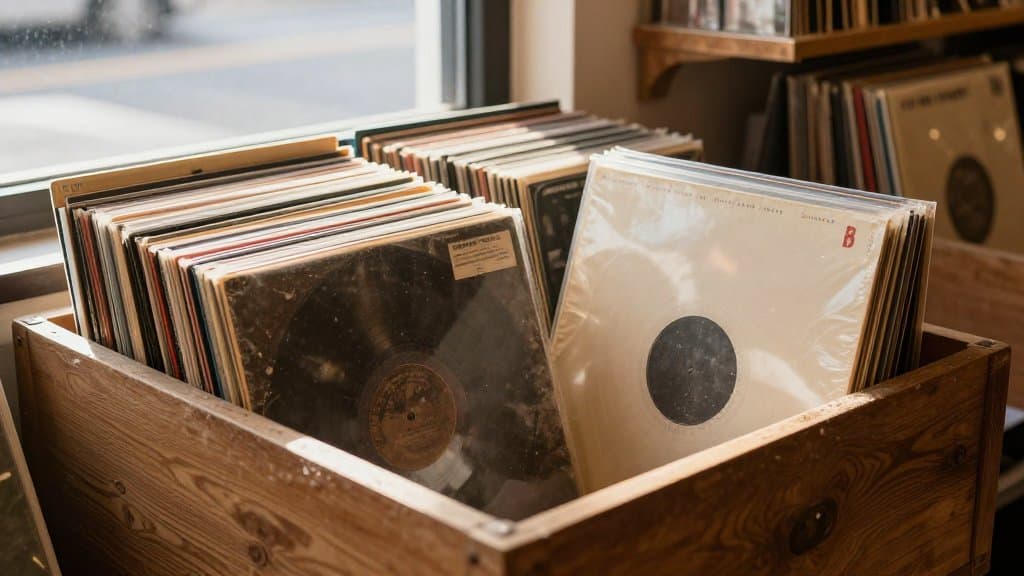
Why some valuable vinyl records slip into the dollar bin
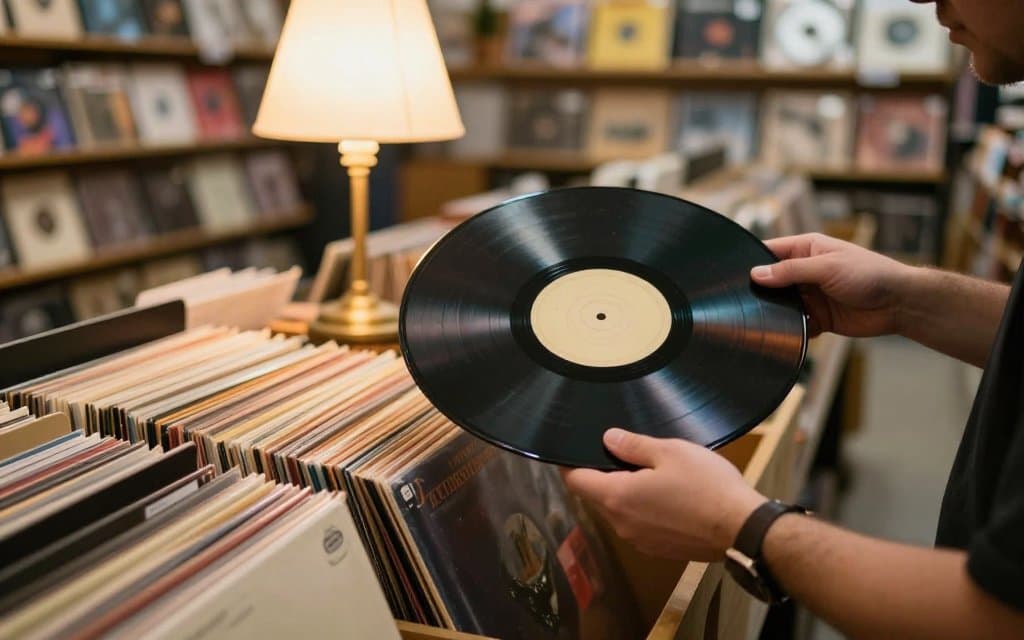
Most of the records stacked in a thrift store crate sell for a dollar or three, and the store prices them that way for good reason. Yet a few valuable vinyl records still ride along in that same bin, because value lives in the pressing, not the title. Two copies of one famous album can look almost identical and be worth $2 and $400.
The gap between the dollar copy and the four-figure copy comes down to small physical clues. A code etched in the runout, a label color that ran for a single year, an original inner sleeve, any one of them can move the price. Learn a handful of markers and you can read a bin the way a dealer does, the same way old foundry marks turn a plain skillet into a payday over on our cast iron guide.
Value lives in the pressing, not the title. Two copies of the same album can sell for $2 and $400 and look nearly the same until you know what to check.
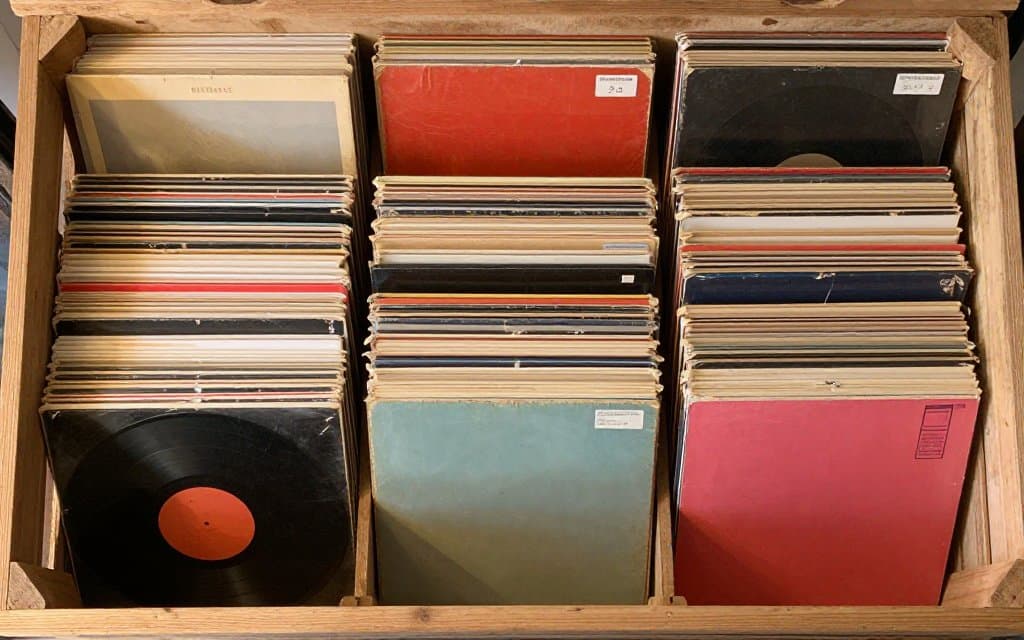
What actually makes a vinyl album worth money
Age alone is close to meaningless. A 1965 easy listening album is old and worth about a dollar, while a 1990s hardcore 7-inch pressed in 300 copies can bring hundreds. What makes a vinyl album worth money is scarcity, demand and condition working together. Small original runs, regional soul labels, withdrawn covers and clean sealed originals are where the money hides.
Collectors chase the first pressing because it sits closest to the original master tape and the record's first cultural moment. A first UK pressing of a landmark album on its original label can fetch $300 or more, while an 1980s repress of the very same title sells for around $10. Before you leave the aisle, run through a quick mental list, and you can read more field checks like it on the Thrifting.app blog.
- •The runout matrix codes etched near the label
- •A deep groove ring on 1950s and 1960s labels
- •Mono or stereo, plus the exact catalog number
- •The original inner sleeve or any pulled artwork
- •Ring wear, scratches and warps seen under a lamp
How to read the dead wax and spot a first pressing
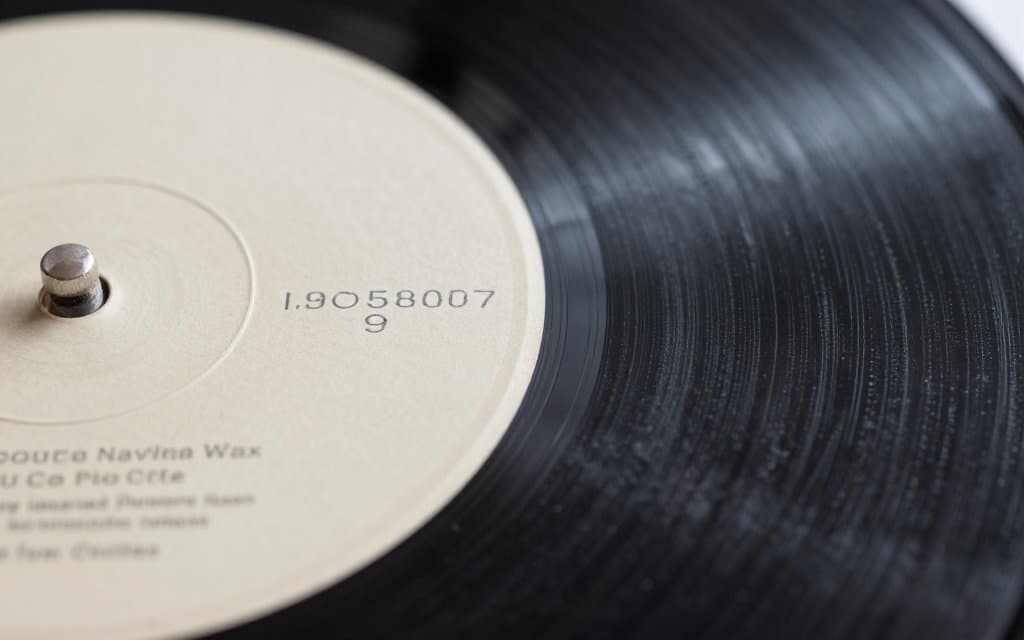
The dead wax is the smooth band of vinyl between the last groove and the label. Tilt the record under a lamp and you will see numbers and letters etched there at the mastering stage. Those matrix codes tell you more than the sleeve ever will, and a low stamper code with a suffix like -1 or -1A points to an early press.
Some mastering engineers left initials that collectors hunt for. The letters RL, for Robert Ludwig, can lift a common looking pressing into real money because his cuts are prized. Reissues almost never carry the same runout details, which is how a $3 copy and a $300 copy separate themselves. Dealers describe exactly what they check in this vinyl value walkthrough.
Deep groove and label clues
A deep groove is a raised ring pressed into the paper label, a habit of the older stamping plates used through the 1950s and into the 1960s. Pair that with an original company address on the label and you are likely holding an original era pressing rather than a later copy. Label color, font and the presence of a promo stamp all narrow the date down further.
Vinyl record grading is where the money is made or lost
Two copies of the same pressing can be $40 apart on condition alone. Vinyl record grading uses the Goldmine scale, a shared language buyers trust, running from Mint down through Near Mint, Very Good Plus, Very Good, Good and Poor. Grade honestly, because a hopeful grade is the fastest way to a returned sale and a bad rating.
Grade the disc and the sleeve separately
The record and the cover get their own grades, and both move the price. A Near Mint disc in a ring-worn sleeve is not a Near Mint sale. Check the vinyl under raking light for hairlines and scuffs, then look the jacket over for seam splits, ring wear and writing. A first pressing can sell for $500 in Near Mint and only $50 in Good, a tenfold swing.
| Grade | Meaning | Value |
|---|---|---|
| Near Mint | No marks under a lamp | Up to about $80 |
| Very Good Plus | Faint marks, plays clean | Roughly half of NM |
| Very Good | Scuffs, light surface noise | About a quarter of NM |
| Good | Plays through but noisy | Often just $1 to $3 |
Each step down the grade can cut a record's value by half or more, which is why condition, not age, is the number that moves the money.
The most expensive vinyl records ever sold
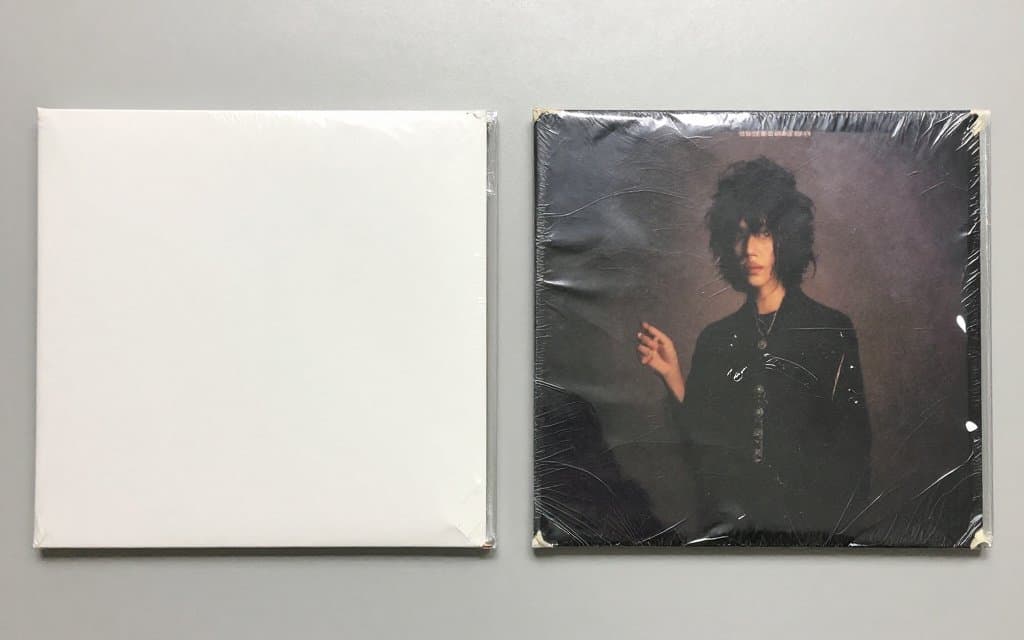
The trophies show how far one disc can climb. The most expensive vinyl records ever sold are private acetates and withdrawn originals, not chart hits, and the most valuable vinyl records almost always carry a story about a tiny run. An Elvis Presley acetate of My Happiness, cut in 1953 as a personal gift before he had a deal, sold for about $300,000.
Soul is its own gold rush. Frank Wilson's Do I Love You on Soul Records, a 1965 Northern Soul single with fewer than five known copies, has traded near $40,000. Rare 45 vinyl records like that one show why the most valuable records are often singles, not albums.
| Record | Detail | Price |
|---|---|---|
| Elvis, My Happiness | 1953 Sun acetate, one copy | $300,000 |
| Beatles Butcher Cover | 1966 withdrawn first state | $125,000 |
| Frank Wilson 45 | 1965 Northern Soul rarity | $40,000 |
| Beatles, Ask Me Why | 1963 Vee-Jay promo single | $37,000 |
An Elvis acetate cut in 1953 sold for about $300,000, proof that one disc of vinyl can outprice a decent used car.
- •Early jazz originals on Blue Note or Impulse
- •Northern Soul and regional soul 45 singles
- •First pressing rock from small private labels
- •Reggae and dub pressed in tiny island runs
- •Punk and hardcore 7-inches under 500 copies
What old records worth money really pay in resale
Here is the honest math. Most crates are packed with dollar records, and a whole inherited box often nets $20 to $50 as a lot. The wins come from the one or two sleepers, and old records worth money reward the person who checks every runout instead of grabbing by cover art. One 45 can pay for the whole trip.
Pricing is where beginners leave money on the table. Ignore optimistic asking prices and look at what a copy like yours actually sold for. A tool like Thrift Scanner reads the label, sleeve and runout from a photo and pulls real sold comps, so you price like a dealer instead of guessing. The same discipline that dates a vintage camera or grades sterling flatware works on records.
- 1.Identify the exact pressing, not just the title
- 2.Grade the disc and sleeve on the Goldmine scale
- 3.Search Discogs sold listings, not asking prices
- 4.Match country, label, matrix and mono or stereo
Common questions about selling old records
How much are vinyl records worth on average?
The vast majority sell for $1 to $5, because most albums from the 1970s and 1980s were pressed in huge numbers. The value sits in the exceptions: early pressings, small labels and clean condition. Grade the record, identify the pressing, then check recent sold prices to see where yours lands.
Which old records are worth money right now?
Original jazz on labels like Blue Note, Northern Soul and regional soul 45s, first pressing rock from small private labels, and early reggae keep strong demand. Sealed or Near Mint copies of any of these command the biggest premiums. A withdrawn cover or a low matrix suffix can turn a familiar title into a real find.
Where can I sell rare vinyl records for the best price?
Discogs is the standard for identifying a pressing and reading real sold data, and its marketplace reaches collectors worldwide. eBay works well for auction heat on truly rare vinyl records, while a trusted local shop pays less but pays today. Whichever you choose, grade honestly and photograph the runout and sleeve clearly.
Ready to stop guessing in the record aisle and start pricing like a dealer? Snap a photo of any record, sleeve or runout and Thrift Scanner identifies the pressing, then shows real market data so you never overpay or undersell again. Get the app here: iOS or Android.