


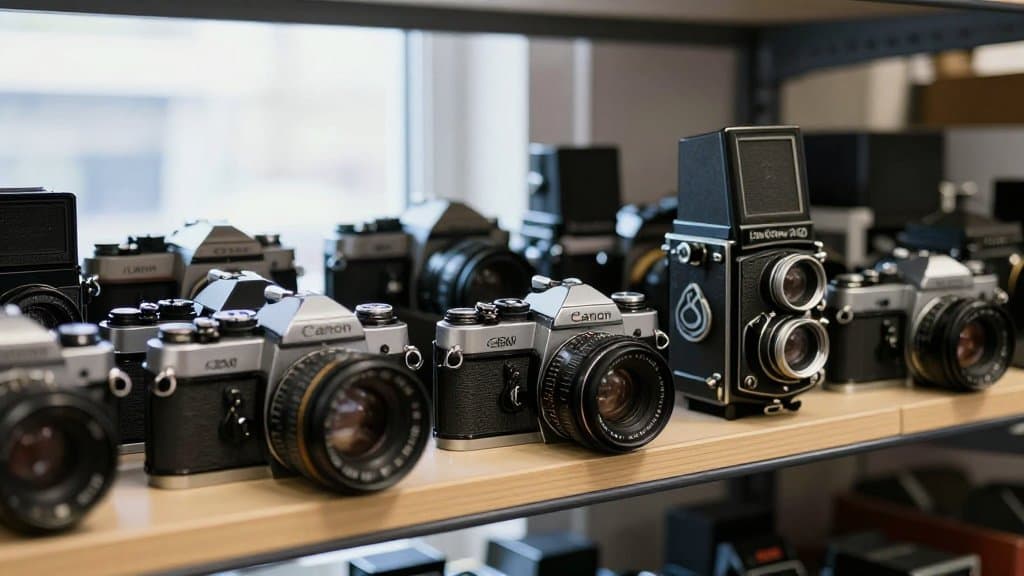
Most shoppers walk right past the camera shelf. That's a mistake, because a Canon AE 1 vintage camera can sit in a thrift bin marked ten dollars and resell for two or three hundred. Film photography is booming again, and the bodies that fed it in the 1970s and 1980s keep climbing in price.
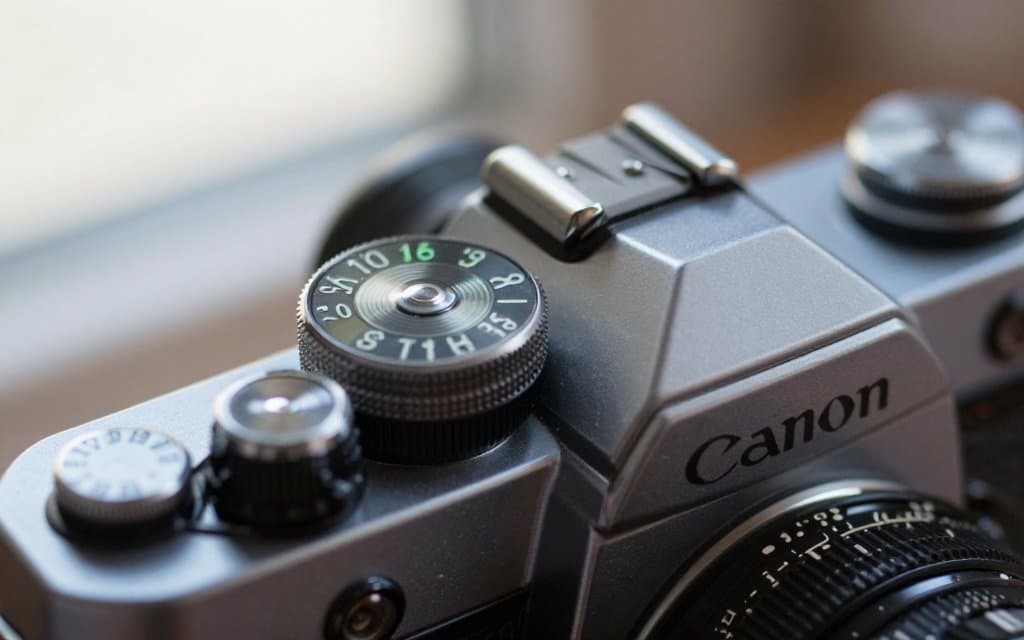
The Canon AE 1 vintage camera is the friendliest place to start. Canon built it from April 1976 to 1984, sold it in huge numbers, and made it one of the first SLRs built around a microprocessor, so clean working bodies are common and buyers already know the name. Spot one cheap and you're usually looking at a fast flip.
Not every old camera is worth grabbing though. Value hangs on the model, the condition, and whether the shutter still fires true. Get those three right and the camera shelf turns into the most profitable corner of the store.
Why a Canon AE 1 vintage camera is the easy win
Here's why the AE-1 shows up in so many reseller haul videos. Clean, working bodies sell in the 150 to 300 dollar range, and they turn up constantly because Canon made so many. One reseller found an AE-1 Program with a 50mm lens for 35 dollars and sold it for 245. That spread is why people learn this camera first.
The AE-1 runs on a 6 volt battery, four LR44 or SR44 cells, and it won't fire the shutter or wake the meter without one. Carry a couple in your bag. A dead battery makes a good camera look broken, and plenty of thrift priced bodies sit cheap for exactly that reason.
No battery means no meter and no working shutter on an AE-1, so keep a couple of LR44 cells in your bag and test on the spot.
The blue chip old cameras worth real money
The AE-1 pays for gas and lunch. The real money hides in a handful of blue chip names, and they show up at estate sales and church thrifts more often than you'd think. These are the old cameras worth money that can turn a slow week around.
Common bodies bring twenty dollars. A clean Leica M6 can bring nine thousand. Same shelf, wildly different money.
German rangefinders lead the pack
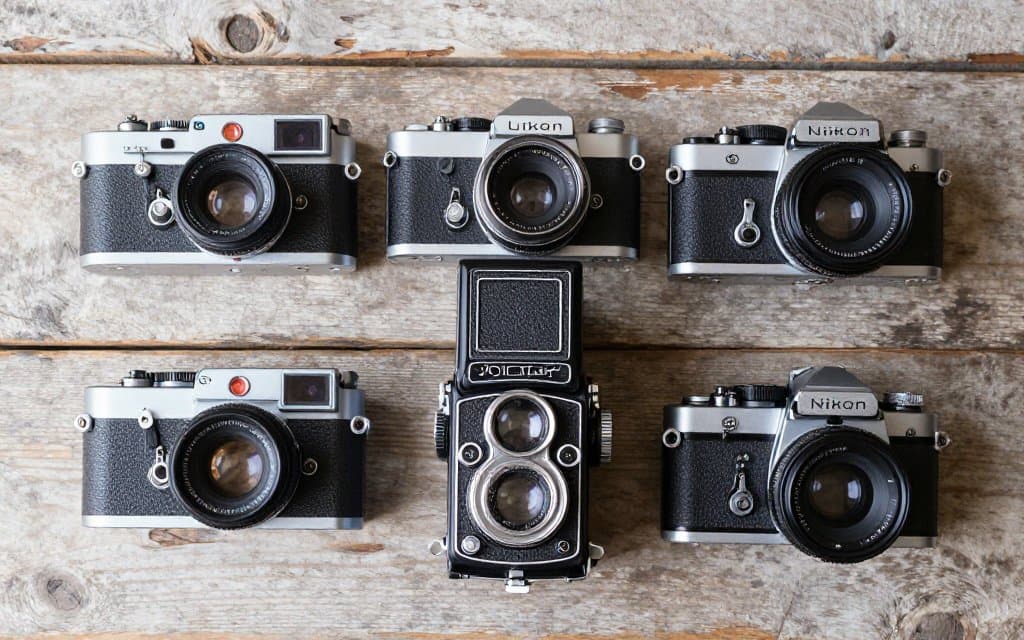
Leica sits at the top. A Leica M6 in excellent shape sells around 2,500 to 3,200 dollars, and a mint boxed example has crossed 9,000 in collector value guides. The older M3 runs 1,200 to 3,000. If you spot the little red dot, slow down and look hard.
Medium format is where it gets serious
Twin lens Rolleiflex bodies bring 800 to 2,600 dollars, more when freshly serviced. A Hasselblad 500C/M with a body, lens, and back sits around 1,000 to 2,500. A pro Nikon F from 1959 to 1973 runs 1,000 to 3,000. None of these are hard to recognize, they're just easy to walk past.
| Camera model | Era | Resale range |
|---|---|---|
| Canon AE-1 | 1976 to 1984 | $150 to $300 |
| Leica M6 | 1984 to 2002 | $2,500 to $3,200 |
| Nikon F | 1959 to 1973 | $1,000 to $3,000 |
| Rolleiflex 2.8F | 1960s | $800 to $2,600 |
| Hasselblad 500C/M | 1970s | $1,000 to $2,500 |
| Polaroid SX-70 | 1972 to 1977 | $100 to $250 |
How to spot vintage film cameras that sell
You don't need to memorize a catalog. The vintage cameras worth money share a few traits, and once you see the pattern you can sort a bin in under a minute. Weight is the first tell, since an all metal body almost always beats a light plastic one.
- •Leica rangefinders in the M and screwmount lines
- •Rolleiflex and Rolleicord twin lens reflex bodies
- •Hasselblad medium format bodies with Zeiss lenses
- •Nikon F, F2 and F3 professional 35mm cameras
- •Canon AE-1, AE-1 Program and Pentax K1000
Film format matters just as much. A camera that still takes 35mm or 120 roll film stays usable, so it holds value. An antique film camera built for a dead format is a much tougher sell, no matter how pretty it looks.
- •35mm film, still sold in drugstores and online
- •120 roll film for medium format shooters
- •Instant film for Polaroid and newer packs
Skip these unless they're dirt cheap
Some cameras just aren't worth the shelf space. A plastic retro film camera or point and shoot from the late 1990s rarely clears more than a few dollars, and heavy lens fungus can kill a sale outright.
- •Plastic point and shoots from the late 1990s
- •Cracked bodies with loose or rattling parts
- •Lens fungus that spreads across the glass
- •Dead formats like 126 and 110 cartridges
Test before you buy or you will overpay
A tested, working body is worth far more than the same camera sold untested, so a two minute check at the store pays for itself. Buyers pay a real premium for certainty, and you should too.
A tested, light tight body with an accurate shutter is worth two to four times the same camera listed as-is and untested.
- •Fire the shutter at 1 second and at 1/1000
- •Look for gummy or crumbling foam light seals
- •Check the meter needle wakes with a battery
- •Turn the focus and aperture rings for grit
- •Open the back and look for fungus or rust
Foam light seals are the usual failure. They dry out, get sticky, and crumble, which lets light ruin the film. New seals cost a few dollars and an hour, so a body with bad seals is a buy if the price is right. It's the same buy or pass instinct you use to tell if gold is real before you commit.
Vintage polaroid camera and instant camera values
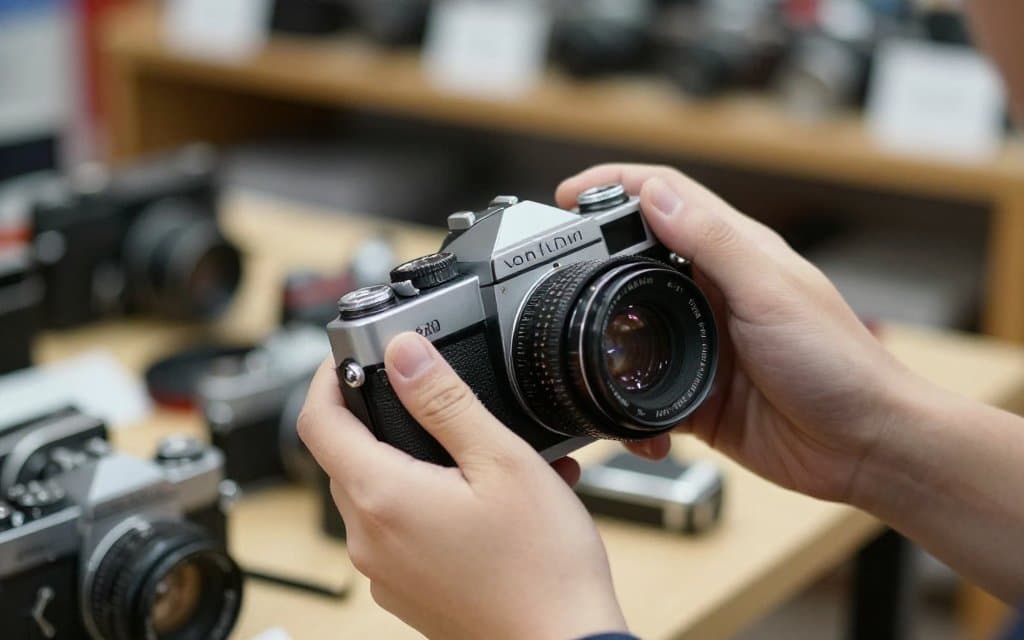
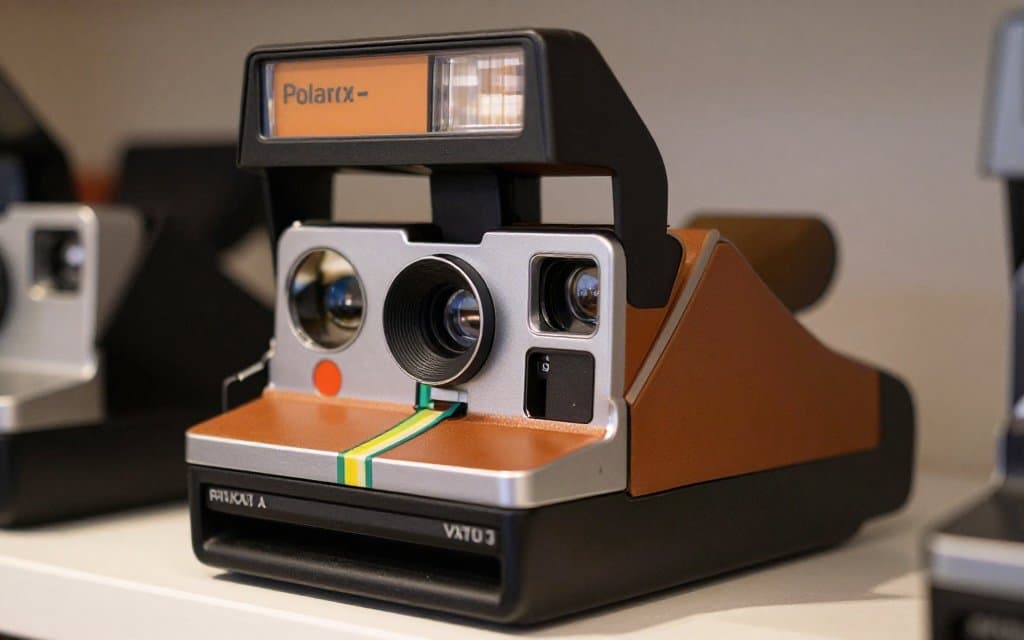
Instant cameras have their own crowd. A vintage polaroid camera like the SX-70, made from 1972 to 1977, was the first folding instant SLR, and clean tested examples sell for well over 100 dollars. Untested ones sell cheap because buyers can't be sure they work.
The catch with any vintage instant camera is film. Modern instant film fits some bodies and not others, so check compatibility before you pay up. A working SX-70 with a fresh pack of film shoots beautifully, and that story is what sells it.
What these flips really pay
Here's the part that matters. Vintage film cameras usually cost 10 to 40 dollars at a thrift store and resell for 75 to 350 on eBay, and the blue chip bodies climb into four figures. The margin comes from condition and completeness, not luck.
| Factor | Value effect | Why |
|---|---|---|
| Tested and working | Worth 2x to 4x as-is | Buyer avoids repair risk |
| Original box and caps | Adds 30% to 50% | Complete kits are rare |
| All metal body | Holds value longer | Ages better than plastic |
| Live film format | Stays usable | 35mm and 120 still sold |
Say you buy a clean AE-1 for 15 dollars and a Rolleiflex for 40 in the same week. The AE-1 nets maybe 200 after fees, and the Rolleiflex can clear a thousand or more if the shutter is honest. Two cameras, one afternoon, and you've paid for a month of thrifting.
That's the same math behind other gear flips. A clean vintage stereo receiver can bring 500 dollars, and a pair of Big E Levi's can top the same number. Cameras just travel light and ship easy.
Vintage camera value questions
How do I find the vintage camera value fast?
Snap a photo and let an app read the model, condition, and recent sold prices for you. Comparable sold listings, not asking prices, tell you the real number. You can check them at thrifting.app right there in the aisle so you never guess.
Which old cameras worth money should I grab first?
Start with names you can recognize on sight: Leica, Rolleiflex, Hasselblad, Nikon F, and the Canon AE-1. Those cover most of the vintage cameras worth money you'll actually see, and they sell quickly. Learn five names and you'll catch the majority of good finds.
Are point and shoot cameras ever worth it?
A few are. Cult compacts like the Olympus Stylus Epic and the Contax T2 sell strong, but most plastic point and shoots are worth only a couple of dollars. When in doubt, check sold listings before you buy.
How can I tell if a camera actually works?
Fire the shutter across slow and fast speeds, check that the meter responds with a battery, and look for crumbling light seals or lens fungus. A body that passes those three tests is worth two to four times an untested one.
Ready to stop guessing on the camera shelf and start pricing like a pro? The Thrift Scanner app identifies a camera from a photo, reads its brand and condition, and shows real market value from millions of sold listings, so you never overpay again. Get the app here: iOS or Android.