


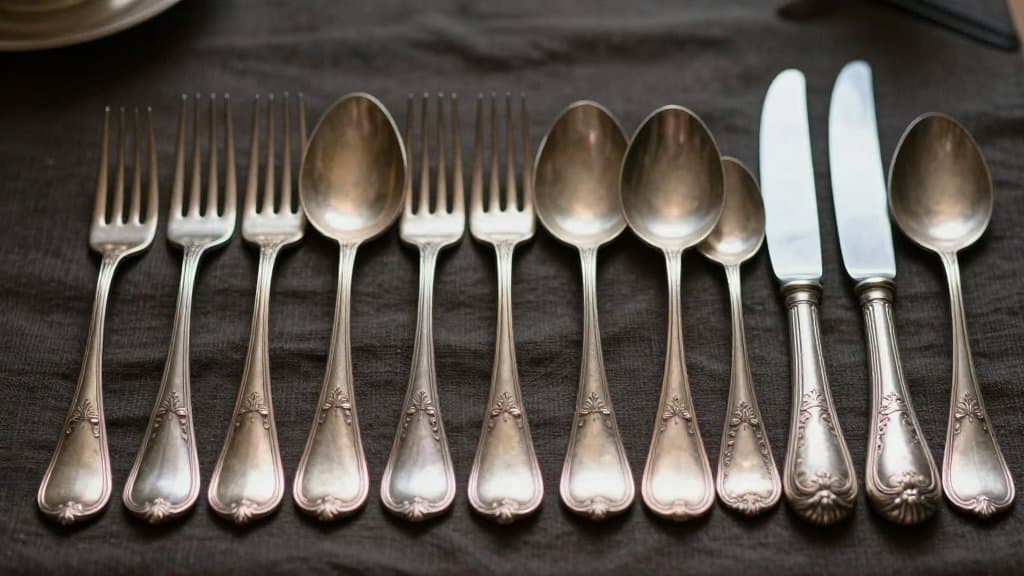
Pull a fork out of a thrift store bin and it might be worth 40 cents or 40 dollars, and the only way to know is to flip it over. Sterling silverware value hangs on a few stamped letters and the weight in your hand, not on how shiny a piece looks. A tarnished, matched sterling service can beat a whole cart of newer kitchenware.
Here is the split that trips up most shoppers. Real sterling is 92.5% pure silver, so it carries a metal value that rises and falls with the market. Silver plate is a microscopic coat of silver over brass or nickel, and it has almost no melt value. Get that one distinction right and your sterling silverware value goes from a guess to a number you can calculate at the shelf.
How sterling silverware value breaks into melt and pattern
Every piece of solid silver has two price tags fighting for the top spot. One is melt, the raw metal weight times the spot price of silver. The other is the pattern premium, what collectors pay for a specific design and maker. Most flatware sells for whichever number is higher, and for common patterns that is usually melt.
That is why two forks of identical weight can be worth very different money. A plain, worn pattern trades close to scrap. A sought after pattern in clean shape can fetch two to four times its metal value, based on completed dealer sales.
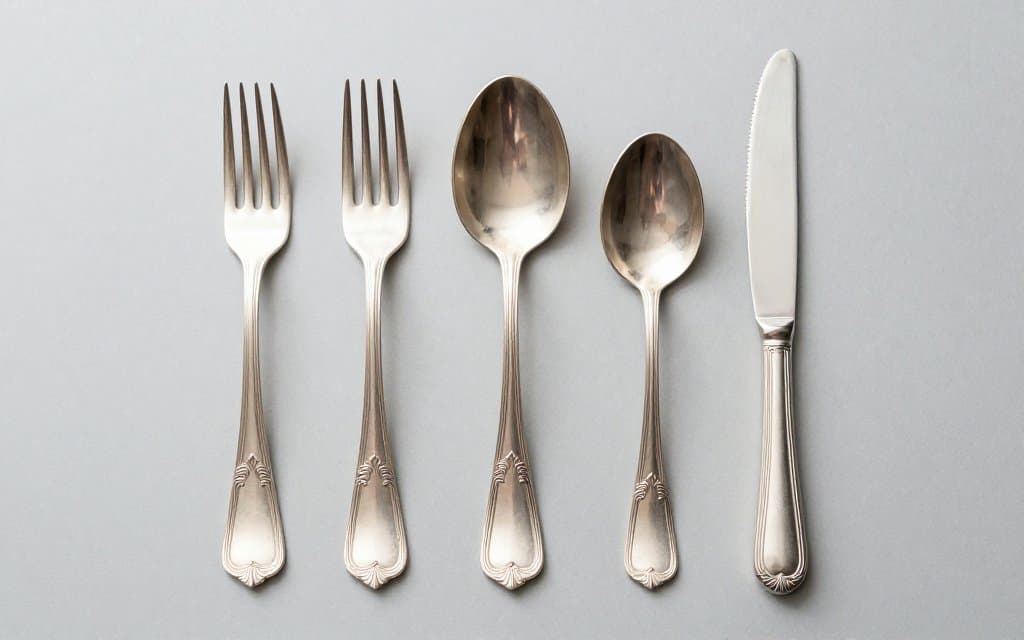
Rule of thumb: if a piece is solid sterling, start with melt as the floor, then let the pattern and maker decide how far above that floor it climbs.
Reading the sterling silver marks that set the price
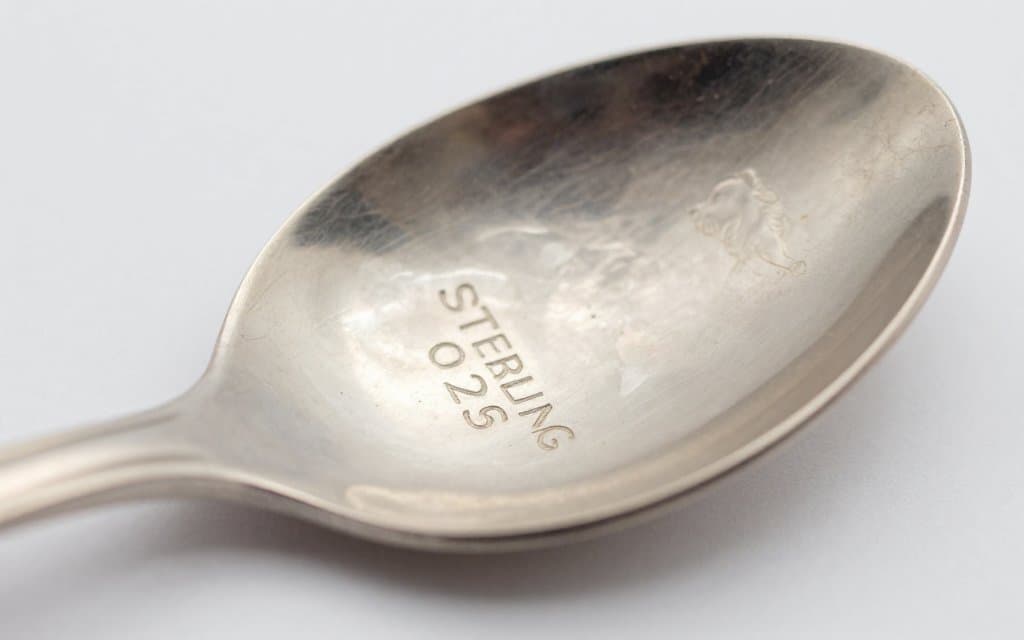
Turn the piece over and look at the back of the handle. On solid pieces you will find sterling silver marks like the word STERLING, the number 925, or on British silver a small walking lion called the lion passant. The 925 silver meaning is simple, 925 parts pure silver per 1,000, the same 92.5% that defines sterling.
Plate gives itself away with different silver markings. Letters like EPNS, EP, EPBM or A1 all mean electroplated, a thin silver skin over base metal, and silver hallmark guides treat every one of them as plate. Words like Silver Plate or triple plate point the same way, and those markings on silverware carry collector value at best and no melt value at all.
What sterling silver means when a mark is missing
Sometimes the stamp is worn or written in old script. Sterling silver means the same thing whether it is spelled out or shown as 925, so treat both as solid. When a fork shows only a maker name and no purity mark, weigh it and test it before you assume, because many famous makers sold both sterling and plate lines. Reading these sterling flatware markings works a lot like reading pottery marks on the bottom of a vase.
- •STERLING or 925 stamp means solid sterling
- •Lion passant points to British sterling silver
- •EPNS, EP or A1 all mean electroplated silver
- •Triple plate is still plate, not solid metal
- •No purity number means weigh and test first
Sterling makers versus silverplate makers
Maker names are a fast shortcut once you learn them. Gorham, Towle, Reed and Barton, Wallace, International and Kirk built their names on solid sterling silver flatware, and Tiffany sits at the top of the value ladder. The catch is that some of these firms also ran plate lines, so the name narrows it down but the mark makes it final.
The Rogers name causes the most confusion at the bins. Most pieces stamped Rogers Bros or Community are silver plate, later owned by International Silver and Oneida. Rogers plate can still carry modest collector value, but do not weigh it for melt.
Doing the melt math on sterling silverware value per ounce
Once you know a piece is solid, the money math is quick. Silver trades by the troy ounce, and on August 6, 2026 the spot price sat near $62 an ounce. Sterling is 92.5% silver, so the sterling silverware value per ounce is roughly the spot price times 0.925, or about $57 in pure metal for every troy ounce of sterling you hold.
Weight adds up faster than people expect, using the standard melt formula. A dinner fork holds about 1.43 troy ounces of silver and a dinner spoon about 1.61, while a teaspoon runs near 0.68. A five piece place setting carries roughly 4.6 to 5.4 troy ounces, and a full service for eight can hold 35 to 45 troy ounces, which is well past $2,000 in metal even at today's softer prices.
| Piece | Silver weight | Melt value |
|---|---|---|
| Teaspoon | 0.68 troy oz | about $39 |
| Salad fork | 0.65 troy oz | about $37 |
| Dinner fork | 1.43 troy oz | about $82 |
| Dinner spoon | 1.61 troy oz | about $92 |
A single place setting of solid sterling can hold more than five troy ounces of silver, worth close to $300 in metal before any pattern premium.
Knives are the one trap in the math. Most sterling knives have stainless steel blades and hollow handles filled with resin or cement for balance, so only the thin silver shell counts. Weigh knives separately and expect them to add far less than a solid spoon of the same size. For gold pieces you find in the same jewelry case, our guide to testing gold runs the same kind of math.
When a pattern beats sterling silverware prices at scrap
Melt is the floor, not the ceiling. For roughly a hundred well loved patterns, collectors pay more for the design than a refiner pays for the metal. Dealers who watch sold listings peg popular patterns at about double their scrap value, and a top name like Tiffany at around four times scrap.
The gap can be huge on a single serving piece. A Gorham Chantilly place setting or a Wallace Grande Baroque ladle sells for real money because people are still building and replacing those sets. That is where sterling silverware prices stop tracking the metal chart and start tracking demand.
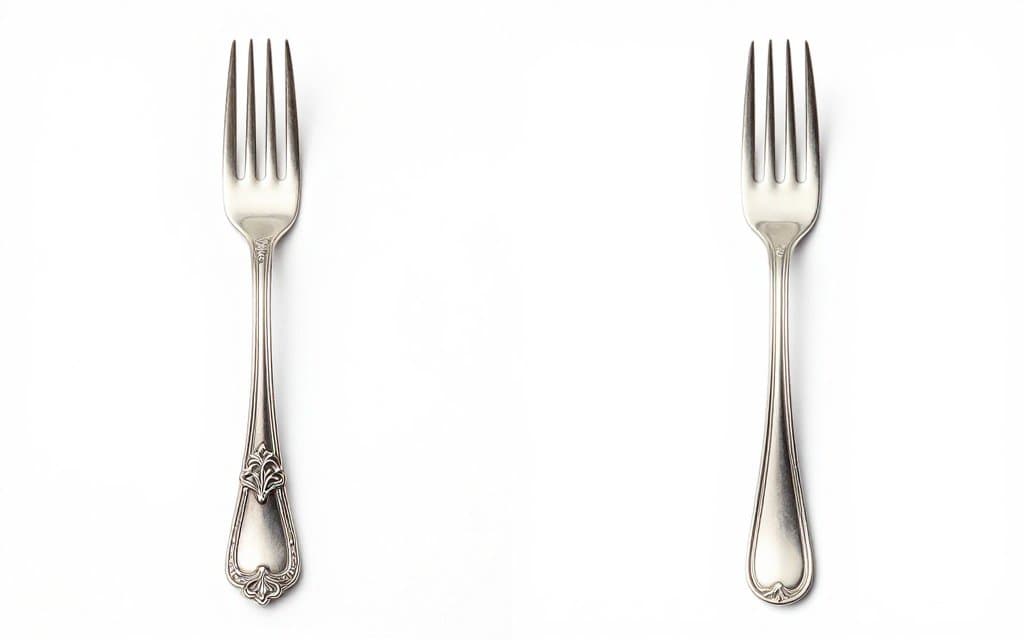
| Pattern | Maker | Top price |
|---|---|---|
| Chantilly | Gorham | $16,995 |
| Grande Baroque | Wallace | $10,000 |
| Old Master | Towle | $7,999 |
| Repousse | Kirk-Stieff | $6,850 |
| Francis I | Reed and Barton | $4,720 |
- •Gorham Chantilly, the classic 1895 design
- •Wallace Grande Baroque, heavy and ornate
- •Towle Old Master with deep relief handles
- •Reed and Barton Francis I, a reseller pick
- •Kirk Repousse, dense hand chased flowers
Match a pattern name to completed sales, not asking prices, because a boxed set listed at $3,000 only counts when a buyer actually pays it.
What resellers actually pay for your set
Where you sell decides how much of that value you keep. Refiners and dedicated silver buyers pay the most for melt, usually 90 to 95 percent of the metal value, because they process silver in bulk. Pawn shops sit lower, often 50 to 75 percent, since they price for a quick resale.
Intact sets beat loose pieces almost every time. A matched 12 piece boxed set in clean shape sells for roughly $2,000 to $3,000 to collectors, while stray sterling pieces drift toward the $100 each range. If you have a complete pattern, sell it as a set to a collector before you think about scrapping it.
- •Weigh solid pieces before accepting any offer
- •Sell matched patterns as a set, not as scrap
- •Refiners pay 90 to 95 percent of melt value
- •Pawn shops usually pay 50 to 75 percent
- •Keep knives separate, their silver weight is low
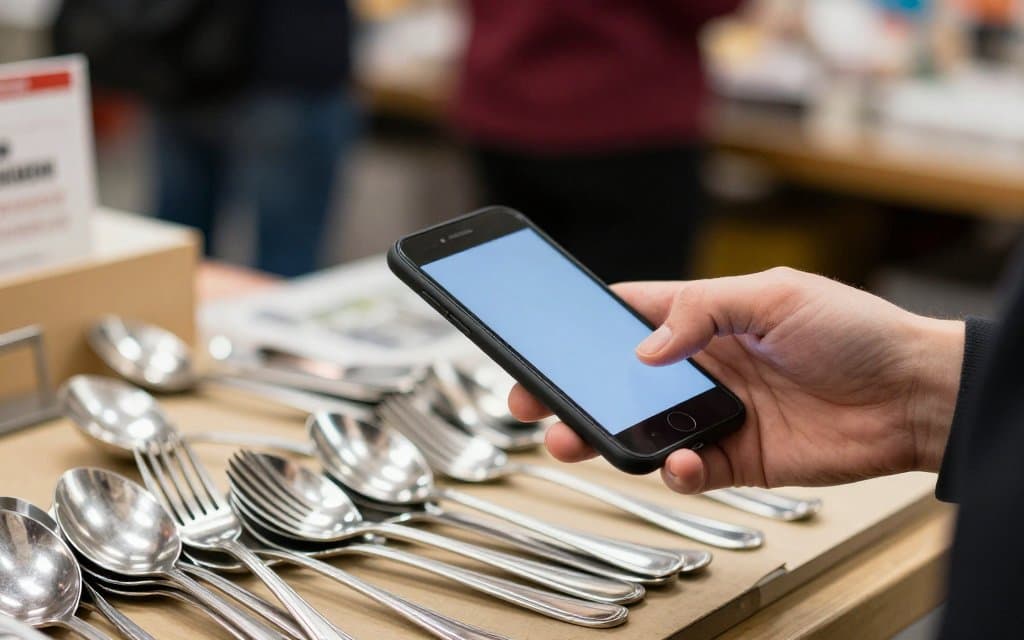
A quick scan removes the guesswork at the shelf. Snap a photo with the Thrift Scanner app and it identifies the maker, reads the pattern and shows real sold prices, so you know whether a tray of forks is scrap or a $2,000 set before you reach the register. Resellers pair it with tools at thrifting.app and our costume jewelry marks guide to price a whole table fast.
Common questions about sterling silverware value
What does 925 silver mean?
The 925 stamp means the metal is 92.5 percent pure silver, mixed with 7.5 percent copper for strength. That is the exact standard for sterling, so 925 and the word sterling mean the same thing. Any lower number, like 800, is still silver but a different, lower grade.
How much is sterling silver flatware worth per ounce?
Solid sterling silver flatware is worth about 92.5 percent of the silver spot price per troy ounce. With spot near $62 in August 2026, that works out to roughly $57 in metal per troy ounce of sterling. A single dinner fork of about 1.43 troy ounces holds roughly $80 in silver.
Are rare silver hallmarks worth more than melt?
Often yes. Rare silver hallmarks from prized makers or short run patterns can push a piece well past its metal value, sometimes double or more. The mark only helps if the piece is solid sterling, though, since a rare plate mark still has no melt value to build on.
How do I read markings on silverware fast?
Flip each piece and scan the back of the handle for a purity mark first. Solid pieces show 925, sterling, or a lion, while plate shows EPNS, EP or a plate word. Learning these markings on silverware, and matching the maker to the mark, tells you in seconds whether to weigh it or walk away.
Ready to stop guessing at the silver shelf and start pricing it with real data? Thrift Scanner identifies the maker, reads the pattern and shows sold prices from millions of listings, so you never leave a $2,000 set behind or overpay for plate again. Snap a photo, get the number, and buy with confidence. Get the app here: iOS or Android.