


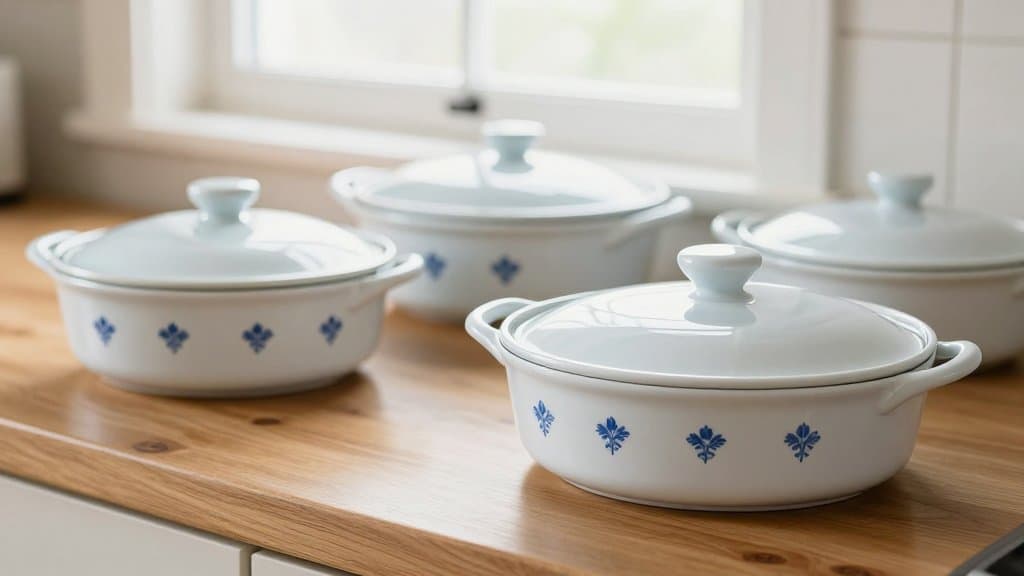
Pull a vintage Corningware Blue Cornflower dish out of a thrift store bin and you are usually holding a $10 casserole. Flip it over, though, and the backstamp can tell a very different story. A small share of these white dishes with the little blue flowers trade for $100, $500, and in rare cases four figures, and the gap comes down to the pattern, the age of the mark, and the shape of the piece.
Corning launched this cookware in 1958, built from a glass ceramic called Pyroceram that grew out of missile nose cone research. The Corningware Cornflower pattern then ran for thirty years, so most of what sits on thrift shelves is common. Learn to read the base and you can pull the early and rare pieces that resellers actually chase. According to a 2026 CorningWare price guide, common Cornflower pieces bring $5 to $30 while the scarce patterns reach $200 to $500 and beyond.
What makes vintage Corningware Blue Cornflower worth money
Four things decide the number. The pattern sets the ceiling, since a thirty year staple will never be as scarce as a design that sold for four years. After that, the backstamp era, the condition of the glaze, and whether the original lid survived do the rest. A cracked lidless dish is worth a fraction of a clean set.
Age is the first lever to check. Early vintage Corningware casserole dishes from the late 1950s and early 1960s carry embossed marks and short instructions, and collectors pay up for them. A plain 1980s piece in the same pattern might bring $8, while a slope sided early example can pass $1,000 at the right auction. If you like kitchenware flips, the same logic drives our vintage Pyrex pattern guide.
Four things move the price: the pattern, the backstamp era, the glaze condition, and whether the original lid is still with the dish.
Read the backstamp to date your vintage Corningware
The mark on the bottom is your clock. Corning changed its stamps often enough that the logo style, the wording, and the model number narrow the date to a tight window. Reading it takes about ten seconds and it is the single most useful habit for pricing these dishes.
The scale runs from the earliest and most valuable marks down to the modern stoneware nobody collects. Match your piece to the list below before you set a price.
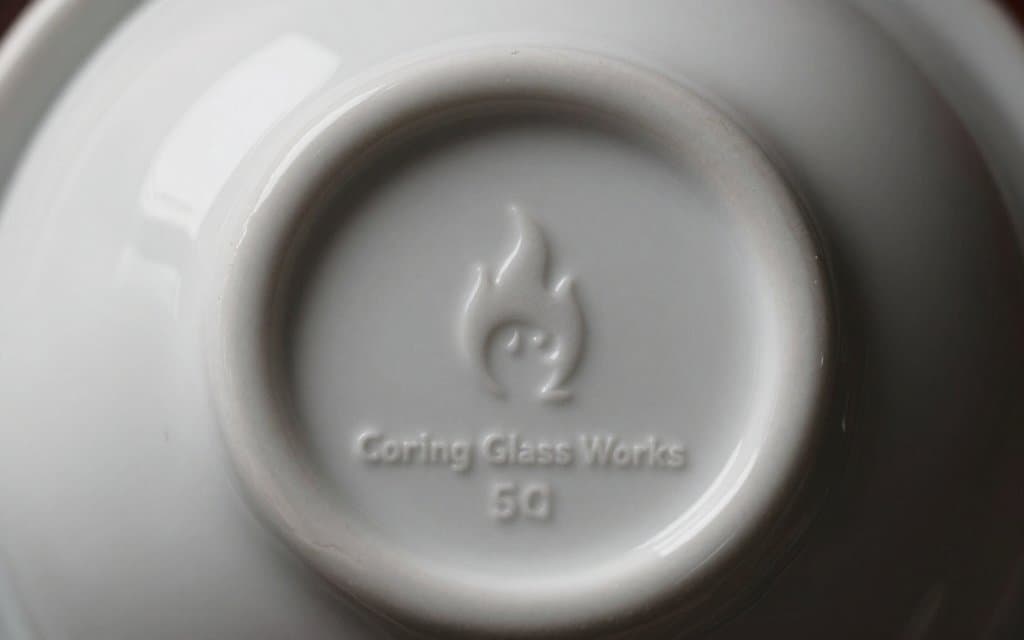
The flame logo and patent marks
The oldest pieces wear an embossed flame logo, the old Corning Glass Works symbol, and often the words PAT PEND or an early patent number. A stamp that reads Made in France still counts as vintage, but it points to the 1970s or later rather than the first run.
- •Embossed flame mark points to 1958 to 1961
- •Flame plus model number lands around 1961 to 1966
- •Pattern name printed on base means 1966 to 1970s
- •Copyright line and country stamp signal 1970s to 1990s
- •One word CorningWare stoneware means post 1998
The Pyroceram test that separates real from stoneware
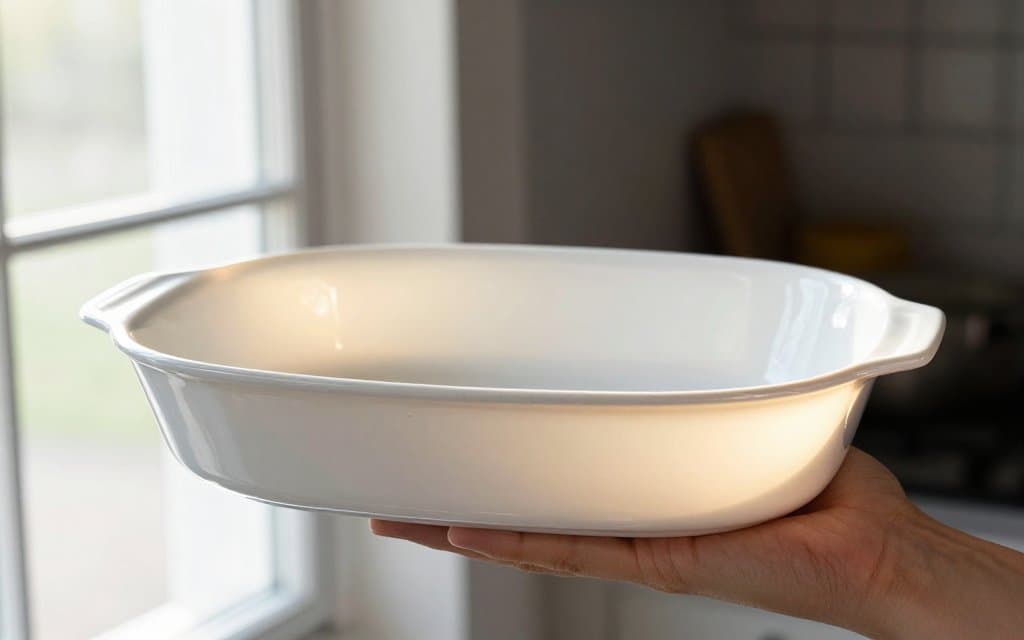
Here is the field test that costs nothing. Hold the dish up to a bright bulb. A genuine Corningware Pyroceram Blue Cornflower piece glows with a faint translucency, while the newer stoneware stays flat and opaque. The real glass ceramic also feels smooth and a little heavier, an easy tell once you have felt the difference.
That difference matters for money. World Kitchen took over the brand and switched to stoneware around 1998, and those later pieces sell for a few dollars no matter how clean they look. If bright mid century kitchenware is your lane, our vintage Fiestaware color guide covers another line collectors chase.
Model numbers on the base
Next to the pattern name you will find a letter and a number. The letter tells you the shape and the number tells you the size, so an A-2 is a two quart oval casserole. Matching that code to the pattern helps you confirm you have a complete piece and not a married lid.
- •P prefix marks round Pyroceram casseroles
- •A prefix marks oval casseroles and bakers
- •B prefix marks skillets and saucepans
- •The number after the letter is the size
Which corningware patterns actually sell high
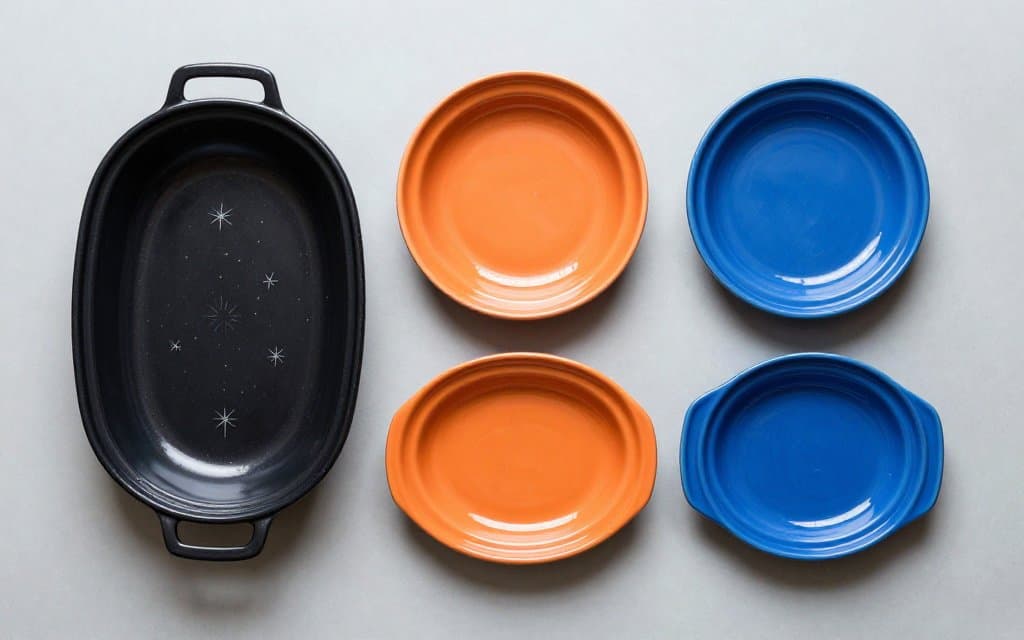
The money lives in the short run designs. Black Starburst, sometimes called Atomic, is the grail. Corning sold it through Sears from roughly 1959 to 1963, so it is far scarcer than the Cornflower staple, and single pieces run $100 to $300 with pristine examples clearing $500.
Wildflower, Floral Bouquet, and the French spice designs follow close behind. Collectors still ask what a La Marjolaine Corningware piece is worth, and the honest answer is $50 to $200 for most sizes, higher for a complete boxed set. The table below lines up the patterns resellers hunt against real sold ranges.
| Pattern | Years | Sold price |
|---|---|---|
| Black Starburst | 1959-1963 | $100-500+ |
| Wildflower | 1970s | $100-500 |
| Floral Bouquet | 1971-1975 | $150-300 |
| La Marjolaine | 1970s | $50-200 |
| Blue Cornflower | 1958-1988 | $5-30 |
Black Starburst is the pattern flippers dream about. A single clean casserole can outsell a whole shelf of Blue Cornflower.
What Blue Cornflower pieces really bring in money
Time for the honest math on the common pattern. Plenty of shoppers know the Corning Ware blue flowers on sight, which is exactly why most single dishes stay stuck between $8 and $30. You are not getting rich on a lone 1980s casserole, and pretending otherwise wastes shelf space.
The exceptions are worth knowing. A full Corningware Blue Cornflower collection in the original box beats loose singles every time, early slope sided dishes reach into the hundreds, and a vintage Corning Ware teapot with its lid brings $25 to $75. Condition and completeness carry the day, the same way they do for our Griswold cast iron value guide.
| Piece | Condition | Price |
|---|---|---|
| Single casserole | Common 1980s | $8-30 |
| Complete boxed set | Clean | $30-100 |
| Early slope side | Excellent | $100-1000 |
| Cornflower teapot | With lid | $25-75 |
- •Original glass lid can double a piece price
- •Chips and heavy crazing cut value in half
- •Faded blue flowers sell for far less
- •Complete sets beat single mismatched dishes
- •Boxed pieces with paperwork bring a premium
Where those viral 10,000 dollar listings come from
You have probably seen the screenshots of Corningware listed at $10,000 or $25,000. Those are asking prices, not sold prices, and anyone can type any number into a listing. Real completed sales for even the rarest sets usually land between $100 and $500.
Check the truth before you celebrate or overpay. On eBay, filter to sold listings and read the actual closing prices, then compare condition honestly. Even faster, a quick photo scan pulls the same sold data so you price on facts, not hope.
An asking price is a wish. A sold price is the market. Only one of them pays your bills.
Common questions about vintage Corningware
How can I tell if my Corningware is valuable?
Start with the pattern and the backstamp. Common patterns like Blue Cornflower and Corningware Spice of Life sell for pocket change, while short run designs like Black Starburst and early embossed marks signal real value. Hold the dish to the light to confirm it is collectible Pyroceram, then check sold eBay listings for your exact piece.
Is Blue Cornflower Corningware worth anything?
Usually a little, sometimes a lot. Most single Corningware Blue Cornflower dishes bring $8 to $30, and complete boxed sets run $30 to $100. Early slope sided pieces from the late 1950s are the ones that occasionally cross into the hundreds, so always check the base before you pass one up.
What is the rarest Corningware pattern?
Black Starburst, also called Atomic, is the one collectors rank highest. It sold only through Sears for about four years in the early 1960s, which makes it far scarcer than the patterns that ran for decades. Pristine Black Starburst pieces regularly clear $300 and can pass $500.
Ready to stop guessing and start profiting at the thrift store? Snap a photo of any Corningware dish and let Thrift Scanner identify the pattern, read the backstamp era, and show real market value from actual sold listings. Never leave a $300 casserole on the shelf again. Get the app here: iOS or Android.