


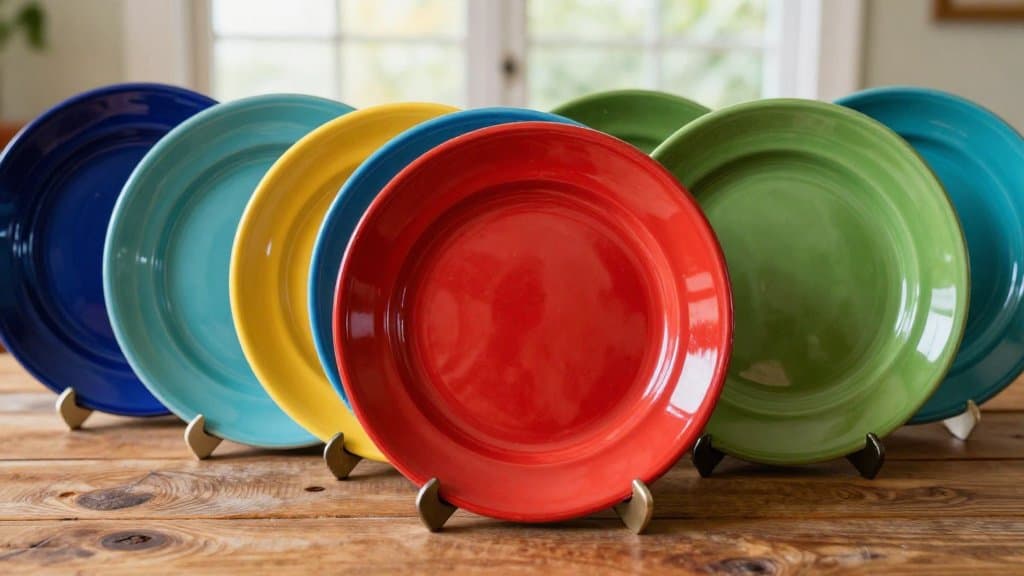
The cheerful red plate sitting in a thrift store case hides a strange secret. Ask any longtime picker whether that old glaze is radioactive, and the answer is yes: it contains real uranium and will nudge a Geiger counter well off its baseline. That fact is not just cocktail trivia, because the fiestaware radioactive era lines up almost exactly with the most collectible years of this dinnerware.
Homer Laughlin launched Fiesta in 1936, and over the next few decades the colors, the marks on the base, and the glaze chemistry all changed in ways you can read like a calendar. This guide covers the radioactive red timeline, the vintage Fiesta colors by year, the backstamps that separate a 10 dollar plate from a 150 dollar one, and the quick physical tells that help you spot the real thing on a crowded shelf.
Is Fiestaware Radioactive? The Uranium Red Years
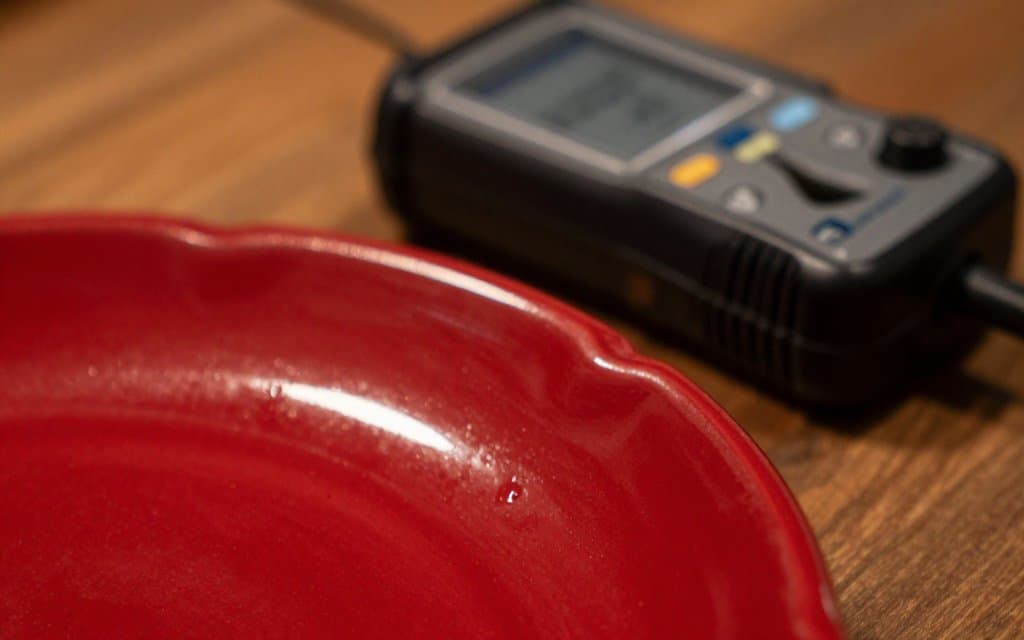
The color that started the worry is the original red, and it earns the reputation. Homer Laughlin mixed uranium oxide into that glaze, and by weight the finished coating could be up to 14 percent uranium. One estimate puts roughly 4.5 grams of uranium in a single dinner plate, which is why a red piece from this window reads hot on a survey meter that the Oak Ridge radiation museum has logged for decades.
The uranium red ran from 1936 to 1943, when the government pulled uranium stocks for the war effort. Production resumed in 1959 using depleted uranium instead of the natural ore, and the shade stayed in the line until the early 1970s. When Fiesta relaunched in 1986 it came back lead free and without that radioactive red, so the glow years have a clean cutoff.
Measured exposure is low but real. Museum readings on vintage red pieces run from about 0.5 to 15 mR per hour at the surface of a plate, and one red teacup measured 32 mrem per hour right at the glaze. Regulators treat occasional use as safe, yet most collectors keep the hottest 1936 to 1943 pieces on a shelf rather than under a daily salad.
By weight, up to 14 percent of vintage Fiesta red glaze could be uranium, roughly 4.5 grams packed into a single dinner plate.
Vintage Fiestaware Colors by Year
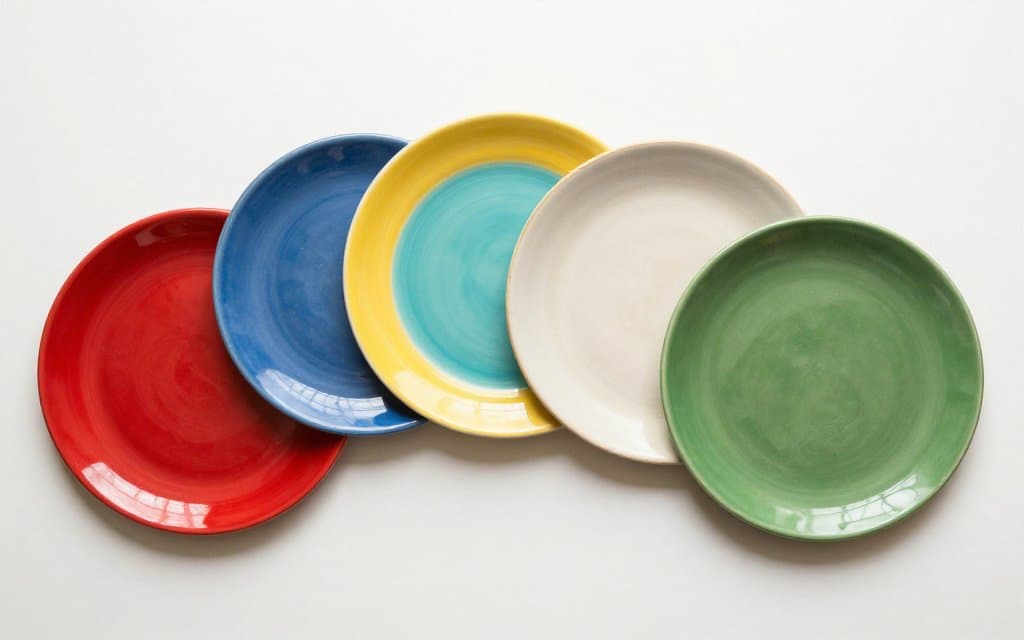
Color is the other calendar built into every piece. Fiesta opened in 1936 with five colors, added a sixth soon after, then rolled out a fresh 1950s palette before finishing the vintage run with one green that resellers still chase. Match a shade to its production window and you have narrowed the age before you even flip the plate over.
- •Red, the uranium glaze made from 1936 to 1972
- •Cobalt blue, a deep navy retired in 1951
- •Light green, the soft original green
- •Old ivory, a warm cream from the first year
- •Yellow, the long runner sold until 1969
- •Turquoise, added in 1937 and still loved
The 1950s brought four warmer tones and retired several originals. Rose, gray, chartreuse, and forest green all ran from 1951 to 1959, which makes any of them a solid mid tier find. Then in 1959 came medium green, the last vintage color and the rarest, produced in smaller numbers right up to 1969.
| Color | Years | Plate Value |
|---|---|---|
| Red | 1936 to 1972 | $18 to $55 |
| Cobalt | 1936 to 1951 | $15 to $50 |
| Turquoise | 1937 to 1969 | $10 to $42 |
| Yellow | 1936 to 1969 | $10 to $30 |
| Medium Green | 1959 to 1969 | $55 to $150 |
Use the table as a quick field reference. The year ranges follow Homer Laughlin production records, and the values reflect recent sold prices for vintage fiestaware plates in the standard 10 inch size in clean condition. Color dating works the same way with other kitchen collectibles, the way a pattern dates a vintage Pyrex piece.
How to Read Fiestaware Markings
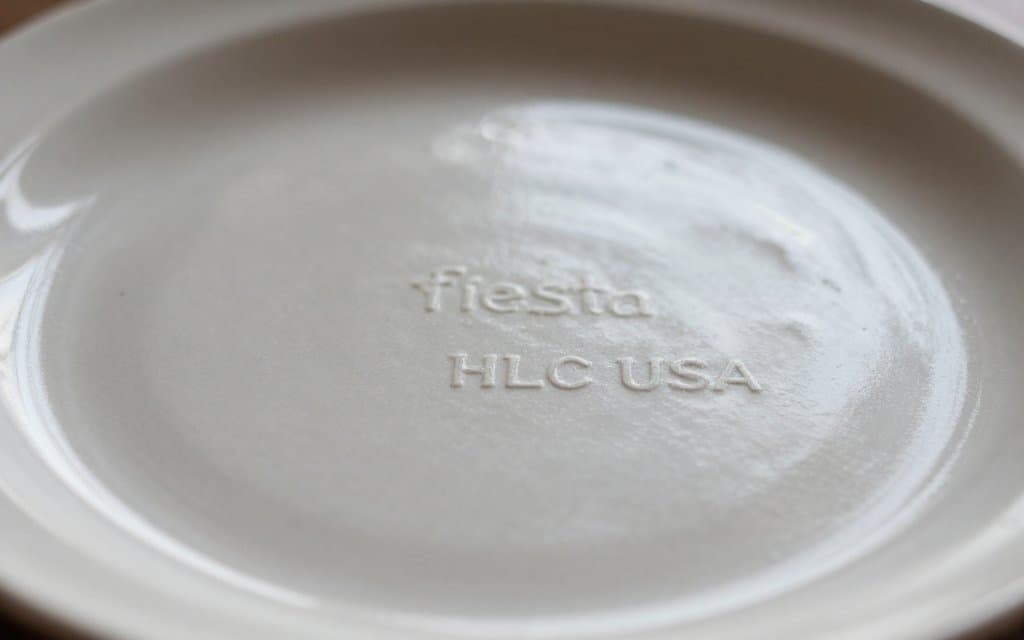
Flip any piece and the base tells you almost as much as the color. Vintage Fiesta markings come two ways, an ink stamp and a mark pressed into the clay, and both spell fiesta with a small lowercase f. You will often see the words genuine fiesta over HLC USA, sometimes in black ink and sometimes molded straight into the base.
Ink stamp versus molded mark
The ink stamp was applied by hand, so it can sit crooked or fade, and it usually reads genuine fiesta made in USA. The molded mark is part of the mold itself and shows the same words in raised or recessed letters. Either one, in lowercase, points to the vintage era.
Telling old marks from the 1986 relaunch
The modern line is easy to separate. If the word FIESTA is stamped in all capital letters it was made in 1986 or later, and if the base carries three or more extra mold letters the piece dates after 1992, with those letters coding the year. Reading a base mark is the same discipline that separates real silver from plate in our sterling silver markings guide.
- •Lowercase fiesta with a small f means vintage
- •GENUINE fiesta ink stamp in black or gold
- •All caps FIESTA points to 1986 or later
- •Three extra mold letters date it after 1992
- •HLC or Homer Laughlin USA marks the maker
Medium Green and Other Rare Fiesta Colors
Not all vintage colors are equal, and this is where Fiesta colors turn into real money. Medium green sits at the top. Made only from 1959 to 1969 and in lower volume than its neighbors, a medium green dinner plate commonly sells for 55 to 150 dollars, while common yellow or turquoise plates trade for 10 to 20. Collectors will pay a 3x to 10x premium for the shade in the right form.
The 1950s colors sit just below. Chartreuse, gray, rose, and forest green plates run roughly 22 to 70 dollars each, but the real prizes are tall forms. A 10 inch vase in medium green can reach 900 to 2,500 dollars, and the same vase in chartreuse or forest green still clears several hundred. Form matters as much as color once you climb past the common shades.
A medium green 10 inch vase can sell for 900 to 2,500 dollars, while the same plate shape in yellow struggles to clear 20.
| Color | Plate | Vase |
|---|---|---|
| Chartreuse | $32 to $70 | $520 to $1,250 |
| Gray | $28 to $60 | $480 to $1,150 |
| Rose | $22 to $55 | $450 to $1,100 |
| Forest Green | $32 to $70 | $510 to $1,200 |
| Medium Green | $55 to $120 | $900 to $2,500 |
What Vintage Fiesta Dishes Are Worth
Once you can date a piece, pricing gets practical. Most everyday vintage Fiesta dishes sell in the 10 to 55 dollar range per plate, with cobalt and red landing higher than yellow and ivory. The famous disk pitcher runs about 75 to 280 dollars depending on color, and covered casseroles and the taller serving forms carry the biggest premiums because fewer survived intact. You can check any piece against real sold listings in seconds at thrifting.app before you commit.
Condition and completeness
Condition swings the number hard. Chips, heavy utensil marks, and the dull cloudiness called glaze wear can cut a price in half. A complete lidded piece with its original lid, or a full place setting in one color, sells for far more than the sum of loose parts, so check that fiesta dinnerware sets are not missing their casserole lids before you buy. The same buy low, sell smart math applies to heavier finds in our cast iron value guide.
- •Rare colors like medium green top the charts
- •Tall forms and lids beat flat plates
- •Chips and glaze wear can cut value in half
- •Matched sets sell above loose singles
- •Clean vintage base marks confirm the era
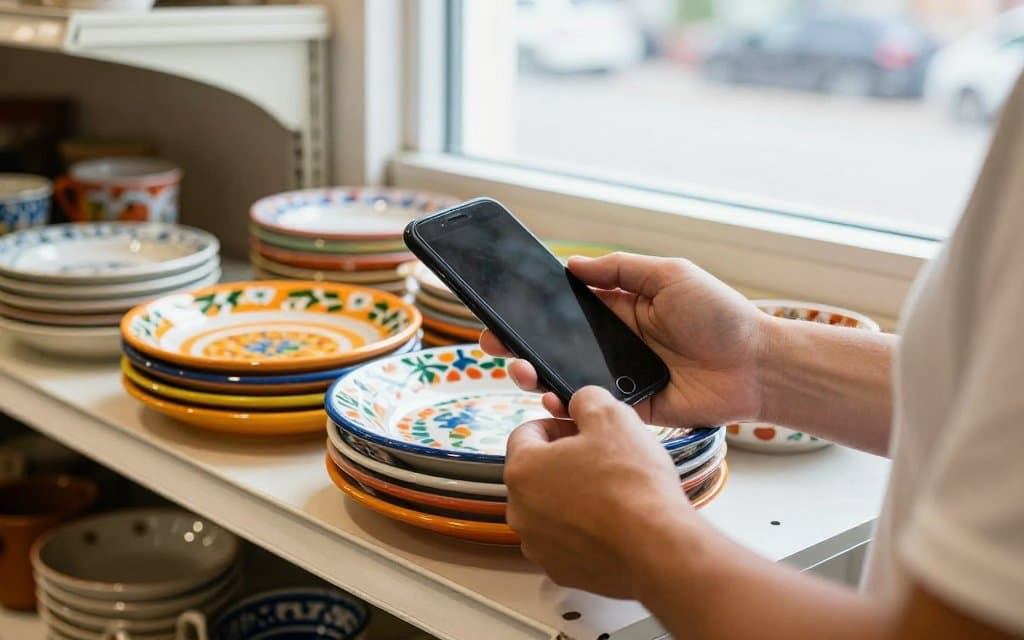
Spotting Real Vintage Fiesta at the Thrift Store
You will not always have a Geiger counter in the aisle, so lean on the body of the piece. Vintage Fiesta is noticeably heavier than the 1986 line, and the underside shows a fully glazed wet foot with no bare clay ring. Look for three small pin marks where the piece rested during firing, plus the concentric rings turned into the base.
- •Wet foot base is fully glazed, no bare clay
- •Three pin marks show where it was fired
- •Concentric rings turned into the base
- •Old pieces feel heavier in the hand
- •C shaped handles on cups and jugs
Put those tells together and you can grade a shelf fast. A heavy plate with a wet foot, three pin marks, a lowercase mark, and a medium green glaze is a buy every single time. A light plate with an all caps stamp is the modern line, still nice to use but not the payday.
Fiesta Questions Thrifters Ask
Is old Fiesta red radioactive enough to worry about?
For occasional use the risk is considered low, and regulators class vintage red as safe to own and display. The caution is about the 1936 to 1943 natural uranium pieces, which read hottest and can leach a little uranium if used with acidic food every day. Most people keep those on a shelf and eat off the newer lead free line.
How do I read Fiesta colors by year?
Match the glaze color to its production window first, then confirm with the base mark. Medium green means 1959 to 1969, the 1950s pastels mean 1951 to 1959, and a lowercase ink or molded mark confirms the vintage era. Together the color and the mark usually pin the decade.
Which medium green Fiestaware pieces sell highest?
Tall and lidded forms win. A medium green 10 inch vase can reach 900 to 2,500 dollars, and covered casseroles or serving bowls in the shade command strong premiums. Flat dinner plates still bring 55 to 150 dollars, well above common colors, but the serious money is in the harder shapes.
Are new Fiesta plates radioactive too?
No. The reformulated red from 1959 to the early 1970s used depleted uranium and reads much lower, and the 1986 relaunch dropped uranium entirely. New fiesta plates are radioactive only at background levels, so a modern red plate is just a red plate.
Ready to stop guessing whether that red plate is a radioactive treasure or a modern reprint? Thrift Scanner reads the brand, color, and condition from one photo and checks real sold prices, so you never leave a medium green vase on the shelf again. Get the app here: iOS or Android.