


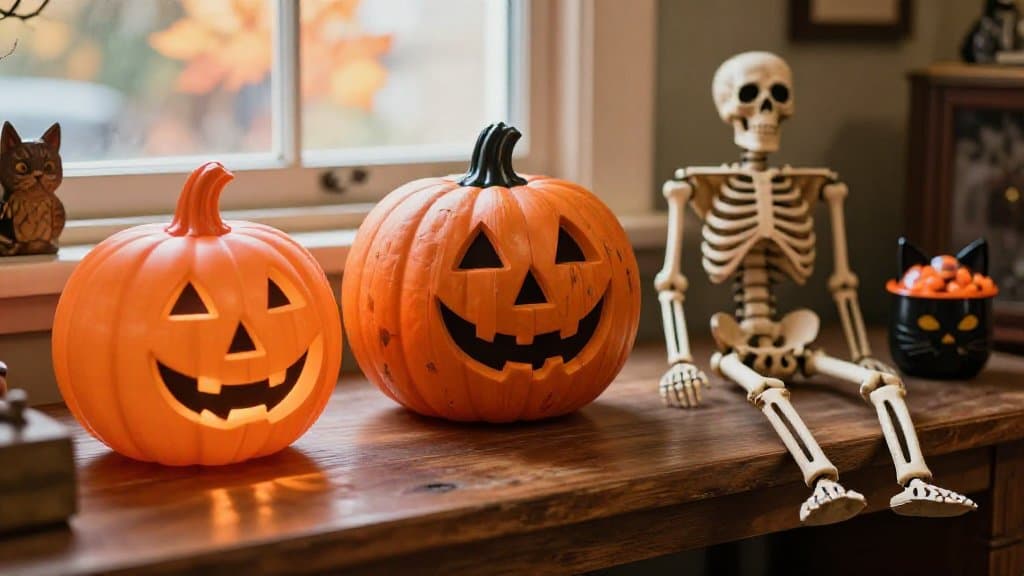
A cardboard skeleton made by Beistle in 1932 sold for $3,700, according to a Patina price roundup. That's the ceiling, not the norm, but it explains why nostalgic Halloween decorations get picked over so fast every fall.
Most of what you'll find at thrift stores and estate sales lands in the $15 to $50 range. The trick is spotting the small slice that's worth ten or a hundred times that, and doing it before the dealer next to you does. Nostalgic Halloween stock also has a hard deadline, so knowing values early matters more than it does with dishes or denim.
Nostalgic Halloween pieces with real price history
The pieces that move reliably fall into five groups: plastic blow molds, Beistle paper decorations, German pulp lanterns, hard plastic candy containers, and boxed costumes. Estate Sale Finder's 2026 guide pulls recent auction results for each, and the spread inside every group is wide.
| Item | Era | Typical value |
|---|---|---|
| Used blow mold, common | 1990s to 2000s | $15 to $40 |
| Beistle jointed skeleton | 1920s to 1960s | $75 to $400 |
| Beistle honeycomb centerpiece | 1920s to 1960s | $50 to $250 |
| German or Japanese pulp lantern, small | Pre-war | $75 to $300 |
| American pulp lantern | 1940s to 1950s | $40 to $150 |
| Hard plastic candy container | 1950s | $30 to $150 |
| Ceramic jack o lantern | 1970s to 1980s | $20 to $100 |
Notice the gap between a common blow mold and a small German lantern. Both can sit in the same seasonal bin at a church sale, often at the same sticker price. Learning to tell them apart is the whole game.
How vintage Halloween blow molds get their value
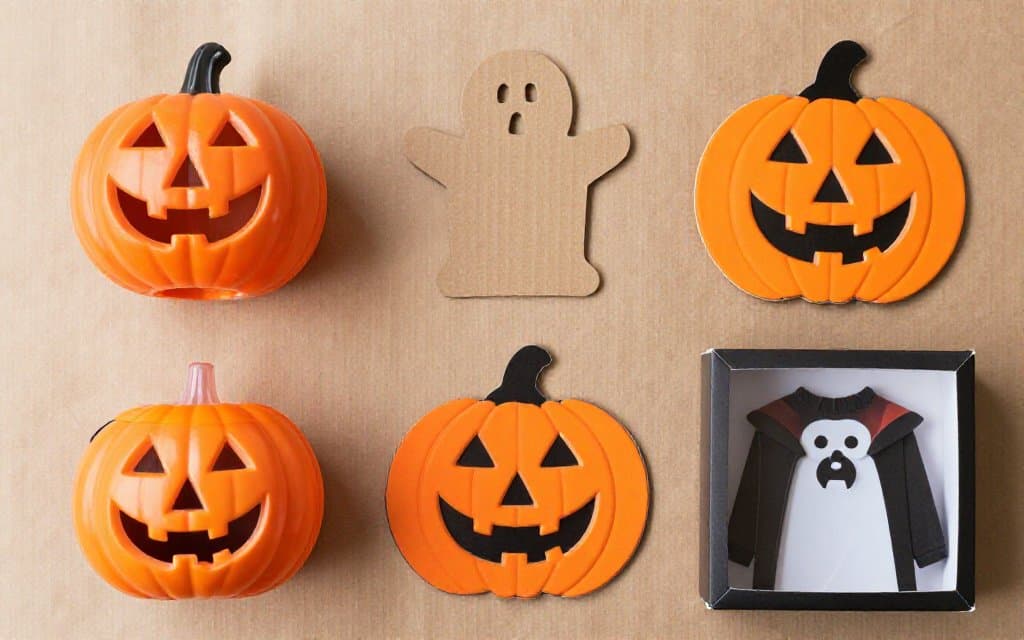
Blow molds arrived in the 1950s and 1960s, when Empire Plastics, General Foam Plastics and Union Products started inflating molten plastic into hollow molds. Antique Trader lists the standouts: a Union Products haunted house that sold for $527 in October 2024, General Foam's Grim Reaper at $100 to $250, and Bayshore haunted houses above $300.
Halloween blow molds from the 1990s and 2000s are a different story. Plenty of them still turn up, and used ones trade at $15 to $40, so they're a volume play rather than a jackpot.
Reading the marks on vintage blow molds
Flip it over first. The maker's name is usually embossed on the back or bottom, and pieces made before 1974 don't carry a barcode. Thicker plastic and brighter paint point to older production too.
- •Embossed maker name on the back or base of the mold
- •No barcode, which suggests production before 1974
- •Original light kit and cord still attached and working
- •Paint that's bright, not chalky or sun-faded
- •No cracks, splits or crushed corners in the shell
Which blow mold pumpkin is worth keeping?
An Empire blow mold pumpkin is the classic porch piece, and Empire's scarce 1950s and 1960s figures are where the higher prices sit. The cat and pumpkin blow mold is another familiar shape. A faded one won't go far, so judge color before you judge the shape.
Sun fading is the quiet value killer on vintage blow molds. A piece that sat on a porch for twenty Octobers can lose most of its appeal even when the plastic is perfect.
Beistle Halloween die cuts and the reissue trap
Beistle was founded in Pennsylvania in 1900, and its paper die-cuts and honeycomb pieces are the backbone of the paper market. Early pieces carry a diamond logo that was dropped around 1930 or 1931, so a diamond mark points straight to the oldest era.
Beistle Halloween values swing hard. Small common die-cuts bring $15 to $60, while a 1930 Tango Cat honeycomb sold for $1,303. The catch is that Beistle has reissued its old designs more than once, and reissues sell for a fraction of originals.
How to spot a reissue of Halloween die cuts
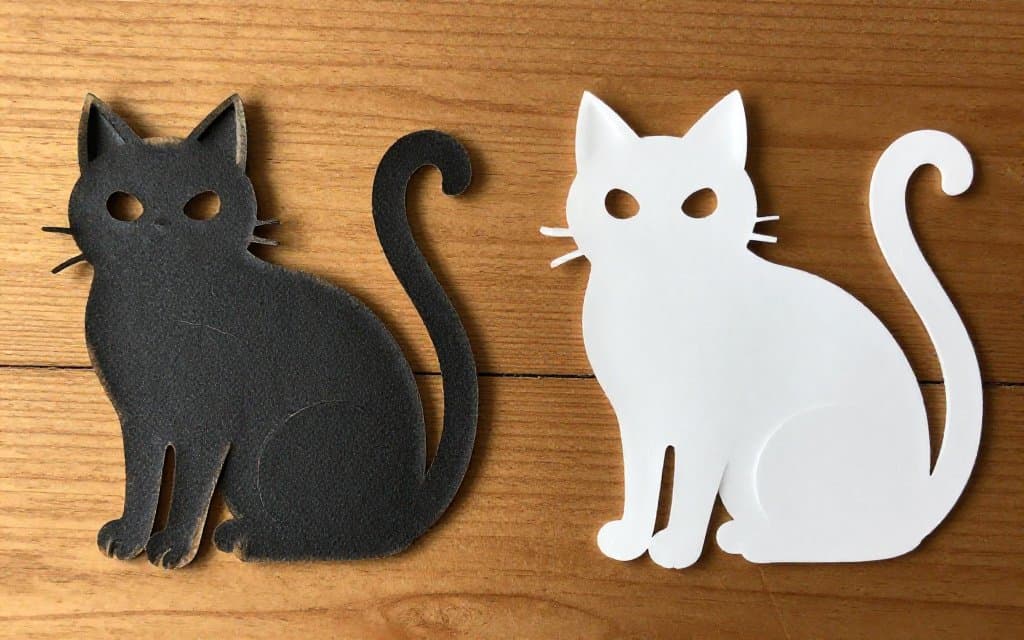
- •Originals are printed on one side and embossed with raised texture
- •Double-sided printing points to a reissue made after 1980
- •Green accents usually mean the 1960s or later
- •2003 reissues use glossy stock with white accents
- •2012 reissues print two copyright dates on the piece
- •An H.E. Luhrs mark dates a die-cut to the 1940s or early 1950s
Look at the cut edge too. Period cardboard shows a warm, slightly gray tone through the edge, and stamped edges are soft and a little fuzzy. Modern stock is bright white with clean, laser-sharp edges.
If a die-cut is printed on both sides, put it down. That one detail separates a $3,700 original from a reissue worth a few dollars.
German paper mache pumpkin lanterns are the top tier
Pre-war German papier-mache sits at the top of the market. A German jack-o-lantern sold for $650 at Jeffrey S. Evans and Associates in August 2025, and a 1920s vegetable-man candy container holds the record at $33,280.
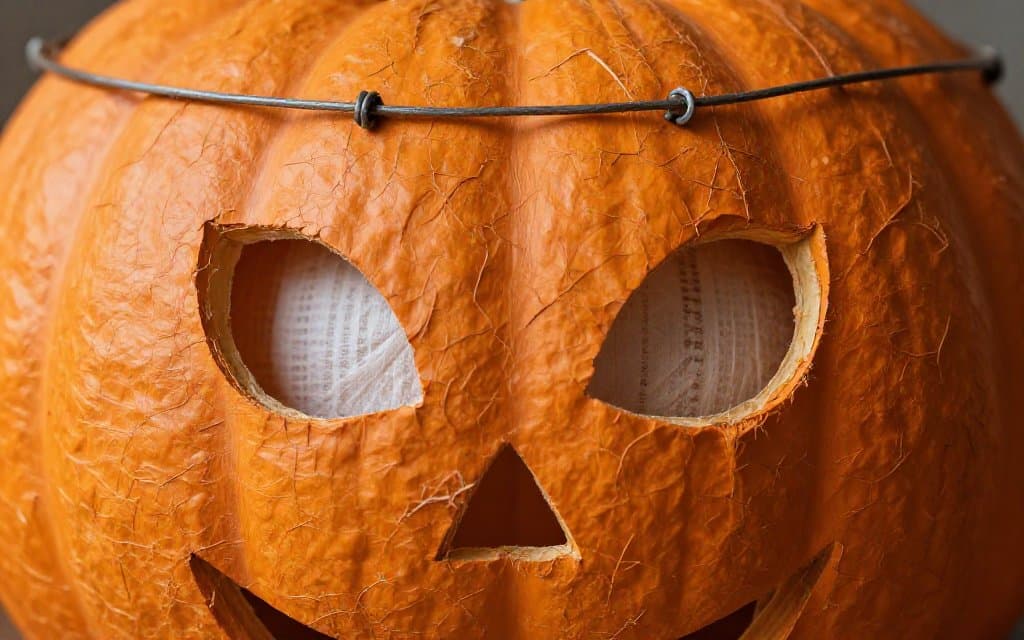
An original paper mache pumpkin has a coarse, fibrous texture and thin, dry paint that crazes into a fine web. Many have a wire bail handle and a printed tissue insert behind the eyes and mouth. Lanterns with that insert intact are worth noticeably more than ones without.
Is a Made in Germany stamp proof it's old?
No. German workshops still make paper mache candy containers, and a new 9 inch Ino Schaller jack-o-lantern with a top hat retails for $203. Reproductions tend to have bright paper linings and faint embossing, while originals show heavy embossing and yellowed, brittle linings.
- •Coarse, fibrous surface you can feel with a fingertip
- •Thin paint crazed into a fine web of cracks
- •Wire bail handle threaded through the rim
- •Printed tissue insert behind the eye and mouth holes
What a bin of antique Halloween decorations is worth
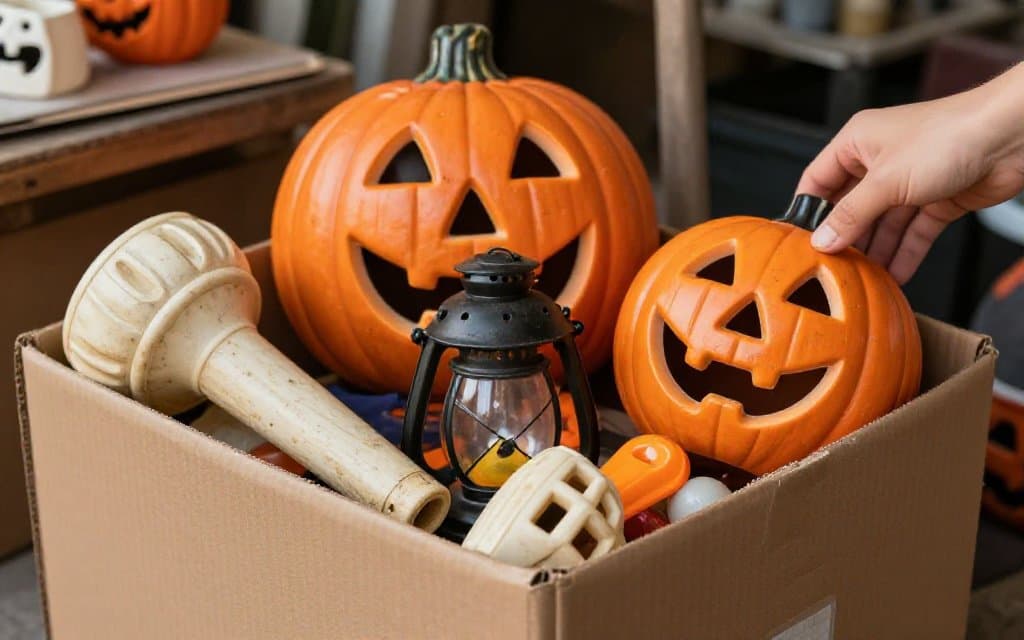
Here's where the money is. Say you pay $5 each for three common used blow molds. At the $15 to $40 range they gross $45 to $120, which is fine but not life-changing. One German pulp lantern hiding in the same box, even a small one at $75 to $300, beats the whole lot.
Hard plastic candy containers from the 1950s are a solid middle tier. Rosbro, E. Rosen and Tico Toys made most of them, ordinary ones bring $30 to $150, and the Rosbro witch on a motorcycle benchmarks around $300 in the standard orange and green.
Where a vintage ceramic jack o lantern fits
Ceramic jack-o-lanterns poured from Byron, Atlantic and Holland molds in the 1970s and 1980s bring $20 to $100. They're heavy to ship, so price in postage before you buy a stack of them.
- •Common used blow molds: $15 to $40 each
- •Gurley wax candles: $20 to $50 each
- •Common unsigned postcards: $5 to $25 each
- •Boxed 1970s costumes: $30 to $50 each
Treat antique Halloween decorations like a mixed lot. The cheap plastic covers your gas money, and the one paper or pulp piece in the box is the actual profit.
Timing the sale so the money lands in October
Seasonal stock has a short window. Patina's advice is to list from September through early October, when buyers are shopping, because prices drop after Halloween and sometimes drop hard. If you find a great piece on November 1, store it and relist next August.
eBay handles most sales, Etsy works well for decorative pieces, and rare German composition belongs at a specialist auction. If you sell holiday stock year round, our guide to vintage glass Santa ornaments covers the next season's best sellers.
Quick answers before your next thrift run
Are vintage Halloween decorations worth anything?
Most are worth $30 to $50, which still beats thrift prices. Working Union Products and General Foam blow molds, early Dennison Bogie Books and Winsch postcards can reach $200 to $600, and rare German pieces go far higher.
Do reproductions of vintage Halloween decorations have resale value?
Some, but not much. Reissues, reproductions and anything made after 1980 sit at the bottom of the market, along with trimmed paper and sun-faded plastic. Check the printing, stock and marks before you pay a collector price.
What else should I check at a fall estate sale?
Look past the seasonal table. The same houses often hold red Fiestaware, early ponytail Barbies and redline Hot Wheels. You can scan any of them on thrifting.app to check recent sold prices before you buy.
Ready to stop guessing at the Halloween bin? Download Thrift Scanner, snap a photo of that blow mold or paper lantern, and see real sold prices before you pay. Get the app here: iOS or Android.