


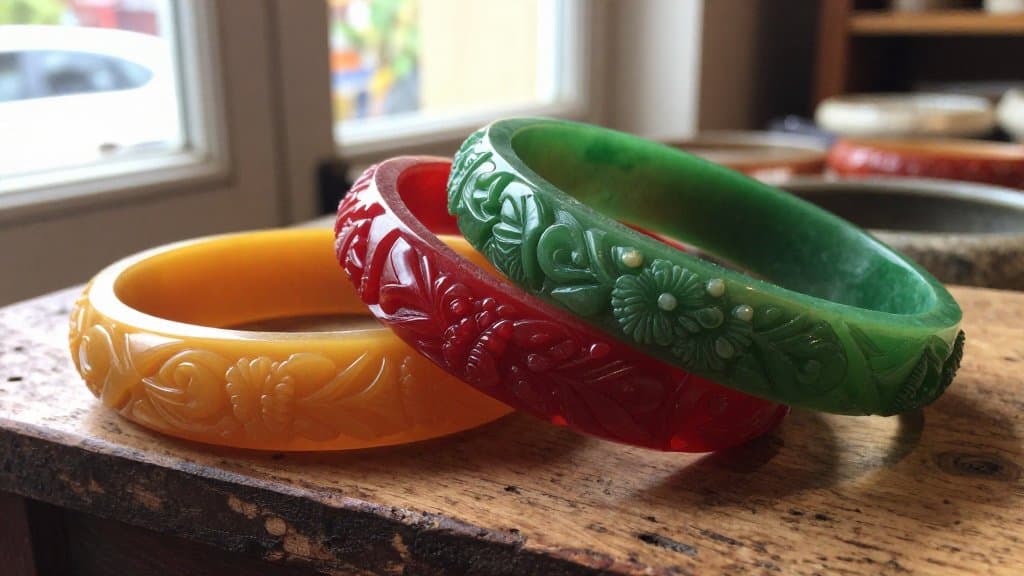
What makes vintage bakelite jewelry worth the hunt
A scratched brown bangle in a thrift store dollar bin can outsell everything else in your cart. Vintage bakelite jewelry gets that kind of respect because it is early plastic that collectors treat like a gemstone, and a carved cuff you paid two dollars for can resell for $75 to $300. The rare pieces go much higher.
Bakelite is a phenol formaldehyde resin that Leo Baekeland patented in 1907, and it became the plastic of the Art Deco years. Most of the vintage bakelite jewelry you will find dates from the late 1930s, right before wartime factories switched to other work in the early 1940s. That short window is a big reason good bakelite jewelry stays scarce.
Values swing hard. On 1stDibs, bakelite bracelets average around $1,600, and auction records climb past $25,000 for the best of them. One green on orange crosshatch cuff sold for $6,000 against an $800 estimate. Sellers list the standouts as antique bakelite jewelry, and most of what you handle will not be that, but knowing the tests keeps you from passing the ones that are.
A plain bangle can be had for about $30, but a large strand of red bakelite beads can fetch $4,000 or more.
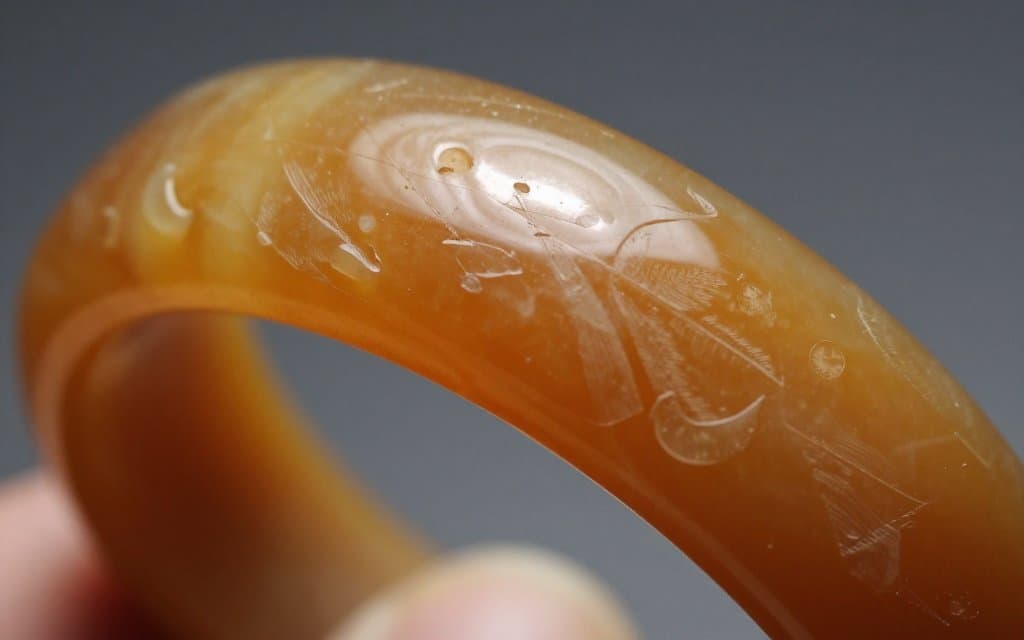
How to test bakelite the safe way
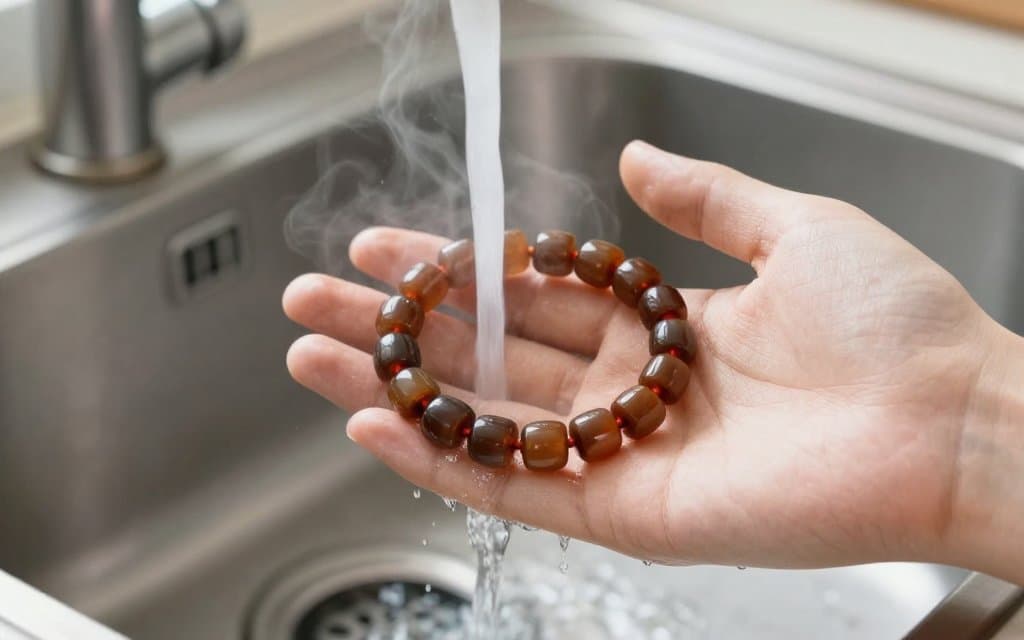
The cleanest field test is hot water. Run the tap as hot as it goes, hold the piece under it for 15 to 30 seconds, then smell it right away. Real bakelite gives off a sharp phenol odor, the kind of chemical smell people compare to an old rotary phone.
No sink nearby? Rub the piece hard against your palm or a wool sleeve for about 20 seconds and sniff. Friction heats the resin enough to release the same smell. It costs nothing and works in the middle of a crowded store, which is why most resellers reach for it first.
The formaldehyde smell that gives it away
That odor comes from the phenol formaldehyde reaction, and it is specific. Lucite gives off no smell at all, and celluloid smells like burning milk, so your nose sorts the three apart fast. If you get nothing after real heat, it probably is not bakelite. The same patient testing habit pays off with other thrift finds that hide their value.
- •Heat the piece under hot tap water 15 to 30 seconds
- •Smell it right away for a sharp phenol odor
- •No smell after real heat usually means not bakelite
- •Skip boiling water, which can craze old resin
The Simichrome and 409 swab test
When smell alone is not enough, chemistry helps. Put a dab of Simichrome polish on a white cotton swab and rub a hidden spot for about 30 seconds. On genuine bakelite the swab turns from pink to yellow. A spritz of Formula 409 on a fresh swab does the same job.
The swab test lies sometimes, so treat it as one vote and not a verdict. Old wax or polish blocks the reaction, and black pieces plus many reds refuse to turn even when they are real. When a swab stays clean but the piece feels and smells right, trust the other signs.
Black and many red pieces often fail the swab test even when they are genuine bakelite, so never rely on one test alone.
How to Test if Bakelite is Real: The Step-By-Step Guide
How to tell if something is bakelite by feel and sound
Your hands tell you plenty before any chemical does. Bakelite feels dense and a little warm, heavier than the modern plastic sitting next to it, and it never shows a mold seam because it was cut and carved rather than injection molded. A visible seam line is an instant no.
The clunk test for a bakelite bracelet
Knock two bangles together and listen. A real bakelite bracelet makes a deep, almost wooden clunk, while newer plastic answers with a light, brittle click. The sound is subjective, so pair it with weight and smell instead of betting on it alone.
Two lookalikes trip people up. Lucite is lighter, slicker, and comes in bright candy colors with no smell, and celluloid is thin and highly flammable. Learn those two and you stop overpaying for plastic that only looks the part.
- •No mold seams or ejector marks anywhere
- •Dense and warm, heavy for its size
- •Deep clunk instead of a light plastic click
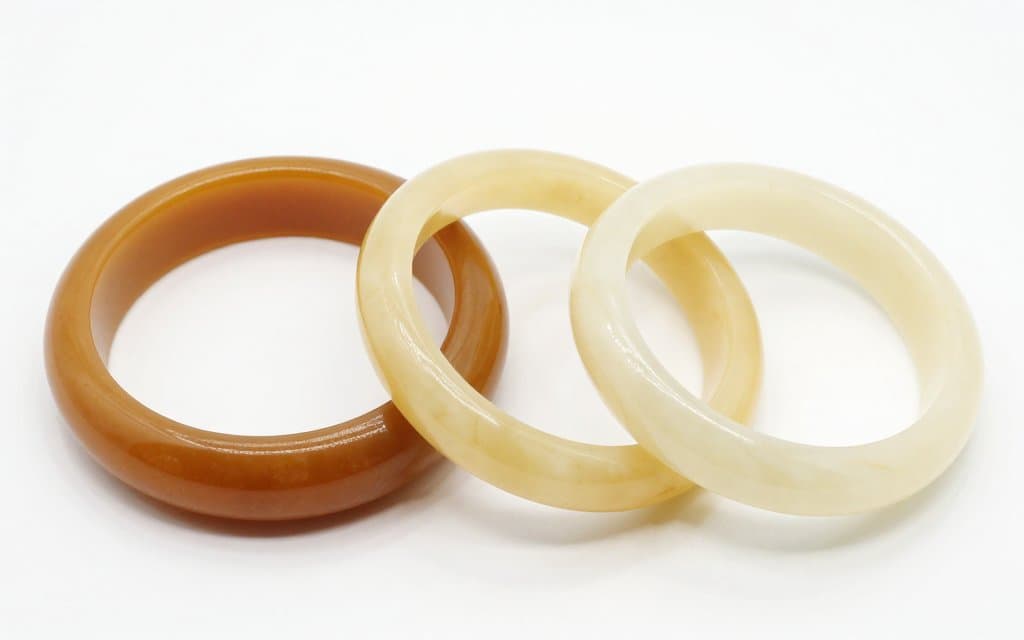
- •Aged color, whites drift toward cream
What your bakelite bracelet or brooch is really worth
Price follows form, color, and carving. Plain solid bangles in common colors sell for about $20 to $75, and once real carving shows up the same bangle jumps to $75 to $300. Figural brooches shaped like fruit, dogs, or flowers run $50 to $500, and full bead necklaces with their original clasp bring $75 to $350.
| Item | Typical low | Typical high |
|---|---|---|
| Plain bangle | $20 | $75 |
| Carved bangle | $75 | $300 |
| Figural brooch | $50 | $500 |
| Bead necklace | $75 | $350 |
| Designer signed | $500 | $1,500 |
The ceiling is real. Designer signed pieces bring $500 to $1,500 at auction, and a big strand of true red beads can pass $4,000. Condition cuts the other way, since chips, cracks, and heavy scratches knock 30 to 60 percent off a piece that would otherwise grade excellent.
Carving, color, and an original clasp decide most of the price. A plain black bangle and a deep carved cherry cuff can differ tenfold.
Colors that pay, from butterscotch bakelite to cobalt
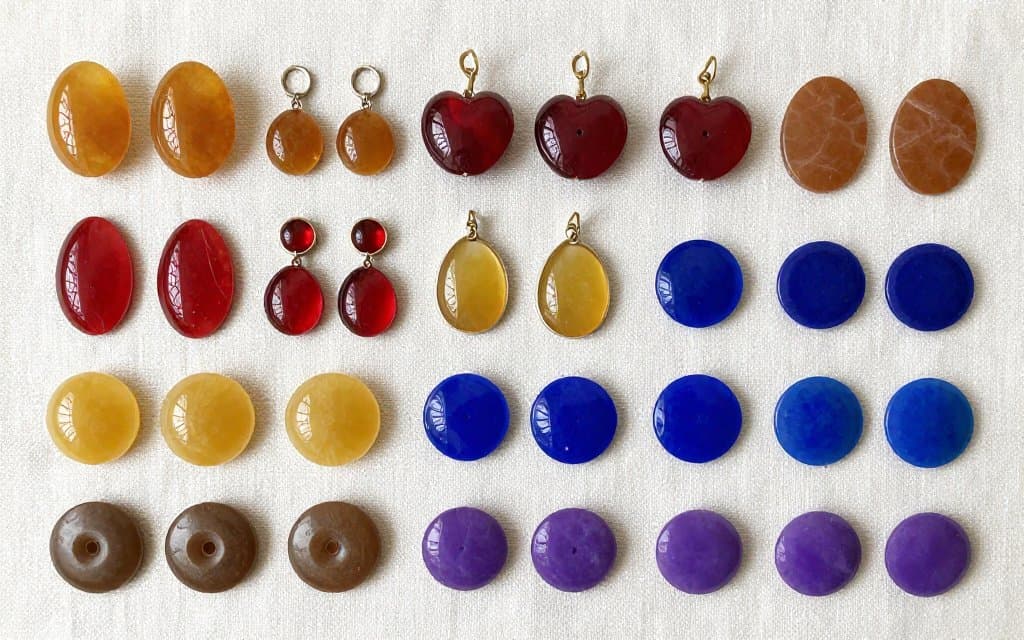
Color is the fastest read on value. Butterscotch bakelite and amber are the everyday shades, so they set the baseline, and browns and blacks sit right there with them. The money hides in the colors you rarely see, which is worth remembering every time you browse secondhand racks.
| Color | Rarity | Premium |
|---|---|---|
| Butterscotch | Common | Baseline |
| Cherry red | Common | Up to 1.2x |
| Apple juice | Scarce | 1.5x to 2x |
| Cobalt blue | Rare | 3x to 5x |
| Purple | Very rare | 2x to 4x |
A carved bakelite bangle in cobalt or lavender can sell for several times what the same carving brings in brown. Apple juice, that clear amber shade, and true turquoise also pull premiums because collectors chase them. When you spot an odd color, test it before you assume it is modern.
- •Cobalt and purple carry the steepest premiums
- •Apple juice reads clear amber, not opaque
- •Whites and turquoise drift with age, that is normal
- •Common brown and black set the price floor
Questions thrifters ask about bakelite
How can you tell if something is bakelite in a busy store?
Lead with your hands and your nose. Feel for real weight and warmth, check for any mold seam, then rub the piece hard for 20 seconds and smell for that phenol odor. Those three steps take ten seconds and clear most pieces without polish or water.
Does real bakelite always smell like formaldehyde?
It should once it is warm, but only after real heat. A cool piece on a shelf gives up nothing, and a quick touch is not enough. Rub hard or run hot water first, then smell, and give a stubborn piece a second try before you walk away.
Why does my butterscotch bakelite fail the swab test?
A surface coat is usually the culprit. Old wax, lacquer, or polish sits between the swab and the resin and blocks the color change, and some blacks and reds never react anyway. Clean a hidden spot and retest, then lean on the smell test when the swab stays quiet.
Is a plain bakelite bracelet worth anything?
Yes, though not a fortune. A plain solid bangle in a common color usually sells for $20 to $75, which still beats almost anything else in the bin. Add carving, a rare color, or a maker mark and that same bracelet can climb into the hundreds.
Ready to stop guessing at the dollar bin and start pricing like a pro? Thrift Scanner reads the brand, material, and real market value of a find from a single photo, so you can spot genuine vintage bakelite jewelry before it goes back on the shelf. Snap a picture, pull real sold listing data, and stop leaving money behind. Get the app here: iOS or Android.