


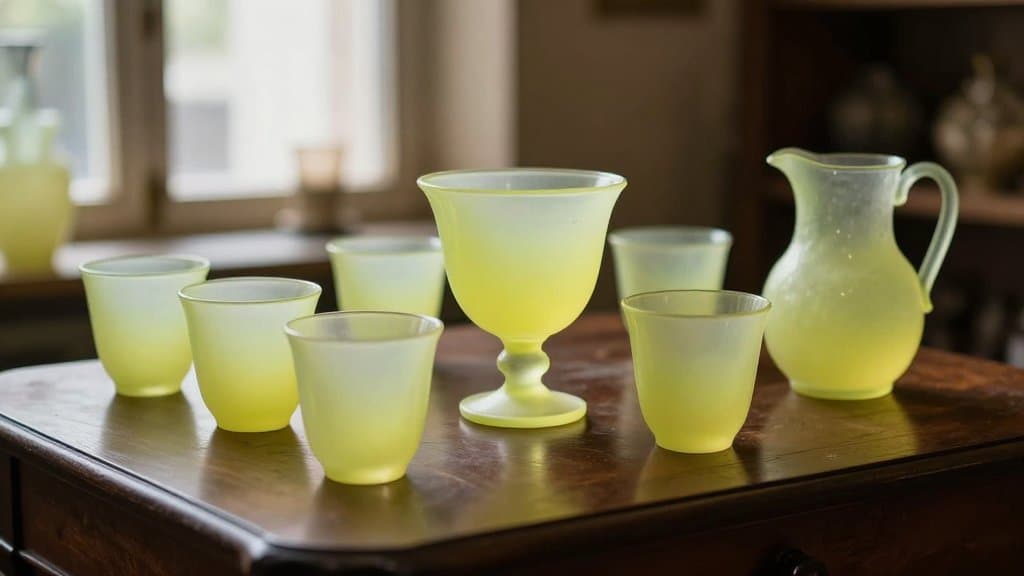
That plain green tumbler in the bric-a-brac aisle can glow like a neon sign under the right lamp, and that glow is often worth real money. Learning how to identify uranium glass takes one cheap tool and about ten seconds per piece, yet most shoppers walk straight past it because it looks dull on the shelf.
The glass has uranium baked into the batch, usually between 0.1 and 2 percent, which makes it fluoresce bright green under ultraviolet light. Collectors call the pale yellow-green version vaseline glass, after the petroleum jelly it resembles. Prices have climbed as glowing-glass clips spread on TikTok and Instagram, so knowing how to spot it on sight gives you a genuine edge at the bins.
What makes the glass glow, and why it barely registers
The green fluorescence comes from uranium, not radium. People sometimes call these pieces radium glass, but that label is a leftover myth; there is no radium in them. Uranium oxide was a common glass colorant from the 1830s through the 1940s, and makers like Anchor Hocking and Fenton poured millions of pieces before wartime rules pulled uranium off the shelves.
A bowl of this glass on a shelf gives off a tiny fraction of the radiation you already absorb from a cross-country flight or a granite countertop.
Is uranium glass safe? For display and normal handling, yes. The uranium sits locked inside the glass, and a Geiger counter held to a typical piece clicks only a little above background. Health physics museums put it simply: enjoy it, wash your hands, and skip serving acidic food or drink in it every day.
The radiation, in plain numbers
Most of these pieces read between 0.1 and 2 percent uranium by weight. That is enough to glow hard under a lamp and far too little to pose a hazard on a mantel. The one real caution is dust: never grind, sand, or cut a piece, because inhaling the powder is the only path by which the material becomes a true health question.
How to identify uranium glass with a black light
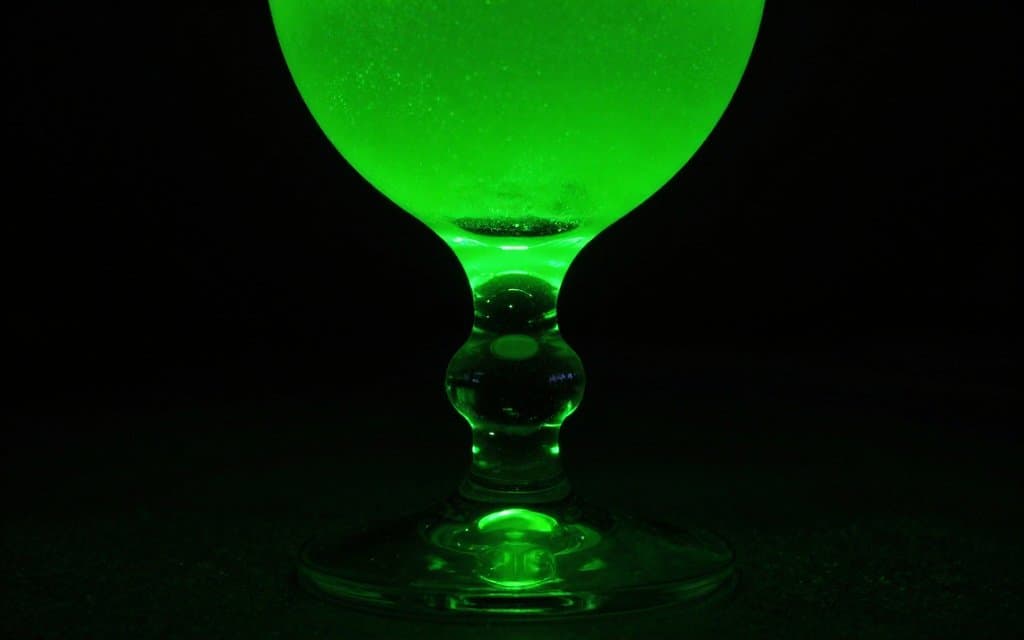
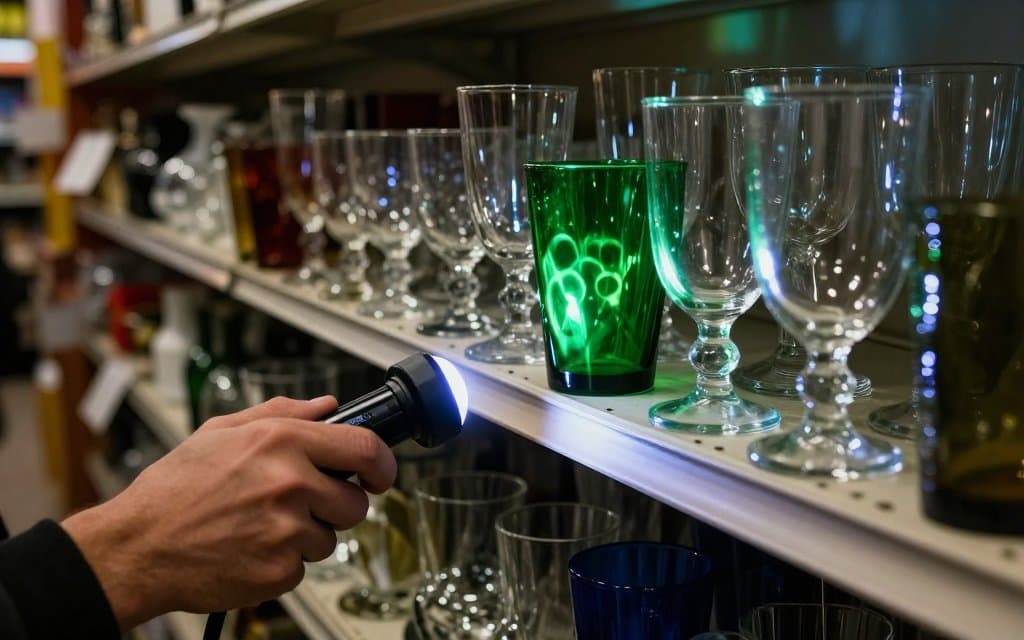
Here is the whole test. In a dark room, sweep an ultraviolet light across the piece and watch for a glow that rises from inside the body of the glass, not a sheen sliding over the surface. Real fluorescence stays put when you shift your angle; a reflection travels with the lamp.
The light itself matters more than anything. A filtered 365 nanometer black light for uranium glass, the kind fitted with a ZWB2 glass filter, gives a clean neon glow and runs about 15 to 35 dollars, as this UV identification guide lays out. Cheap 395 nanometer flashlights spill visible violet that bounces off any shiny glass and fakes a glow, which is how beginners get fooled.
- •Test in a dark room for the clearest glow
- •Use a filtered 365 nm light, never a 395 nm one
- •Watch thick spots: bases, stems, and handles
- •A true glow radiates from inside the glass
- •A sliding sheen is reflection, not the real thing
The glow you want radiates from within the body of the glass and stays visible as you move the light. Surface shine slides across the piece; real fluorescence sits still.
Which black light actually works
Wavelength is the deciding factor, and the gap between two common lights is night and day. Here is how each behaves on the same shelf of glass.
| Light type | Wavelength | Result |
|---|---|---|
| Filtered UV | 365 nm | Bright clean neon glow |
| Cheap blacklight | 395 nm | Violet wash and false reads |
| Room daylight | None | Looks like plain glass |
How To Identify Uranium Glass ~ Depression Glass ~ Vaseline Glass ~ With Twin Cities Adventures
Telling vaseline from the rest of the family
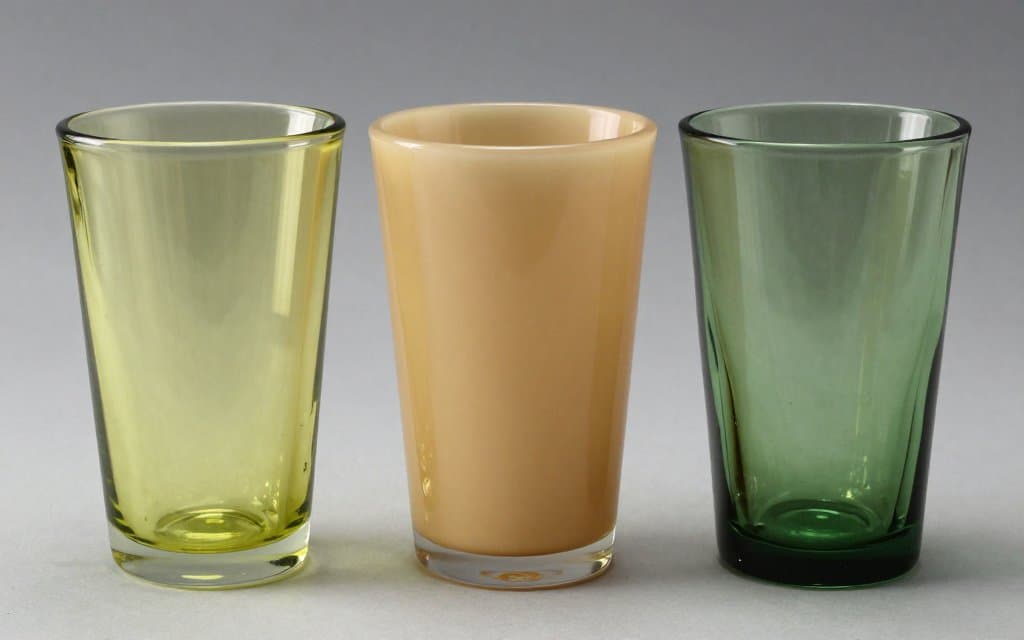
Collectors get picky about names, and the distinction pays. The classic version is transparent and yellow-green, the exact shade of old petroleum jelly. The broader family also covers opaque custard glass, jadeite, and green Depression pieces that carry uranium. Rarer tints such as blue vaseline glass, made by adding cobalt or other oxides to the batch, turn up too, and they run scarcer than the standard yellow-green.
Why fuss over the label? Because buyers search by it. A listing tagged vaseline glass often pulls a different, sometimes deeper, bidding crowd than one tagged plain green Depression glass, even when the same lamp makes both light up. The word carries a premium of its own.
What these glowing pieces sell for
Here is the part that pays for the flashlight. Uranium glass value tracks the rarity of the shape far more than the material itself, since the batch is common but interesting forms are not. A plain pressed tumbler is worth a few dollars glowing or not, while a Victorian novelty compote or documented English Pearline can climb into the hundreds.
Condition then rewrites the math. A single rim chip cuts its resale value by 50 to 70 percent, and cloudy interior staining that dealers call sickness leaves a piece close to unsellable. Everyday vaseline glass plates and cups sit at the low end, while punch sets, vases, and figural pieces hold the real money. That is where vaseline glass value actually lives.
| Form | Typical price | Condition note |
|---|---|---|
| Cups and small pieces | 5 to 30 dollars | Glow alone adds little value |
| Bowls and plates | 15 to 100 dollars | Chips cut value 50 to 70 percent |
| Vases and compotes | 30 to 200 dollars | Form matters more than color |
| Punch bowls and sets | 100 to 500 plus | Complete sets bring the most |
| Figural and novelty | 30 to 150 plus | Victorian shapes fetch premiums |
The forms that carry the money
Skip the loose plates unless they are dirt cheap. The pieces that reward a careful shopper are the ones hard to find complete: lidded jars, footed compotes, cruets, and full punch sets with matching cups. A complete set can sell for several times the total of its scattered parts, so it pays to buy the whole thing when you spot one.
A single rim chip drops a piece by 50 to 70 percent, and cloudy sickness inside the glass is close to unsellable. Buy it clean or leave it on the shelf.
- •Run a fingernail around every rim for chips
- •Hold it to daylight to spot cloudy sickness
- •Check bases and handles for hairline cracks
- •Favor lids, cruets, and complete matched sets
- •Photograph the glow for your resale listing
Where to find it and how to shop it
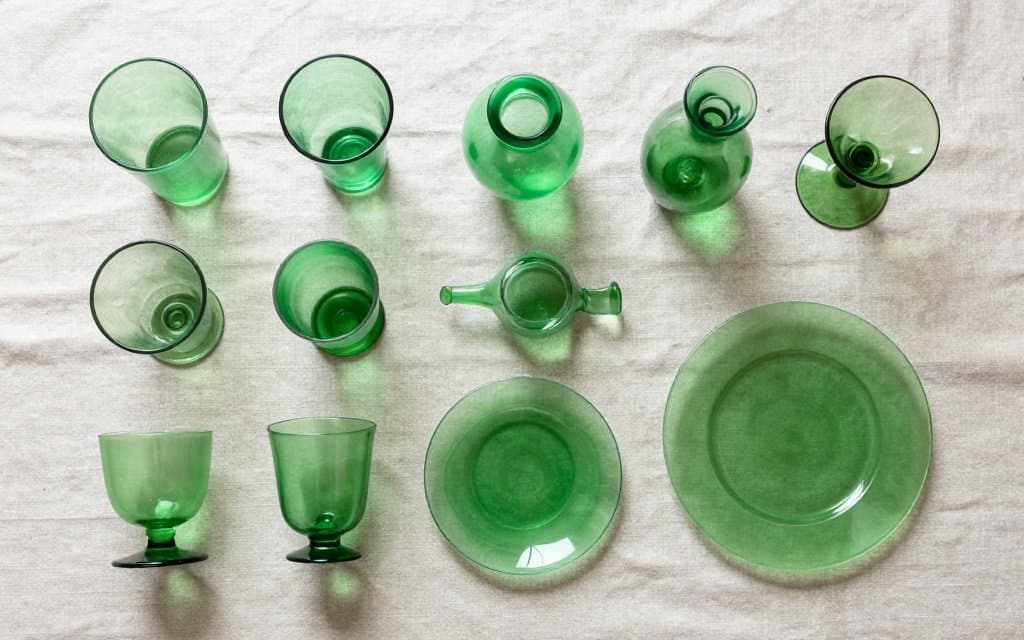
These pieces hide in plain sight because they look ordinary in store lighting. Estate sales, church bazaars, and the glassware shelf at any thrift store are prime hunting grounds. Carry your UV light, sweep the shelf quickly, and the glowing pieces announce themselves in a second.
Uranium is not the only radioactive thing on those shelves. Some vintage dinnerware lights up for a related reason, which is why our guide on whether Fiestaware is radioactive pairs well with a black light hunt. If you also chase glowing kitchenware, the same trip often turns up valuable vintage Pyrex patterns worth a second look.
- •Sweep glassware shelves at every thrift stop
- •Estate and church sales hide the best pieces
- •Bring a filtered 365 nm light on every trip
- •Ask about back-room boxes not yet priced
Not sure what a glowing find should sell for? Snap a photo and let the resale value scanner pull real sold comps so you price from data instead of a hunch.
Common questions collectors ask
Is uranium glass dangerous to keep at home?
Not really. On a shelf, the radiation is very low, a small slice of your normal yearly background dose, and it cannot travel far. The only firm rules are to avoid eating or drinking from it daily and to never sand or grind a piece, since dust is the sole way the material turns into a hazard.
How do I know if my green glass glows from uranium?
Shine a filtered 365 nm ultraviolet light on it in the dark. If it glows bright neon green from inside the glass, it holds uranium. Plain green glass, milk glass, and modern reproductions stay dull or throw only a faint surface violet that slides as you move the lamp.
Does every glowing piece glow the same green?
Almost. Nearly every piece fluoresces the same electric green because the color comes from the uranium itself, whether the glass looks yellow, green, or custard in daylight. Blue vaseline glass and other tinted batches still light up green, just over a slightly different base cast.
Which UV flashlight should I buy?
Buy a filtered 365 nanometer UV flashlight with a ZWB2 lens, usually 15 to 35 dollars. Skip the 395 nanometer party blacklights; they leak violet light that reflects off any glass and produces false positives that cost resellers real money at the register.
Ready to stop guessing what your glowing finds are worth? Thrift Scanner identifies the piece, reads its condition, and shows real market value from millions of sold listings, so you never overpay or underprice a glowing-glass score again. Get the app here: iOS or Android.