


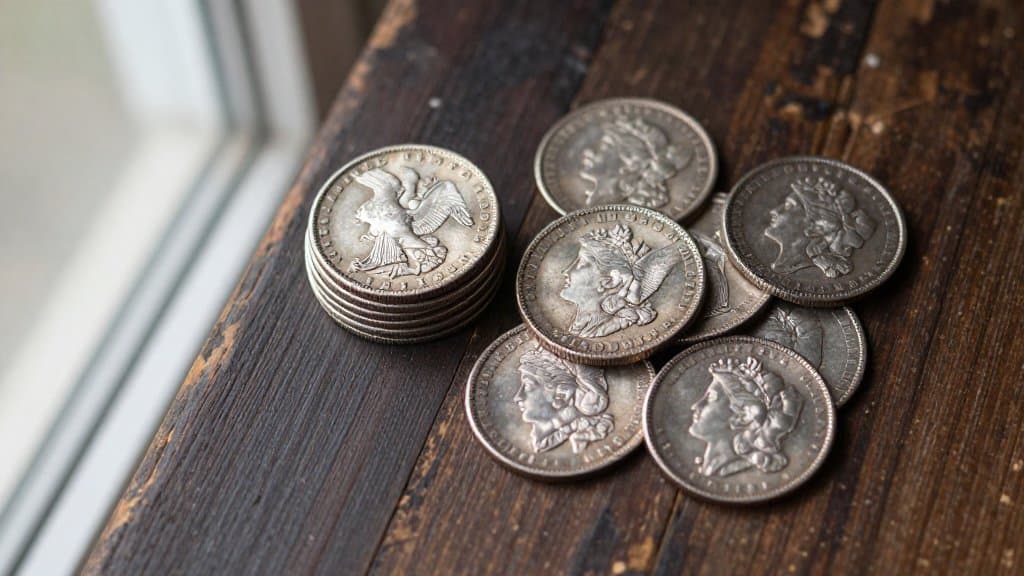
Flip over an old silver dollar and the whole story is in the details. Two coins can look identical across a table, yet one is worth about thirty dollars in silver and the other is worth a used car. A silver dollar value swings on four things: the year, the mint mark, the grade, and whether the coin is a common date or a genuine rarity.
Most of the cartwheels you will meet at an estate sale are common Morgan and Peace dollars, and those trade for silver melt plus a modest premium, roughly $70 to $120 in circulated shape at early 2026 silver prices. The exciting part is the small share that carry a key date or a scarce mint mark. Those can jump from a hundred dollars into the thousands, and the very best have crossed the million dollar line at auction.
What decides a silver dollar value
Four levers move the price, and they stack. Date and mint mark set the rarity. Condition, what collectors call grade, decides how much of that rarity you actually capture. Demand, which for silver dollars is huge, keeps even common coins well above face value. The phrase to remember is scarcity in high grade, because a common date in flawless condition can beat a rare date that has been worn smooth.
- •Date and mint mark set the base rarity
- •Grade decides how much value you keep
- •Original surfaces beat cleaned, shiny coins
- •Silver content sets the hard price floor
- •Collector demand lifts even common dates
A common Morgan in gem condition can outsell a rare date that has been polished. Original skin is worth far more than shine.
Morgan silver dollar value by date and mint mark
Morgan dollars ran from 1878 to 1904, then again in 1921. The series key is the 1893-S, struck in tiny numbers in San Francisco. In collectible grades it starts around $4,000 and climbs past $600,000, and the finest known sold for $2,086,875 in 2021. The 1889-CC, the king of the Carson City coins, runs from roughly $595 worn to six figures in mint state. These rank among the most valuable silver dollars in all of US coinage.
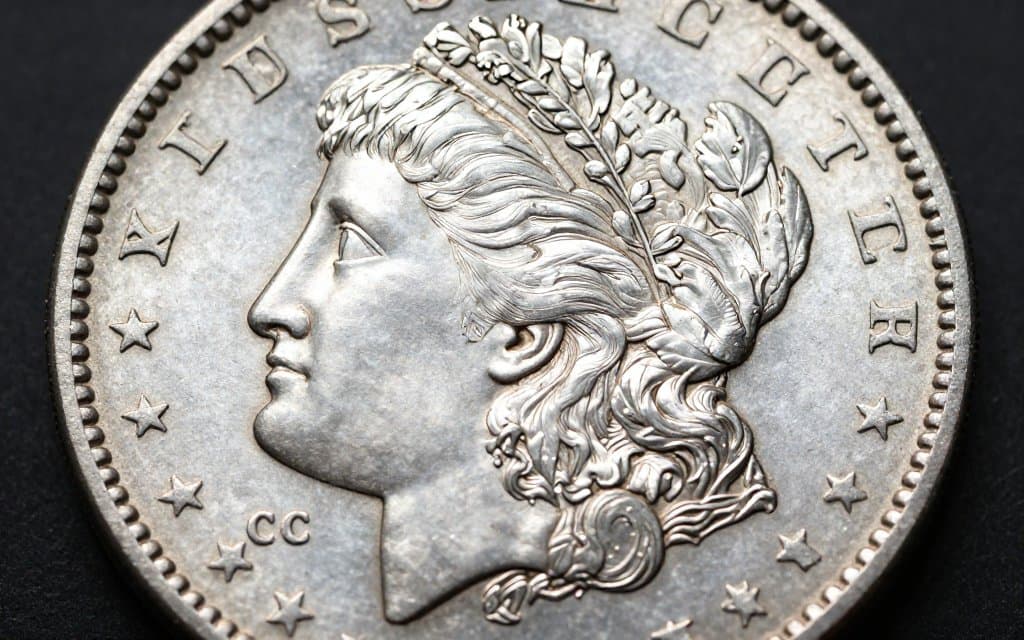
Mint marks live on the reverse, beneath the wreath and just above the word DOLLAR. A blank spot means Philadelphia. A CC is Carson City, an S is San Francisco, an O is New Orleans, and a D on a Morgan shows up only in 1921. Just like a wheat penny, one small letter can change the price by thousands.
The Carson City premium
Carson City struck Morgan dollars for only 13 years, and the Pittman Act of 1918 melted millions of silver dollars, wiping out huge numbers of them. That is why a CC mint mark commands more than the same date from Philadelphia. Collectors chase the full CC run, so even beat up examples sell for a strong premium, and a common 1882-CC still starts near $110 in worn grades.
| Date | Grade | Value |
|---|---|---|
| 1893-S | Good to XF | $4,000 to $15,000 |
| 1889-CC | Good to XF | $595 to $3,875 |
| 1895 proof | MS65 plus | $125,000 plus |
| 1894 | Good to XF | $725 to $1,100 |
| 1901 | MS60 plus | $4,850 plus |
| Common dates | Circulated | $70 to $120 |
- •1893-S, the undisputed series key date
- •1889-CC, the king of Carson City Morgans
- •1895, a proof-only date with 880 struck
- •1894, a scarce low mintage Philadelphia coin
- •1903-O, once famously rare, still prized
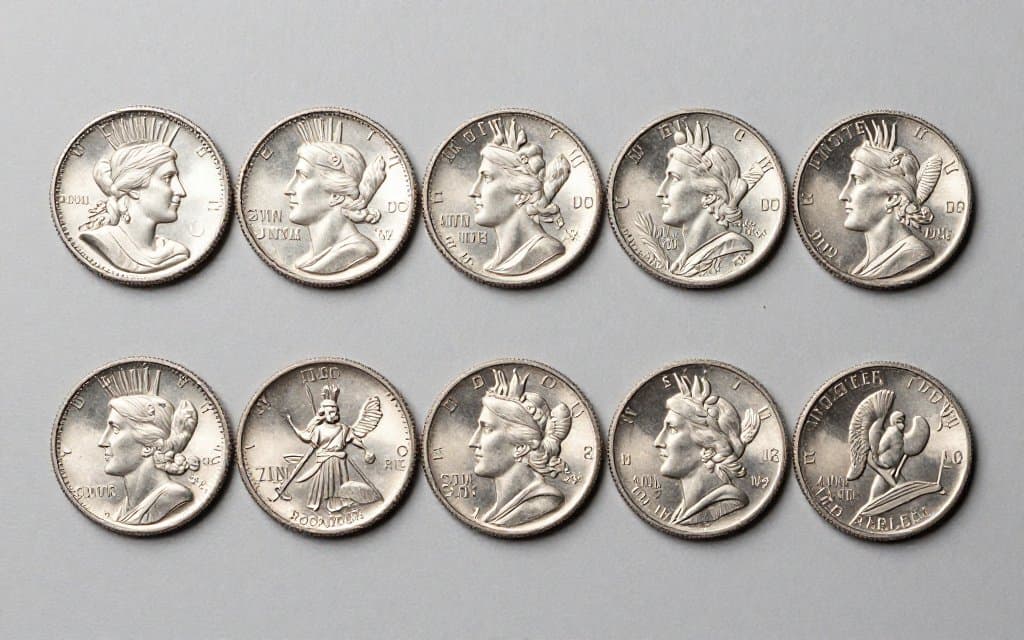
10 Valuable Morgan Silver Dollar Coins - Key Dates and Rare Varieties
Peace silver dollar value and the dates to watch
Peace dollars picked up where Morgans left off, running from 1921 to 1935, and they tell a shorter, cleaner story. The 1921 is the first year and the only regular issue struck in high relief. That high relief 1921 runs about $257 worn and $706 to $4,110 uncirculated, with top gems reaching $40,000 or more. The real trophy is the 1934-S, whose gem examples sell for $25,000 to well over $100,000.
The 1928 Philadelphia is the lowest mintage Peace date at 360,649 coins and starts around $225 even worn. Most common Peace dollars from 1922 to 1925 sit at $30 to $55 in circulated grades, close to their silver content. So the Peace series rewards you for spotting three or four specific dates and shrugging at the rest.
- •1921 high relief, the scarce first year
- •1934-S, the gem-grade series trophy
- •1928, the lowest mintage at 360,649 coins
- •1927 and 1927-S, quietly scarce dates
- •1922 to 1925, common and close to melt
The 1934-S Peace dollar in gem condition can bring $25,000 to more than $100,000, yet a 1924 sits near thirty dollars in silver.
How to tell if a coin is silver
You can sort silver from clad in a few seconds. Every US dime, quarter, and half dollar dated 1964 or earlier is 90% silver, so the date is your first tell. Set the coin on its edge: a solid silver coin shows a plain silver stripe, while a modern clad coin shows a copper line sandwiched in the middle. Silver is not magnetic, so a magnet that grabs the coin means it is not silver at all.
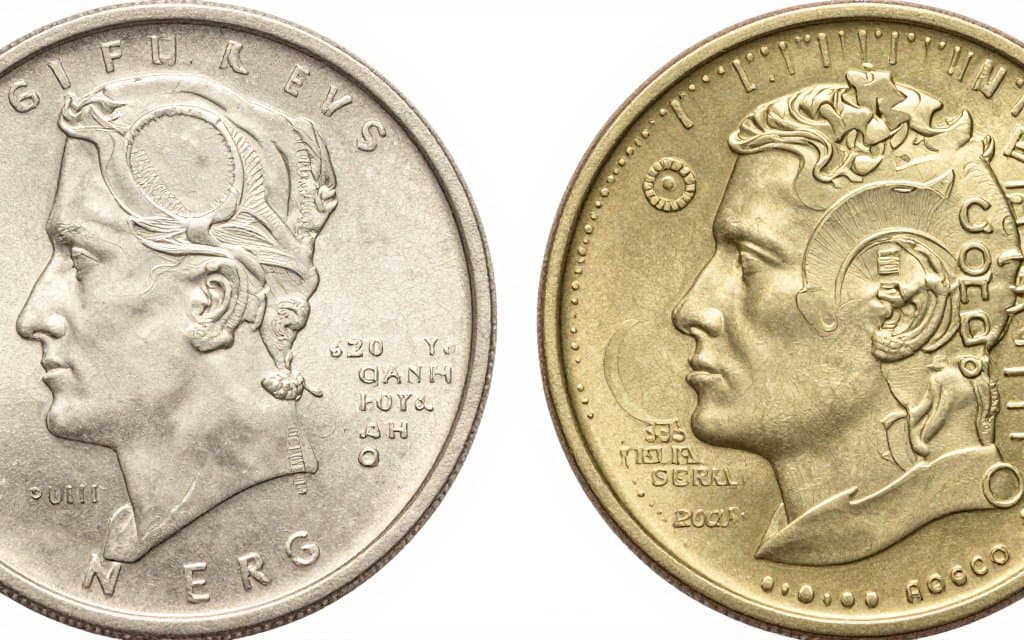
The ring and edge tests
Real silver has a long, clear ring when you balance it on a fingertip and tap it with another coin. Clad coins sound dull by comparison. The edge test is faster in a noisy shop, since no copper stripe means the coin is very likely 90% silver. Counterfeits do exist, mostly cast copies from overseas, so the same careful eye you would use to spot a fake Coach bag pays off here: check the weight, the edge reeding, and the sharpness of the detail. A genuine Morgan or Peace dollar weighs 26.73 grams.
- •Check the date, 1964 or earlier is silver
- •Look at the edge for a copper stripe
- •A magnet should not stick to real silver
- •Silver rings long and clear when tapped
- •A silver dollar weighs 26.73 grams
Morgan silver dollar melt value and junk silver coins
Every common silver dollar has a hard price floor set by its metal. A Morgan or Peace dollar holds 0.7734 troy ounces of silver, so the morgan silver dollar melt value is about $25 at roughly $32 an ounce, the early 2026 range. That floor moves with the silver market every day, which is why dealers quote melt before they quote collector value.
| Coin | Silver | Melt |
|---|---|---|
| Morgan dollar | 0.7734 oz | about $25 |
| Peace dollar | 0.7734 oz | about $25 |
| 90% half | 0.3617 oz | about $11.50 |
| 90% quarter | 0.1808 oz | about $5.80 |
| 90% dime | 0.0723 oz | about $2.30 |
Smaller change follows the same rule. Pre 1965 silver coins, the 90% dimes, quarters, and halves, are what the trade calls junk silver coins, and $1 in face value carries about 0.715 ounces of silver. Junk does not mean worthless, it means the value is in the metal, not the design. A roll of old quarters can quietly be worth many times its face value.
Junk silver is not junk. Every $1 in pre-1965 dimes, quarters and halves holds about 0.715 ounces of silver, and that metal sets the floor.
What silver dollars really pay at the counter
Here is where the money gets real. If you buy a common Morgan for $35 at an estate sale and it books at $90 to $120, you are not doubling melt, you are stacking a collector premium on top of it. That spread is the whole game, and it is why silver coins worth money are the ones with a story, a scarce date or a clean, original surface. Before you pay, scan it against real sold prices at thrifting.app.
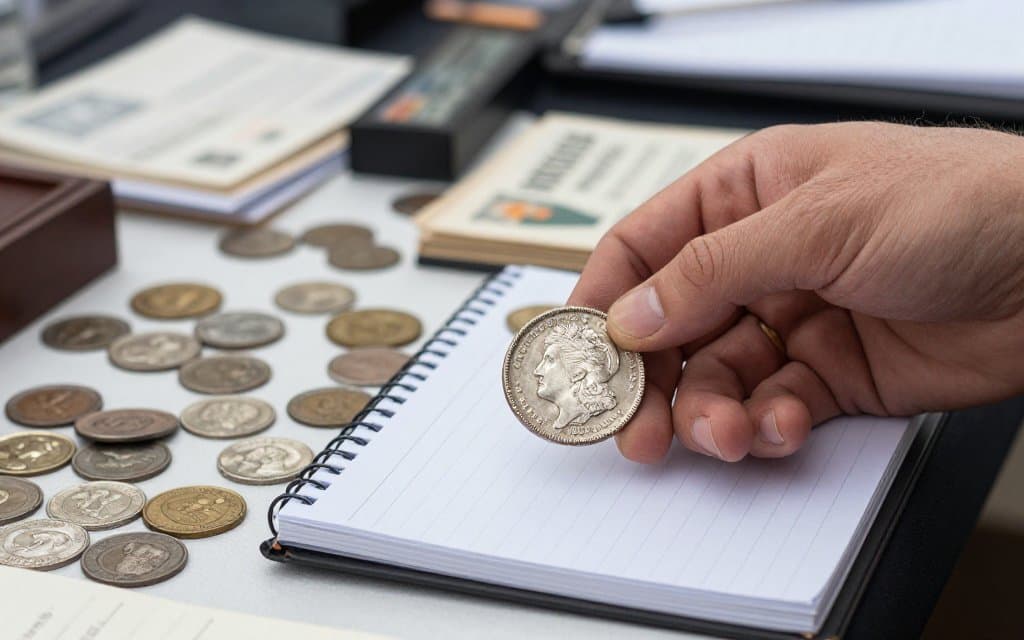
Selling costs eat into the win, so plan for them. eBay takes around 13% plus a listing fee, a local coin shop pays a bit under retail for instant cash, and a big auction house makes sense only for four figure coins. Grade also multiplies value fast, so a coin worth $120 raw can be worth several times that once a service like PCGS or NGC certifies a high grade. The same melt logic that sets a coin's floor also drives sterling silverware value.
Condition is the quiet killer. A harshly cleaned Morgan can lose half its value or more, because collectors pay for original surfaces, not shine. So never polish a coin you think is valuable, and handle it by the edges to protect the flat fields where scratches show most.
- •Cleaning can cut a coin's value in half
- •Original toning and surfaces add a premium
- •Certified high grades multiply the price
- •eBay fees run about 13% plus a listing fee
- •Coin shops pay less but pay you today
Common questions about silver dollars
Are all old silver dollars actually silver?
Almost all of them, yes. Every Morgan dollar from 1878 to 1921 and every Peace dollar from 1921 to 1935 is 90% silver and holds 0.7734 ounces. The main exception is the Eisenhower dollar from 1971 onward, which is copper-nickel clad for circulation, though some 1971 to 1976 Ikes were struck in 40% silver for collectors.
How much is a 1921 Morgan silver dollar value today?
The 1921 is the most common date in the whole Morgan series, since hundreds of millions were struck. That means a 1921 Morgan silver dollar value is usually just melt plus a small premium, about $30 to $45 in circulated grades. Only high mint state examples, or the scarcer 1921-D and 1921-S in top grades, bring a real premium.
Where is the mint mark on a Morgan dollar?
Turn the coin over and look at the bottom center of the reverse, beneath the wreath and just above the letters in DOLLAR. CC means Carson City, O means New Orleans, S means San Francisco, and no letter means Philadelphia. That one tiny letter can swing the price by thousands of dollars.
Should I clean a silver dollar before selling?
No, and this is the mistake that costs people the most money. Cleaning leaves hairline scratches that collectors spot instantly, and a cleaned coin can sell for half of what an original one would. If a coin is dirty, leave it alone and let the buyer see honest, original surfaces.
Not sure if that coin is a thirty dollar melt piece or a four figure key date? Point Thrift Scanner at it, let the app read the date, mint mark and condition, then pull real sold prices so you never leave money on the table. Get the app here: iOS or Android.