


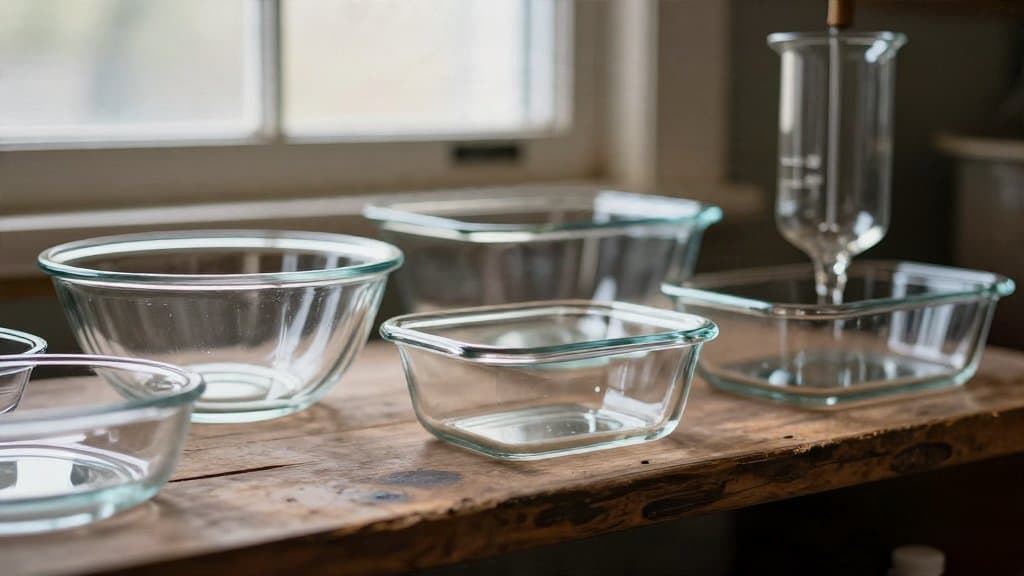
That all caps PYREX stamp on the bottom of a clear dish doesn't prove it's borosilicate glass. The Corning Museum of Glass says the mark isn't a conclusive way to tell which formula a piece was made from, yet the logo rule still gets repeated in thrift aisles and listing titles. If you flip clear vintage Pyrex, that gap matters, because buyers pay for the story your description tells.
Here's the short version. Corning launched Pyrex in 1915 as borosilicate glass, moved most kitchen pieces to tempered soda-lime glass in the 1940s, and let go of the consumer business in 1998. So a dish that shows up when you search clear pyrex vintage on eBay could be either glass, and the price gap between the two is close to zero.
Why the logo rule fails on clear vintage Pyrex
The glass came first and the branding changed later. According to the Pyrex Collector timeline, Corning's Eugene Sullivan developed a low-expansion borosilicate called Nonex in 1908, and clear ovenware went on sale in 1915 as an American answer to Schott's Duran. Corning held the borosilicate patent until 1936, then moved to tempered soda-lime in the 1940s for better impact resistance.
The lowercase logo didn't arrive until a 1970s rebrand, as House Digest reports, and the brand has used more than 150 glass compositions over the years. That leaves roughly three decades of all caps pieces that are soda-lime, stamped exactly like the borosilicate ones.
The Corning Museum of Glass says the PYREX mark "is not a conclusive way to determine, historically, what type of glass formulation the product is made from." Read the caps as an age clue, not a lab result.
What America's Test Kitchen was told
In May 2024, Pyrex told America's Test Kitchen that all caps means vintage borosilicate and lowercase means newer soda-lime. That's a fair shortcut for modern shelves, and it only applies to US Pyrex, since European PYREX is still borosilicate. It just doesn't hold up for the 1940s to 1970s pieces you'll actually find at Goodwill.
- •1908: Corning develops its own borosilicate, first sold for lanterns
- •1915: clear ovenware launches, including pie plates and loaf pans
- •1925: clear refrigerator dishes and the measuring cup arrive
- •1940s: most kitchen pieces shift to tempered soda-lime glass
- •1970s: the lowercase pyrex logo appears in a rebrand
- •1998: Corning divests its consumer products division
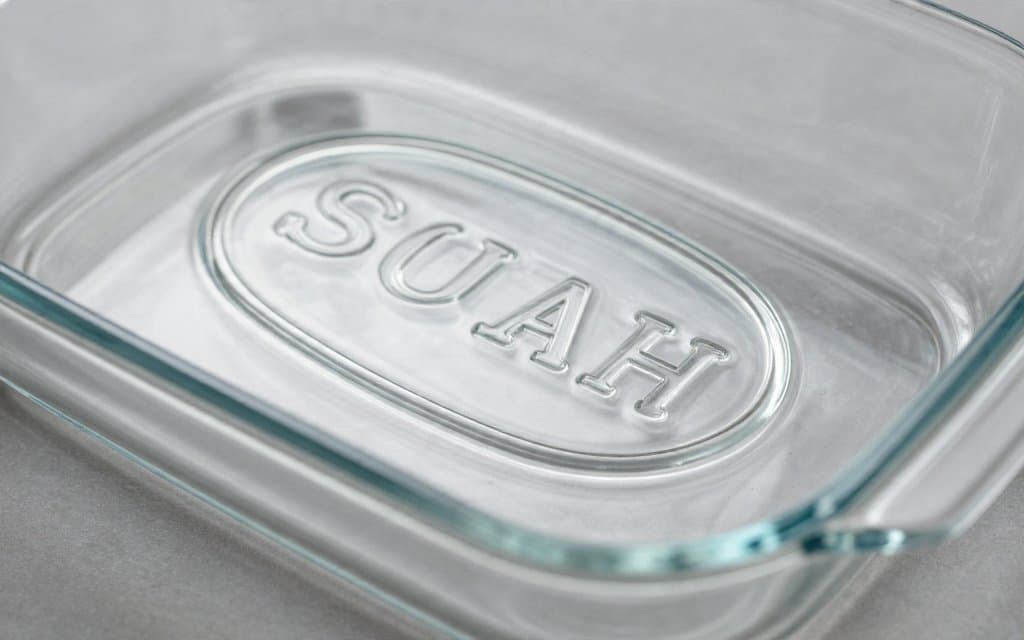
How to date antique Pyrex without trusting the stamp
Shape and product line tell you more than lettering does. Smithsonian magazine's history of the brand lists the first 1915 range as casseroles, pie plates, shirred egg dishes, custard cups, loaf pans, oval bakers, cut-glass teapots and engraved dishes. Engraving on a clear baker is a strong hint you're holding something early.
Shape and line clues
Clear stovetop pieces, like percolators and saucepans, usually belong to Flameware, an aluminosilicate glass sold from 1936 until 1979. Corning redesigned both Ovenware and Flameware in 1958, then replaced Flameware with amber Pyrex Fireside. If it's meant for a burner, it isn't ovenware, and neither borosilicate story applies.
Tint and edge checks
Some collectors look at the thickest edge: a greenish cast can point to soda-lime, though iron in the batch can tint either glass. Hackaday's 2025 write-up put it bluntly, saying there's no quick, definitive way to tell. Fun to try at home, but it's not something to put in a listing.
- •Engraved or cut designs suggest ovenware from the 1910s or 1920s
- •Clear stovetop percolators belong to the 1936 to 1979 Flameware run
- •Amber stovetop glass usually means Fireside, made after 1979
- •A green tint in thick edges hints at soda-lime but isn't proof
- •Chips and cracks cut value and raise the risk of thermal breaks
If a listing says borosilicate only because of the caps logo, the seller is guessing. Write "all caps PYREX mark" instead, photograph it, and let buyers draw their own conclusion.
What clear vintage Pyrex actually sells for
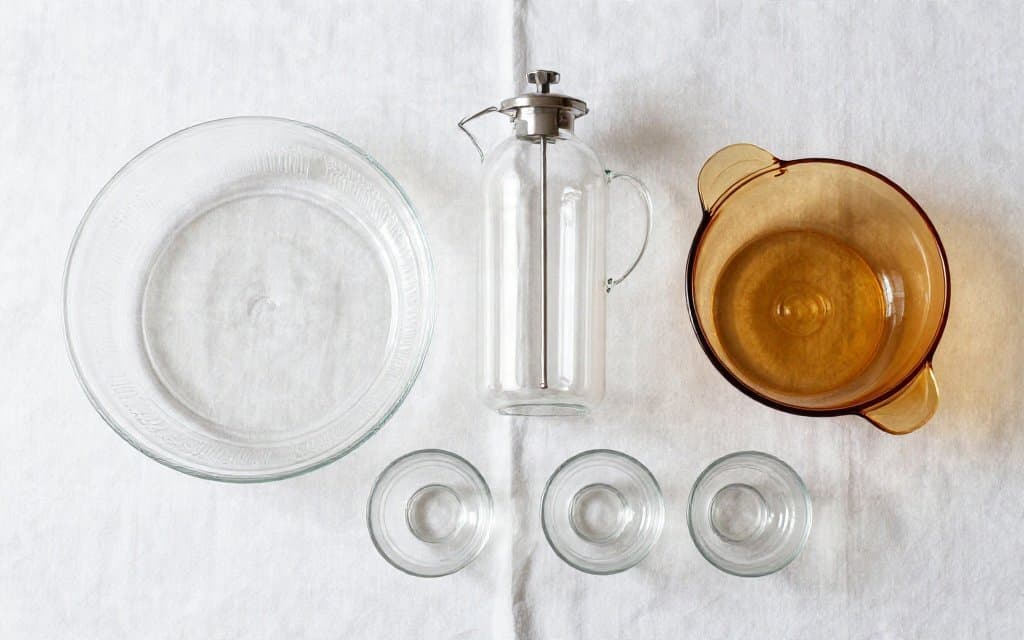
Clear pieces are steady sellers, not jackpots. Complete Flameware percolators I found on eBay were listed between about $30 and $95, with the 9-cup 7759-B at the top, and clear 6-cup teapots sat around $22 to $25. That's decent money for a shelf item that usually costs a few dollars at a thrift store.
The pyrex teardrop mixing bowl
Those ribbed, teardrop-shaped bowls with a pour spout come from a 1970s line collectors call sculptured ovenware. A 2-quart example was listed at $20 or best offer, and a reseller had a matching one at $14.99. They're common, so condition and a crisp measurement scale are what sell them.
The vintage pyrex bread pan
Loaf pans were part of the original 1915 lineup, which is why so many turn up in estate sales. I couldn't find reliable sold comps for a single clear loaf pan, but one new-in-box sculptured set of ribbed bowls plus a loaf pan sold for $129. Boxes and complete sets carry the money here, loose pans much less.
| Item | Price seen | Notes |
|---|---|---|
| Teardrop bowl, 2 qt | $14.99 to $20 asking | 1970s sculptured line |
| Flameware percolator | $30 to $95 listed | 9-cup 7759-B listed highest |
| Flameware teapot | $22 to $25 listed | Blue-tint 8336 is common |
| Spring green 325 bowl | $30 median sold | Across 55 recent eBay sales |
| Boxed sculptured set | $129 sold | Bowls plus loaf pan, new in box |
Here's what that means after fees. One price tracker put the median sold price for a clear spring green 325 bowl at $30 across 55 sales, netting about $25.92 after eBay's selling fee. Pay $4 at the thrift store and you're near $22 before shipping, which is why it's worth reading our breakdown of how eBay fees eat into flips before you price.
The median asking price for that green 325 bowl was $18, while the median sold price was $30. With clear Pyrex, sellers underprice far more often than they overprice.
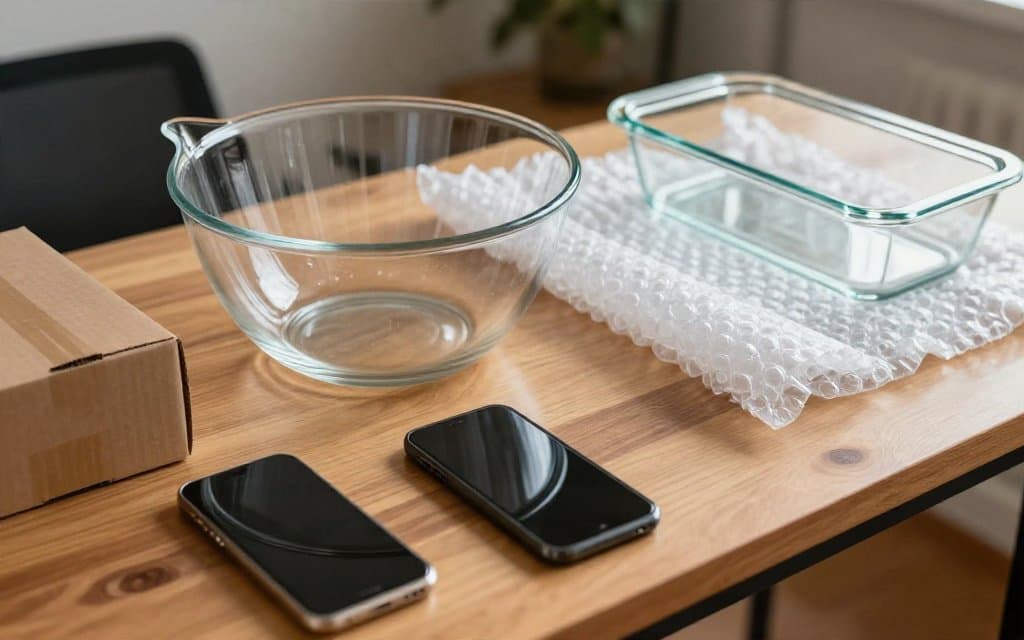
Where old Pyrex bowls fit next to patterned opal ware
The headline prices you read about almost always come from opal patterns, which were tempered soda-lime from the start. Color ware began with a primary-color nesting set in 1945, and patterns followed, so collectors hunting atomic eyes Pyrex or Pyrex Autumn Rainbow are in a different market from clear glass buyers. Clear old pyrex bowls sell best bundled by size or sold as kitchen basics.
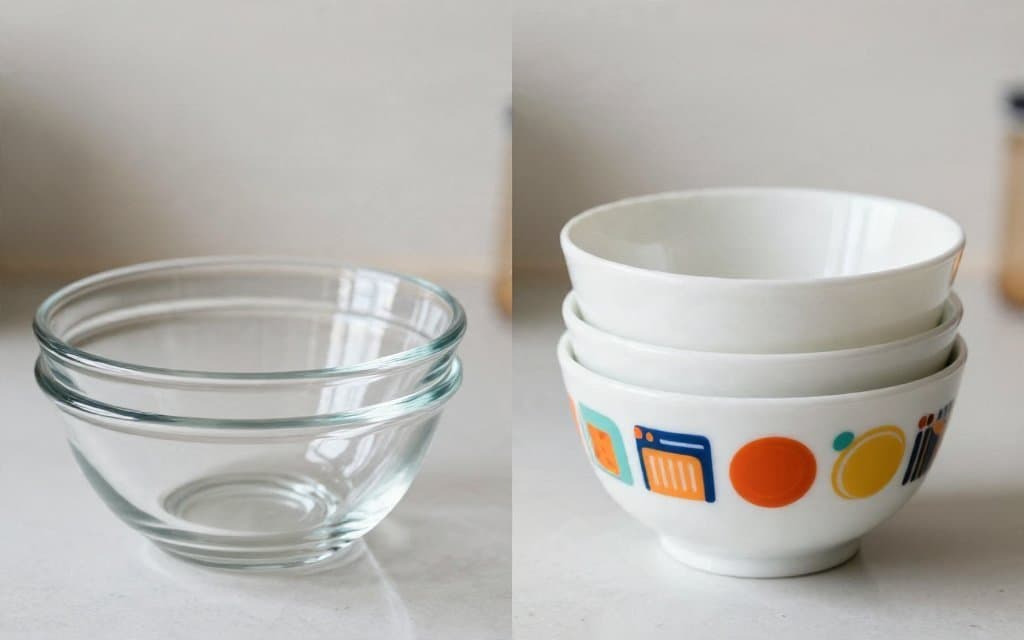
Corning blurred the line in 1986, when US opal ware was discontinued and painted clear nesting bowls took its place. If you like this kind of glass, our guides to Fire King jadeite marks and vintage Corning Ware patterns cover the same shelves.
- •Opal color ware started with a 1945 primary-color bowl set
- •Snowflake and Pink Daisy debuted on oval casseroles in 1956
- •Gooseberry and Butterprint launched on Cinderella bowls in 1957
- •Painted clear nesting bowls date from 1986 or later
Listing vintage pyrex bowls so buyers trust you
Lead the title with the shape, capacity and line, then the mark style, like "Pyrex sculptured teardrop bowl 2 qt, all caps mark." Photograph the stamp, the measurement scale and every edge under bright light. Skip the borosilicate claim unless you can prove it, and say plainly if there's a chip.
Buyers will cook in it, so a short care note earns trust. America's Test Kitchen says newer soda-lime pieces shouldn't go straight from freezer to oven, and old glass deserves the same caution. If you're unsure what a shelf of glass is worth, a quick scan with the identification tools at thrifting.app pulls up sold comps before you commit.
Questions thrifters ask about clear Pyrex
Is all caps PYREX always borosilicate?
No. Corning moved most kitchen pieces to tempered soda-lime in the 1940s and didn't switch to the lowercase logo until the 1970s. All caps tells you a piece is probably older, not what it's made of.
Are old pyrex bowls safe to bake in?
Generally yes, if they're free of chips and cracks, since damage makes glass more likely to fail under heat. Let the oven preheat fully and avoid sudden swings, like a cold dish onto a hot burner or wet counter.
Is clear antique Pyrex worth buying to resell?
At $2 to $5 it usually is, especially percolators, boxed sets and early engraved pieces. Plain clear casseroles and pie plates are slow sellers, so check sold listings before filling your cart.
Ready to stop guessing what that clear Pyrex is worth? Download Thrift Scanner, snap a photo of the dish and its stamp, and see real sold prices before you pay. Get the app here: iOS or Android.