


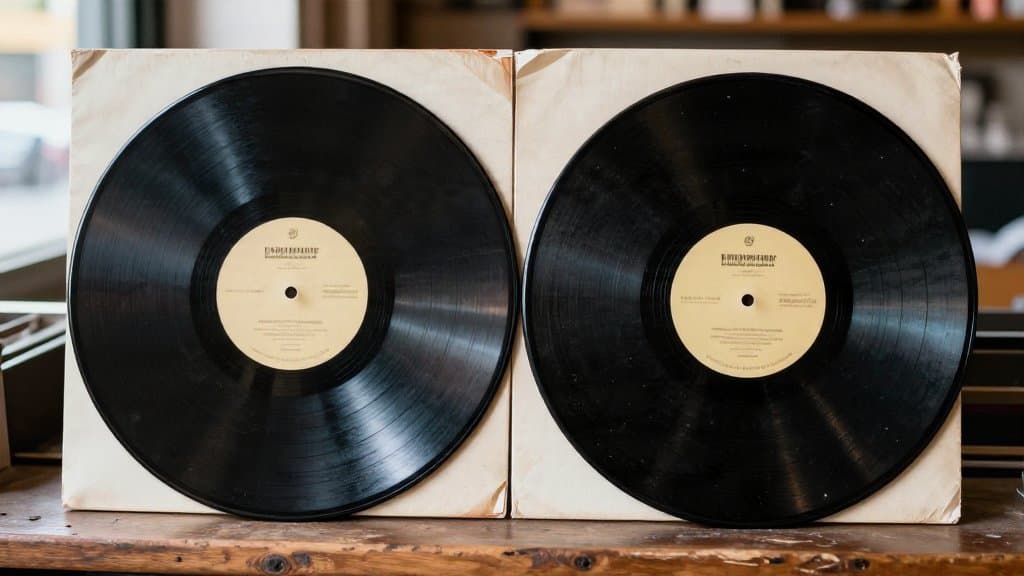
A clean record and a tired copy of the same album can be worth wildly different amounts. Goldmine's grading guidance says a VG record usually sells for no more than 25 percent of a Near Mint copy, and that's before anyone checks which pressing you've got.
That's why VG+ vinyl is the grade worth caring about when you're digging through a thrift store crate. It's the last step before the price falls off a cliff, and the difference often comes down to a couple of scuffs you can spot under the store lights before you pay. If you already flip vintage band tees, think of grading as the record world's version of checking stitching and tags.
Goldmine's rule of thumb: VG records usually sell for no more than 25 percent of a Near Mint copy, and Good copies bring 10 to 15 percent, if you're lucky. Grade first, then price.
Why VG+ vinyl and VG sit so far apart on price
Goldmine describes VG+ in one memorable line: except for a couple minor things, this would be Near Mint. Light scuffs or very light scratches are fine, as long as they don't affect listening. Drop one grade to VG and the flaws get obvious, with surface noise you can hear and wear or writing you can see.
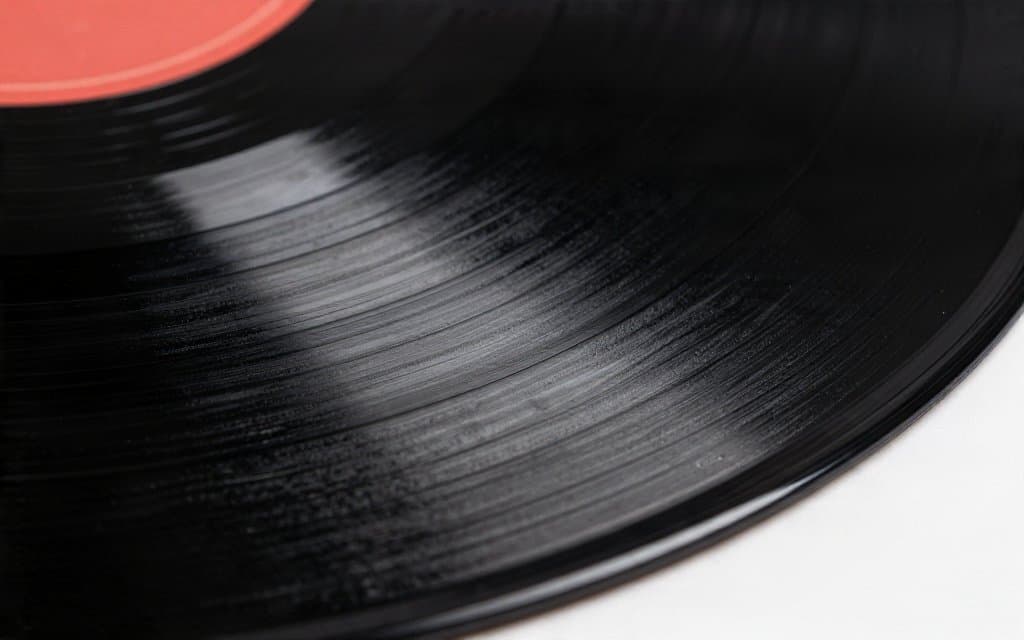
So the slide isn't gradual. A record that plays quietly with a scuff or two still sits near the top of the range, while one that hisses through the quiet passages becomes a quarter-price record. People who buy valuable vinyl records read those grades closely, and they'll return a copy that was graded too generously.
- •Tilt the disc under a bright light to catch scuffs and hairlines
- •Run a fingernail gently across a scratch; if it catches, it's deep
- •Check the label for writing, stickers, and spindle marks
- •Sight along the edge at eye level to spot a warp
- •Play a quiet passage before calling anything VG+ or better
How vinyl record grading works on the Goldmine scale
The Goldmine grading standard runs from Mint down to Poor, and each step has a specific meaning. Learn the top four and you'll be able to grade most thrift finds in under a minute.
Mint and Near Mint
Mint means absolutely perfect in every way, and the guide suggests using it only when more than one person agrees. Near Mint looks like it just came from a retail store and was opened for the first time. A Near Mint cover has no creases, no ring wear, and no seam splits.
What a VG+ grade allows
VG+, sometimes listed as Excellent, allows a few light scuffs or very light scratches that don't change how it sounds. It's the grade most well-kept thrift records land on when they come from a careful owner. Goldmine doesn't attach a fixed percentage to it, so you'll price it from recent sales of the exact pressing.
VG, Good and Poor
VG has audible surface noise and more visible wear. Good, Good Plus and VG minus records still play without skipping but carry heavy surface noise and groove wear. Poor and Fair copies are cracked, badly warped, or skip, and Goldmine says they go for 0 to 5 percent of Near Mint value, if they sell at all.
| Grade | Condition | Share of NM |
|---|---|---|
| Near Mint (NM) | Looks unplayed, no visible defects, clean cover | Benchmark price |
| VG+ / Excellent | A couple of minor flaws, plays clean | No fixed figure, check sales |
| VG | Audible surface noise, visible wear or writing | Up to 25% |
| G, G+, VG- | Plays through, heavy noise and groove wear | 10 to 15% |
| Poor / Fair | Cracked, badly warped, skips or repeats | 0 to 5% |
Grade the sleeve and the record as two separate things
Serious sellers give the disc and the jacket their own grades, and Heathen Records' first pressing guide lists that as a core valuation step. A perfect disc in a split, written-on jacket is a different product from the same disc in a crisp one.
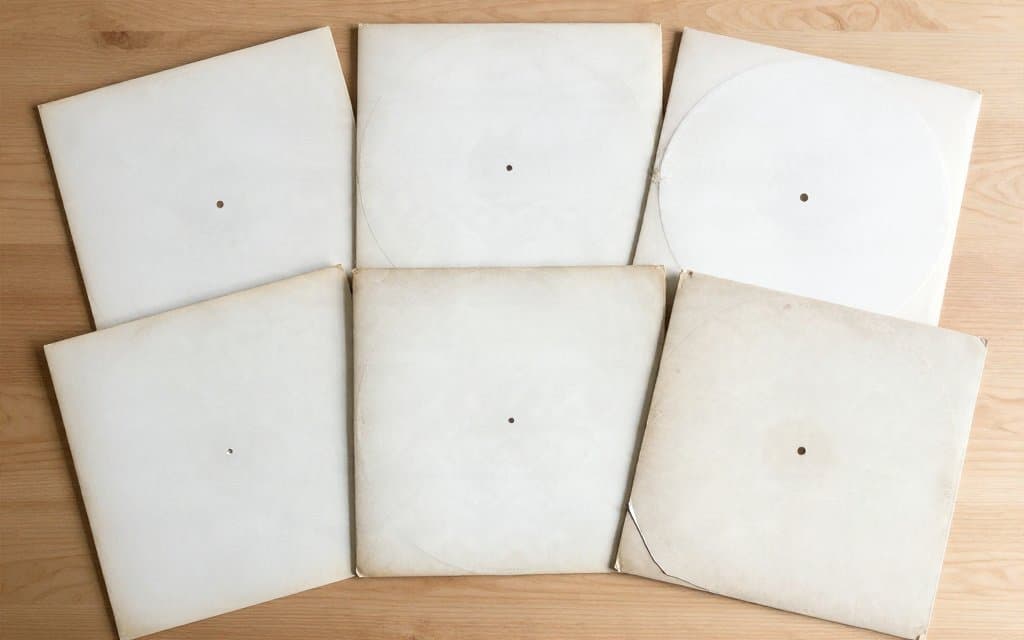
The jacket can also tell you the copy is later than it looks. A barcode on an album released before barcodes were common usually points to a later sleeve. Inserts matter too, so check for the original inner sleeve, lyric sheet, poster, or obi strip before you price anything.
- •Ring wear: a faint circle pressed through by the disc inside
- •Seam splits along the top, bottom, or spine edges
- •Writing, price stickers, or a previous owner's name
- •Missing inserts like lyric sheets, posters, or obi strips
- •A barcode on an album that predates barcodes
What a grade does to the price of valuable vinyl records
Here's a real example. A widely shared list of Blue Note collecting tips, reposted by Jazz Collector, notes that an original Jackie McLean Swing Swang Swingin' fetches about $700 in Near Mint, while a later Liberty pressing brings about $150 in the same condition. Run the Goldmine shares on that original and a VG copy tops out around $175, with a Good copy at roughly $70 to $105.
Look at what that means. A worn original ends up worth about the same as a clean later pressing, so the first pressing premium you hoped for can vanish into surface noise. Condition also explains strong results elsewhere: a copy of Kenny Dorham's Quiet Kenny on New Jazz 8225, with the record graded M- and the cover VG+, went for $1,691.78.
| Copy | Grade | Value |
|---|---|---|
| Original Swing Swang Swingin' | Near Mint | About $700 |
| Original Swing Swang Swingin' | VG (25% rule) | Up to about $175 |
| Original Swing Swang Swingin' | Good (10 to 15%) | About $70 to $105 |
| Liberty pressing | Near Mint | About $150 |
Fees take another bite. Third-party fee calculators list the Discogs selling fee at 9 percent of the order total, shipping included, so a $175 sale loses $15.75 before payment processing. We broke down the same squeeze on another big marketplace in our post on eBay fees on thrift flips.
A VG original can end up worth about the same as a Near Mint later pressing. Condition doesn't just trim the price, it can wipe out the premium you paid for.
Check for a first pressing vinyl copy before you grade
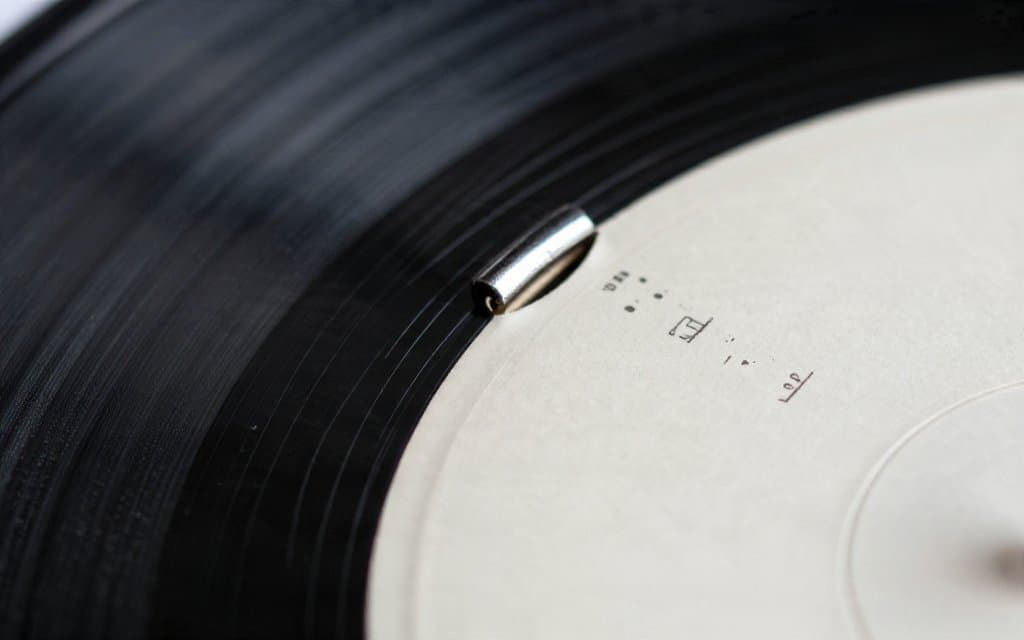
Grading tells you how much of the value survives, but the pressing sets the ceiling. The dead wax, the smooth band between the last groove and the label, carries matrix numbers, plant symbols, and engineer initials, and Heathen notes that a single character can separate a first pressing from a repress. Those marks are shared by every copy pressed from the same metalwork, so they identify an edition, not one individual record.
Blue Note marks worth memorizing
- •An ear, the P for Plastylite, in the dead wax marks an original
- •Deep grooves on both sides appear on firsts through BN 4058
- •Lexington labels ran through BN 1543, with flat edges on firsts
- •Every catalog number above BN 4226 is a Liberty pressing
- •An early number with no ear is a Liberty pressing, whatever the label
Even then, details can trip you up. A Blue Note 4051 copy of Jackie's Bag with the ear, the Van Gelder stamp and the West 63rd address but no deep grooves sold for $231.38 graded VG++, and the collector tracking it doubted it was a true original.
Modern limited editions count too
Age alone doesn't make a record scarce. The turquoise deluxe box of Tame Impala's Lonerism has a Discogs median sale of around $473, while the standard 2LP is easy to find. On the other hand, the glow-in-the-dark When We All Fall Asleep, Where Do We Go? was still $20 at Target in August 2026, with a Discogs median near $30.
Where to sell once you know the grade
If you've ever typed sell vinyl records near me into your phone, you know local shops pay on the spot. They still have to resell at a profit, though, so expect an offer well below the sold prices you see online, especially for anything you've graded VG+ or better.
Selling vinyl records online
Online, your grade is your reputation. Price from completed sales of the exact pressing, not asking prices, and compare like with like. A quick scan with thrifting.app can pull sold comps while you're still standing at the crate, which beats guessing.
- •Give the record grade and the sleeve grade as two separate grades
- •Photograph the dead wax so buyers can confirm the pressing
- •Price from completed sales, never from current asking prices
- •Note any skip or noise with the side and track where it happens
Price from what sold, not what's listed. Asking prices only tell you what a seller hopes to get, and buyers know the difference.
Questions about old vinyl records worth money
How much are my vinyl records worth?
Start by confirming the exact release from the catalog number and dead wax, then grade the disc and sleeve separately. Look up completed sales for that pressing in that grade. Most common records from big sellers are worth very little, and Heathen points out that a worn first pressing of a million-seller may be worth little more than a modern reissue.
Are rare 45 records graded the same way?
Yes, singles use the same scale, and the runout matters just as much. With Nirvana's Love Buzz on Sub Pop SP23, the hand-etched message in the side A runout is the most reliable test, because counterfeits usually get the wording, size or punctuation wrong.
What are the most valuable vinyl records at thrift stores?
Original 1950s and 1960s jazz is the classic sleeper, along with scarce limited editions from recent years. Valuable LP albums turn up rarely, so build the habit of checking every promising copy, the same way you'd check a Lego bin for minifigures before buying it by weight. Be careful with colored vinyl, too: Tool's Ænima only had one official vinyl edition, so every colored copy is unofficial.
Ready to stop guessing what a record crate is worth? Download Thrift Scanner, snap a photo of the album, and see real sold prices so you never overpay for a scuffed copy again. Get the app here: iOS or Android.