


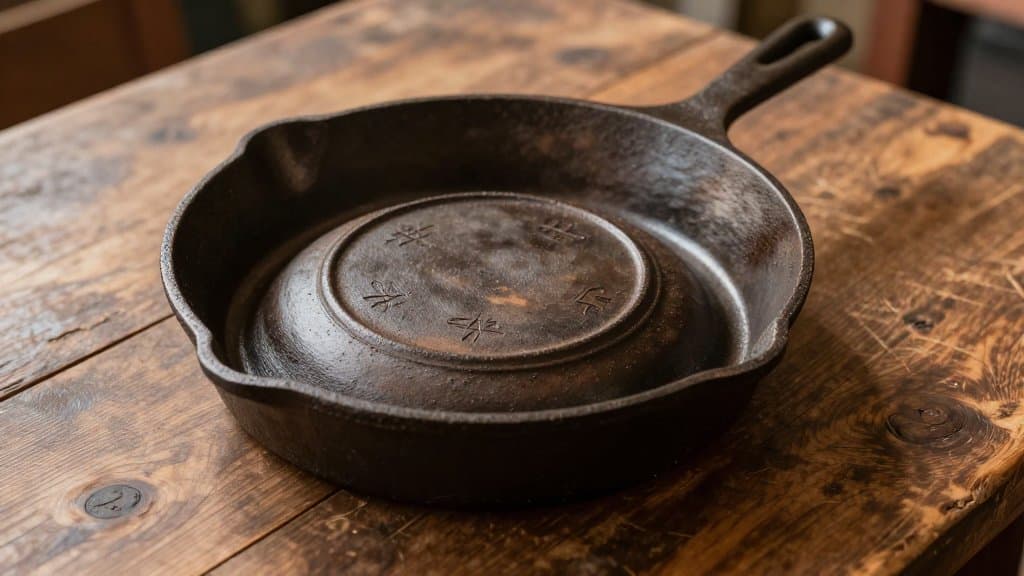
Flip almost any old skillet over and the bottom tells you what it's worth. A gate mark cast iron pan, the kind with a rough seam running across its underside, is usually the oldest piece on the thrift shelf and often the priciest. That single raised line can mean the pan was poured before 1900.
Most shoppers walk right past these because grime hides the clues. Learn the marks and you can spot a vintage cast iron skillet worth real money in seconds, while everyone else fights over shiny new pans. Dating and pricing one comes down to three things: the casting scar, the logo, and the condition.
What a gate mark cast iron pan actually is
The gate mark is a scar from how foundries poured iron into the late 1800s. Metal ran in through a channel called a gate, and after the pan cooled a worker snapped it off, leaving a raised line or nub across the base. The collectors at Cast Iron Collector note that gate marked bottoms usually point to late 18th or 19th century production.
By roughly 1890 most makers moved the gate to the edge, which hid the scar, so a visible seam is a strong age signal. Pair it with a smooth, machined cooking surface and no brand name and you're probably holding early vintage cast iron cookware, decades older than the rough, pebbly pans sold today.
If a pan is stamped Made in USA, it left the foundry after 1960, so the oldest pieces carry no country stamp at all.
- •A raised gate mark seam across the base
- •A smooth, machined cooking surface that shines
- •A heat ring circling the bottom for old stoves
- •No Made in USA stamp anywhere on the pan
How to read Griswold logos and dates
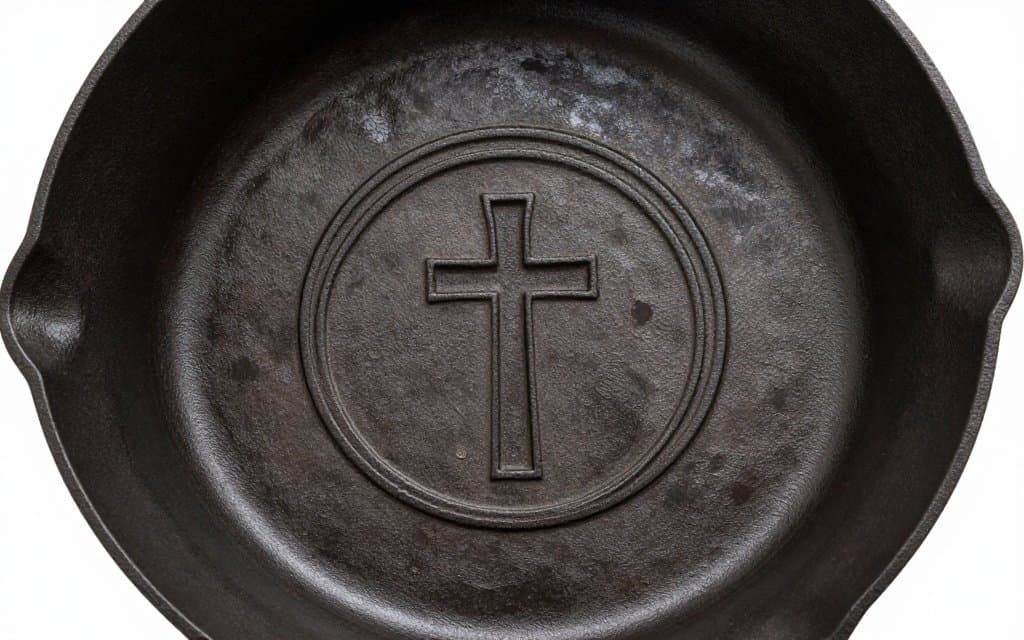
Griswold of Erie, Pennsylvania stamped a cross inside a double circle on the base, with the name spanning the arms. The company reworked that logo again and again, which turns it into a fairly precise clock for dating a pan.
The documented logo timeline lines up like this, and it is the fastest way to put a year on a find.
| Logo | Years | Collector note |
|---|---|---|
| ERIE block | pre 1907 | Oldest, quite rare |
| Slant logo | 1906-1929 | Early and collectible |
| Large Block | 1920-1940 | The most desirable mark |
| Small Block | 1939-1957 | Common vintage era |
The most desirable Griswold marks
The large block logo made from 1920 to 1940 is the sweet spot for collectors. Slant script pieces run older, from 1906 to 1929, and anything marked only ERIE predates all of it. If you already know how to read silver hallmarks, this is the same habit turned toward iron.
How to Identify Antique and Vintage Cast Iron Skillets
Spotting Wagner, Erie, and unmarked pieces
Wagner Manufacturing of Sidney, Ohio was Griswold's great rival. A clean antique cast iron pan from Sidney carries the Wagner Ware Sidney O mark in an oval, and collectors sometimes tag the earliest ones as Wagner 1891, after the year the family firm got going. Good Wagner cast iron sells nearly as well as Griswold.
Plenty of solid pans wear no name at all. On an unmarked piece, check for a heat ring, a super smooth surface, and the size number stamped on top of the handle, which is a Wagner habit. Griswold's unmarked Iron Mountain line used a distinctive untapered oval handle opening instead.
Is your unmarked pan a Wagner or a Griswold?
Look at the handle first. A size number cut across the top of the handle usually means Wagner, while a plain oval opening with no number leans Griswold Iron Mountain. The lids help too, since Wagner used scalloped basting bumps and Griswold used broken concentric rings.
What these pans are really worth
This is where cast iron skillet value gets fun. Age and maker set the floor, but rarity and condition set the ceiling, and the swing is enormous. A common Griswold number 8 might bring 40 to 80 dollars, while the right rare piece climbs into four and five figures.
The numbers below come from real auction results reported by A Magical Mess. Even a modest griswold cast iron value beats most of the glass and pottery on the same shelf.
| Piece | Sold price | Year |
|---|---|---|
| Griswold No. 13 | $20,000 | 2020 |
| ERIE spider skillet | $10,000 | 2024 |
| Griswold No. 14 | $3,249 | 2024 |
| Griswold No. 1 | about $1,000 | typical |
The most sought after pan is the tiny number 1 skillet, so scarce that collectors pay around $1,000 for one despite its size.
For scale, that puts a good skillet in the same league as the vintage Pyrex bowls and vintage Corningware that resellers already chase. You can check live resale prices before you ever reach the register.
- •Size 1 skillets, tiny and genuinely scarce
- •Odd sizes like 2, 11, 13, and 20
- •Number 14 pans with a front pour spout
- •Matched pieces that still have the right lid

Condition is where the money is made or lost
Condition can erase every other advantage. Buyers pay for a flat base, a smooth cooking face, and clean casting, and they walk away fast from damage. An antique cast iron skillet with a crack is basically firewood in resale terms.
A hairline crack can turn a thousand dollar skillet into a fifty dollar user pan overnight, so always check the rim and handle in good light.
- •Hairline cracks, especially near the handle joint
- •A warped base that rocks on a flat countertop
- •Deep rust pitting across the cooking surface
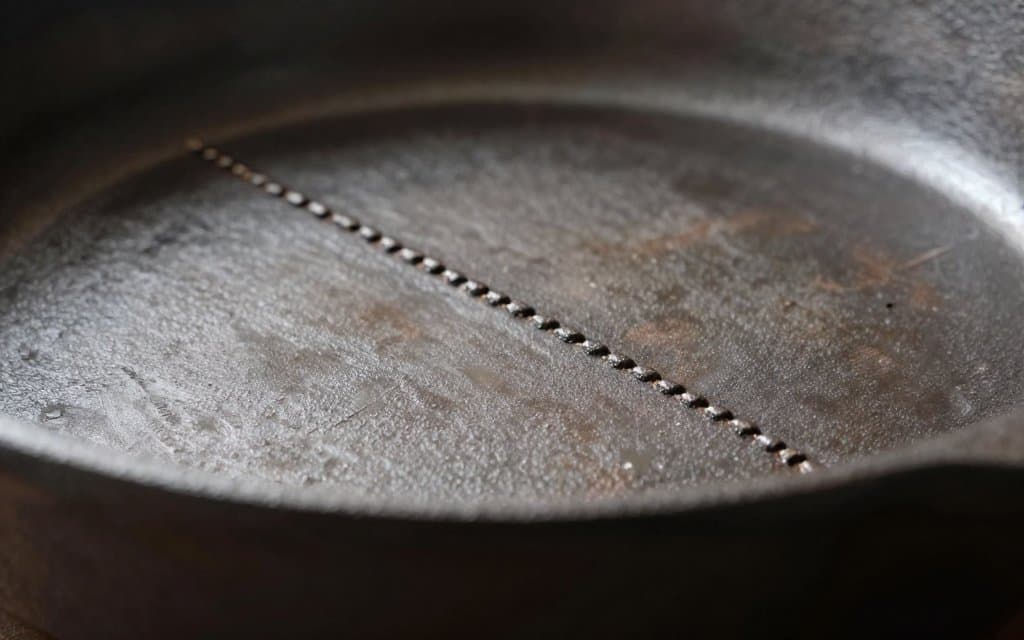
- •Old welds, braze repairs, or drilled holes
Surface rust and old seasoning wipe off, so do not let a grimy pan scare you. Run a fingertip around the rim for hairlines, set the pan on glass to check for a wobble, and only then decide.
Common questions about cast iron
How can you tell a gate marked cast iron skillet is old?
A gate marked cast iron skillet shows a raised seam or nub across the base where the pour channel was broken off. That method faded out around 1890, so the mark alone usually dates a pan to the 1800s. A smooth interior and no country stamp back it up.
What is Wagner Ware Sidney cast iron worth?
Common Wagner Ware Sidney skillets in clean shape trade for about 30 to 90 dollars, and full sets can reach into the hundreds. Early or odd sizes carry a premium, so check the number and the surface before you pass one up.
Are vintage cast iron lids and corn stick pans worth money?
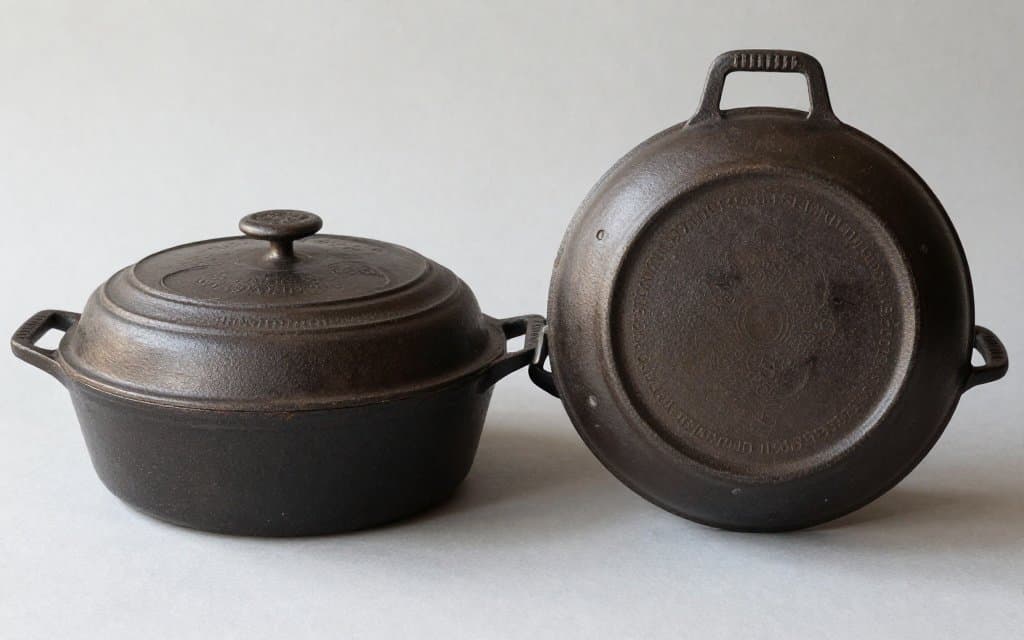
Yes, and people forget them. A matching vintage cast iron lid can add 30 to 100 dollars to a piece, and a vintage cast iron corn stick pan is its own little market. A marked wagner ware corn stick pan in good shape often clears 40 dollars or more on its own.
What is the fastest way to check a pan in the store?
Flip it, photograph the base, and read the mark before you commit. A quick scan against real sold listings tells you whether the number on the handle is worth 15 dollars or 500. That five second check is the gap between a shelf pan and a payday.
Ready to stop guessing at the thrift store and start spotting the pans that pay? Thrift Scanner reads the maker, the mark, and the size from one photo, then shows real sold prices so you never leave a gate mark cast iron skillet behind again. Get the app here: iOS or Android.