


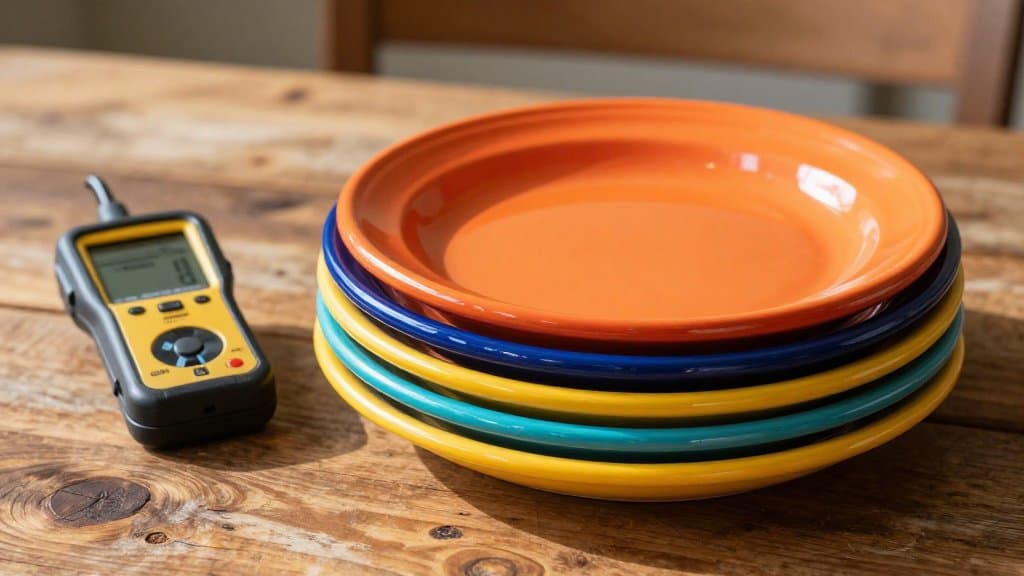
Radioactive Fiestaware isn't an internet legend. The orange-red glaze Homer Laughlin used on its famous dinnerware contained uranium, and the same pieces that make a Geiger counter click are the ones collectors pay the most for.
That's the odd thing about vintage Fiestaware: the scary story and the valuable story are about the same plates. If you know how to spot old red, read the stamp on the bottom and price it fairly, a stack of colorful dishes at the thrift store stops being a guess.
Why radioactive Fiestaware exists at all
The Homer Laughlin China Company in West Virginia launched Fiesta in 1936, and its red glaze got its color from uranium oxide. According to the Oak Ridge Associated Universities health physics museum, that red glaze could be up to 14% uranium by weight, and a single plate may carry around 4.5 grams of it in a glaze layer only 0.2 mm thick.
Red didn't run continuously. It used natural uranium from 1936 until 1943, when uranium became a wartime material and red dropped out of the lineup. It came back in 1959 made with depleted uranium, which has less of the fissile U-235, and stayed through the Fiesta Ironstone years that ended in 1973.
Natural uranium is about 0.7% U-235. The depleted uranium used for red from 1959 onward is only about 0.2%, so later red reads lower on a counter.
Why the 1986 relaunch is a different animal
When Homer Laughlin brought Fiesta back in 1986, the new line launched without the old uranium red. That gives you a clean dividing line: modern Fiesta dinnerware in reds and oranges is a different glaze entirely, so the radioactive question really only applies to pre-1973 pieces.
Which Fiestaware colors carry uranium
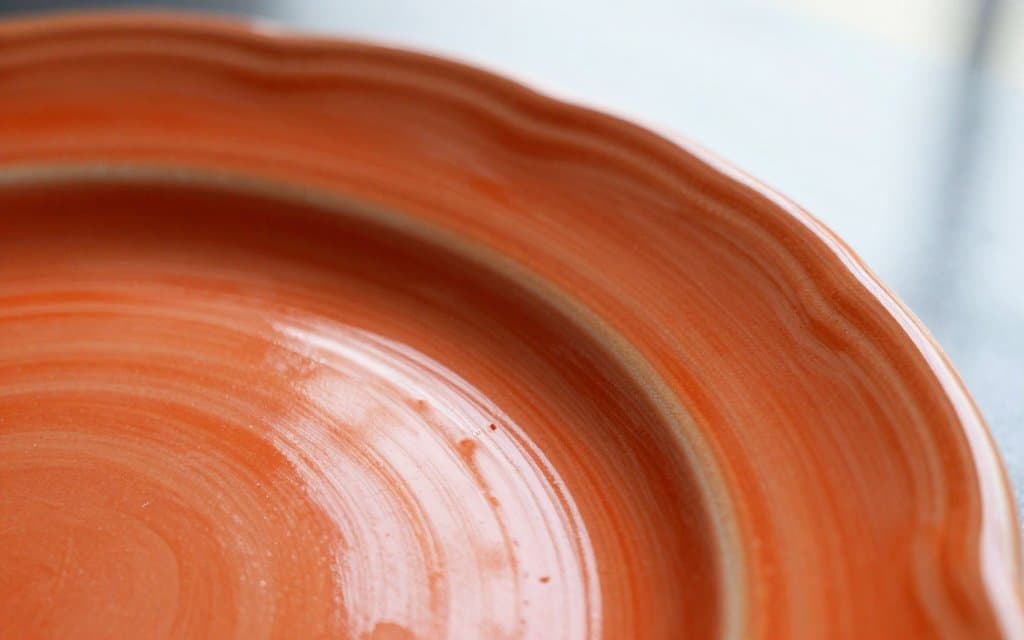
Most people assume only the red is hot. ORAU's notes say Fiesta's ivory glaze also used natural uranium, and the pottery industry relied on uranium compounds for some yellows and greens as well. Red is simply the strongest, because it carried the most.
- •Red: natural uranium 1936 to 1943, depleted uranium 1959 onward
- •Ivory: natural uranium, a much weaker reading than red
- •Cobalt, turquoise and light green: rarely the reason a counter clicks
- •1950s colors like gray, rose and chartreuse: valued for rarity, not glow
The 1950s colors and medium green
The original lineup was red, cobalt, yellow, light green and ivory, with turquoise joining in 1937. Gray, rose, chartreuse and forest green arrived in 1951 and ran until 1959, then medium green replaced them and lasted only until 1969. Vintage Green Antiques calls medium green the rarest vintage color, and its prices show it.
If you already hunt colored glass, you'll recognize the pattern. Rare shades beat common ones in almost every category, which is the same reason cobalt and red depression glass outsell plain green.
Reading Fiestaware marks on the bottom
Flip every piece before you think about color. Old Fiesta usually has an inkstamp reading GENUINE fiesta, with fiesta in lowercase, or a mark pressed into the clay such as Fiesta HLC USA or HLC Fiesta Made in USA.
- •Inkstamp GENUINE fiesta with a lowercase f points to vintage
- •Molded Fiesta HLC USA or HLC Fiesta Made in USA marks are good signs
- •A fully glazed bottom is typical of older pieces
- •Uncolored clay showing on the foot ring usually means newer stock
- •Vintage pieces feel noticeably heavier than the current line
When there's no mark at all
Plenty of genuine pieces, like cups and some small bowls, never got a stamp. In that case weight and the underside do the talking: older Fiesta is heavier, and its base tends to be glazed edge to edge, while newer pieces often show a ring of bare clay.
What vintage Fiesta dishes actually sell for
Prices vary a lot by color and form. Here are dinner plate ranges from Vintage Green Antiques, which is the easiest way to compare colors like for like.
| Color | Years Made | Plate Value |
|---|---|---|
| Red | 1936 to 1943, 1959 to 1972 | $25 to $60 |
| Cobalt Blue | 1936 to 1951 | $20 to $45 |
| Turquoise | 1937 to 1969 | $15 to $30 |
| Yellow | 1936 to 1969 | $10 to $20 |
| Gray | 1951 to 1959 | $25 to $50 |
| Medium Green | 1959 to 1969 | $60 to $150+ |
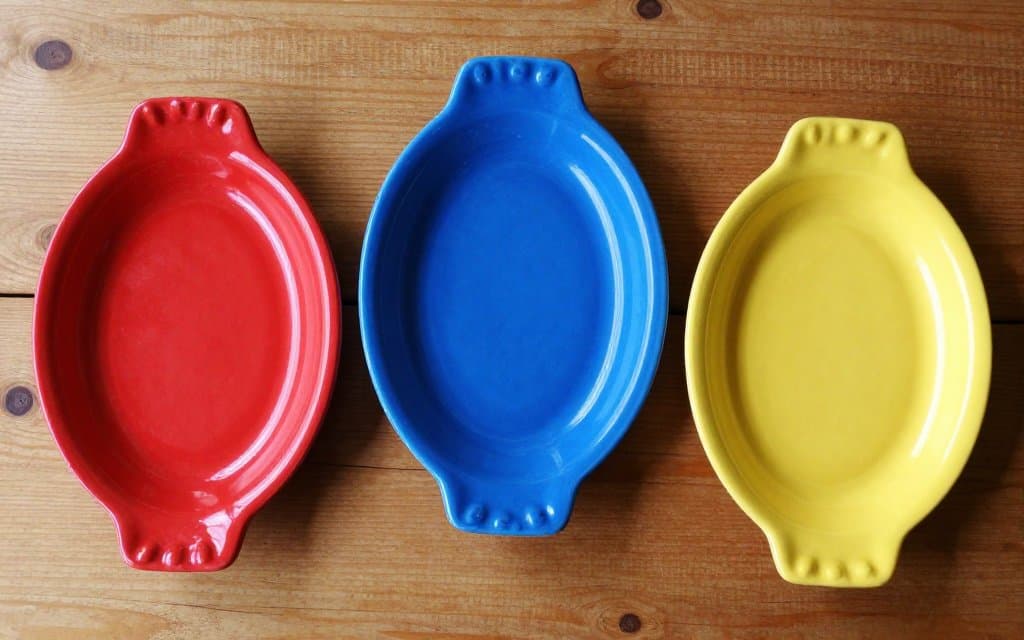
Serving pieces are where the real money sits. Taste of Home lists vintage casseroles at $250 to $350, a fruit bowl at $425, salad bowls at $525 to $600 and a cake plate at $1,600, while ordinary vintage Fiestaware plates and bowls land closer to $40 to $50 each.
Turquoise and yellow are the commons. Red and medium green are the colors buyers will pay a premium for, so check those first in any mixed stack.
Shapes worth grabbing on sight
- •Cake plates, the top sale in the Taste of Home list at $1,600
- •Salad bowls, listed at $525 to $600
- •Covered casseroles, listed at $250 to $350
- •Gravy boats, a smaller win at $85 to $95
Is it safe to keep, sell or eat from?
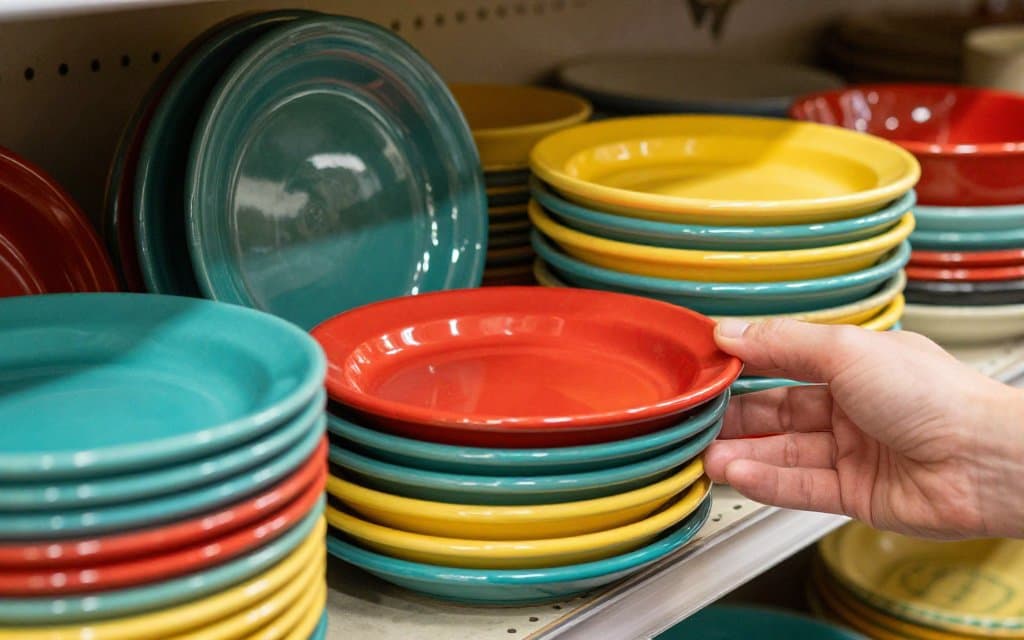
For display and resale, the numbers are reassuring. ORAU measured 0.5 to 15 mR per hour at the surface of a red dinner plate, falling to 0.002 to 0.3 mR per hour at one meter. A shelf of red plates across the room isn't the issue.
Eating from it is a different call. The EPA says not to use antique orange-red Fiestaware to hold food or drink, because the glaze can chip and you could swallow uranium particles. Treat old red as a display and collector piece, and say so honestly in your listings.
ORAU estimated that someone eating daily from red Fiesta could take in about 0.21 grams of uranium a year. That's the reason old red belongs on a shelf, not in the dish rotation.
Should you disclose it when you sell?
Yes, and it helps more than it hurts. Collectors searching for fiesta plates radioactive or fiesta dinnerware radioactive are often buyers who want the real uranium red, so a clear note that a piece is pre-1973 red, display only, matches what they're looking for and heads off returns.
What the red premium means for your profit
Here's the maths that makes red worth learning. On the Vintage Green Antiques ranges, a red dinner plate is worth $25 to $60 while yellow sits at $10 to $20, so the same plate shape can be worth two to three times as much in red. Medium green can stretch past $150.
Say you find a mixed box of six plates, purely as an example: two red, one medium green and three yellow. Using the low end of each range, that's $50 for the reds, $60 for the green and $30 for the yellows, about $140 before fees, and most of it comes from three plates.
- 1.Sort a mixed stack by color before you look at anything else
- 2.Flip each piece and check for vintage marks or a glazed base
- 3.Inspect rims and feet for chips, which hit value and safety
- 4.Price red and medium green separately from the common colors
- 5.Bundle yellow and turquoise into sets so they move faster
If you sell vintage kitchenware already, the same sorting habit works on Pyrex patterns and Fire King jadeite. Learn the few colors that carry the value, and stop paying the same for every piece.
Quick answers before you hit the shelves
Is all vintage Fiestaware radioactive?
No. Red is the color with the highest uranium content, and ivory carries a smaller amount. Most other vintage colors, and the modern line made since 1986, aren't where you'll get meaningful readings.
How can I tell vintage fiesta dishes from new ones?
Check the bottom for a GENUINE fiesta inkstamp or a molded HLC mark, then look at the base. A fully glazed underside and a heavier feel point to vintage, while visible bare clay usually means the piece is newer.
Which Fiestaware colors are worth the most?
Medium green leads, with dinner plates from $60 to $150 or more, followed by red at $25 to $60. Turquoise and yellow are the most common and sell for the least, often $10 to $30 a plate.
Are fiestaware plates with chips still worth buying?
Chipped pieces sell for much less, and with old red the EPA's concern is exactly that chipped glaze. Pass on damaged red unless the price is tiny, and if you're unsure, compare the mark and color with other pottery marks and values or run a quick scan at thrifting.app.
Ready to stop guessing at the dish aisle? Download Thrift Scanner, snap a photo of that orange-red plate or mystery bowl, and get real sold-listing data before you pay. Get the app here: iOS or Android.