


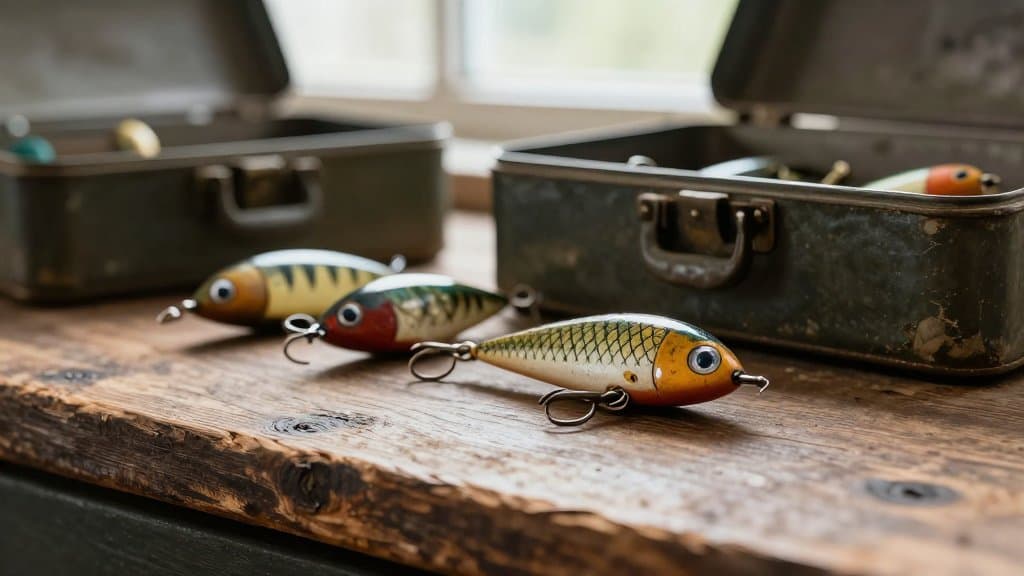
Pull a plastic crankbait out of a thrift store tackle box and it is worth about two dollars. Pull out a wooden one with tiny glass eyes and you might be holding two hundred. Old wood fishing lures are the ones collectors chase, and the gap between a common plug and a rare one is wider than almost anything else on the shelf.
The good news for thrifters is that the tells are physical, not magic. Material, eyes, hardware, maker stamp, and paint color set the price, and you can read all five in about thirty seconds once you know the order. Vintage fishing lures carved from wood before the mid 1950s sit at the top, while plastic bodies from the 1960s on rarely clear ten dollars.
Wood beats plastic, glass eyes beat painted, and a box beats no box. Learn those three and you can price most vintage lures on sight.
Why old wood fishing lures beat the plastic ones
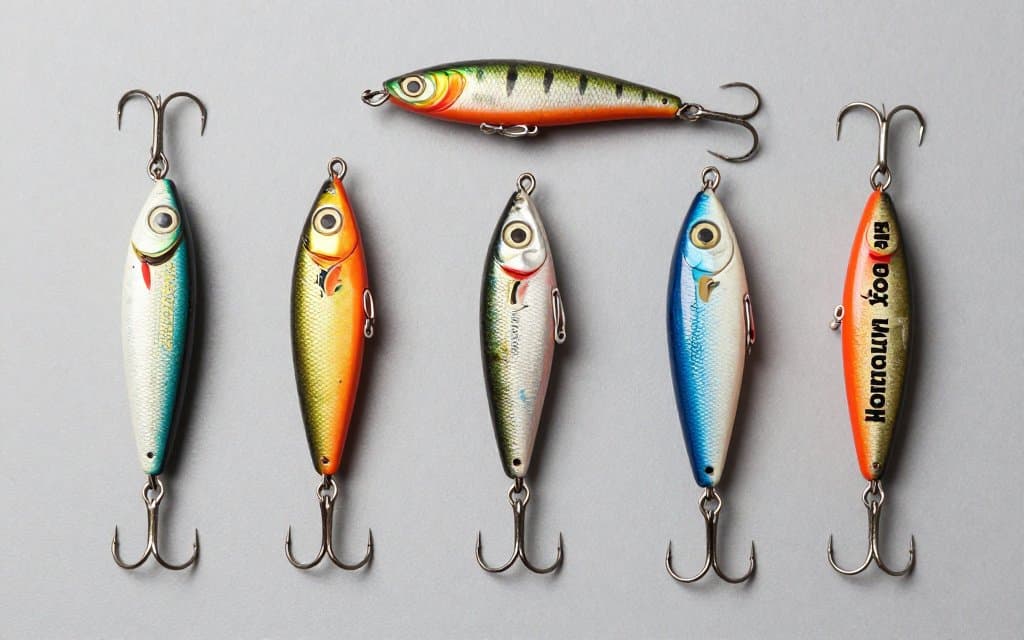
The dividing line is roughly 1955. Before it, quality baits were carved or turned from cedar and other hardwoods, then hand painted one at a time. After it, injection molded plastic took over because it was far cheaper to make. That switch is why old wood lures carry a premium, since they were produced in smaller numbers and far fewer survived decades of tackle boxes and toothy fish.
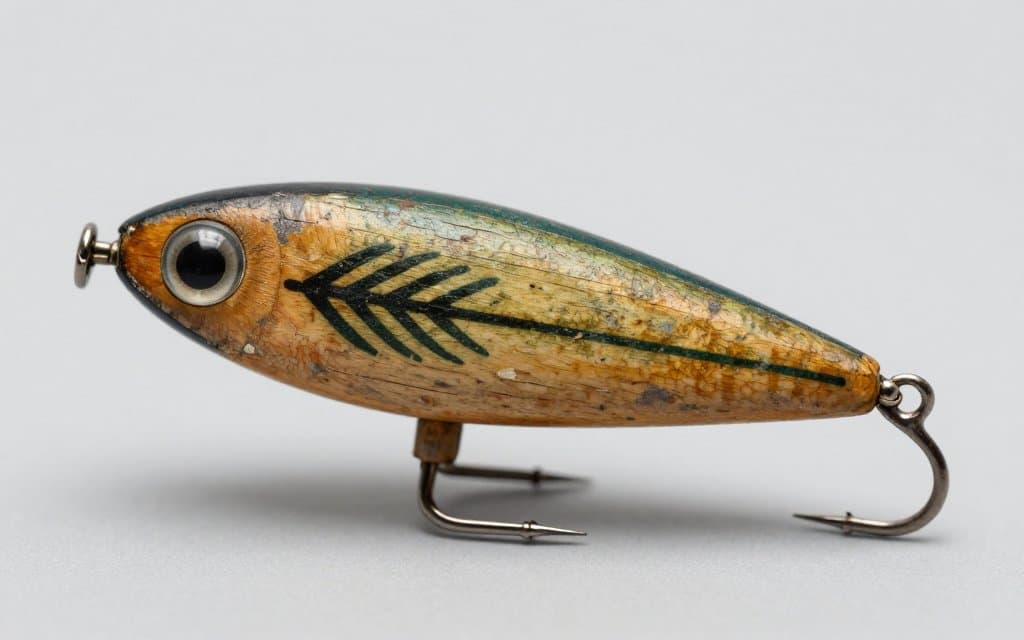
Glass eyes are the single fastest value signal. Heddon used them until about 1939, and Creek Chub kept going into the 1950s. A wooden body with real glass eyes almost always predates World War II, and those pre-war examples are what antique fishing lures collectors pay up for. Painted or tack eyes point to a later, cheaper run.
- •Wooden body feels dense and shows grain or seams
- •Glass eyes catch light while plastic eyes look flat
- •Metal hook hangers instead of molded plastic loops
- •Hand painted scales and gills, not printed dots
- •A maker stamp on the lip, belly, or hook hardware
The maker names that turn a lure into money
Brand is the biggest lever on price. Four American makers lead the field: Heddon of Dowagiac, Michigan, Creek Chub of Garrett, Indiana, Pflueger of Akron, Ohio, and South Bend of Indiana. A Heddon in good shape ranges from about $15 to $1,000, while Creek Chub runs roughly $6 to $580. Unbranded store lures from the same years usually top out near $20, so reading a maker stamp is the same skill as reading Roseville pottery marks.
A standard Heddon Crazy Crawler sells around $40. The same lure in the rare Ghost color has cleared $300.
Heddon, the Dowagiac heavyweight
Heddon practically invented the wooden plug, and its early Dowagiac baits are blue chip. A rare Heddon Black Sucker has sold for around $19,000 at auction. Even mid century Heddons like the Crazy Crawler 2100, made from 1940 to 1957, bring $50 to $400, and the scarce Ghost color pushes the top of that range.
Creek Chub and the Pikie Minnow
Creek Chub's Pikie Minnow 700 ran from 1920 to 1978 and is the brand's signature bait. Early wooden versions with glass eyes and a metal diving lip stamped C.C.B.CO. are the keepers, valued from $40 to more than $400. The company's paint work, especially the Perch Scale finish, is a big reason these old wooden fish lures still sell so well.
How to date a lure by its eyes and hardware
Hardware tells time. The way hooks hang from the body changed every decade or so, which lets you date a bait even when the paint is gone. Experienced collectors check the rig before they even flip the lure over.
| Feature | Era | Signal |
|---|---|---|
| Glass eyes | 1900 to 1939 | Top tier, pre-war |
| Tack eyes | Late 1930s to 1940s | Transition years |
| Painted eyes | 1950s onward | Plastic era, lower |
| Cup rig hooks | 1900s to 1910s | Earliest hardware |
| L-rig hooks | 1910s to 1930s | Pre-war wood |
| Screw-on hooks | 1950s and later | Plastic bodies |
Read that chart from the top down. Glass eyes plus a cup or L-rig means a pre-war wooden lure, the tier worth real money. Screw on hangers and painted eyes mean a 1950s or later body most buyers skip. Antique wood lures still wearing their original hooks, not rusty replacements, earn the biggest bids, so date it from the hardware the way a gate mark dates a cast iron skillet.
- •Cup rig hooks sit in a small cup: 1900s to 1910s
- •L-rig screw and washer hangers: 1910s to 1930s
- •Surface rig flush mounts: 1940s into the 1950s
- •Glass eyes almost always mean a pre-1940 bait
- •A faded lip stamp can still name the maker
Vintage red and white fishing lures and the Dardevle
Color is its own price multiplier, and no scheme is more collectible than red and white. Vintage red and white fishing lures show up across every maker because the pattern was a bass and pike favorite for a century. South Bend's Bass-Oreno in a Depression era patriotic red, white, and blue is the rarest of the bunch and has sold in the $500 to $1,500 range, while a plain version stays a $10 to $25 lure.
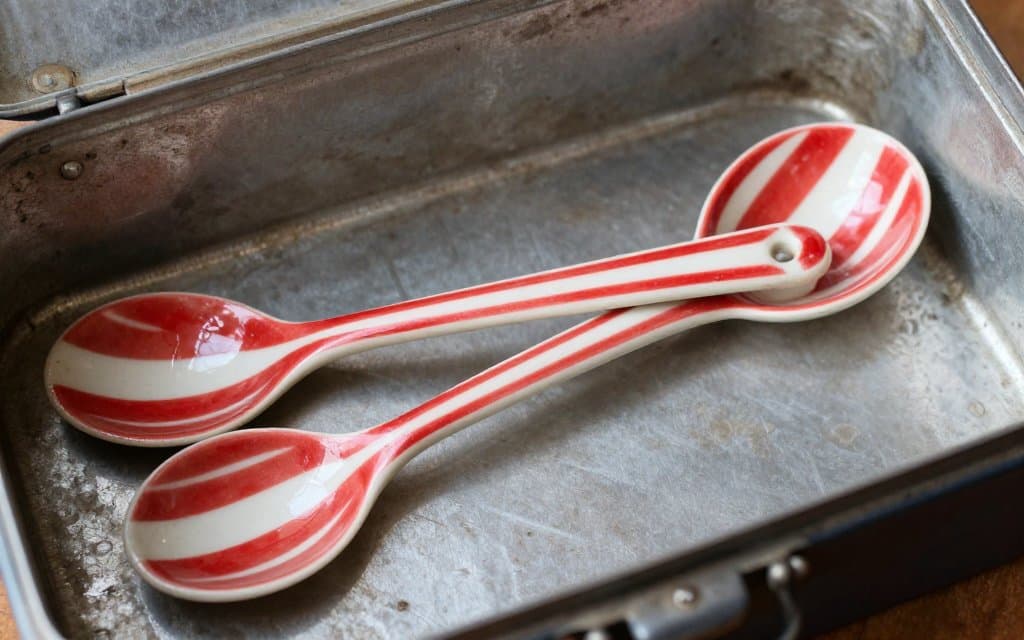
Not every valuable find is wood. The Eppinger Dardevle, a red and white striped casting spoon, has been made in Detroit since Lou Eppinger designed it in 1906. Early spoons stamped DARDEVLE DETROIT U.S.A. predate the company's 1959 move to Dearborn, and they were pressed from copper or quarter hard brass while cheap copies used thin steel. Most vintage Dardevle lures sell for $15 to $25, but these antique metal fishing lures gain real value in the early Detroit stamps and boxed sets.
What old wood fishing lures are really worth
Here is where the money actually lands. The most valuable fishing lures share four traits: a scarce maker, a pre-war wooden build, a desirable factory color, and clean paint, ideally with the box. Scarcity and era drive the price, the same force behind 1968 to 1977 Hot Wheels redlines.
| Lure | Years | Value |
|---|---|---|
| Heddon Crazy Crawler | 1940 to 1957 | $50 to $400 |
| Creek Chub Pikie 700 | 1920 to 1978 | $40 to $400 |
| Heddon Lucky 13 | 1921 onward | $40 to $300 |
| South Bend Bass-Oreno | 1916 to 1964 | $10 to $1,500 |
| Pflueger Globe 3750 | 1910 to 1966 | $75 to $300 |
| Paw Paw Hair Mouse | 1930s | $50 to $250 |
The box is often rarer than the lure inside it, and a period correct one can double the final price.
The original box is the quiet multiplier. A period correct box can double a lure's price, and an NRA stamped Creek Chub box from the 1930s adds even more. That is why vintage fishing lures with box command such a premium at sale.
Condition rules the final number. A repaint, a swapped hook, or a cracked body can cut value by more than half. Before you buy or list, photograph the bait against a plain background and authenticate before you commit, the way you would test whether gold is real.
- •Repainting erases most of a lure's value
- •Rusty or replaced hooks drop the price fast
- •Cracks and chips in the wood body hurt bids
- •A missing box leaves real money behind
- •Plastic eyes signal a later, cheaper run
Common questions before you buy a lure
How can you tell if old wood fishing lures are valuable?
Start with the material and the eyes. A wooden body with glass eyes, a maker stamp, and original paint is the profile buyers want. Plastic bodies, painted eyes, and repaints usually mean a lure worth a few dollars, not a few hundred.
What makes vintage fishing lures worth money?
Four things stack up: a top maker like Heddon or Creek Chub, a build from before 1955, a rare factory color, and clean condition with the box. Miss two of those and you are usually in single or low double digit territory.
Are red and white fishing lures worth anything?
Some are. A common red and white spoon is a $15 to $25 item, but a Depression era South Bend Bass-Oreno in patriotic colors has reached $500 to $1,500. Rarity and maker still decide it, not the color by itself.
Where can you sell antique fishing lures?
eBay is the deepest market for antique fishing lures, and its completed listings show real sold prices. Specialty tackle forums and collector shows reward the rarest pieces, and a boxed pre-war bait often does best at auction.
Ready to stop guessing in the tackle box aisle? Thrift Scanner identifies the maker, reads the age clues in the eyes and hardware, and shows real market value from millions of sold listings, so you never overpay for a common plug or walk past a glass eyed gem. Get the app here: iOS or Android.