


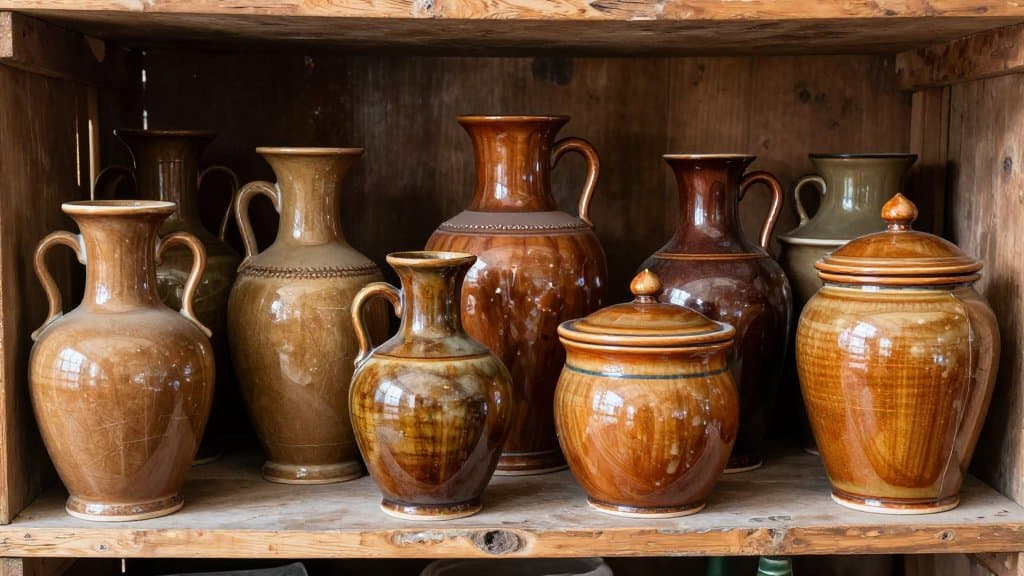
A Roseville jardiniere someone grabbed for $6 at a church sale resold on eBay for just over $900, and the only thing standing between those two numbers was the mark on the bottom. Reading roseville pottery marks is what separates grocery money left on a shelf from a piece worth a car payment. Flip the pot over, and a stamp, a line of raised letters, or a faint pressed word tells you the maker and roughly the decade.
Most people never turn the piece over. That is the whole edge. American art pottery made between 1880 and 1960 runs from about $50 to more than $30,000 depending on maker, line, and condition, and the base is where that story starts. Learn a handful of marks and vintage pottery stops being a guessing game.
What the mark on the base is telling you
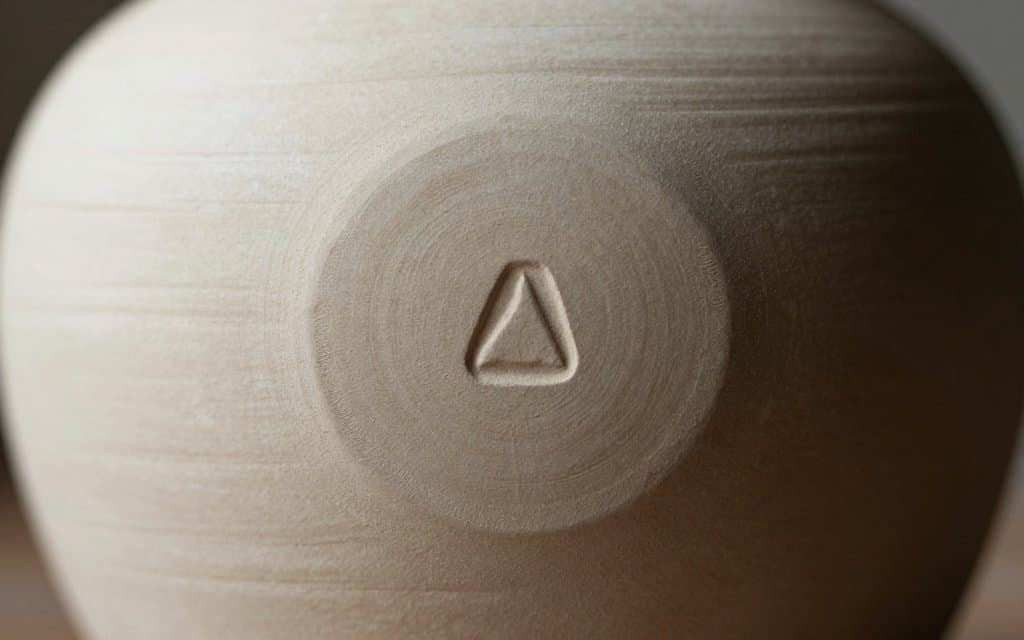
Turn any pot over and you meet one of five things. A backstamp is a printed logo. An impressed mark is pressed into the clay before firing, so you can feel it with a fingertip. An incised mark is scratched in by hand. An ink stamp sits on the surface and can wash off. A paper label peels away and is usually long gone by the time a piece reaches a thrift shelf.
- •Backstamp: a printed logo on the base
- •Impressed mark: pressed in, you feel it
- •Incised mark: scratched in by hand
- •Ink stamp: sits on top, wears off
- •Paper label: peels away, often long gone
The type of mark is a clue on its own. Raised and impressed marks were part of the mold, so they are hard to fake and easy to trust. Printed and paper marks came later or wore off, which is why a great piece can show up wearing almost nothing. If you already check cast iron maker's marks, the same instinct carries straight over to ceramics.
How to read Roseville pottery marks by era
Roseville changed how it signed its work every couple of decades, and that timeline is a gift. The earliest pieces from before the 1920s often wore only a paper or foil label, so many sit unmarked today. From about 1910 to 1930 you find an impressed Rv cipher with a shape number. Raised script that simply says Roseville runs from roughly 1930 to 1936.
After 1936 the company molded Roseville U.S.A. into the base along with a shape and size number, and that raised mark is the one most thrifters actually meet. Matching the mark to the era is the fastest way to separate a common late bowl from an early art piece worth serious money.
| Mark | Years | What it means |
|---|---|---|
| Paper or foil label | Pre 1920s | Early, often lost |
| Impressed Rv cipher | 1910 to 1930 | Shape number nearby |
| Raised script Roseville | 1930 to 1936 | No country line yet |
| Roseville U.S.A. raised | 1936 to 1954 | Shape and size number |
The paper label problem
Here is the trap. Plenty of genuine early Roseville left the factory with nothing but a paper label, so the base looks blank. Do not walk away from an unmarked pot that has sharp mold detail and a soft period glaze. Check the shape against a Roseville value guide before you call it nothing.
An unmarked pot is not a worthless pot. Some of the best early Roseville and Weller left the factory wearing nothing but a paper label.
How to spot fake Roseville pottery marks
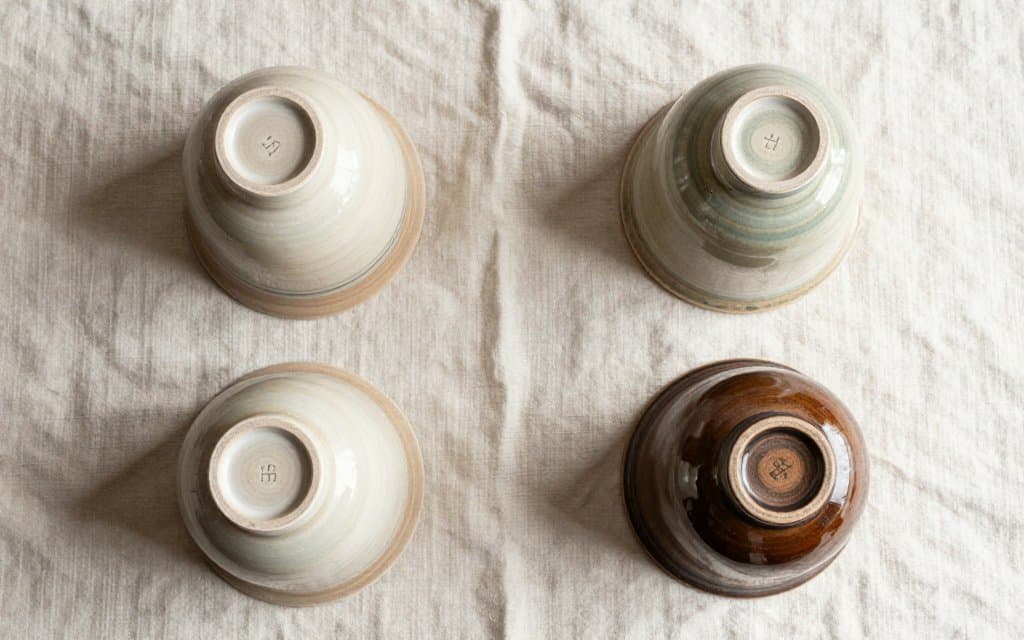
Reproductions have flooded this market since the early 2000s, and most of the copies give themselves away at the base. Real Roseville has crisp mold lines and glaze colors that match the period. A reproduction usually shows softer, mushy detail, colors that sit a shade off, and a mark that looks either too clean or strangely rough for its supposed age.
- •Soft, mushy mold detail on the flowers
- •Glaze colors that sit a shade off
- •A mark that looks too clean and new
- •A mark that looks strangely rough
- •Bright chalk white clay at the foot
The tell that catches the most people is weight and clay. Genuine old pieces feel dense, and the unglazed clay at the foot ring reads buff, tan, or gray. If the clay is bright chalk white, you are almost certainly holding a modern copy. Learning to read these fakes now saves you from a return request later.
Reading McCoy pottery marks and the clay body
McCoy is the friendlier cousin. It is everywhere, it is affordable, and it is actively collected, which makes reading mccoy pottery marks worth your time on every planter and jar you flip. Early pieces from the 1920s and 1930s can carry an NM cipher for Nelson McCoy. Block or script McCoy and McCoy USA marks belong to the 1940s and 1950s, and a circular McCoy USA logo points to the 1960s.
- •Raised letters you can feel with a thumb
- •Dense clay in buff, tan, or gray
- •An NM cipher points to the 1920s
- •A circular McCoy USA logo means the 1960s
The white clay giveaway
Run your thumb over the letters. If they are raised enough to feel, you are probably holding classic 1940s or 1950s output. Then peek at the unglazed foot. Vintage mccoy pottery uses a dense buff or gray clay, while bright white clay is the calling card of a modern look-alike. Common McCoy runs $10 to $30, scarce pieces reach $200 to $500, and the right mccoy cookie jars sell from $40 to $400.
Run a thumb across the base. Raised lettering you can actually feel is the fingerprint of McCoy's 1940s and 1950s work.
Hull and Weller marks worth real money
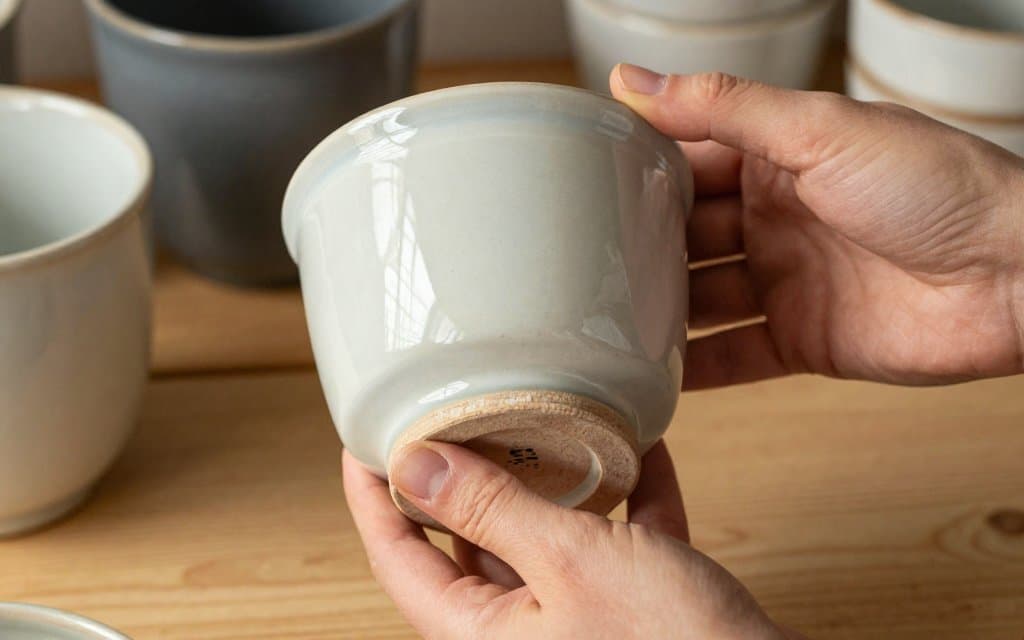
Two more names earn their keep. Hull pottery often reads Hull Art USA with a shape code like W-3, and while most pieces sell for $20 to $75, select items climb to $150 to $300. Casual sellers skip them because the mark means nothing to an untrained eye, which is exactly where the margin hides.
Weller pottery plays harder to read. Look for WELLER incised in block letters or a Weller Pottery ink stamp, but know that pieces made before 1920 may carry only a line name such as Louwelsa or Sicard with no factory mark at all. Large Sicardo vases with iridescent decoration have sold for $10,000 to $20,000 at art pottery auctions, so this is not a name to breeze past.
What vintage pottery value really comes down to
Marks tell you who and when. Condition tells you how much. This is the part that decides whether a find pays for lunch or pays a bill, and it is where new resellers lose the most money by shrugging off small damage.
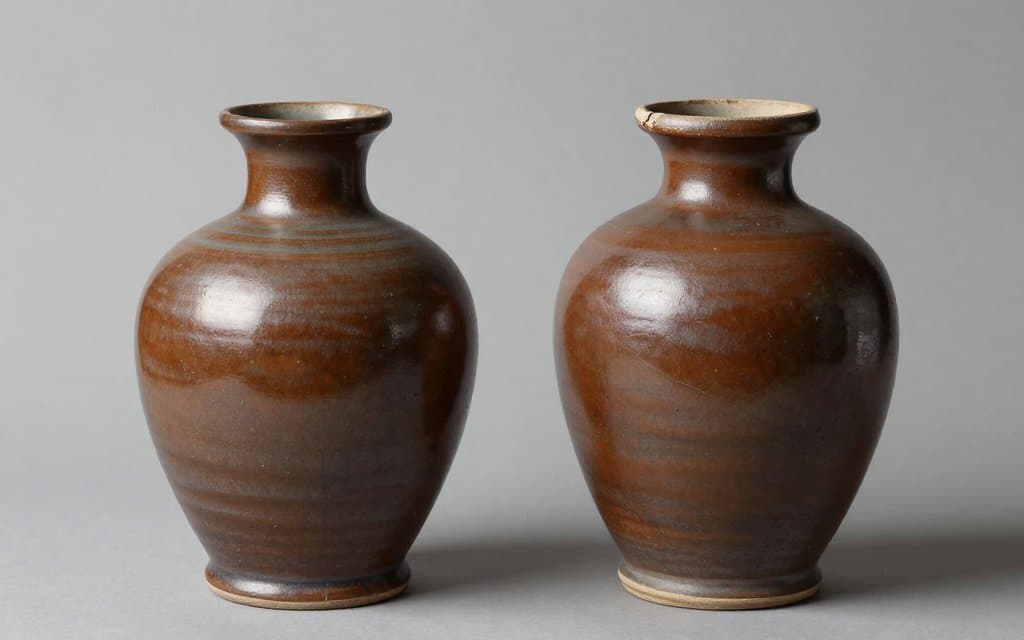
Pottery is brutal about flaws. A chip, hairline crack, or repair can strip 50 to 80 percent of value off a common piece in an instant, and even a rim nick can knock a $120 vase down to a $40 sale. Rarity still sets the ceiling, so roseville pottery value climbs into the thousands for early art lines while a late bowl stays under fifty dollars.
A single rim chip can turn a $120 Roseville vase into a $40 sale. Condition moves pottery prices harder than almost any other collectible.
| Brand | Common | Top pieces |
|---|---|---|
| Roseville | $30 to $150 | $5,000 plus |
| McCoy | $10 to $30 | $200 to $500 |
| Hull | $20 to $75 | $150 to $300 |
| Weller | $40 to $150 | $10,000 plus |
| Rookwood | $75 and up | $3,000 plus |
The same eye works across a whole shelf. The instinct you build here is the same one behind spotting vintage Pyrex patterns or reading vintage Fiestaware colors, and you can get an instant value estimate on any mark before you commit at the register.
Questions thrifters ask about pottery marks
How do I identify pottery marks I have never seen?
Start with the mark type, then the words, then the clay. Photograph the base in good light and compare the shape and glaze against known examples, since pottery marks identification leans as much on form as on the stamp itself. A scanning app speeds this up by matching your photo to real sold listings in seconds.
Are fake roseville pottery marks common?
Yes, especially on popular patterns like Pinecone and Magnolia. Reproductions since the early 2000s copy the shape but miss the crisp detail and the correct clay color. When the mark looks too perfect and the clay is chalk white, treat the piece as a copy until proven otherwise.
What are mccoy cookie jars worth?
Most common mccoy cookie jars sell in the $40 to $400 range, with figural designs bringing the higher numbers. Condition and a clean, correct mark matter more than age, and a cracked lid or a repaint pulls the price down fast.
Is antique roseville pottery always marked?
No. Plenty of genuine antique roseville pottery wore only a paper label that has since fallen off, so a blank base is not a dealbreaker. Judge the mold detail, glaze, and shape together before you pass on it.
Ready to stop guessing at the base of every vase and start pricing finds with real data? Thrift Scanner identifies the maker, reads the mark, and shows resale value pulled from millions of sold listings, so you never leave a Roseville behind again. Get the app here: iOS or Android.