


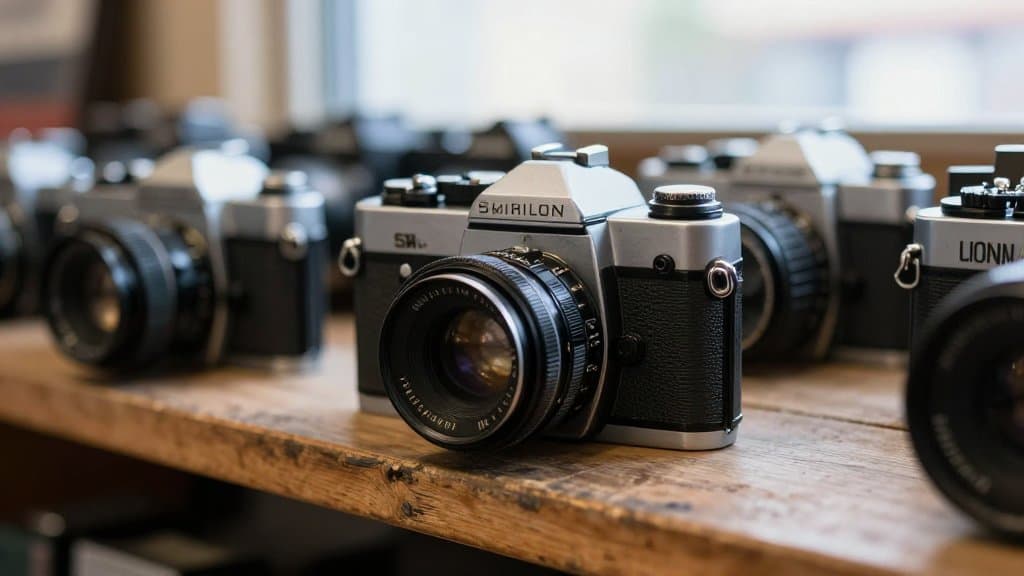
Pull an old film camera off a thrift shelf and you are holding a small gamble. Most of them sell for ten to forty dollars, about the price of lunch. A few sell for the price of a used car, and the two can sit on the same shelf under the same five dollar sticker.
The trick is knowing which is which in about thirty seconds, before someone else grabs it. That skill pays better now than it did five years ago, because a real film photography revival has pushed prices on working gear to levels nobody expected. Snap a photo with Thrift Scanner and you get the actual sold value, or check any find against real market data yourself.
What makes an old film camera worth real money
Four things set the number: the model, whether it works, whether the lens is any good, and the film format it takes. Miss one and your estimate can be off by a factor of ten. A dead body with a great lens still sells; a mint body nobody wants does not, the same way a hidden maker's mark can lift a cast iron skillet.
Cameras that shoot film you can still buy today hold value best. That means 35mm, 120 roll film, and 4x5 sheet film. A gorgeous camera built for a dead format is a shelf ornament, and the market prices it that way.
- •A metal body from a name like Canon or Nikon
- •A fast lens marked f/1.8, f/1.4, or f/2
- •A shutter that fires clean at every speed
- •Foam light seals that are still soft, not gooey
- •A still made format such as 35mm or 120 film
Most old film cameras that cross a thrift counter sell for ten to forty dollars. The handful that do not can cover a month of rent, and they hide in the same dusty bin.
The film photography revival keeps pushing prices up
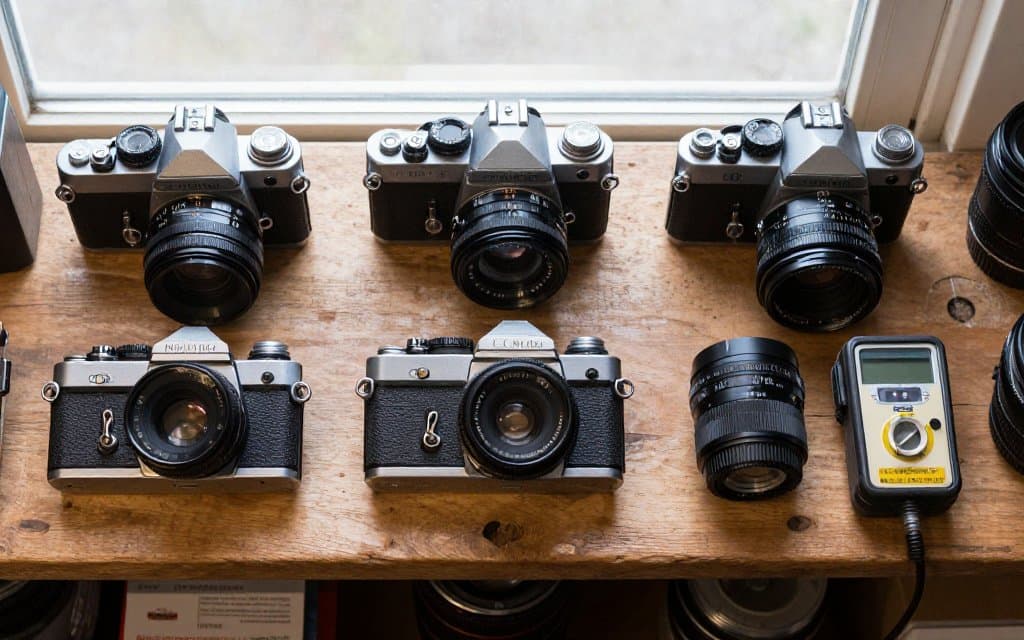
Film was supposed to be dead by now. Instead a wave of younger shooters picked it back up, and the supply of clean, working film cameras keeps shrinking. That mix pushed the market to multi decade highs.
The numbers back it up. The global film camera market was worth about 291 million dollars in 2025 and is projected to reach 434 million by 2032. Prices on the most wanted bodies moved fast: the Leica M6 rose roughly 41 percent over its historical average in 2025, and half of the tracked used listings sell within ten days.
For a thrift shopper, that is the whole opportunity. Analog photography gear is one of the few secondhand categories where demand climbs while stock dries up. You see the same story with records in the next bin over, and the gap between a thrift sticker and a real resale price has rarely been wider.
Which vintage cameras bring the biggest money
The grail vintage film camera bodies are rare in the wild, but they surface at estate sales and church thrifts where nobody knew what Grandpa left behind. A clean Leica M6 trades around 3,300 dollars, with fair asking prices from about 3,167 to 4,408. A Millennium edition once sold for 9,000.
Medium format is where the quiet money hides. A Hasselblad 500C/M runs about 2,400 dollars, a Leica M3 around 1,200, and a Rolleiflex twin lens anywhere from 300 to over 2,600 by condition. Even a Polaroid SX-70 can bring 150 dollars, and mint examples have crossed 2,000.
| Camera | Resale range | Format |
|---|---|---|
| Leica M6 | $3,167 to $4,408 | 35mm rangefinder |
| Hasselblad 500C/M | About $2,400 | 120 medium format |
| Leica M3 | About $1,200 | 35mm rangefinder |
| Rolleiflex TLR | $300 to $2,600 | 120 medium format |
| Polaroid SX-70 | $150 to $2,000 | Instant film |
A camera that fires with no battery has already survived fifty years. That mechanical simplicity is exactly what makes an old film camera the kind resellers fight over.
SLR film cameras are the thrift store bread and butter
You will not trip over a Leica. You will trip over SLR film cameras from the 1970s and 1980s, and those are where most flips actually happen. These SLR cameras cost 10 to 40 dollars on the shelf and resell from 75 to 350 on the usual platforms.
Two rules sort the winners. First, the glass often outvalues the body, so a camera with a fast 50mm lens beats the same body with a slow kit lens. Second, mechanical bodies age better than electronic ones, because circuit boards and capacitors fail while gears keep turning.
Canon film camera bodies people actually buy
The Canon AE-1 is the famous one, and Canon built roughly five million of them, which keeps prices honest. A working Canon film camera body trades near 120 dollars, an unused boxed one has hit 900, and an AE-1 Program with a 50mm lens can reach 245 from a 35 dollar thrift buy. The catch is that the AE-1 is electronic, so listen for the classic shutter squeal and check for a cracked battery door.
Nikon film camera bodies and pro glass
A Nikon film camera like the original Nikon F is a professional workhorse that sells around 150 dollars and can reach 560 in top shape. The fully mechanical Nikon FM2 is another favorite, and on any Nikon the lens can be worth more than the body. Old Nikkor primes get bought fast.
| Camera | Working price | Mechanical |
|---|---|---|
| Pentax K1000 | About $100 | Yes |
| Canon AE-1 | About $120 | No |
| Olympus OM-1 | $100 to $140 | Yes |
| Nikon F | $150 to $560 | Yes |
| Canon AE-1 Program, 50mm | About $245 | No |
How to Spot Valuable Vintage Film Cameras & Avoid Cheap Ones
Point and shoot film camera prices caught everyone off guard
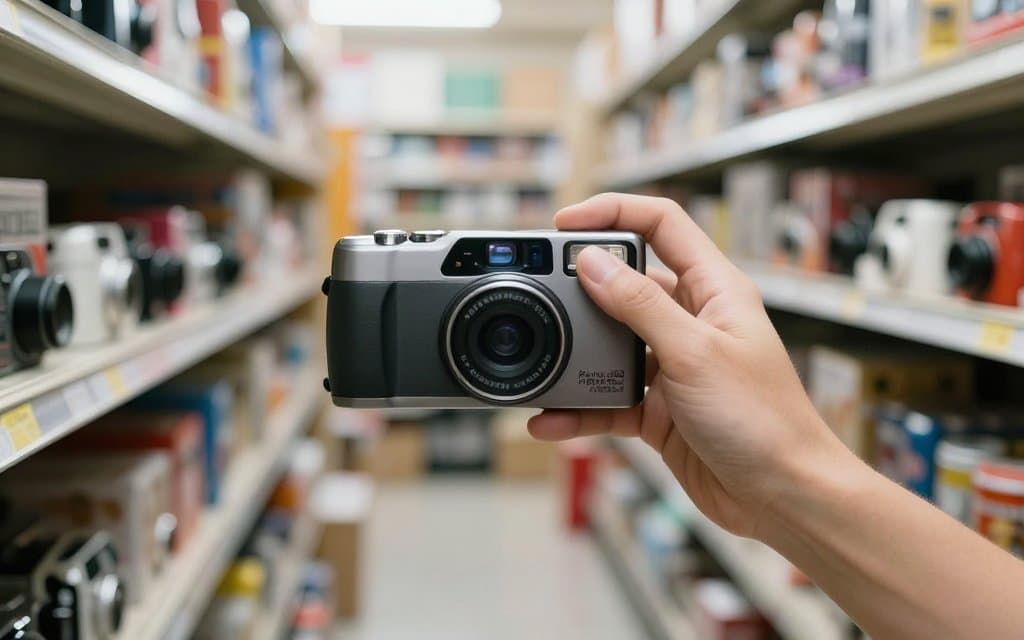
For years the plastic point and shoot film camera in the junk bin was a five dollar toy. Then the compact cult hit and a few models went vertical. Most 1990s plastic compacts still sell for 5 to 30 dollars, so this is where shoppers overpay on hype.
The exceptions are worth real money. A Contax T2 with its Zeiss lens can top 1,000 dollars, and clean bodies push toward 2,000. An Olympus Mju II or a Yashica T4 runs 300 to 600. Like old game cartridges, the cult items hide among the junk, so scan the exact model before you pay.
- •Contax T2 with a sharp Zeiss T-star lens
- •Olympus Mju II, small, sealed, and reliable
- •Yashica T4 with the same Zeiss glass for less
- •Any compact marked f/2.8 from a real brand
The plastic point and shoot in the junk bin is usually a five dollar camera. A Contax T2 in that same bin is a two thousand dollar mistake to walk past.
How to check a 35mm film camera before you buy
A camera that looks perfect can be dead inside, and a grimy one can be flawless. Ten seconds of checking a 35mm film camera saves you from buying a paperweight. Here is the order I run, fastest tell first.
Light seals, shutter, and the meter
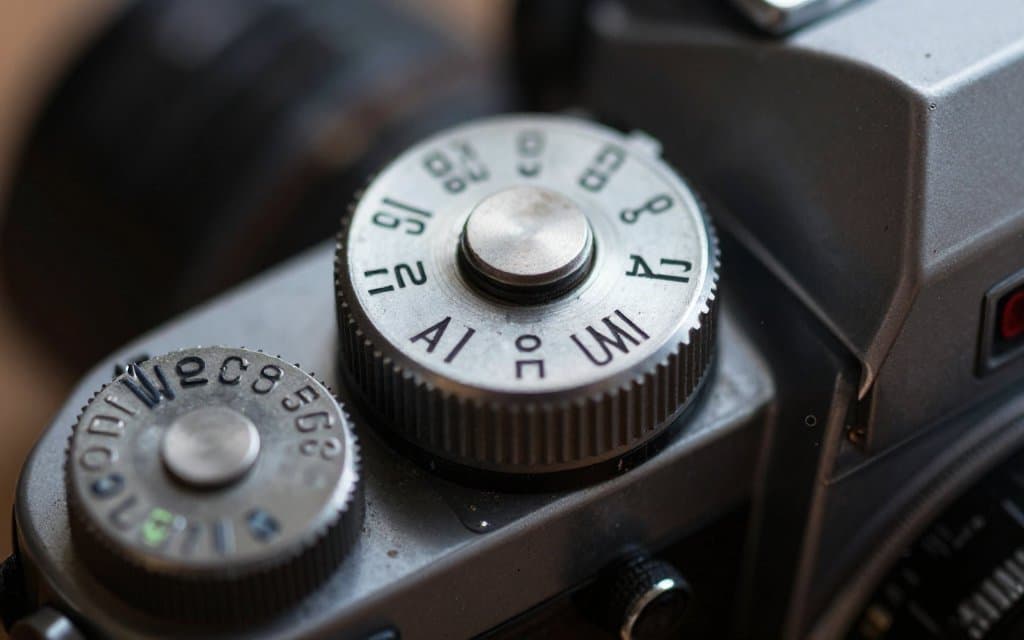
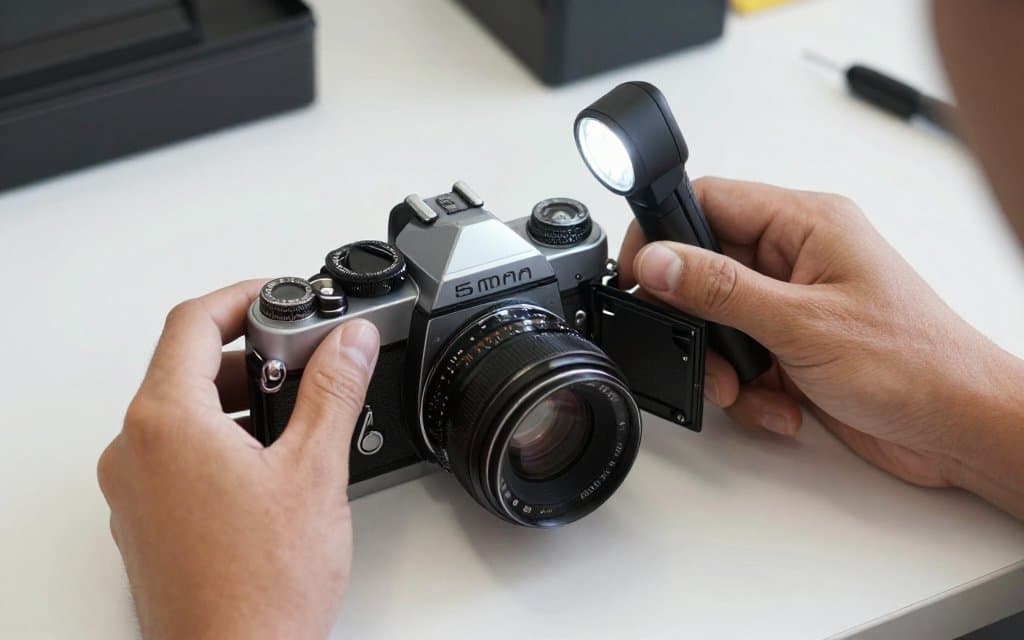
Open the film door and look at the foam light seals. If they are gooey or crumbling into little black crumbs they need replacing, though that is a cheap fix. Fire the shutter at every speed from slow to fast and listen, using a simple listening test: a one second setting should sound about one second, and every speed should sound even, not stuck.
Then test the meter. Drop in a fresh battery, point the camera at something bright and then something dark, and watch the needle or lights swing smoothly. Indoors a typical reading lands near 400 ISO, one sixtieth of a second, at f/2.8, which gives you a quick sanity check.
Fungus, haze, and battery corrosion
Hold the lens to a light and look through it. Fine threads or a spider web pattern inside the glass is fungus from damp storage, and it drags the value down hard. Light haze and a few dust specks are normal and fine.
Last, open the battery door and look for blue or white fur, which means a battery leaked and may have eaten the contacts. On an old camera a little cleaning fixes surface crust, but heavy corrosion can kill the electronics for good.
- •Light seals soft, not gooey or crumbling
- •Shutter fires evenly at slow and fast speeds
- •Meter needle swings when the light changes
- •Lens glass clear, no web like fungus threads
- •Battery bay clean, no blue or white fur
Common questions about old film camera value
How much is my old film camera worth?
Most working SLRs and compacts land between 30 and 350 dollars, with common models like the Pentax K1000 near 100 and the Canon AE-1 near 120. The rare grails run into the thousands. Condition, the lens, and whether it fires all move the number, so check a real sold price before you set yours.
Are point and shoot film cameras worth anything?
Most 1990s plastic compacts are worth 5 to 30 dollars, so do not overpay on hype. The exceptions are the cult models: a Contax T2 can clear 1,000 dollars, and an Olympus Mju II or Yashica T4 sits around 300 to 600. Scan the exact model before you decide.
Which old cameras sell for the most money?
Leica rangefinders lead, with the M6 trading around 3,300 dollars and the M3 near 1,200. Medium format bodies like the Hasselblad 500C/M bring about 2,400. These almost never show up cheap, but estate sales are where the surprises happen.
Ready to stop guessing at the camera shelf? Point Thrift Scanner at any old film camera and it identifies the model and shows real sold prices in seconds, so you never overpay or walk past a grail again. Get the app here: iOS or Android.