


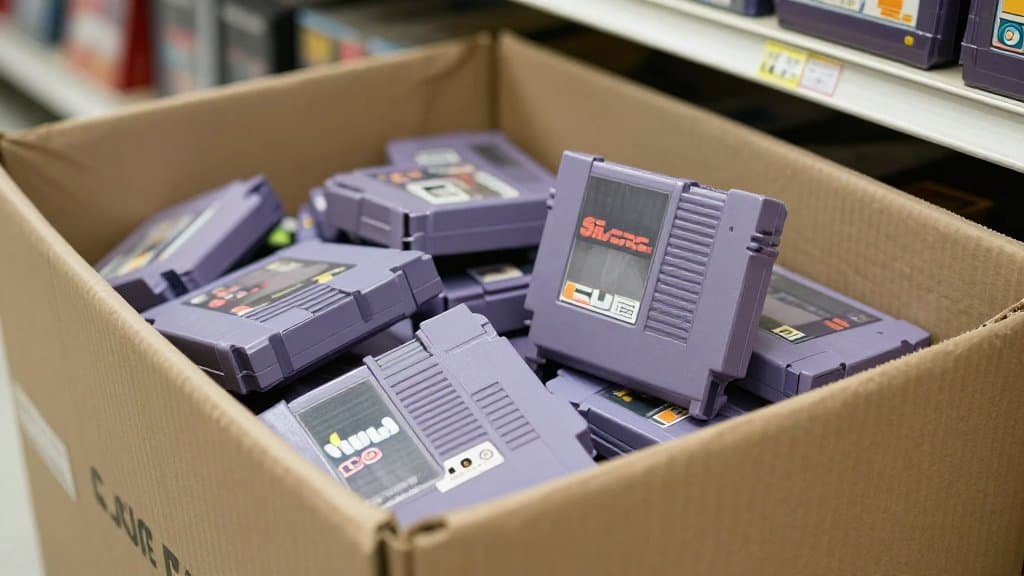
Walk past the electronics shelf at most thrift stores and you'll see a bin of dusty game cartridges priced at a dollar or two each. Most of them are worth about that. A few are worth a car payment, and one in a thousand is worth a used car. The trick is knowing which is which before you hand over your money.
Here's the honest version of how nes game value works. Price isn't about how famous a game is or how old the plastic looks. It comes from three things stacked together: how few copies exist, how badly collectors want it right now, and what shape yours is in. Get those three right and you can spot rare video games that other shoppers walk right past.
What actually sets nes game value
Common titles are common for a reason. Nintendo printed tens of millions of copies of Super Mario Bros, Duck Hunt, and Tetris, so a loose cart of any of them runs about $5 to $20 and probably always will. Sports games age worse. Madden, NBA Live, and the yearly hockey and baseball titles were pressed in huge numbers and get replaced every season, so most sell for under $5 loose.
Scarcity is where the money hides. A game with a small print run, a mid-year recall, or a release in the final months of a console's life had far fewer copies made. Demand matters just as much. A scarce sports title nobody collects stays cheap, while a hard-to-find action or role-playing game with a cult following climbs a little every year.
- •Small original print run from the factory
- •A release in the console's final year or two
- •A recall or a limited rental-store edition
- •A cult following that keeps demand high
Value is not about how famous the game is. It is about the specific title, the condition, and how many copies survived, in that order.
Late releases and small print runs
The late-run releases are a real category worth learning. Games published in a console's last year or two, like Little Samson on the NES, often had tiny production runs because retailers had already moved on to the next system. That scarcity is why a cartridge that sold for pocket money in 1992 can bring four figures today.
The condition ladder from loose to sealed
Loose, complete, and sealed
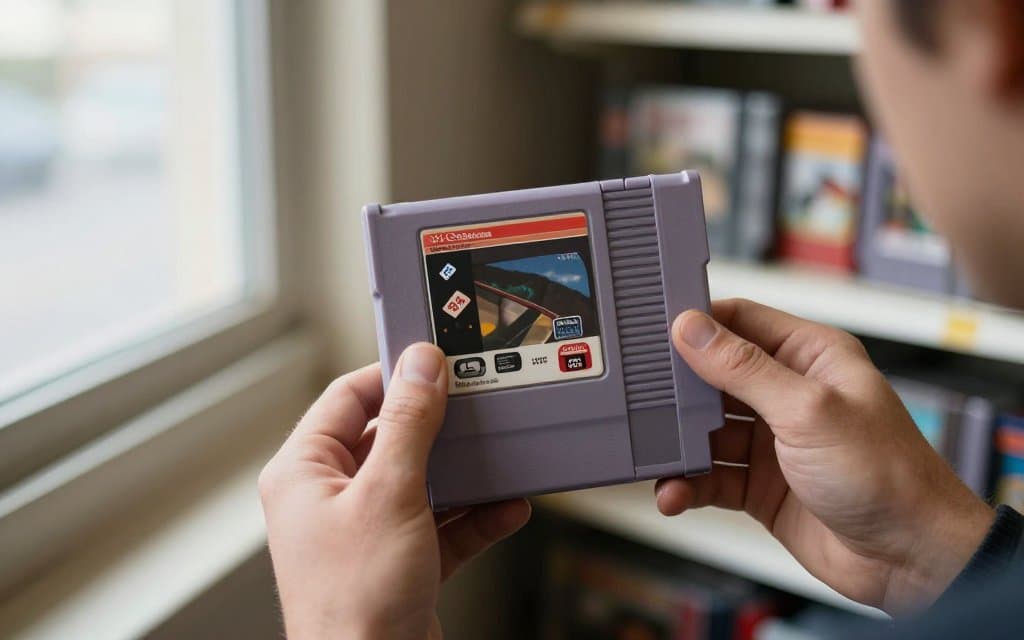
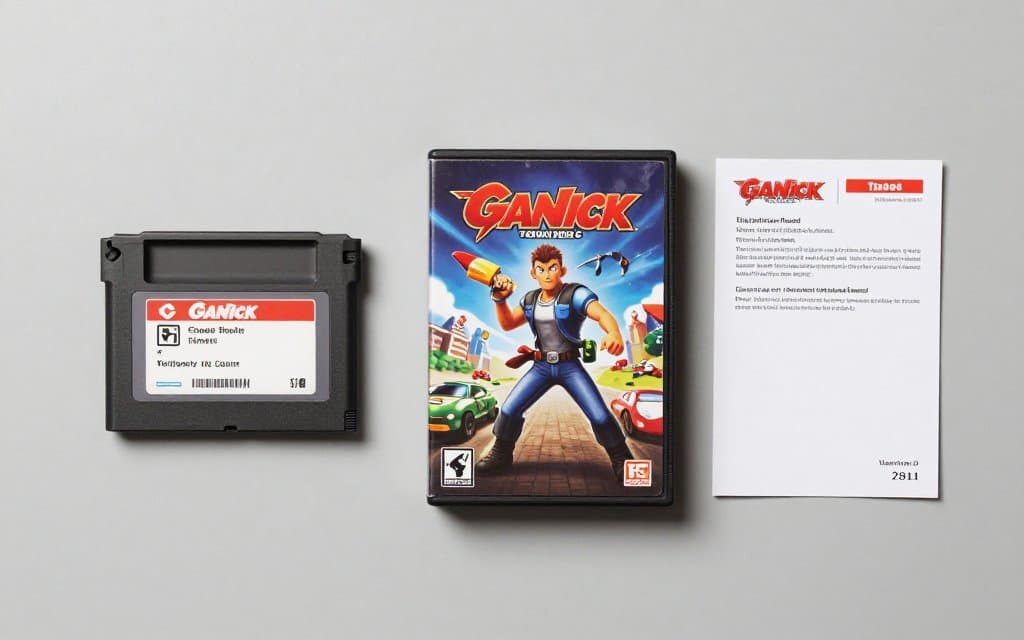
Condition swings the price more than almost anything else. The same game shows up in three grades on the resale market. Loose means just the cartridge. Complete in box, or CIB, means the cart plus the box, manual, inserts, and any tray or poster. Sealed means still shrink-wrapped and never opened.
The jump between them is steep. A complete copy typically sells for 3 to 10 times the loose price, and a sealed copy can run 10 to 50 times loose or more. One example resellers cite often: a game worth $15 loose becomes about $120 complete once you add the box, manual, and paper inserts. Several reseller price guides land on that same 3-to-10 range.
Boxes and manuals got tossed in the 1990s. That is exactly why complete copies are scarce now, and why the box often holds most of the value.
| Condition | Typical multiplier | Example price |
|---|---|---|
| Loose cart | Baseline | $15 |
| Complete in box | 3x to 10x | $120 |
| Sealed copy | 10x to 50x | $300 plus |
| Graded sealed | Auction only | Thousands |
Which old games are actually rare
When people ask which games rare enough to matter, the answer is a short list that changes slowly. On the NES, Stadium Events is the headline. Loose copies run roughly $15,000 to $40,000, and sealed examples climb into six figures. Little Samson is the other famous one, moving from around $2,400 loose to $20,000 or more sealed, as a detailed rarest NES games breakdown lays out.
At the very top sits the Nintendo World Championships gold cartridge, with only 26 known copies and sales near $100,000 to $150,000. It is the most expensive video game most collectors will ever see in person. You almost certainly won't find one in a donation bin, but knowing the ceiling helps you take the mid-tier finds seriously. Like vintage Star Wars figures, the boxed and complete examples are the ones that bring the real money.
| Game | Loose value | Sealed value |
|---|---|---|
| Stadium Events | $15,000+ | $100,000+ |
| Little Samson | $2,400 | $20,000+ |
| Panic Restaurant | $800 | $2,000+ |
| Flintstones Dinosaur Peak | $1,000 | $1,500+ |
Console by console, from Atari to GameCube
Beyond the trophy titles, each system has its own baseline. Loose NES commons sit at $5 to $20, with mid-tier action games like Mega Man 5 at $60 to $90. For SNES games prices, commons run $5 to $15, while Super Metroid brings $40 to $60 and a scarce shooter like Aero Fighters can hit $800 to $1,200 loose.
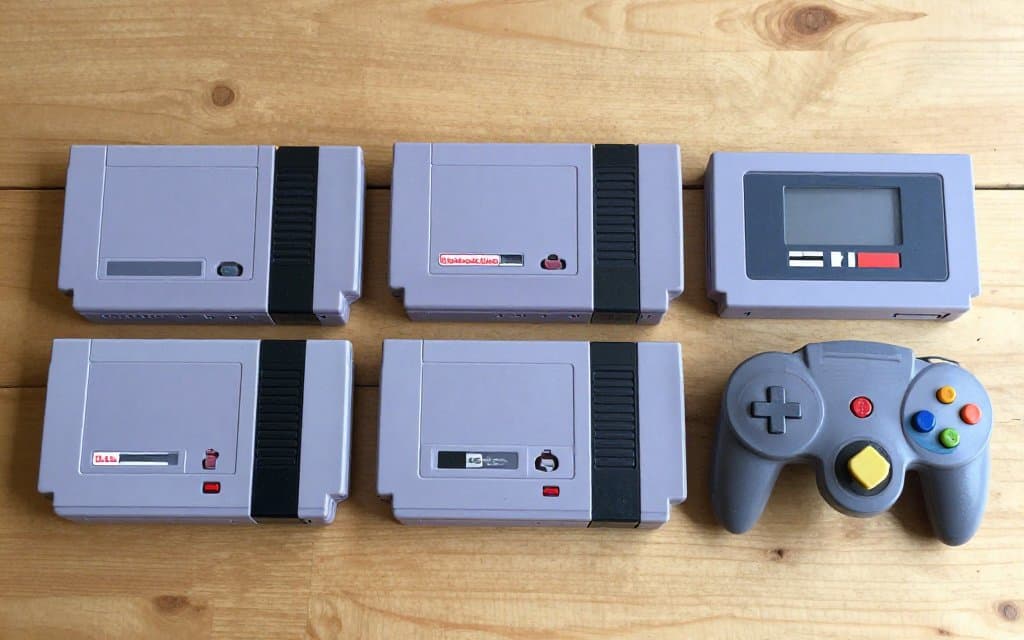
Nintendo 64 console value follows the same completeness rule, and a boxed system with a controller and cables usually trades in the $30 to $80 range. Loose N64 carts skew cheap, with Ocarina of Time around $25 to $40, but a rarity like ClayFighter Sculptor's Cut reaches $300 to $500. GameCube game value runs a touch higher on commons at $10 to $30, and a cult title like Gotcha Force lands near $250 to $400. Even Atari 2600 value has a floor and a ceiling, with common carts under $5 and scarce ones worth real money to collectors.
A clean, complete system beats a loose, yellowed one every time. That one habit is most of Nintendo 64 console worth in practice.
How to check a price before you buy
You don't have to memorize any of this. The fastest reality check is Price Charting, the video games price guide most resellers lean on, which tracks recent sold prices for loose, complete, and sealed copies side by side. Cross-check it against eBay sold listings, not asking prices. Anyone can list a cart for $300, and that number tells you nothing about what it actually sells for.
- •Price the exact title, region, and condition
- •Use sold listings, never asking prices
- •Check loose, complete, and sealed separately
- •Photograph the label and cart with your phone
In the aisle, with a line behind you, speed matters. That is the whole point of Thrift Scanner: snap a photo of the cartridge or label and it identifies the title and shows real market value pulled from millions of sold listings, so you can decide in seconds instead of guessing. The same loose-versus-complete gap shows up across electronics too, including vintage film cameras.
How to spot a reproduction cartridge
As values climb, fakes follow. Reproduction cartridges are common for the pricey titles, and a few tells give them away. Genuine Nintendo carts use a three-point security screw, so a standard Phillips screw on the back is a warning sign. Original labels have a matte finish, while repros often look glossy or oversaturated. Crack one open and a plain green circuit board with no maker markings is another red flag that collector guides warn about repeatedly.
- •Phillips screws instead of a 3.8mm security bit
- •Glossy or oversaturated label print
- •Plain green board with no maker markings
- •A rare title priced suspiciously cheap
Authenticating a find is a skill that pays for itself, the same way it does with designer goods. If you want the same mindset applied to another category, our guide on spotting a fake Coach bag walks through the same kind of close looking, and you can browse more finds worth money on the thrifting.app blog.
Questions thrifters ask about valuable video games
How do I find nes game value fast?
Snap the cartridge with your phone, then look it up on Price Charting or eBay sold listings, or let Thrift Scanner identify the title and pull real sold values in seconds. Always price the exact version and condition you are holding, not the best copy online. That habit alone keeps you from overpaying at the register.
What is the most expensive video game ever sold?
The record sales are sealed, professionally graded copies of the earliest Nintendo classics, which have reached six figures and beyond at auction. The Nintendo World Championships gold cart, with only 26 known copies, trades around $100,000 to $150,000. The realistic thrift-store ceiling is much lower, usually a few hundred to a few thousand dollars on the right rare title.
Are scratched or dirty cartridges still worth anything?
Often yes. A dirty label or a scuffed shell knocks the price down but rarely to zero, and most carts clean up well with a little care. The bigger value killers are water damage, chewed labels, and a board that no longer works. Grade your copy honestly, because buyers will.
Should I get a game professionally graded?
Only when the sealed copy is already worth far more than the grading fee and the wait. Grading a loose common cart or an ordinary complete title usually costs more than it adds. Save WATA or VGA grading for genuinely scarce, sealed finds where the bump clearly beats the cost.
Ready to stop guessing at the game bin and start spotting the winners? Thrift Scanner identifies any cartridge or console from a photo and shows what it really sells for, so you never overpay or leave money on the shelf again. Get the app here: iOS or Android.