


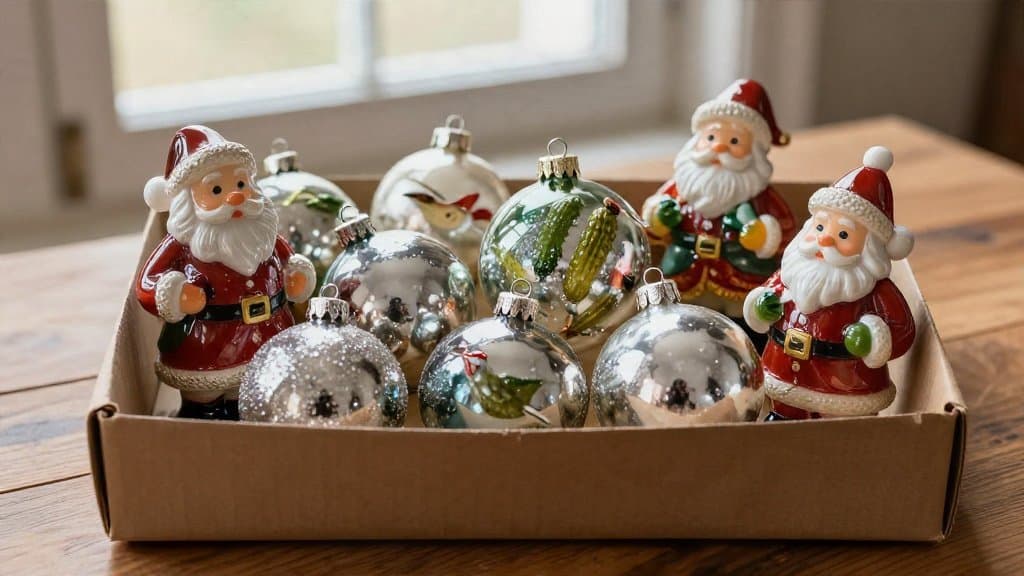
The glass that Old World Christmas sold in the United States from 1984 through 2000 came from Inge-Glas in Germany. In 2001 the brand moved production of its designs to China, and that one date now does most of the work when you're pricing vintage Old World Christmas ornaments at the thrift store.
So the German pieces are the ones to grab. They were mouth-blown, silvered by hand on the inside, hand-painted and glittered, many in molds that date to the 1860s, according to the Inge-Glas company history published by its US retailers. The later China-made line can look similar on a shelf, which is exactly why a quick check of the cap and box matters before you pay.
Why vintage Old World Christmas ornaments split at 2001
Old World Christmas is the Merck family's company, and for 17 years it was the American outlet for Inge-Glas. The Müller family behind Inge-Glas started blowing glass in Lauscha in 1597, and the Müller-Blech branch began making hand-painted ornaments in the 1860s.
After World War II, Lauscha fell under Russian occupation. In 1953 Heinz Müller-Blech fled to Neustadt bei Coburg and rebuilt the family workshops there, which is where the German pieces from the distributor years were made.
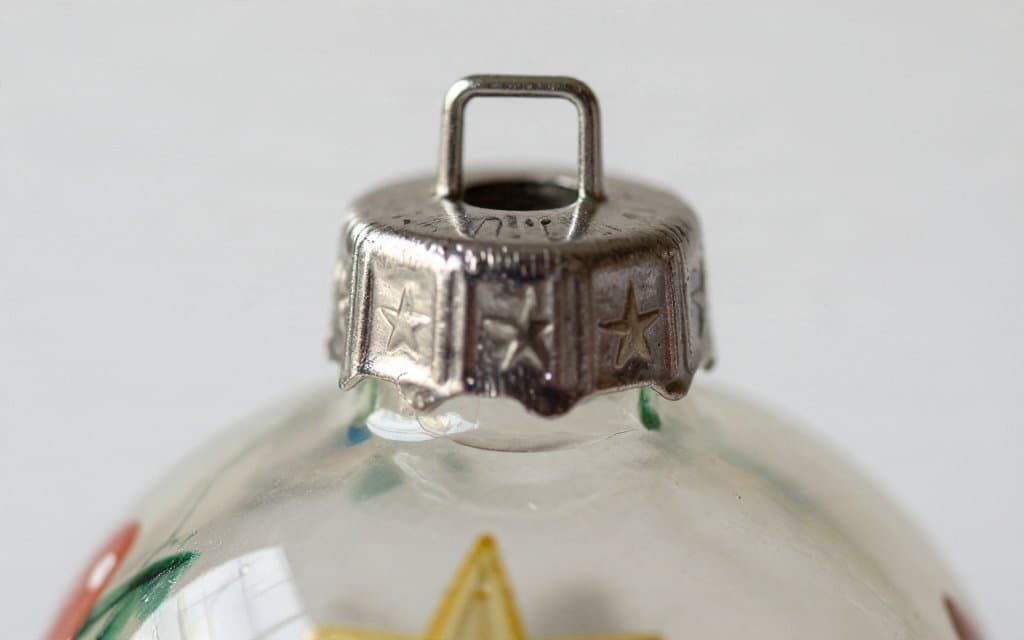
The Star Crown cap is the fastest tell
Since 2001 Inge-Glas has sold ornaments under its own name, topped with a trademarked Star Crown cap. The Old World Christmas pieces made in China after the split don't have it. A crown-shaped cap tells you the glass is German, though on its own it can't tell you whether the piece is from 1988 or last winter.
The Star Crown cap belongs to Inge-Glas. Old World Christmas ornaments made in China from 2001 on don't carry it, so a crown on the cap points straight to German glass.
What the box and tag add
Packaging fills in the rest. A country of origin printed on the box settles the Germany or China question in seconds, and an original box makes a buyer more confident about what they're getting. Keep the paper, even when it's scuffed.
- •Star Crown cap on top: Inge-Glas glass, made in Germany
- •Old World Christmas box marked China: made in 2001 or later
- •Old World Christmas box marked Germany: from the Inge-Glas years
- •Heavy glass or a plastic body: likely a modern reproduction
How to check vintage glass Christmas ornaments by hand
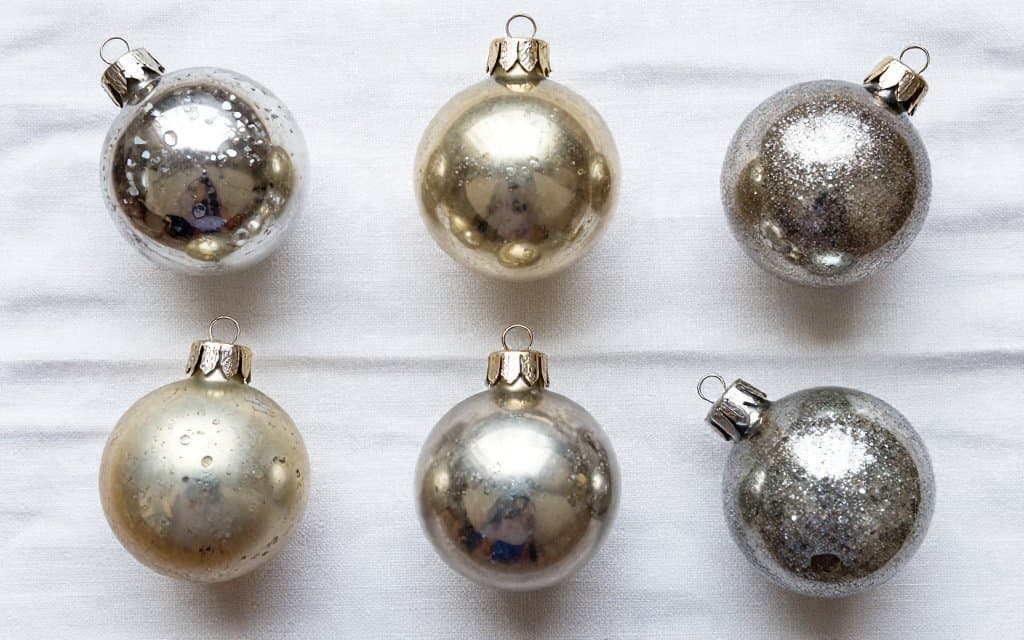
Older glass gives itself away through wear and small flaws. LoveToKnow's ornament guide says genuine antique pieces are usually thin mercury glass silvered on the inside, while reproductions tend to be plastic or thicker, sturdier glass.
- •Look inside the neck for silvering that has flaked or gone cloudy
- •Feel the glitter; old mica glitter is bumpy and uneven
- •Compare caps: older ones are plain and thick, newer ones thin and fancy
- •Check for paint rubs on high points like a Santa's nose and boots
Mercury glass ornaments and their silver lining
Mercury glass ornaments get their shine from silvering on the inside of the glass. Expect it to flake with age. Collectors treat that as normal patina, so a perfect, mirror-bright interior on something sold as 1920s German glass is a reason to slow down.
Caps, glitter and paint
Older caps are simple and thick, and some are plaster or paper, while newer caps are thin, ornate metal. Old mica glitter feels rough under your thumb. Paint on a genuinely old piece shows rubbing and scratches where hands have touched it for decades.
Old World Christmas vs vintage Shiny Brite ornaments
Shiny Brite ornaments are the other big name in thrift bins, and they're a different animal entirely. Max Eckardt, a German immigrant who grew up in Lauscha, launched them in 1937 with Woolworth's and Corning Glass. They were machine-blown, lightweight and lined with silver nitrate, and in 1939 they sold at Woolworth's for 2 to 10 cents each.
The caps date them. House Digest notes that pre-war hangers were scalloped and stamped Made in the US. of A., wartime pieces got cardboard caps and yarn hangers, and postwar caps read Shiny Brite-Made in U.S.A. Production wound down in the 1960s as plastic ornaments took over.
- •Scalloped cap stamped Made in the US. of A.: pre-war Shiny Brite
- •Cardboard cap with a yarn hanger: wartime Shiny Brite production
- •Cap stamped Shiny Brite-Made in U.S.A.: a postwar piece
- •A Shiny Brite box can hold another brand, so check every cap
| Era | Maker | Cap clue |
|---|---|---|
| Early 1800s to WWII | Lauscha glassblowers | Simple, thick caps; kugels blown from heavy glass |
| 1937 to 1960s | Shiny Brite (USA) | Stamped metal caps, cardboard caps in wartime |
| 1984 to 2000 | Inge-Glas for Old World Christmas | German mouth-blown glass sold under the Old World Christmas name |
| 2001 onward | Old World Christmas | Made in China, no Star Crown cap |
| 2001 onward | Inge-Glas | Sold under its own name with the Star Crown cap |
What vintage glass Santa ornaments and other figurals sell for
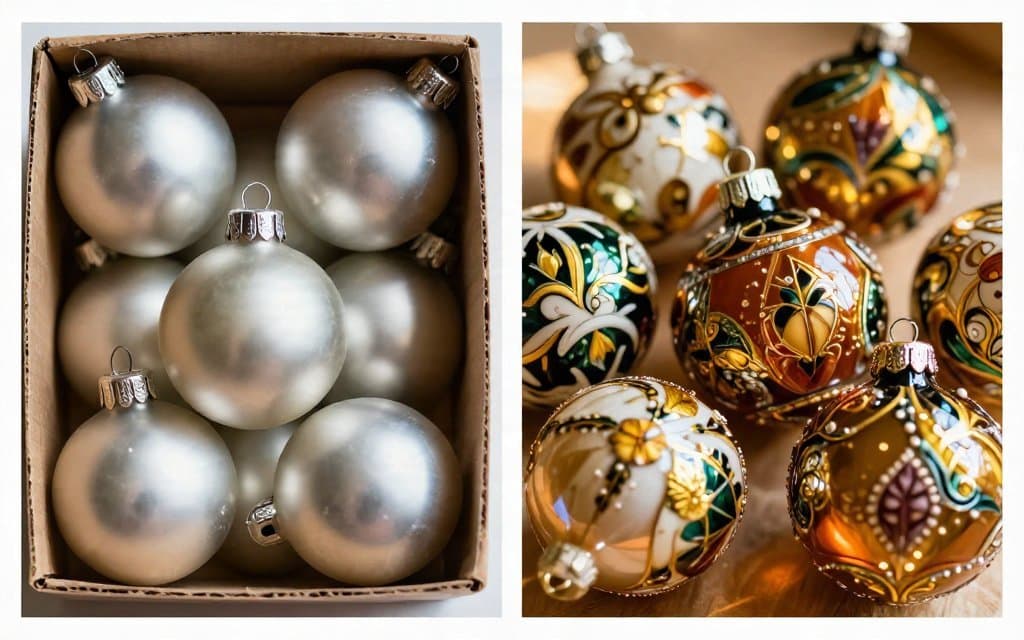
Shape matters more than brand to many buyers. Figurals, the molded glass Santas, animals, fruit and instruments made from around 1900 until World War II, are mostly priced at $20, $50 or $100 at auction, according to Antiques Roadshow's look at old ornaments. One Noah's Ark figural sold for thousands.
LoveToKnow puts figurals anywhere from a few dollars to over $100, while plain indented ornaments often stay under $20. Unsilvered 1940s pieces with paper hangers, made during wartime metal rationing, often sell for $15 to $30 each.
| Ornament type | Typical price | Source |
|---|---|---|
| Molded figurals, pre-WWII | Mostly $20, $50 or $100 | PBS Antiques Roadshow |
| Figurals like Santas and pickles | A few dollars to over $100 | LoveToKnow |
| Unsilvered 1940s paper-hanger pieces | $15 to $30 each | LoveToKnow |
| German kugels | Around $30, more if old | LoveToKnow |
| Indented ornaments | Often under $20 | LoveToKnow |
| Single Shiny Brite ornaments | $5 to $90 | Money Digest |
Frank Woolworth bought $25 worth of glass ornaments in 1879 and sold out in two days. Thrift shoppers are still sorting through what that first order started.
Don't price a vintage Santa glass ornament from the Inge-Glas years against a 1920s German figural, though. It's a well-made collectible from the 1980s or 1990s, so check recent sold listings for that exact design instead.
The money side of a box of retro Christmas ornaments
Most ornament profit comes from sorting, not luck. A mixed box of retro Christmas ornaments is worth breaking up: figurals and boxed German glass go out alone, and plain vintage Christmas ornaments go out as a color-matched lot.
Run the maths before you list. Indented balls that sell for under $20 won't leave much once shipping and fees come out, so read how eBay fees cut into small flips first. A pre-war figural in the $50 to $100 band is a different story, and it's worth a careful listing.
Price the figurals alone. One molded Santa or bird can be worth more by itself than a whole box of plain indented balls.
- •Pull out the figurals and price each one on its own
- •Group plain balls and indents into color-matched lots
- •Photograph caps and boxes, since buyers ask about both first
- •Note every chip, flake and paint rub right in the listing
Ornaments also pair well with other holiday finds. If you're already pulling 1970s ceramic Christmas trees off the shelf, vintage Christmas decorations of every kind belong in the same seasonal push.
Questions about antique Christmas ornaments
Are Old World Christmas ornaments made in Germany?
The ones sold from 1984 through 2000 were made in Germany by Inge-Glas. From 2001 the brand produced its designs in China, so newer pieces aren't German. Antique Old World Christmas ornaments don't really exist, since the brand's oldest pieces date to the 1980s.
Is every vintage glass Santa ornament with a crown cap old?
No. The Star Crown cap identifies Inge-Glas, and Inge-Glas still makes ornaments today. It proves German origin rather than age, so look at wear, packaging and the design before you call a piece vintage.
Are Shiny Brite ornaments worth anything without the box?
Yes, just less. Single ornaments resell for roughly $5 to $90, and the box is the clearest proof of what you've got. Wartime pieces with cardboard caps are harder to find, which helps even when the box is long gone.
Where can you compare other old glass finds?
Our guides to spotting real Murano glass and dating Dugan carnival glass use the same habit of checking marks before price. You can also browse more identification tips at thrifting.app.
Ready to stop guessing at the ornament bin? Download Thrift Scanner and let AI identify glass ornaments, caps and brands instantly. Snap a photo, get real market data, and never overpay again. Get the app here: iOS or Android.