


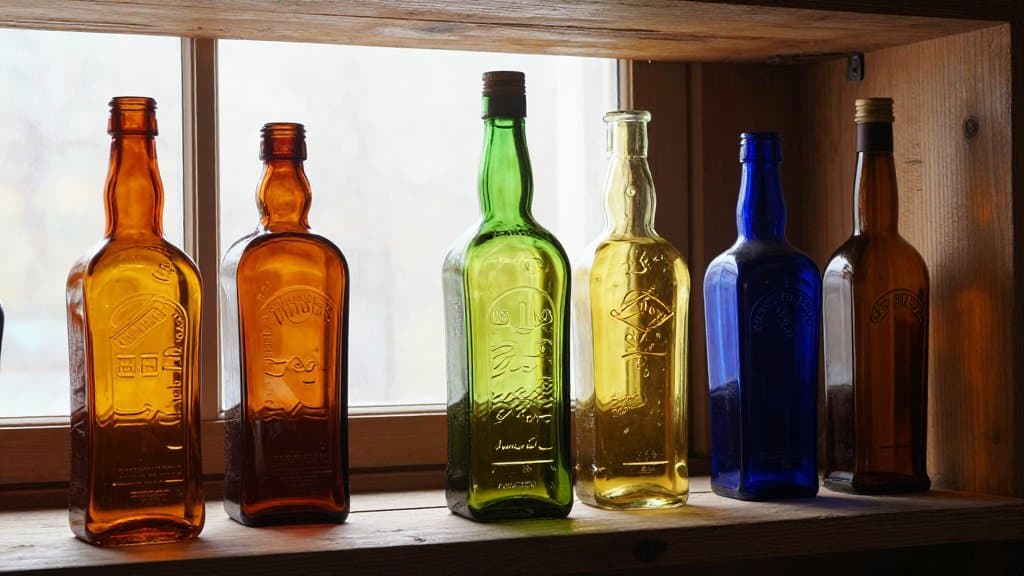
A dusty bottle from the back of a cabinet can be worth more than the dishes stacked around it. Some antique glass liquor bottles, the embossed whiskey and bitters kind from the 1800s, sell for hundreds, and the rarest ones clear four figures. A yellow-green Drake's Plantation Bitters bottle has sold in the $2,000 to $8,000 range, and most shoppers walk right past it.
Most old bottles are common and bring $5 to $25, so the whole game is knowing which few pay off. Value comes down to age, color, embossing, and condition, and you can read almost all of that in about ten seconds once you know where to look. This guide walks through antique bottle identification the way a picker does it, base first, then color, then the name pressed into the glass.
What makes antique glass liquor bottles worth money
Four things drive antique bottle value, and they stack. Age sets the floor, color and embossing set the ceiling, and condition decides whether a buyer pays full price or nothing at all. A plain clear bottle from 1960 is worth pocket change. An embossed, cobalt, pontil-scarred bottle from 1850 can cover a car payment.
- •Age: pre-1900 glass beats anything machine made
- •Color: cobalt, teal and yellow-green pay the most
- •Embossing: a raised brand or town name adds value
- •Condition: chips, cracks and haze cut the price fast
- •Rarity: odd shapes and short-run makers spike demand
Here is a rule pickers live by. If the glass has a rough scar on the base and a raised name on the front, slow down. That pair usually means the bottle was made before 1870, and age plus embossing is exactly where the money starts.
Read the base and the seams to date a bottle
Before you think about price, date the bottle. Two features tell you nearly everything, the base and the side mold seam, and neither needs a tool. Good light and one quiet minute will do. Turn the bottle over first.
The pontil scar tells you it is early
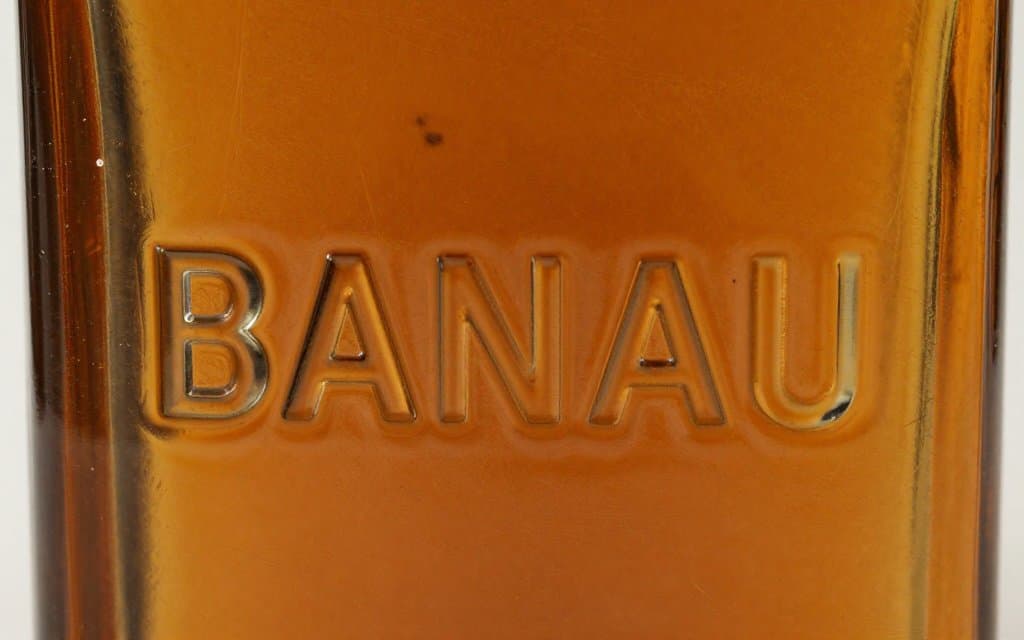
Look at the center of the base. A jagged, tube-shaped scar is an open pontil, a strong sign the glass was blown before the 1860s. A round gray or black smudge is an iron pontil from the middle of the 1800s. A smooth base with a small suction ring means a machine made it much later, and later usually means less money.
Where the mold seam stops
Now run a finger up the side seam. If it fades out at the shoulder, the bottle likely dates from 1800 to 1880. If it climbs through the neck, think 1880 to 1910. If the seam runs all the way over the lip, a machine made it, which points to 1905 or later. Earlier seams mean older glass, and older glass is where antique glass liquor bottles start to matter. Collector guides like Appraisily track the same timeline.
| Feature | Date range | Reading |
|---|---|---|
| Open pontil scar | Before 1860 | Blown by hand, top value tier |
| Seam stops at shoulder | 1800 to 1880 | Mouth blown, often embossed |
| Seam through the neck | 1880 to 1910 | Transition era, check color |
| Seam over the lip | 1905 to now | Machine made, usually common |
Bitters and whiskey bottles bring the biggest money
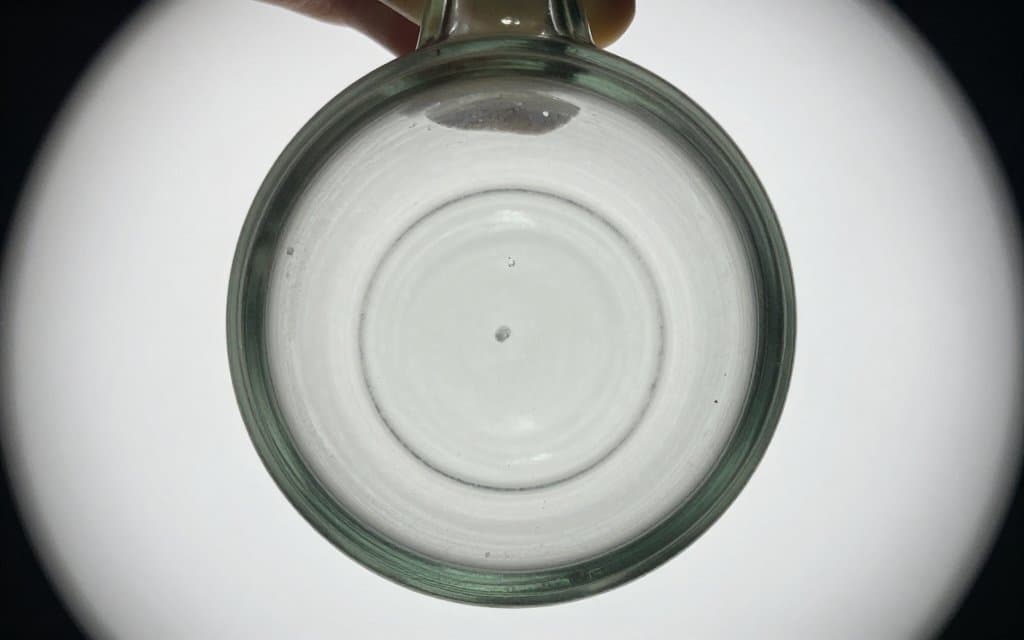
The four-figure bottles almost always come from two families, bitters and historical flasks. Bitters were sold as medicine but were mostly alcohol, and the trade ran from 1840 until the Pure Food and Drug Act shut it down in 1906. Makers poured them in figural shapes, log cabins, barrels, and ears of corn, and collectors chase them hard.
A common amber bitters is a $20 to $40 bottle. Change the color and the math changes fast. A yellow-green Drake's Plantation Bitters runs $2,000 to $8,000, a Greeley's Bourbon Bitters in olive or teal brings $500 to $4,000, and a golden National Bitters ear of corn sits around $800 to $3,000. Figural bitters as a group span $300 to $5,000 and up, and specialist bottle dealers log those named examples in their price guides.
Historical whiskey flasks are the other heavy hitter. Pint flasks embossed with eagles, Masonic symbols, or portraits, blown in the 1820s to 1840s, reach $2,000 to $10,000 in rare colors, while a plain amber pint flask is a $20 to $60 item. A pre-Civil War calabash flask usually lands between $100 and $500. These are the vintage glass liquor bottles that reward a slow, careful look.
The most expensive word on an old bottle is often a color, not a name. A cobalt or yellow-green version of a common bottle can be worth ten times its plain amber twin.
| Bottle type | Common | Rare or colored |
|---|---|---|
| Figural bitters | $20 to $40 | $2,000 to $8,000 |
| Whiskey flask | $20 to $60 | $2,000 to $10,000 |
| Patent medicine | $5 to $25 | $200 to $1,500 |
| Poison bottle | $30 to $100 | $300 to $1,000 |
Color is the fastest value multiplier
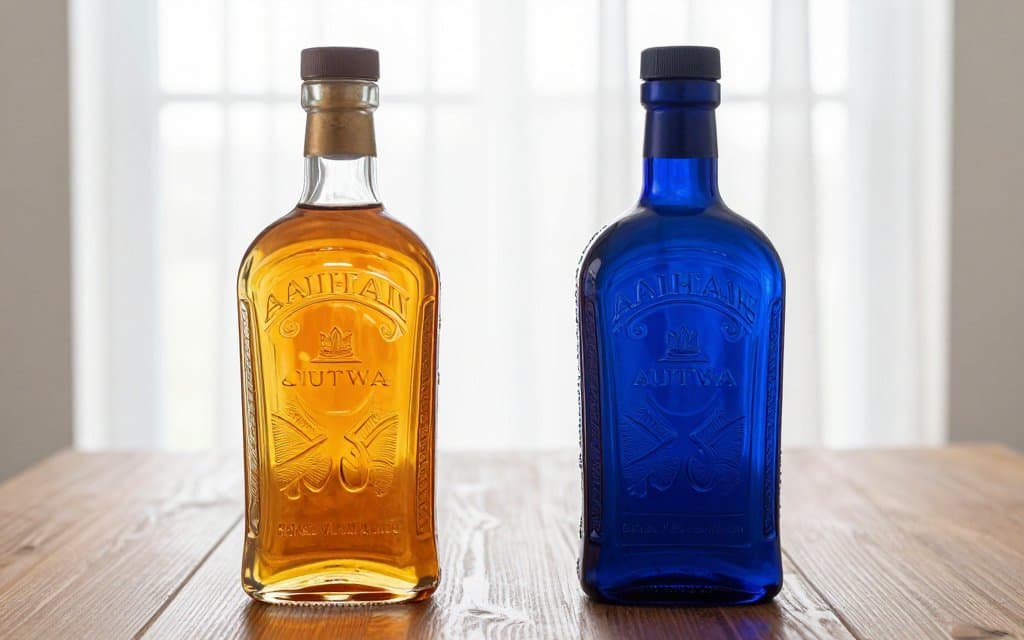
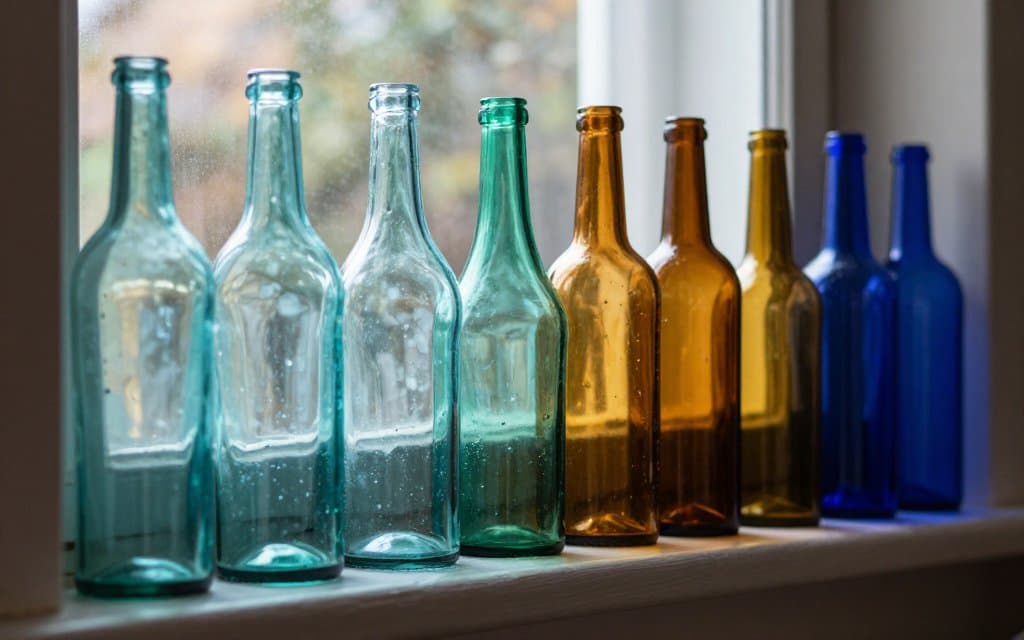
If you learn one shortcut, learn color. The same bottle in a rare shade can be worth many times the plain version, because color came from small batches and odd mineral mixes that were hard to repeat. Hold the glass to a window and judge the true hue, not the light behind it.
- •Aqua and clear: the common baseline, lowest value
- •Amber: a step up, roughly three to six times
- •Teal, citron and olive: two to five times baseline
- •Cobalt and emerald: four to ten times baseline
- •Red and scarlet: rarest of all, and prices explode
This is also where reproductions show up, so stay skeptical of a too-perfect deep blue with no wear. Real antique bottle value rides on genuine age, and modern repro glass tends to feel light, look flawless, and carry a seam that runs right over the lip. The same color rule drives carnival glass values, where a rare shade beats a common one every time.
Medicine, poison, milk and perfume bottles
Not every valuable bottle held liquor. Patent medicine bottles in aqua from the 1870s to 1900s are usually $5 to $25, and you can spot the era by a rectangular body with chamfered corners and the word cure, which faded out after 1906. A rare cure in cobalt or yellow-green can jump to $200 to $1,500. Poison bottles were made strange on purpose, ribbed and skull shaped so you could feel danger in the dark, and a skull and crossbones example runs $75 to $300 while a figural skull tops $1,000.
Dairy and vanity glass pull their own crowds. Rare antique milk bottles that carry an embossed dairy name and a painted color label sell well above a plain quart, and antique clear glass perfume bottles with a ground stopper and cut panels bring steady money from buyers who never touch whiskey glass. Even plain antique clear glass bottles and a common vintage clear glass bottle keep a small floor when the embossing names a druggist or a town that history forgot. It is the same lesson as reading marks on sterling silverware, where the stamp makes the price.
What antique glass liquor bottles are really worth in resale
Here is the honest money picture. Pull ten old bottles from a house clearout and eight are common, worth $5 to $20 each, sometimes less once fees and shipping bite. Glass is heavy and it breaks, so a $12 bottle can cost $9 to pack and mail, which erases the point. The profit hides in the other two.
Those two are the reason to check every base. A clean, embossed, pre-1900 bottle in a good color can jump to $100 to $500, and a rare figural bitters or a colored historical flask is the four-figure ticket that pays for the whole box. Sort without mercy, list the common ones as a lot, and put real effort only into the bottles that clear the shipping math. That is how antique bottles worth money turn into cash instead of clutter. Dating them by marks is the same habit that separates a cheap pan from a prized gate mark cast iron skillet.
- •Photograph the base, the seam and any embossed name
- •Search sold listings, not asking prices, for value
- •Sell common bottles as a boxed lot to save on fees
- •Wrap each bottle double, since breakage kills profit
- •Hold rare colors for auction, where bidders push high
Price with sold listings, never with the hopeful numbers people paste on a bottle that has sat unsold for a year.
Common questions about antique bottle value
How can you tell how old a glass bottle is?
Start at the base and the side seam. A rough pontil scar means it was blown by hand before the 1860s, while a seam that runs over the lip means a machine made it after about 1905. Add the maker mark if there is one, since an Owens-Illinois logo points to 1929 or later. You can browse more finds and tools at thrifting.app when you want a second opinion.
Are clear glass bottles worth anything?
Some are. Most antique clear glass bottles are common and bring a few dollars, but embossing changes that. A clear bottle naming a defunct druggist, brewery, or town can still sell for $20 to $80, and a ground-stopper perfume in cut clear glass can do better. Vintage glass alcohol bottles with a maker mark and a date code also find buyers.
What antique glass liquor bottles sell for the most?
Colored figural bitters and early historical whiskey flasks lead the pack. A yellow-green bitters or a portrait flask in a rare shade can reach several thousand dollars, while the same shape in plain amber stays around $20 to $60. Color and age do the heavy lifting, and condition decides the final number.
Where should you sell antique bottles?
For common bottles, a boxed lot on a general marketplace saves you time and listing fees. For a rare color or a known figural, a specialist bottle auction reaches the collectors who pay top prices. Always price against sold listings, not the hopeful ones still sitting live.
Stop guessing at the recycling bin and start reading the glass. Snap a photo of any bottle base or embossed name and Thrift Scanner identifies the maker and shows real market value from actual sold listings, so you never leave antique glass liquor bottles on the shelf again. Get the app here: iOS or Android.