


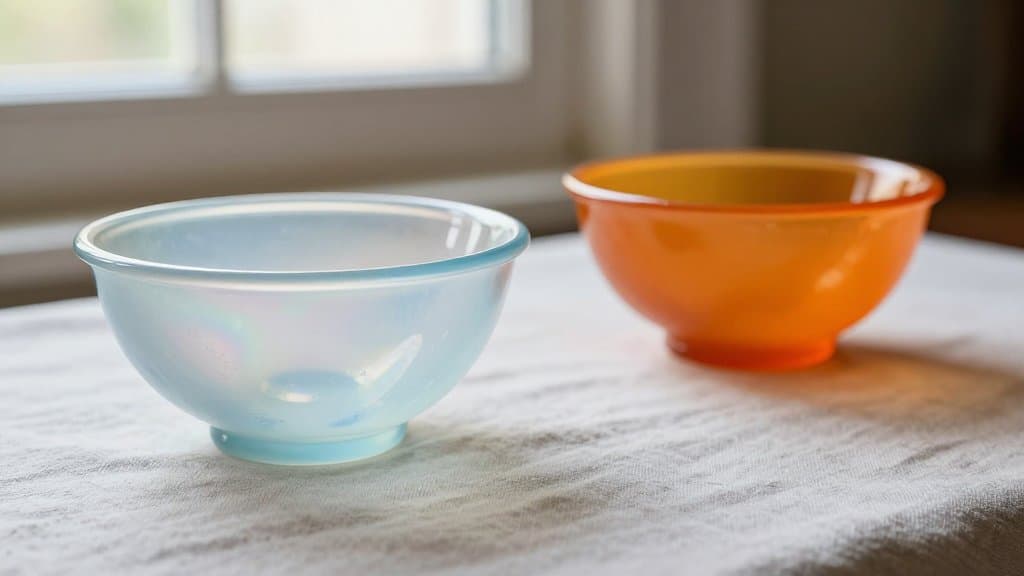
A pale, icy blue bowl sitting at the back of a thrift shelf can outvalue everything stacked in front of it. Most of the iridescent glass you will meet thrifting is common marigold worth a few dollars, yet ice blue carnival glass in the right pattern trades for hundreds and, in rare cases, five figures.
That gap is the whole game. Learn to read color, maker and pattern and you can walk past the cheap orange bowls with a clear conscience while grabbing the piece that pays for the trip. Here is how carnival glass value actually works, and how to tell an icy rarity from a pretty but ordinary find.
What this iridescent glass really is
This iridescent glass is really just pressed glass that was sprayed with metallic salts while still hot, which is what gives it that rainbow, oil on water sheen. Fenton started making it in 1908, and by the 1920s several American factories were turning out millions of pieces. It got cheap enough that theaters and fairs handed it out as prizes, which is how it earned its name.
The finish sits on the surface, not inside the body of the glass. On a marigold piece the glass underneath is actually clear, and the warm color lives entirely in that sprayed coating. Production faded after the Great Depression, so most genuine vintage pieces were made between about 1908 and the early 1930s.
Marigold is the most common color for one reason. Its glow comes only from the sprayed glaze, so factories could iridize plain clear glass by the wagonload.
Why ice blue carnival glass beats marigold
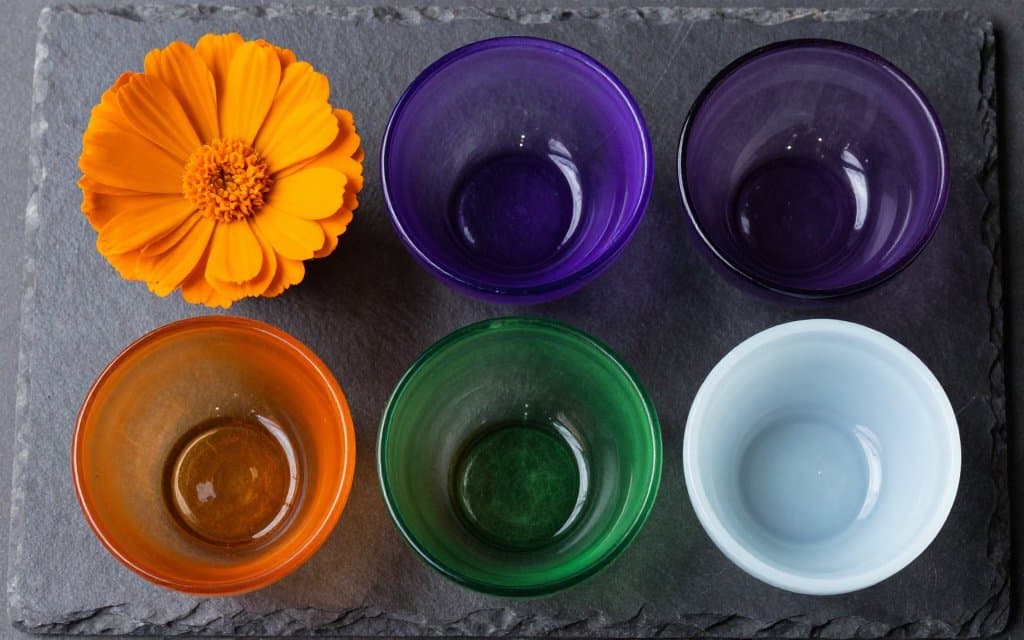
Color is the single biggest lever on price. Marigold is everywhere, so a marigold bowl usually sells for $20 to $50. Move up to a scarce color and the same shape in the same pattern can bring five to twenty times as much. That is why an ice blue piece gets pulses racing, because the pale, frosty blue was made in far smaller numbers, mostly by Northwood.
The rarest colors read like a want list: cherry red, aqua opalescent, ice blue, ice green and black amethyst. A Northwood Peacocks on the Fence bowl in aqua opalescent has topped $20,000 at auction, while a common marigold version might struggle to clear $40. Same glass, wildly different money. It is the same color rush that drives vintage Fiestaware prices.
| Color | How rare | Resale range |
|---|---|---|
| Marigold | Very common | $20 to $50 |
| Amethyst | Common | $40 to $150 |
| Ice blue | Rare | Hundreds to $16,000 |
| Aqua opal | Very rare | $1,000 to $20,000 |
| Cherry red | Very rare | $500 to $5,000 |
How to identify carnival glass in the aisle
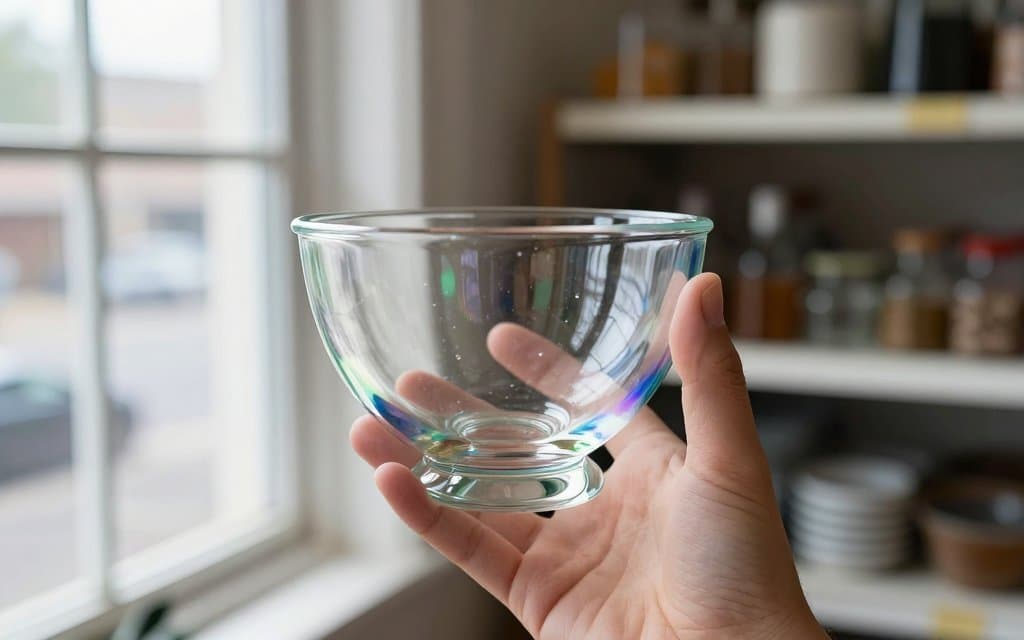
You can usually spot it from a few feet away once you know the look. The iridescence is the giveaway, a metallic rainbow that shifts as you tilt the piece. Pick it up and it should feel heavier and thicker than modern pressed glass, with edges that were hand shaped into ruffles, sawtooth points or a pie crust rim.
The base color test
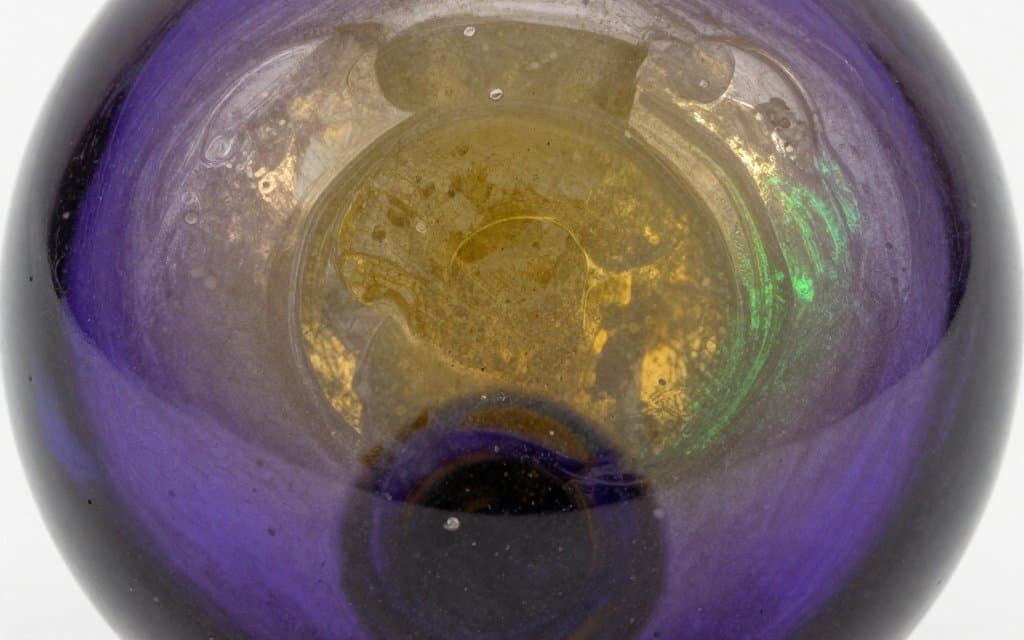
To learn the real color, flip the piece and find a spot on the base where the iridescent spray did not reach. Hold that clear area up to a window. What you see there, not the surface sheen, is the base color that sets the price. A base that glows pale blue under the shimmer is the difference between a $30 bowl and a small fortune.
- •Rainbow sheen that shifts color as you tilt it
- •Heavier and thicker than modern pressed glass
- •Ruffled, sawtooth or pie crust hand shaped edges
- •Clear base color read where the spray missed
- •Pattern pressed into the glass, not painted on
Maker's marks that add value
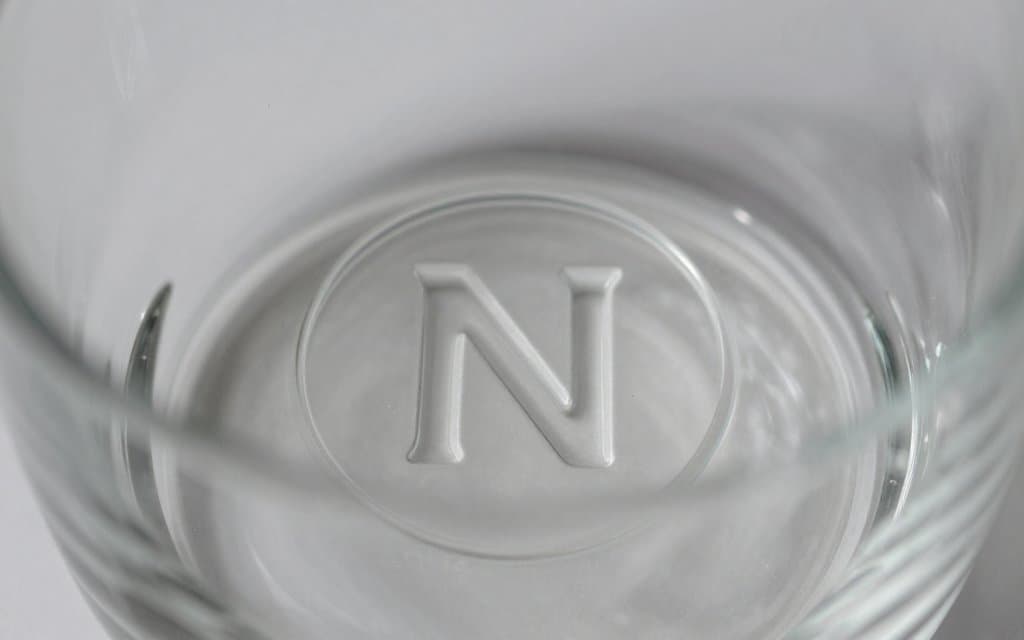
Most classic pieces were never signed, so a mark is a bonus rather than a requirement. When you do find one it helps. Northwood glass carried an underlined capital N inside a circle, often pressed inside the base of tumblers rather than on the outside. Learning marks is the same habit that pays off with Roseville pottery marks.
Fenton glass is the tricky one. The company did not mark its early pieces at all, so anything with the word Fenton in a script oval is from the 1970 revival or later, not the classic era. Two other names to know are Imperial and Millersburg. Dugan carnival glass includes the dreamy peach opalescent that collectors prize, and Fenton's frosty white iridescent glass has a devoted following of its own.
- •Northwood: underlined N inside a circle mark
- •Fenton: unmarked classic, script oval after 1970
- •Dugan: peach opalescent and Diamond era pieces
- •Imperial: strong colors and clean pressed patterns
- •Millersburg: short run, radium bright iridescence
The patterns collectors chase
After color, pattern decides the ceiling. A plain bowl in a dull pattern stays cheap no matter how shiny it is. The patterns that pull real money are the detailed, storytelling ones like Grape and Cable, Peacocks on the Fence, Good Luck, Dragon and Lotus and the famous Farmyard bowl. Those are the ones that turn a $40 find into a four figure sale.
You do not have to memorize hundreds of names. Photograph the piece and let an app match the pattern and pull real sold prices, the same way you would check uranium glass or a shelf of vintage Pyrex. Pattern plus color plus condition is the whole equation.
The rule of thumb is simple. A common pattern in a rare color beats a rare pattern in common marigold almost every time.
How to Identify and Value Antique Colored Carnival Glass
What the money looks like
Here is where it gets fun. The record for a single piece is a Northwood Ice Blue Strawberry plate that sold for $16,327 on eBay back in 2003. Aqua opalescent Peacocks on the Fence bowls have cleared $20,000, and a documented Dugan Farmyard bowl brought $2,100 at a 2017 auction. Those are the outliers, but they show how far a rare color and pattern can travel.
A rare color bought at a marigold price is the entire reason resellers bother to learn glass in the first place.
The everyday math is friendlier and still worth your time. Most marigold glass pieces sell for $20 to $50, and the plain marigold bowls that turn up in every store are the easy, dependable flips. The real wins come when you buy a rare color at marigold prices because the seller never read the base glass. The table below shows a few documented sales.
| Piece | Maker | Sale price |
|---|---|---|
| Ice Blue Strawberry plate | Northwood | $16,327 |
| Peacocks on the Fence | Northwood | $20,000+ |
| Farmyard bowl | Dugan | $2,100 |
| Tree Trunk vases | Northwood | $1,750 |
| Embroidered Mums plate | Northwood | $702 |
Condition is the tiebreaker on all of it. A hairline crack, a chip on a ruffle or heavy interior scratching can cut a price in half or worse, so check the rim and base under bright light before you buy.
Spotting fakes and new glass
New iridescent glass is everywhere, from craft store vases to imported reproductions, and some of it copies the classic patterns closely. The tells are usually the finish and the feel. Modern iridescence often looks too even and electric, almost oil slick perfect, where old spray is softer and a little uneven.
Weight and wear help too. Genuine old pieces feel dense and show light base wear from a century on shelves. If you want to rule out fakes and reproductions before you spend real money, read the auction notes at Invaluable or the identification tips over at Antiques Know How.
- •Iridescence that looks too even and electric
- •Feather light weight versus dense old glass
- •Crisp modern base with no shelf wear at all
- •Fenton script oval mark, meaning 1970 or later
Common questions from the thrift aisle
How can you tell old pieces from new?
Look at the finish and the base. Old iridescence is soft and slightly uneven, while new pieces often look glossy and mechanically perfect. A genuine antique also feels heavier and shows faint base wear, and remember that a Fenton script oval mark means the piece dates to 1970 or later.
Is marigold carnival glass worth anything?
Usually a little, not a lot. Common marigold bowls and plates trade for about $20 to $50, so they are still an easy flip from a $3 thrift shelf. Marigold only reaches big numbers in scarce patterns or unusual shapes.
What is the rarest color?
Red and aqua opalescent sit at the very top, with ice blue, ice green and black amethyst close behind. Those colors can sell for five to twenty times what the same shape brings in marigold, which is why an ice blue find is such a thrill.
Where can you sell these pieces?
eBay and specialist glass auctions get the best prices for rare colors and patterns, because that is where serious collectors are watching. For common marigold, local antique malls and Facebook groups tend to move it faster. Always list the color, maker and pattern, and price from real sold listings rather than hopeful asking prices.
- •eBay sold listings for rare colors and patterns
- •Specialist glass auctions for top tier pieces
- •Antique malls and Facebook groups for marigold
- •Always price from sold, not asking, listings
Ready to stop guessing at the thrift shelf and start spotting the rare colors? Snap a photo with Thrift Scanner and let it read the pattern, flag the likely maker and pull real sold prices, so you never leave an ice blue bowl behind again. Get the app here: iOS or Android.