


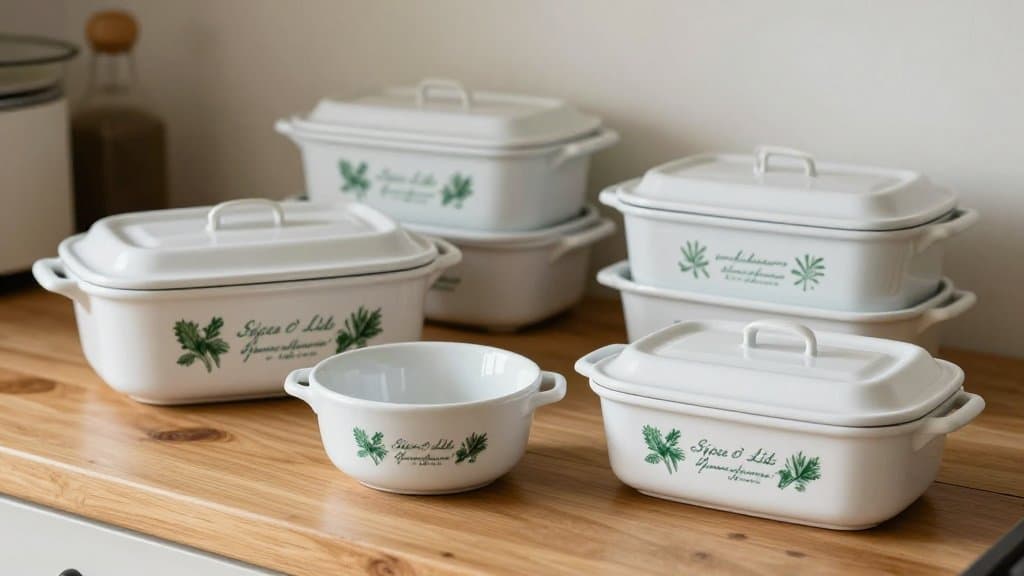
Every few months a photo of a La Marjolaine CorningWare worth thousands of dollars makes the rounds online, and every few months a shopper walks right past the same dish on a Goodwill shelf priced at $6. Both things really happen. The gap between them comes down to a few marks on the glass that take about ten seconds to read.
CorningWare has a devoted following, and the Spice O' Life series that most of these dishes belong to is one of the most common patterns in thrift history. That is exactly why the valuable versions hide in plain sight. Once you know the script names, the handle shape, and the stamp on the base, you can tell a $20 bake dish from a real payday before you reach the register.
What makes La Marjolaine CorningWare worth chasing
Spice O' Life launched in 1972 and became the second most produced CorningWare pattern ever, right behind Blue Cornflower. Corning kept it in production for about 15 years, so the plain version is everywhere and cheap. The pieces collectors chase are the early runs, roughly 1972 to 1975, that carry a line of cursive French script under the vegetable band.
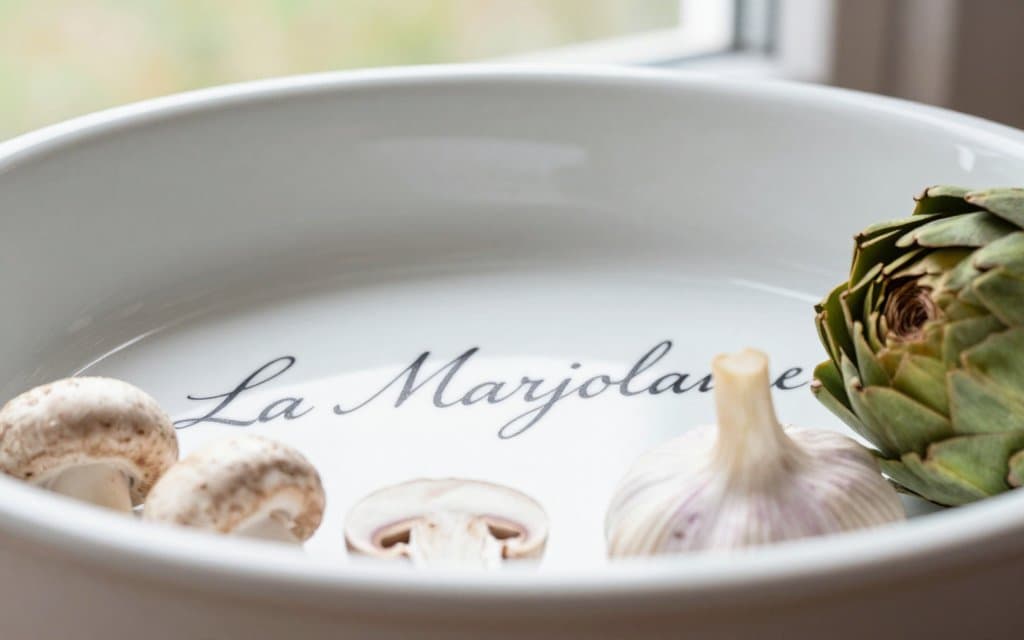
That script is the whole tell. Words like L'Echalote, the shallot, and La Marjolaine, the marjoram, were printed under the mushrooms and garlic on only a small share of pieces. Thrifters who hunt these at Goodwill know a mint four-quart casserole with that script has been listed for $4,000 or more. Real sold prices are calmer, and most land between $100 and $500, but that still beats the $18 sticker on a plain one.
- •L'Echalote, the shallot, in cursive under the veg
- •La Marjolaine, marjoram, on early script pieces
- •La Sauge and La Romarin, sage and rosemary
- •No script at all means a common later run
The vegetables are common. The French words under them are not. Script under the band is the whole game.
Spice O' Life is everywhere, so most of it is cheap
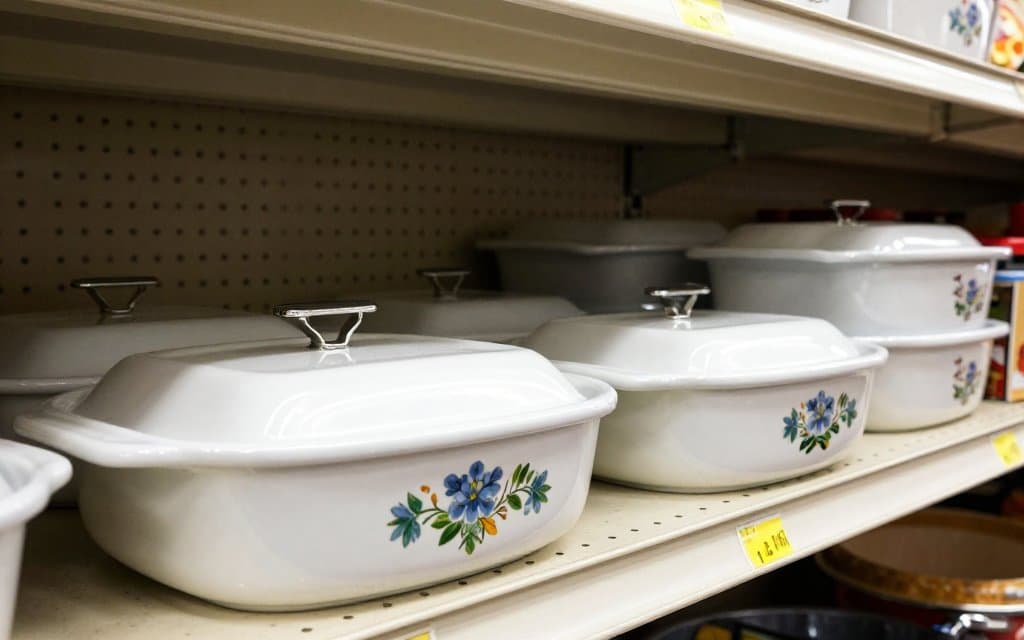
Here is the part the viral posts skip. Because Corning made the pattern for a decade and a half, the ordinary A-series pieces turn up at nearly every thrift store, and the honest CorningWare Spice of Life value on a common dish is about $15 to $30. Volume is the enemy of price, the same way ice blue carnival glass outruns common marigold because far fewer of it were made.
The same logic runs through the rest of the catalog. The cornflower blue CorningWare that started the line in 1958 is beloved but common, so most bowls and dishes sell for $10 to $30 while a big casserole with the right lid can climb far higher. The classic CorningWare Cornflower pattern still follows one rule, that condition and size drive the price. Type antique CorningWare patterns into a resale app or open a published CorningWare price guide and the range is dizzying, which is why a plain vintage CorningWare patterns value chart helps.
| Pattern | Years | Typical value |
|---|---|---|
| Blue Cornflower | 1958 on | $10 to $30 most pieces |
| Spice O' Life plain | 1972 on | $15 to $30 |
| Script Spice O' Life | 1972 to 1975 | $100 to $500 |
| Black Starburst | 1959 to 1973 | $100 to $350 |
| Wildflower | 1977 to 1984 | $20 and up by size |
| Blue Cornflower casserole | 1958 on | $70 to $4,500 by size |
How to date a piece from the handle and the stamp
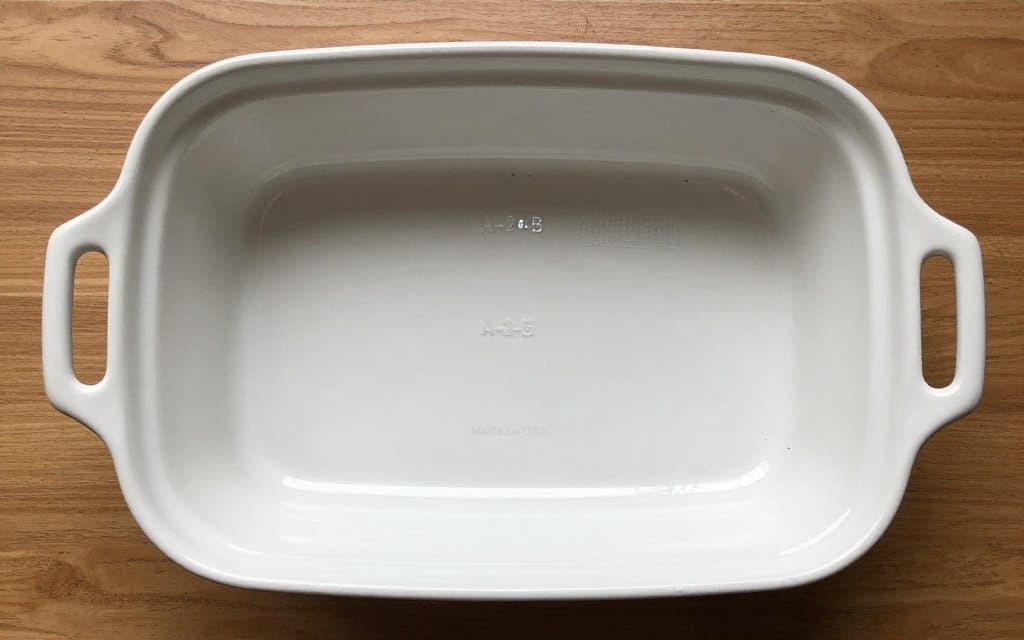
Flip the dish over, the same base-first habit that dates a cast iron skillet. CorningWare used a letter-and-number code that quietly tells you the era. P-series pieces, made from the 1960s to 1972, have small narrow handles. A-series pieces, coded like A-1-B or A-2-B and made from 1972 into the 1980s, have the wider handles most people picture.
The other clue is the stamp itself. First-generation pieces from 1972 to 1979 often carry a hologram mark etched into the ceramic that only shows when you tilt it toward the light. Genuine bodies are Pyroceram, a glass-ceramic that feels smooth like glass and moves from freezer to stovetop, which later stoneware lookalikes simply cannot do.
P-series or A-series, and why it matters
A P-series stamp on a script piece is the jackpot, because it points to the earliest and shortest runs. An A-series code is not bad news, it just means the piece is common enough that condition and size will decide the price. Either way, the code turns a guess into a fact you can price against.
- •P-series code and narrow handles point to pre-1972
- •A-1-B or A-2-B codes mean the common 1970s runs
- •A hologram stamp that glints when tilted, 1972 to 1979
- •A Pyroceram body that feels smooth like glass
- •Made in USA and the Corning mark on the base
| Series | Era | What it means |
|---|---|---|
| P-series | 1960s to 1972 | Early, narrow handles |
| A-series | 1972 to 1980s | Common, wider handles |
| Hologram stamp | 1972 to 1979 | First-generation original |
| Stoneware body | Newer | Not vintage Pyroceram |
What the rare pieces actually sell for
Let us talk numbers, because that is why you are here. A plain Spice O' Life casserole is a $15 to $30 dish. A clean early script piece with its lid usually sells for $100 to $500, and the rare mint four-quart examples are the ones that post those thousand-dollar headlines. The L'Echalote CorningWare value that goes viral is the ceiling, not the norm.
Other patterns have their own bright spots. A Black Starburst CorningWare casserole from the 1959 to 1973 run brings about $100 to $350, and early Blue Cornflower coffee pots have topped $300. Even the quiet CorningWare Old Town Blue adds value when it completes a set. Like sterling flatware, the price can run from pocket change to serious money.
Condition is the tax. A perfect lid can double a casserole, and one chip can erase most of the value.
Spotting fakes, repros, and stoneware lookalikes
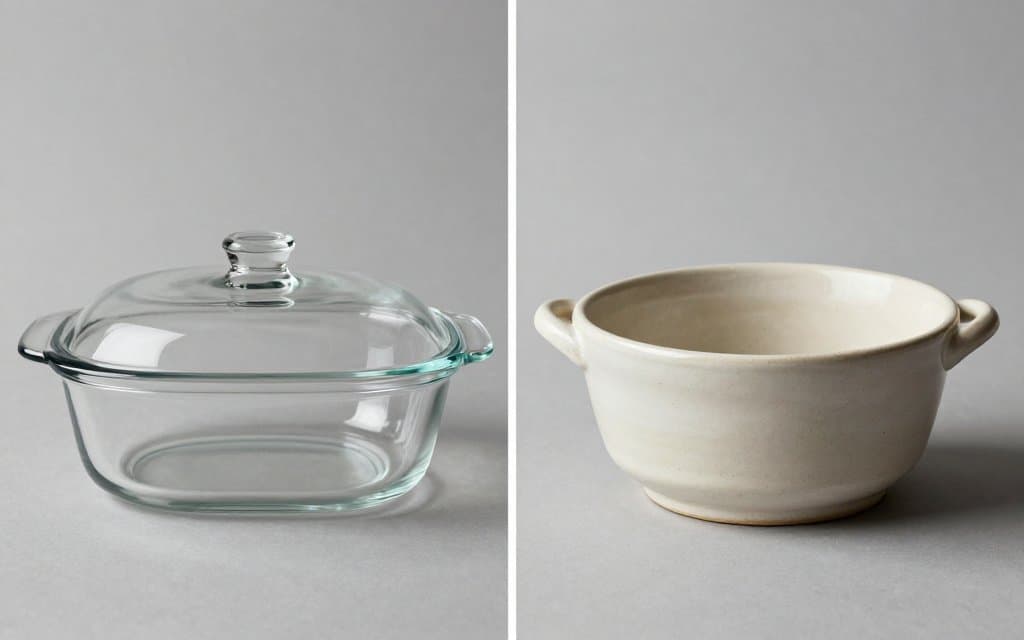
The resale boom pulled in reproductions and modern stoneware that borrows the look without the Pyroceram body. Telling them apart uses the same eye you bring to telling a real bag from a good fake: weight, feel, and the marks on the base do the work. Vintage pieces are dense and glassy, while repros feel light and glossy.
Handle the dish before you trust a pattern. If the base looks brand new, the walls feel thin, or the seams are bold and rough, treat it as a lookalike. When money is on the line, a quick scan against real sold listings settles it faster than a hunch.
- •A base that feels light and looks glossy new
- •Thin walls you can almost see the light through
- •Bold mold seams and rough, sloppy edges
- •Stoneware that is heavy and slightly porous
- •A modern printed logo with no vintage stamp
Questions thrifters ask about CorningWare values
How can you tell if CorningWare is valuable?
Check three things: the script under the pattern, the series code with the handle shape, and the condition. Cursive French words, a P-series code, and a clean body with its matching lid point to the pieces worth real money. Everything else is usually a $15 to $30 dish.
Is all Spice O' Life CorningWare worth money?
No, and this is the biggest myth. Corning made Spice O' Life for about 15 years, so the plain A-series pieces are extremely common and sell for $15 to $30. Only the early script versions, roughly 1972 to 1975, carry the premium buyers talk about.
What is the rarest CorningWare pattern?
Among widely sold lines, early script Spice O' Life like L'Echalote and La Marjolaine draws the loudest bids, while short-run patterns such as Black Starburst are prized. Rarity plus condition, not the name alone, sets the final price.
Can you still use vintage CorningWare on the stove?
Genuine Pyroceram pieces were built to go from freezer to stovetop to oven, which is part of their charm. Inspect for cracks first, since a hairline can fail under heat. If a dish turns out to be truly valuable, many collectors keep it on the shelf instead.
Ready to stop guessing whether that casserole is a $6 shelf-sitter or a real find? Thrift Scanner reads the pattern, brand, and condition, then shows real market value from actual sold listings so you never overpay or undersell again. Snap a photo in the aisle and know before you buy. Get the app here: iOS or Android.